2026 Super El Niño: Prepare for Record-Breaking Global Weather
“`html
Introduction to Super El Niño 2026
As the world grapples with the implications of climate change, the weather phenomena known as El Niño has come into sharp focus, particularly the anticipated Super El Niño 2026. The latest data suggests that this event could be stronger than any El Niño recorded before, with potentially profound impacts on global weather patterns. This article delves into the details surrounding the expected intensity of the Super El Niño 2026, its implications, and what it may mean for various regions around the globe.
Understanding El Niño and Its Impact
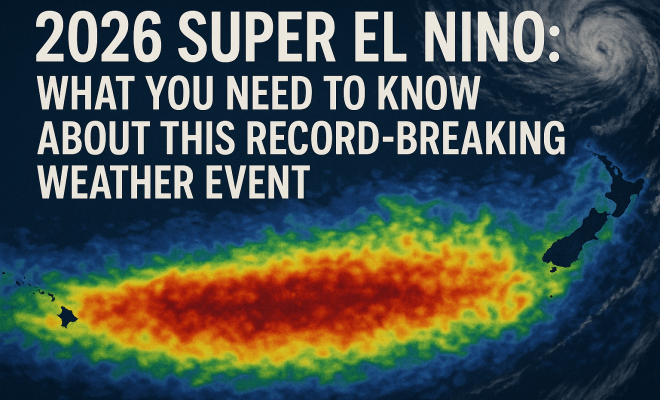
El Niño is part of a larger climate pattern known as the El Niño Southern Oscillation (ENSO). This phenomenon occurs every few years when the surface waters of the Pacific Ocean become unusually warm. While El Niño can lead to a variety of weather changes, a “Super” El Niño refers to those episodes where the temperature anomalies exceed +2 degrees Celsius in the central and eastern Pacific Ocean. This year’s forecast data indicates that the Super El Niño 2026 may indeed exceed those thresholds.
Historically, significant El Niño events have been associated with extreme weather patterns globally, including increased rainfall, severe droughts, and heightened storm activity. The prospect of a Super El Niño heightens concerns, as it not only raises the stakes for weather impacts but also triggers a cascade of effects on ecosystems, agriculture, and water supply systems across various regions.
Current Forecasts and Data Trends
Recent forecasts from the European Centre for Medium-Range Weather Forecasts (ECMWF) have indicated alarming trends concerning the Super El Niño 2026. The forecasting models show that sea surface temperatures in the ENSO region are already demonstrating strong anomalies, with values exceeding +2 degrees. This data is not just a cause for concern—it’s a signal of significant shifts in weather patterns.
As the forecast models evolve, meteorologists are increasingly confident that the upcoming Super El Niño will not only be powerful but could also reshape weather across the United States and parts of Europe. With these predictions, communities are left to ponder how to prepare for the unpredictable weather that lies ahead.
Predicted Weather Patterns Across the United States
One of the most immediate concerns surrounding the Super El Niño 2026 is its predicted impact on weather patterns across the United States. As described in the recent forecast, we can expect above-normal heat in the central and western U.S., which could have far-reaching implications for agriculture, water resources, and public health.
States like California and Texas may experience significantly higher temperatures, increasing the risk of drought and wildfires. Conversely, the southern U.S. is likely to see wetter conditions, which could lead to flooding and other weather-related challenges. This juxtaposition of weather extremes highlights the need for communities to assess their vulnerabilities and adapt accordingly.
Potential Effects on Agriculture
The agricultural sector stands to be significantly impacted by the Super El Niño 2026, particularly given the forecasted temperature and precipitation anomalies. In regions expecting heightened temperatures, crops may suffer from heat stress, affecting yield and quality. Farmers in the Midwest and western U.S. are already preparing for the possibility of water shortages as the expected heat intensifies.
On the flip side, areas that may receive above-average rainfall could face challenges with crop management and soil erosion. If farmers are unprepared for flooding, they could lose substantial investments. The disparity in weather patterns means that farmers across the country will need to adjust their strategies, from planting schedules to irrigation practices, in order to safeguard their livelihoods.
Implications for Natural Disasters
One of the most pressing concerns surrounding the Super El Niño 2026 is the potential for increased natural disasters. The combination of heightened temperatures, excessive rainfall, and shifting weather patterns could lead to a spike in events such as hurricanes, floods, and wildfires. (See: Understanding El Niño and its impact.)
Hurricane season could be particularly affected, with warmer ocean waters acting as fuel for more intense storms. The National Oceanic and Atmospheric Administration (NOAA) has warned that during previous Super El Niño events, the frequency and intensity of hurricanes in the Atlantic have decreased, but this does not apply universally. Other regions may experience heightened hurricane activity, leading to catastrophic consequences for coastal communities.
Global Weather Impacts
The effects of the Super El Niño 2026 will not be confined to the United States. Globally, regions such as Southeast Asia, Australia, and parts of South America could also feel the impacts. Countries that typically rely on predictable weather patterns for agriculture and fishing may experience significant disruptions.
For instance, Australia has been known to experience drought conditions during strong El Niños, and it appears that the 2026 event could exacerbate such conditions, leading to economic and ecological challenges. Similarly, countries in the Horn of Africa often struggle with dry spells during El Niño events, and the Super El Niño 2026 could bring further hardship to these already vulnerable regions.
Community Preparedness and Response
In light of the impending Super El Niño 2026, community preparedness and proactive response plans are more critical than ever. Local governments and organizations must develop strategies to address the potential impacts of extreme weather. This can include everything from enhancing infrastructure to dealing with flooding, to formulating plans for heat advisories and agricultural support.
Community education will be vital in helping individuals understand the risks associated with Super El Niño. From local farmers to urban residents, everyone must be informed about the potential weather shifts and how they can mitigate their risks. Workshops, public forums, and collaboration with meteorological agencies can facilitate spreading this knowledge.
The Role of Climate Change
It’s impossible to discuss the Super El Niño 2026 without considering the influence of climate change. As global temperatures continue to rise, the intensity and frequency of El Niño events are likely to increase as well. Research indicates that climate change may lead to warmer ocean temperatures, contributing to the strength of future El Niño episodes.
This intersection of climate change and El Niño phenomena poses a significant challenge for policymakers and scientists alike. While we can’t prevent a Super El Niño, understanding its connection to climate change can help in developing better forecasting models and response strategies.
The Potential Economic Impact of Super El Niño 2026
The economic implications of Super El Niño 2026 cannot be understated. Disruptions in global markets due to agricultural failures can ripple through economies, affecting food prices and availability. A notable statistic from previous El Niño events showed that the agricultural sector can see losses ranging from $5 billion to $60 billion globally, depending on the severity of the weather conditions.
For instance, during the 1997-1998 El Niño, the global economy faced significant downturns, particularly in developing nations where agriculture played a pivotal role. Countries such as Indonesia and the Philippines saw agricultural losses that contributed to overall economic instability. With the predicted intensity of Super El Niño 2026, we might witness similar or even greater challenges ahead.
Health Consequences Related to Super El Niño 2026
The health implications of Super El Niño 2026 extend beyond immediate weather-related injuries. Increased temperatures and changing precipitation patterns can influence the spread of vector-borne diseases, like malaria and dengue fever, as warmer conditions may expand the habitats of mosquitoes. (See: What is El Niño?.)
Additionally, communities facing flooding can experience outbreaks due to contaminated water supplies. The CDC has reported that after major flooding events, there is often a spike in waterborne illnesses. Therefore, public health initiatives must account for the potential health crises stemming from Super El Niño, ensuring that communities are prepared and resources are allocated.
Comparative Analysis: Super El Niño vs. Standard El Niño Events
It’s essential to distinguish between a standard El Niño and a Super El Niño event to grasp the true scale of Super El Niño 2026’s potential impact. Standard El Niños typically lead to increased rainfall across the southern U.S. and drought in the western Pacific, but the temperature anomalies are usually less intense—around +1.0 to +1.5 degrees Celsius.
When we consider the Super El Niño, we’re looking at anomalies exceeding +2.0 degrees Celsius, which historically has led to much more severe weather patterns. For example, the 1982-1983 Super El Niño caused widespread flooding in California and severe drought conditions in Australia. By examining past data against projections for 2026, we find that Super El Niños are often associated with a greater frequency of extreme weather events, more significant agricultural losses, and heightened economic instability.
Potential Environmental Changes
The environmental impacts of Super El Niño 2026 may also be extensive. Ecosystems are sensitive to temperature changes, and the ensuing weather patterns can lead to alterations in habitats. For instance, coral reefs may suffer from bleaching due to warmer waters, which can devastate marine biodiversity. Fish populations that rely on specific temperature ranges may migrate, affecting local fisheries and livelihoods dependent on those resources.
In tropical regions, altered rainfall patterns could lead to shifts in plant and animal species as they adapt to changing conditions. This could disrupt food chains and ecosystem balance. The loss of biodiversity not only affects the environment but can also impact human populations reliant on these ecosystems for food, medicine, and other resources.
Technological Advances in Weather Forecasting
As we approach Super El Niño 2026, advancements in technology and meteorological science play a crucial role in predicting and understanding these events. Satellite technology and ocean buoys have improved our ability to monitor sea surface temperatures and atmospheric conditions in real-time. These tools provide critical data that can help scientists refine their models and improve forecasts.
Machine learning and artificial intelligence are also being integrated into climate science. These technologies analyze vast datasets and identify patterns that may be invisible to human researchers. Improved forecasting can lead to better preparedness and response strategies for communities facing the impacts of extreme weather events.
FAQs about Super El Niño 2026
What exactly is a Super El Niño?
A Super El Niño is a stronger-than-average El Niño event characterized by sea surface temperature anomalies in the central and eastern Pacific exceeding +2 degrees Celsius. This leads to more extreme weather patterns worldwide.
How often do Super El Niños occur?
Super El Niños are relatively rare; they occur approximately every 10 to 20 years. The last Super El Niño occurred in 2015-2016, and before that, significant events were recorded in 1982-1983 and 1997-1998. (See: Super El Niño 2026 explained.)
What are the primary impacts of a Super El Niño on global weather?
Super El Niños can lead to increased rainfall in some regions, severe droughts in others, and a higher frequency of extreme weather events. They can also disrupt traditional weather patterns, affecting agriculture, ecosystems, and economies worldwide.
How can communities prepare for Super El Niño’s impacts?
Communities can prepare by developing emergency response plans, enhancing infrastructure to withstand extreme weather, and educating residents about potential risks. Collaboration with meteorological agencies can also improve local preparedness efforts.
What role does climate change play in Super El Niño events?
Climate change is believed to influence the intensity and frequency of El Niño events. Warmer ocean temperatures can contribute to the strength of these episodes, meaning that climate change could make future Super El Niños more severe.
How can businesses mitigate risks associated with Super El Niño?
Businesses can mitigate risks by developing contingency plans that address potential supply chain disruptions, fluctuating prices, and changes in consumer behavior caused by severe weather. Investing in disaster recovery plans and insurance can also safeguard against financial losses.
Are there any benefits to Super El Niño events?
While often associated with negative impacts, there can be some benefits. For example, regions that typically face drought may experience beneficial rainfall, improving water supplies. However, these positive effects are often outweighed by the broader negative impacts on agriculture, health, and infrastructure.
Conclusion: The Path Forward
As we prepare for the potential impacts of the Super El Niño 2026, it’s essential to stay informed and proactive. Communities must work together to devise plans that not only address immediate weather-related challenges but also consider the long-term effects of climate change. By fostering resilience, we can better navigate the uncertainties that lie ahead and work toward a sustainable future amid shifting climate patterns.
In the end, the anticipation of Super El Niño 2026 serves as a crucial reminder of the interconnectedness of global weather systems and the pressing need for adaptive strategies in an era of climate uncertainty. Let’s remain vigilant and prepared as we face whatever this event may bring.
“`
Trending Now
Frequently Asked Questions
What is a Super El Niño?
A Super El Niño refers to an extreme phase of the El Niño phenomenon characterized by sea surface temperature anomalies exceeding +2 degrees Celsius in the central and eastern Pacific Ocean. This significant warming can lead to severe weather impacts globally, including increased rainfall, droughts, and heightened storm activity.
How does Super El Niño 2026 differ from previous El Niños?
Super El Niño 2026 is anticipated to be stronger than previous events, with forecasts indicating that sea surface temperatures will exceed +2 degrees Celsius. This heightened intensity raises concerns about its potential to cause unprecedented weather patterns and significant impacts on ecosystems, agriculture, and water supply systems.
What are the effects of Super El Niño on global weather?
Super El Niño events can disrupt global weather patterns, leading to increased rainfall in some regions, severe droughts in others, and intensified storm activity. The 2026 event is expected to have widespread implications, affecting agricultural productivity, water resources, and overall climate stability worldwide.
What does the forecast say about Super El Niño 2026?
Recent forecasts from the European Centre for Medium-Range Weather Forecasts indicate alarming trends for Super El Niño 2026, showing strong sea surface temperature anomalies already exceeding +2 degrees Celsius. These trends signal significant shifts in weather patterns that could have far-reaching consequences.
Can Super El Niño impact agriculture?
Yes, Super El Niño can significantly impact agriculture by altering rainfall patterns and increasing the likelihood of droughts or flooding. These changes can affect crop yields, water supply for irrigation, and overall food security, making it crucial for farmers and policymakers to prepare for potential variations in weather.
What did we miss? Let us know in the comments and join the conversation.