The Tech Edvocate

Top Menu

  • Advertisement
  • Apps
  • Home Page
  • Home Page Five (No Sidebar)
  • Home Page Four
  • Home Page Three
  • Home Page Two
  • Home Tech2
  • Icons [No Sidebar]
  • Left Sidbear Page
  • Lynch Educational Consulting
  • My Account
  • My Speaking Page
  • Newsletter Sign Up Confirmation
  • Newsletter Unsubscription
  • Our Brands
  • Page Example
  • Privacy Policy
  • Protected Content
  • Register
  • Request a Product Review
  • Shop
  • Shortcodes Examples
  • Signup
  • Start Here
    • Governance
    • Careers
    • Contact Us
  • Terms and Conditions
  • The Edvocate
  • The Tech Edvocate Product Guide
  • Topics
  • Write For Us
  • Advertise

Main Menu

  • Start Here
    • Our Brands
    • Governance
      • Lynch Educational Consulting, LLC.
      • Dr. Lynch’s Personal Website
      • Careers
    • Write For Us
    • The Tech Edvocate Product Guide
    • Contact Us
    • Books
    • Edupedia
    • Post a Job
    • The Edvocate Podcast
    • Terms and Conditions
    • Privacy Policy
  • Topics
    • Assistive Technology
    • Child Development Tech
    • Early Childhood & K-12 EdTech
    • EdTech Futures
    • EdTech News
    • EdTech Policy & Reform
    • EdTech Startups & Businesses
    • Higher Education EdTech
    • Online Learning & eLearning
    • Parent & Family Tech
    • Personalized Learning
    • Product Reviews
  • Advertise
  • Tech Edvocate Awards
  • The Edvocate
  • Pedagogue
  • School Ratings

logo

The Tech Edvocate

  • Start Here
    • Our Brands
    • Governance
      • Lynch Educational Consulting, LLC.
      • Dr. Lynch’s Personal Website
        • My Speaking Page
      • Careers
    • Write For Us
    • The Tech Edvocate Product Guide
    • Contact Us
    • Books
    • Edupedia
    • Post a Job
    • The Edvocate Podcast
    • Terms and Conditions
    • Privacy Policy
  • Topics
    • Assistive Technology
    • Child Development Tech
    • Early Childhood & K-12 EdTech
    • EdTech Futures
    • EdTech News
    • EdTech Policy & Reform
    • EdTech Startups & Businesses
    • Higher Education EdTech
    • Online Learning & eLearning
    • Parent & Family Tech
    • Personalized Learning
    • Product Reviews
  • Advertise
  • Tech Edvocate Awards
  • The Edvocate
  • Pedagogue
  • School Ratings
  • Razvoj iskanja in filtrov v vse obsežnejših katalogih kazino iger

  • Cinematic Intros Meet Familiar Reel Based Slot Play

  • Eventyrmotiver giver bonussekvenser retning og sammenhæng

  • Sådan former lydoplevelsen forskellige casinospil

  • Kameraføring former oplevelsen af roulette og blackjack på stream

  • Fra enkle browserbaserede casinospil til digitale formater med flere muligheder

  • Fra oldtidens fortællinger til nutidens spiltemaer

  • Čím sa líšia televízne herné formáty od tradičných živých stolov

  • The Astonishing Truth: Why Micro-Credentials Are Crushing Traditional Degrees in Today’s Job Hunt

  • This One Skill Boosts Graduate Salaries By 94% — And Most Grads Don’t Have It

Digital & Mobile Technology
Home›Digital & Mobile Technology›What are Ones, Twos, and Threes in Animation?

What are Ones, Twos, and Threes in Animation?
By Matthew Lynch
June 12, 2023
0
Spread the love

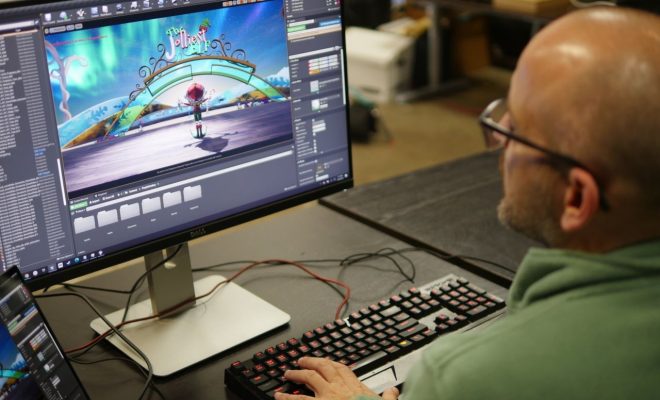
Animation is a medium that has captivated audiences for decades, with its ability to bring stories and characters to life through the use of moving images and sound. Within the animation industry, there are various technical terms used to describe the different levels of detail and complexity used in the creation of animated sequences. Three of these terms are “ones”, “twos”, and “threes”, which refer to the number of frames used per second in an animated sequence.

Ones are the most detailed and complex type of animated sequence, using one frame per second. This means that every single movement in the animation is captured in detail, resulting in a very smooth and fluid motion. The level of detail in ones is high enough to capture even the subtlest nuances of a character’s movement, making it ideal for dramatic or action-packed scenes.

Twos, on the other hand, use two frames per second. This means that every other frame is skipped, resulting in a slightly choppier animation with less detail. While twos don’t have the same level of refinement as ones, they are still considered to be fairly smooth and are often used in slower, more contemplative scenes where the pacing is more relaxed.

Threes are the least detailed and complex type of animated sequence, using three frames per second. This means that two out of every three frames are skipped, resulting in a much choppier animation with less detail than either ones or twos. While threes are not as smooth or refined as the other two types, they do have a certain charm and can be used effectively in comedic, whimsical, or stylized sequences.

In summary, ones, twos, and threes are different types of animated sequences that refer to the number of frames used per second. Ones are the most detailed and complex, using one frame per second. Twos use two frames per second, resulting in a slightly choppier animation with less detail. Threes use three frames per second, resulting in a much choppier animation with even less detail. Each type of sequence has its own strengths and weaknesses, and can be used effectively depending on the needs of the story and the vision of the animator.

Previous Article

How to Delete Any WhatsApp Contact

Next Article

How to See Old Stories on Instagram

Matthew Lynch

Related articles More from author

  • Digital & Mobile Technology

    How to Copy and Paste Text in the Linux Terminal

    June 21, 2023
    By Matthew Lynch
  • Digital & Mobile Technology

    What Are Haptics and How Do They Work?

    June 2, 2023
    By Matthew Lynch
  • Digital & Mobile Technology

    How to Take a Screenshot on iPhone 11

    June 6, 2023
    By Matthew Lynch
  • Digital & Mobile Technology

    How to Change Administrator on Windows 11

    May 20, 2023
    By Matthew Lynch
  • Digital & Mobile Technology

    What Is Realtek Card Reader Software?

    May 10, 2023
    By Matthew Lynch
  • Digital & Mobile Technology

    How to Properly Restart a Router & Modem

    May 30, 2023
    By Matthew Lynch

Search

Login & Registration

  • Log in
  • Entries feed
  • Comments feed
  • WordPress.org

Newsletter

Signup for The Tech Edvocate Newsletter and have the latest in EdTech news and opinion delivered to your email address!

About Us

Since technology is not going anywhere and does more good than harm, adapting is the best course of action. That is where The Tech Edvocate comes in. We plan to cover the PreK-12 and Higher Education EdTech sectors and provide our readers with the latest news and opinion on the subject. From time to time, I will invite other voices to weigh in on important issues in EdTech. We hope to provide a well-rounded, multi-faceted look at the past, present, the future of EdTech in the US and internationally.

We started this journey back in June 2016, and we plan to continue it for many more years to come. I hope that you will join us in this discussion of the past, present and future of EdTech and lend your own insight to the issues that are discussed.

Newsletter

Signup for The Tech Edvocate Newsletter and have the latest in EdTech news and opinion delivered to your email address!

Contact Us

The Tech Edvocate
910 Goddin Street
Richmond, VA 23231
(601) 630-5238
[email protected]

Copyright © 2026 Matthew Lynch. All rights reserved.