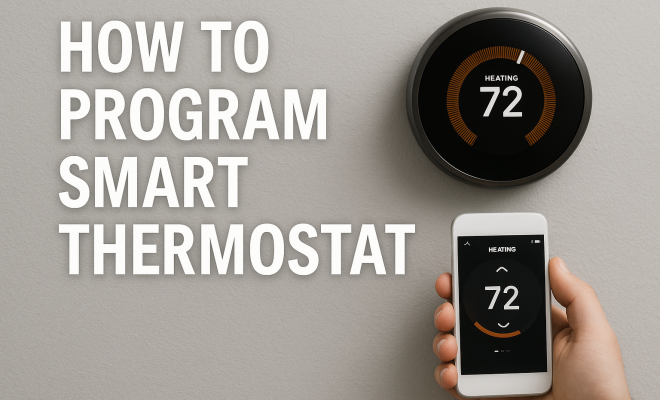
How to program smart thermostat
“`html
1. Understanding Smart Thermostats
Smart thermostats are the modern solution for home heating and cooling management. Unlike traditional thermostats that merely allow you to set a temperature, smart thermostats analyze your habits and preferences to optimize comfort and efficiency. They can learn when you’re home or away, adjust temperatures accordingly, and even integrate with other smart home devices for seamless operation.
One of the key benefits of a smart thermostat is its energy-saving capabilities. According to the U.S. Department of Energy, homeowners can save up to 10-15% on heating and cooling bills by programming their thermostats. With rising energy costs, this is more important than ever, making it crucial to learn how to program a smart thermostat effectively.
2. Choosing the Right Smart Thermostat
When it comes to selecting a smart thermostat, there are various options on the market. Popular models include the Nest Learning Thermostat, ecobee SmartThermostat, and Honeywell Home T9. Each model has unique features, from learning algorithms to remote sensors, and understanding these can help you choose the best one for your needs.
For example, if you have a multi-story home, the ecobee’s remote sensors can help ensure consistent temperatures in different rooms. Alternatively, if you’re tech-savvy and love experimenting, the Nest Learning Thermostat’s learning capabilities may appeal to you. Making an informed choice will set the foundation for how well you can program your smart thermostat to suit your lifestyle.
3. Installing Your Smart Thermostat
Before you can begin to program your smart thermostat, proper installation is key. Most smart thermostats come with detailed installation guides, and many manufacturers offer user-friendly mobile apps to guide you through the setup process. However, if you’re not comfortable with electrical work, hiring a professional might be a better option.
During installation, ensure that your thermostat is placed in an optimal location—ideally, away from direct sunlight or heat sources that could affect its readings. A poorly placed thermostat can lead to inaccurate temperature readings, which can hinder your ability to program it effectively.
4. Connecting to Wi-Fi and Setting Up the App
Once you’ve installed the smart thermostat, the next step is connecting it to your home Wi-Fi network. This is crucial for remote access, allowing you to control your thermostat from anywhere. Most brands provide a mobile application that enhances functionality, offering features like scheduling, energy usage reports, and alerts.
After downloading the app and creating an account, follow the prompts to connect your thermostat to Wi-Fi. This process varies by model, so consult the user manual for specific instructions. Establishing a solid connection ensures you can easily program your smart thermostat at your convenience.
5. Programming Your Smart Thermostat
Now we get to the heart of the matter—programming your smart thermostat. Start by setting a schedule based on your daily routine. For example, you might want the temperature to be cooler when you’re away at work and warmer when you’re at home in the evenings.
Most smart thermostats allow you to set different programs for weekdays and weekends. A common strategy is to lower the temperature during sleeping hours and return it to a comfortable level before you wake up. Utilize the app’s features to create these schedules, adjusting as necessary to find what works best for your household. (See: U.S. Department of Energy on thermostats.)
6. Utilizing Advanced Features
Smart thermostats come with a variety of advanced features that can enhance your heating and cooling experience. For instance, geofencing technology allows the thermostat to track your smartphone’s location, automatically adjusting the temperature when you leave or return home.
Another feature to explore is energy-saving modes, which can provide insights into usage and suggest optimal settings. Some models even offer integration with voice assistants like Amazon Alexa or Google Assistant, allowing you to control the thermostat with simple voice commands. Understanding and leveraging these advanced features is key to maximizing efficiency and comfort.
7. Monitoring and Adjusting Settings
Regularly monitoring your smart thermostat’s performance is essential. The app will typically provide insights into your energy usage, helping you make informed decisions about your settings. If you notice higher energy bills or inconsistent temperatures, it may be time to adjust your programming.
Don’t hesitate to experiment with different settings and schedules until you find what feels right for your home. Remember, the goal is to strike a balance between comfort and energy efficiency. Regular adjustments based on seasonal changes or lifestyle shifts will ensure your smart thermostat continues to work optimally for you.
8. Additional Considerations
Beyond basic programming, consider the environmental impact of your thermostat settings. By reducing energy consumption, not only do you save on utility bills, but you also contribute to a more sustainable future. Many smart thermostats have features to help you track your carbon footprint and provide tips for further reducing energy use.
Incorporating a smart thermostat into your home is just one step towards a more energy-efficient lifestyle. Pairing it with other smart home technologies, like smart blinds or LED lighting, can create a cohesive energy management system that enhances your overall comfort and savings.
9. Cost-Benefit Analysis of Smart Thermostats
The initial investment in a smart thermostat may raise some eyebrows, with prices ranging from $100 to over $300 depending on the model and features. However, it’s important to conduct a cost-benefit analysis to understand the long-term savings. For instance, a smart thermostat could lead to annual savings of about $180 on energy bills, effectively paying for itself within a couple of years.
Furthermore, many utility companies offer rebates or incentives for upgrading to energy-efficient appliances, which can offset the upfront costs. Over time, the combination of energy savings, rebates, and increased home value due to energy efficiency features can make a smart thermostat a wise investment.
10. Real-World Examples of Smart Thermostat Benefits
Numerous case studies have shown that smart thermostats can significantly impact energy savings. For example, a family using the ecobee SmartThermostat reported a decrease of about 23% in their heating and cooling costs within the first year of installation. Similarly, a study published by the American Council for an Energy-Efficient Economy indicated that homes with smart thermostats experienced a noticeable reduction in energy consumption compared to those using traditional models.
Moreover, businesses are also reaping the benefits. A local small business that implemented smart thermostats in their offices reported saving upwards of $500 annually in energy costs, allowing them to redirect those funds toward employee development and other initiatives.
11. Expert Perspectives on Smart Thermostats
Experts in energy efficiency highlight the importance of smart thermostats in modern homes. According to Dr. Susan McNeil, an energy consultant and author, “The role of technology in energy efficiency is pivotal. Smart thermostats not only promote energy savings but also encourage users to be more conscious of their energy consumption habits.” This mindset shift can lead to lasting changes that benefit both the environment and household budgets.
Additionally, many HVAC professionals recommend smart thermostats for their ability to optimize heating and cooling systems. “Smart thermostats can lead to less wear and tear on your HVAC system, extending its lifespan,” states Mark Rodriguez, an HVAC technician. “They also help ensure that your systems run efficiently, which can prevent costly repairs down the line.” (See: CDC on home heating and cooling.)
12. Frequently Asked Questions (FAQ)
What is a smart thermostat?
A smart thermostat is a device that allows you to control your home’s heating and cooling remotely via a smartphone app or web interface. It can learn your habits and adjust settings accordingly for energy efficiency.
How do I know if my HVAC system is compatible with a smart thermostat?
Most smart thermostats are compatible with a wide range of HVAC systems, but it’s essential to check the specifications. You can typically find compatibility information on the manufacturer’s website or consult an HVAC professional.
Can I install a smart thermostat myself?
While many people successfully install smart thermostats by following the provided instructions, if you’re uncomfortable with electrical work, it’s best to hire a professional to ensure proper installation.
Do smart thermostats work with all types of heating and cooling systems?
Smart thermostats usually work with most types of systems, including central heating and cooling, heat pumps, and radiant heating. However, it’s crucial to verify compatibility with specific models.
Will a smart thermostat save me money on my energy bills?
Yes, smart thermostats can lead to significant energy savings, often reported between 10-15% annually, depending on your usage patterns and settings.
What happens if my Wi-Fi goes down?
Most smart thermostats will continue to operate using the last set schedule or temperature. However, remote access features will be unavailable until your Wi-Fi connection is restored.
Can I control my smart thermostat with my voice?
Many smart thermostats are compatible with voice assistants like Amazon Alexa or Google Assistant, allowing for voice control of your heating and cooling settings.
How often should I adjust my smart thermostat settings?
It’s a good idea to regularly monitor your energy usage and adjust settings based on seasonal changes or lifestyle shifts. Many users find that revisiting their thermostat settings every few months helps maintain comfort and efficiency.
13. Final Thoughts on Programming Smart Thermostats
Learning how to program a smart thermostat effectively can greatly enhance your home’s comfort while saving on energy costs. With the right model, installation, and programming techniques, you can create an environment tailored to your lifestyle and preferences. As technology continues to advance, staying informed about your smart thermostat’s features will help you maximize its potential.
14. The Future of Smart Thermostats
As technology continues to evolve, the future of smart thermostats promises even more advancements. With the integration of artificial intelligence (AI) and machine learning, upcoming models are expected to predict usage patterns more accurately and learn user preferences at an accelerated pace. Imagine a thermostat that not only adjusts based on your current habits but also anticipates changes in your routine, such as adjusting for your weekend plans or predicting when you might arrive home based on historical traffic data. (See: New York Times article on smart thermostats.)
Additionally, advancements in eco-friendly technology are making smart thermostats even more appealing. Features such as improved energy reporting, integration with renewable energy sources, and the ability to communicate with other smart home devices will further enhance energy management capabilities. For instance, a smart thermostat might work in tandem with solar panels to optimize energy consumption based on production rates, ensuring you use energy when it’s most cost-effective.
15. Comparing Smart Thermostats: A Side-by-Side
When choosing a smart thermostat, it can be helpful to compare features side-by-side. Here’s a quick comparison of three popular models:
| Feature | Nest Learning Thermostat | ecobee SmartThermostat | Honeywell Home T9 |
|---|---|---|---|
| Learning Capability | Yes | Yes | No |
| Remote Sensors | No | Yes | Yes |
| Voice Control | Yes | Yes | Yes |
| Energy Reports | Yes | Yes | Yes |
| Geofencing | Yes | Yes | Yes |
This comparison illustrates how different models cater to varying needs. The Nest Learning Thermostat excels in its learning capabilities, while the ecobee offers advantages for larger homes with multiple rooms, thanks to its remote sensors. The Honeywell Home T9 provides a balanced option with essential features, making it suitable for those new to smart home technology.
16. Tips for Optimal Use of Your Smart Thermostat
Getting the most out of your smart thermostat involves more than just installation and programming. Here are some tips to consider:
- Regularly Update Your Firmware: Manufacturers often release updates that can improve performance and add features. Make sure your thermostat is always up to date.
- Use Energy Reports: Review monthly energy reports provided by the app to understand your usage patterns. This data can guide you in making adjustments to maximize savings.
- Experiment with Zonal Heating: If you have a larger home, consider using multiple thermostats or smart vents to control the temperature in specific areas for increased comfort and efficiency.
- Schedule Maintenance: Regular maintenance of your HVAC system is crucial for optimal performance. A well-maintained system works better with your smart thermostat, leading to better energy efficiency.
17. Environmental Impact of Smart Thermostats
As more people adopt smart thermostats, the collective impact on energy consumption can be substantial. Transitioning to these devices not only helps individual households save money but also contributes to national efforts to reduce carbon footprints. According to the U.S. Environmental Protection Agency (EPA), if every household in the United States switched to energy-efficient products like smart thermostats, the energy savings would be equivalent to eliminating the emissions from over 17 million cars.
Moreover, smart thermostats help foster a culture of energy awareness in households. As users receive immediate feedback on their consumption, they tend to be more mindful of their overall energy use, leading to behavior changes that further benefit the environment.
18. Conclusion: A Step Toward Smart Living
Adopting a smart thermostat is more than just a home improvement—it’s a step toward a smarter, more efficient lifestyle. By understanding the various aspects of these devices, from installation to programming and monitoring, you can transform your home into an energy-efficient haven. The financial savings, comfort, and environmental benefits make smart thermostats an essential component of modern living. As you explore the features and capabilities of your smart thermostat, you’ll soon discover how much easier it is to enjoy a comfortable home while being kind to the planet.
“`
Trending Now
Frequently Asked Questions
What is a smart thermostat and how does it work?
A smart thermostat is a device that manages home heating and cooling by learning your habits and preferences. It optimizes comfort and efficiency by adjusting temperatures based on whether you're home or away, and can integrate with other smart home devices for seamless operation.
How can I save energy with a smart thermostat?
Smart thermostats can help save energy by automatically adjusting temperatures based on your schedule. According to the U.S. Department of Energy, homeowners can save 10-15% on heating and cooling bills by effectively programming their smart thermostats.
What features should I look for in a smart thermostat?
When choosing a smart thermostat, consider features like learning algorithms, remote sensors, and compatibility with other smart devices. Popular models include the Nest Learning Thermostat and ecobee SmartThermostat, each offering unique functionalities to suit different needs.
Is it easy to install a smart thermostat?
Most smart thermostats come with detailed installation guides and user-friendly mobile apps to assist with setup. However, if you're not comfortable with electrical work, hiring a professional for installation is recommended to ensure proper setup.
Can I program my smart thermostat to adjust temperatures automatically?
Yes, smart thermostats can be programmed to adjust temperatures automatically based on your daily routines and preferences. They learn your habits over time, allowing for optimal comfort and energy efficiency without manual adjustments.
Have you experienced this yourself? We’d love to hear your story in the comments.