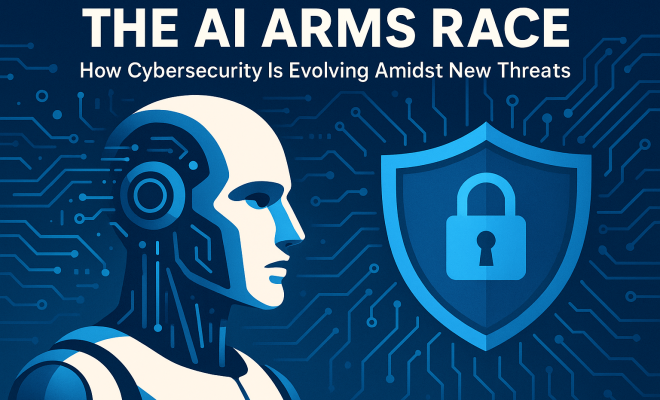
The AI Arms Race: How Cybersecurity Is Evolving Amidst New Threats
“`html
As we stand at the crossroads of technological advancement and security challenges in June 2026, the conversation surrounding cybersecurity has never been more urgent. With the rapid proliferation of artificial intelligence (AI) across various industries, both defenders and cybercriminals are leveraging this powerful technology in unprecedented ways. This cybersecurity newsletter aims to shed light on how AI is reshaping the landscape of digital security, the implications for businesses, and what you can do to stay informed.
The Dual-Edged Sword of AI in Cybersecurity
AI has become an integral tool for cybersecurity professionals, enabling faster threat detection, improved response times, and enhanced analytics. However, as defenders become more adept at using AI, so too do the attackers. This has resulted in a burgeoning arms race where the same technologies that offer protection can also be manipulated for malicious purposes.
For instance, AI-driven algorithms can sift through vast amounts of data to identify patterns and anomalies, which is crucial for spotting potential threats. Yet, the same algorithms can be hijacked by threat actors to automate attacks, making them more efficient and harder to detect. This dual-use nature of AI underscores a critical vulnerability in today’s cybersecurity infrastructure.
How Cybercriminals Are Adapting
Cybercriminals are not just using AI; they are also refining their strategies at an astonishing pace. With the aid of AI, attackers can exploit vulnerabilities faster than ever before. For example, automated tools can scan for weaknesses in systems and applications, launching attacks within hours of a vulnerability being discovered. This rapid-fire approach allows cybercriminals to deploy sophisticated phishing campaigns, ransomware attacks, and other malicious activities.
Moreover, AI enables the creation of deepfake technology that can impersonate individuals or organizations with startling accuracy. Such technology can be utilized in social engineering attacks, where users are tricked into revealing sensitive information or credentials. The use of AI in crafting these deceptive scenarios highlights the urgent need for robust defense mechanisms.
The Impact on Businesses and Users
The implications of this AI-augmented threat landscape are profound, particularly for businesses. Organizations today face the daunting challenge of not only protecting their data but also adapting their cybersecurity strategies to counteract increasingly sophisticated attacks. The financial and reputational damage caused by data breaches can be catastrophic, leading to legal ramifications and loss of customer trust.
In light of this, businesses must prioritize cybersecurity training for their employees, ensuring that staff are well-versed in recognizing potential threats, including AI-driven ones. Establishing a culture of security awareness can be a game-changer in mitigating risk.
Building Resilience with AI
Despite the challenges posed by malicious AI use, organizations can harness the technology to bolster their defenses. AI can enhance threat intelligence by providing insights into emerging vulnerabilities and attack vectors. Companies are increasingly turning to AI for predictive analytics, allowing them to foresee and mitigate threats before they materialize.
Moreover, machine learning models can continuously adapt based on real-time data, improving their ability to discern legitimate traffic from malicious requests. This proactive approach can significantly elevate an organization’s security posture.
The Regulatory Landscape: What to Expect
As the use of AI in cybersecurity evolves, so does the regulatory landscape surrounding it. Governments and regulatory bodies worldwide are beginning to take note of the implications of AI in both cybersecurity and cybercrime. In the United States, current discussions revolve around establishing frameworks that govern the ethical use of AI technology while holding companies accountable for breaches. (See: CDC cybersecurity resources.)
Organizations must stay abreast of these changing regulations, as non-compliance can result in substantial fines and further jeopardize security. By proactively aligning with these regulations, businesses can not only fortify their defenses but also enhance their reputation as responsible technology users.
The Future of Cybersecurity: A Call for Collaboration
Looking ahead, the future of cybersecurity will hinge on collaboration between various stakeholders — businesses, governments, and cybersecurity experts. As cyber threats become more complex and intertwined with AI, a united front is essential for effective defense strategies. Information sharing among businesses and industries can help illuminate patterns in cyberattacks, enabling organizations to strengthen their protective measures.
Initiatives such as cybersecurity information-sharing platforms can facilitate timely communication about threats and vulnerabilities, creating a collective knowledge base that enhances overall security. This collaborative approach is crucial, especially as AI technology continues to evolve.
Staying Informed: The Role of Cybersecurity Newsletters
For both businesses and individuals, staying informed about the latest developments in cybersecurity is critical. Cybersecurity newsletters serve as an invaluable resource, providing insights into recent threats, emerging technologies, and best practices. Subscribing to relevant cybersecurity newsletters not only keeps you updated but also equips you with knowledge that can help mitigate risks.
These newsletters often highlight real-world case studies, showcasing how organizations have successfully navigated cybersecurity challenges. They can also offer actionable advice tailored to various sectors, making them applicable whether you’re in healthcare, finance, or education.
The Importance of Cyber Hygiene
Alongside robust cybersecurity strategies, maintaining good cyber hygiene is essential for both individuals and organizations. Cyber hygiene refers to the practices and steps that users of computers and other devices take to maintain system health and improve online security. This includes regular software updates, using strong passwords, and being cautious with email attachments or links.
For instance, regularly updating software can help patch security vulnerabilities that cybercriminals exploit. According to a study by the Ponemon Institute, organizations that prioritize regular updates and patch management significantly reduce their risk of a successful cyber attack. Additionally, encouraging employees to practice good password management—like using password managers and enabling two-factor authentication—can further enhance security.
Emerging Cybersecurity Technologies
As threats become more sophisticated, new technologies are constantly being developed to combat them. One such technology gaining traction is the use of blockchain for cybersecurity. By leveraging blockchain’s decentralized nature, organizations can enhance data integrity and reduce the risk of data breaches. Blockchain can provide a secure method for storing sensitive information, making it more difficult for cybercriminals to alter or steal data.
Another emerging technology is Zero Trust architecture, which operates on the principle of “never trust, always verify.” In this model, every user and device must be authenticated and authorized before accessing resources, regardless of whether they are inside or outside the network perimeter. This approach mitigates the risk of insider threats and helps protect sensitive data.
Real-World Case Studies
Understanding the practical implications of cybersecurity measures can be greatly enhanced by examining real-world examples. One notable case is the 2021 Colonial Pipeline ransomware attack. This incident, which led to the temporary shutdown of a major fuel pipeline, highlighted the vulnerability of critical infrastructure to cyber threats. The attack was executed using a form of ransomware that encrypted the company’s data, demanding a ransom for its release.
In response, Colonial Pipeline took immediate steps to improve their cybersecurity posture, including investing in better threat detection and incident response capabilities. This case serves as a reminder of the importance of preparedness and the need for continuous improvement in cybersecurity measures. (See: NIST Cybersecurity Framework.)
Cybersecurity Awareness Training
Regular training sessions for employees are critical in fostering a strong security culture within organizations. Cybersecurity awareness training helps staff recognize potential threats and understand how to respond effectively. For instance, phishing simulations can be employed to test employees’ ability to identify suspicious emails. According to KnowBe4, companies that conduct regular phishing training see up to a 90% reduction in successful phishing attacks.
Effective training programs not only focus on technical skills but also address human factors, such as the psychology of social engineering attacks. By understanding the tactics used by cybercriminals, employees become more vigilant and less susceptible to manipulation.
Frequently Asked Questions (FAQ)
What is a cybersecurity newsletter?
A cybersecurity newsletter is a regularly published resource that provides updates on the latest threats, trends, and best practices in the field of cybersecurity. These newsletters help professionals and organizations stay informed about developments that could impact their security posture.
How can I find reliable cybersecurity newsletters?
Look for newsletters published by reputable cybersecurity firms, industry organizations, or educational institutions. Subscribing to newsletters from sources like the SANS Institute, CSO Online, and cybersecurity blogs can provide valuable insights.
Why is staying informed about cybersecurity important?
Cyber threats are constantly evolving, and staying informed helps individuals and organizations adapt their security measures accordingly. Awareness of the latest trends and tactics used by cybercriminals enables proactive defenses against potential attacks.
How often should I read cybersecurity newsletters?
It’s beneficial to read cybersecurity newsletters regularly, ideally on a weekly or monthly basis. This frequency allows you to stay up-to-date with new threats and best practices without becoming overwhelmed with information.
Can cybersecurity newsletters help small businesses?
Absolutely! Cybersecurity newsletters can provide small businesses with tailored advice, case studies, and resources that are relevant to their specific challenges. Staying informed can help them implement effective cybersecurity measures, even with limited resources.
What are some best practices I can learn from cybersecurity newsletters?
Cybersecurity newsletters often cover best practices such as strong password management, regular software updates, employee training, incident response planning, and the importance of data backups. Implementing these practices can significantly enhance your security posture.
Adopting a Proactive Cybersecurity Strategy
Taking a proactive approach to cybersecurity is essential in today’s landscape. This involves not only implementing the latest technologies but also continuously assessing and updating your security measures based on the latest threat intelligence. One effective strategy is to conduct regular penetration testing, which simulates attacks on your systems to identify vulnerabilities before criminals can exploit them. (See: Scientific research on cybersecurity.)
It’s also beneficial to create incident response plans that outline how to react in the event of a cyber incident. These plans should be regularly tested and updated to ensure they remain effective against evolving threats. Involving all relevant stakeholders in the planning process, including IT, legal, and communications teams, can enhance the efficacy of your response strategies. Additionally, consider embracing a risk management framework to evaluate and prioritize potential risks based on their likelihood and impact.
Statistics: The Growing Threat Landscape
Understanding the scale of cybersecurity threats can help emphasize the importance of staying informed. According to Cybersecurity Ventures, global cybercrime damages are expected to reach $10.5 trillion annually by 2025, underscoring the financial implications for businesses worldwide. Furthermore, a report from IBM found that the average cost of a data breach in 2023 is $4.45 million, which highlights the need for robust cybersecurity measures.
The frequency of attacks is also alarming. The Cybersecurity and Infrastructure Security Agency (CISA) reported a 300% increase in ransomware attacks since the onset of the pandemic. This spike demonstrates the urgency for organizations to bolster their defenses and stay ahead of emerging threats. Adding to this, a recent survey by the Ponemon Institute revealed that 70% of organizations experienced at least one cyber attack in the past year, indicating that no sector is immune to cyber threats.
Expert Perspectives on Future Cybersecurity Trends
Industry experts have a wealth of insights regarding the future of cybersecurity. For example, Bruce Schneier, a renowned security technologist, emphasizes the necessity of creating a culture of security awareness within organizations. He suggests that integrating security into the corporate culture is as critical as technological defenses, stating, “Security is not a product, but a process.”
Similarly, experts predict that quantum computing will revolutionize the field of cybersecurity in the coming years. As quantum technology develops, it poses new challenges, particularly in encryption. Experts like Dr. Michele Mosca advocate for the need to develop quantum-resistant encryption methods now to prepare for the inevitable advancements in computing power.
Conclusion: Navigating the AI-Driven Cybersecurity Landscape
As we continue to explore the complexities of cybersecurity in an AI-driven world, one thing is clear: understanding the dual-use nature of this technology is essential for effective defense. By acknowledging both its benefits and risks, businesses and individuals can take proactive steps toward enhancing their cybersecurity measures.
In a landscape that is constantly evolving, staying informed through resources like cybersecurity newsletters can empower you to make well-informed decisions. Ultimately, the key to navigating this new frontier lies in collaboration, awareness, and a commitment to ongoing education.
“`
Trending Now
Frequently Asked Questions
How is AI changing cybersecurity?
AI is transforming cybersecurity by enabling faster threat detection, improved response times, and enhanced analytics. However, it also poses risks as cybercriminals can exploit AI technologies to automate and enhance their attacks, creating a challenging arms race between defenders and attackers.
What are the risks of using AI in cybersecurity?
The primary risks of using AI in cybersecurity include the potential for attackers to hijack AI algorithms for malicious purposes, leading to automated and more efficient cyberattacks. This dual-use nature of AI creates vulnerabilities that defenders must continuously address.
How do cybercriminals use AI?
Cybercriminals leverage AI to exploit system vulnerabilities quickly and efficiently. They use automated tools to scan for weaknesses, launch attacks within hours of discovering vulnerabilities, and deploy sophisticated phishing campaigns and ransomware attacks.
What is the impact of deepfake technology on cybersecurity?
Deepfake technology poses significant cybersecurity threats as it allows cybercriminals to impersonate individuals or organizations with high accuracy. This can lead to more convincing phishing attacks and social engineering tactics, increasing the risk of data breaches.
What can businesses do to enhance cybersecurity against AI threats?
Businesses can enhance their cybersecurity by staying informed about AI developments, investing in advanced threat detection tools, regularly updating security protocols, and training employees to recognize and respond to AI-driven cyber threats.
Agree or disagree? Drop a comment and tell us what you think.