Unmasking AI’s Environmental Footprint: Water, Land & Energy
“`html
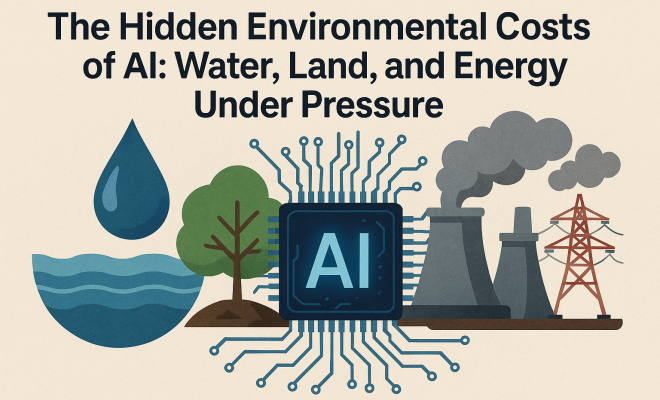
As the world dives deeper into the realms of artificial intelligence (AI), a growing concern is surfacing regarding the AI data centers environmental impact. A recent social media post has caught the attention of many by highlighting the significant strain that these centers place on our natural resources, particularly water and land. This unsettling realization has ignited a new environmental backlash, forcing us to reconsider the true cost of our technological advancements.
The Rising Tide of AI Technology
Artificial intelligence systems are no longer just an abstract concept. They have become ingrained in our daily lives, from recommendation algorithms on streaming services to sophisticated data analysis in various industries. As companies like Google and Microsoft continue to expand their AI capabilities, they also ramp up the construction of data centers to support these technologies. While these advancements often come with the promise of innovation and efficiency, they also harbor an alarming environmental side.
What Exactly Are AI Data Centers?
At their core, AI data centers are vast facilities that house thousands of servers used to process and store immense amounts of data. These centers are essential for machine learning applications, cloud computing, and, of course, AI functionalities. However, to maintain their operations, data centers require significant amounts of electricity, cooling systems to regulate temperature, and other resources that contribute to their environmental footprint.
The Environmental Controversy Unfolds
The recent social media discourse has brought to light the often-overlooked aspects of AI technology. Many consumers perceive AI as an intangible service, not realizing the physical infrastructure—and the environmental costs—that lie beneath the surface. The post emphasizes that while we enjoy the conveniences of AI, we must confront the hidden costs associated with its proliferation.
Water Consumption: A Depleting Resource
One of the most shocking revelations is the sheer amount of water required to cool these data centers. According to various reports, a single data center can consume between 1 to 5 million gallons of water per day. This staggering figure raises serious concerns, particularly in regions already facing water scarcity. The water is essential for cooling the servers; without it, the equipment could easily overheat, leading to system failures.
As AI technology demands grow, so does the pressure on our water resources. This situation is especially dire in areas experiencing drought conditions, where every drop counts. The potential for conflict over water resources increases, challenging local communities and industries that rely on this precious commodity.
Land Use: Expanding Footprints
The physical footprint of AI data centers is another pressing issue. They require vast tracts of land, often leading to the destruction of natural habitats and agricultural land. For example, in the United States, tech giants are constructing sprawling data centers in areas that were once rich in biodiversity. Deforestation and habitat loss accompany these developments, posing a threat to local ecosystems and wildlife.
Furthermore, as these centers proliferate, they contribute to urban sprawl, leading to increased infrastructure demands and further environmental degradation. This expansion raises a critical question: is the convenience of AI worth the ecological costs?
Energy Demand: The Power Struggle
The energy consumption of AI data centers cannot be overlooked. These facilities are power-hungry; they account for approximately 2% of global electricity demand. As AI adoption continues to rise, projections indicate that this figure could increase significantly, placing additional strain on energy resources.
This energy demand often translates to increased fossil fuel consumption, counteracting global efforts to transition to renewable energy solutions. While many tech companies are pledging to shift toward renewable energy sources, the reality is that the current infrastructure is heavily reliant on non-renewable energy. Until substantial changes are made, the environmental impact remains a pressing concern.
Public Awareness and Response
The social media post that sparked this conversation is more than just a viral moment; it reflects a growing public awareness about the implications of AI technology. There’s a palpable shift in consumer sentiment as people begin to question the sustainability of the tech they use daily. This trend is driven by a desire for transparency and accountability, urging major corporations to evaluate their environmental practices. (See: AI data centers and environmental impact.)
Activism around the environmental impact of technology is becoming increasingly influential. Grassroots movements are advocating for regulations that hold companies accountable for their resource usage and environmental footprint. This growing pressure from the public is essential for fostering change within the industry.
Corporate Responsibility: The Role of Tech Giants
Major technology companies are under scrutiny as consumers demand more responsible practices. Google and Microsoft, among others, have made commitments to sustainability, pledging to power their data centers with renewable energy. While these steps are commendable, critics argue that more needs to be done.
Transparency in operations is crucial. Companies must provide clear data on their water and energy consumption, land use, and the overall environmental impact of their operations. By doing so, they can build trust with consumers and demonstrate a genuine commitment to sustainability.
Innovative Solutions for a Greener Future
While the challenges are significant, there are also opportunities for innovation. Tech companies are exploring new technologies to reduce water usage and improve energy efficiency. For example, companies are investing in advanced cooling systems that minimize water consumption or adopting AI itself to optimize power usage in real-time.
Similarly, there’s potential in repurposing abandoned buildings for data centers, thereby alleviating some of the land use pressures. By converting these spaces, companies can contribute to urban renewal while minimizing their environmental impact.
The Need for Regulatory Frameworks
The government also plays a crucial role in addressing the AI data centers environmental impact. Policymakers must establish regulations that govern the construction and operation of data centers, ensuring that they adhere to sustainability guidelines. This may include water usage limits, energy efficiency standards, and land use regulations.
Furthermore, incentives for companies that adopt sustainable practices can facilitate a transition toward greener operations. Encouraging innovation through grants or tax breaks can pave the way for new solutions that mitigate environmental harm.
The Economic Implications of AI Data Centers
AI data centers not only impact the environment but also have significant economic implications. The construction and operation of these facilities create jobs and stimulate economic activity. However, as the demand for AI grows, the costs associated with maintaining these centers can rise, leading to potential trade-offs.
For instance, the estimated cost of building a new data center can range between $5 to $10 billion, depending on location and size. This investment can yield substantial returns; however, it also poses questions about resource allocation. Should funds be directed toward expanding these energy-intensive facilities, or should they be invested in sustainable practices and renewable energy sources?
In regions where data centers are constructed, there may be local economic benefits, such as job creation. However, the long-term sustainability of these jobs is a concern, especially if the facilities are built on resources that may soon be depleted or if they contribute to environmental degradation that affects local communities.
Case Studies: Innovations in Sustainable Data Centers
Some companies are leading the way in creating sustainable data centers that minimize their environmental impact. Below are a few noteworthy examples:
- Google’s Data Centers: Google has committed to operating entirely on renewable energy. Their data centers use advanced cooling techniques, such as using seawater in Finland, which significantly reduces their water and energy consumption.
- Microsoft’s Project Natick: This project involves underwater data centers that leverage the natural cooling of ocean water. Preliminary results indicate that these submerged facilities are more efficient and have a lower environmental impact than traditional land-based data centers.
- Facebook’s Luleå Data Center: Located in Sweden, this facility uses outside air for cooling, taking advantage of the cold climate. Facebook has also invested in renewable energy projects in the region to support its energy needs.
Public Perception and the Future of AI Data Centers
The environmental concerns surrounding AI data centers are increasingly influencing public perception. Consumers are becoming more educated about the implications of technology on the planet. A recent survey indicated that 70% of people would consider switching to a tech company that prioritizes sustainability over one that does not.
This growing awareness creates an opportunity for tech companies to differentiate themselves by investing in sustainable practices. By being proactive, companies can not only align with consumer values but also prepare for potential regulatory changes that may emerge in response to the environmental challenges posed by data centers. (See: Environmental health concerns.)
FAQs About AI Data Centers Environmental Impact
What are the primary environmental concerns associated with AI data centers?
The main concerns include high water consumption for cooling, extensive land use, and substantial energy demand, which often relies on non-renewable resources.
What measures can be taken to mitigate the environmental impact of data centers?
Companies can invest in renewable energy, improve cooling efficiency, opt for sustainable building practices, and explore the use of AI to optimize resource consumption.
How does the energy consumption of AI data centers compare to other industries?
AI data centers account for about 2% of global electricity demand, which is significant compared to other sectors such as agriculture and manufacturing. As AI usage increases, their share of energy consumption could rise even further.
Are there any regulations currently in place for data centers?
Regulations vary by country and region. Some places have strict guidelines regarding energy efficiency and resource consumption, while others have yet to establish any comprehensive policies.
What role can consumers play in reducing the environmental impact of AI data centers?
Consumers can support tech companies that prioritize sustainability and advocate for more transparency in operations. By choosing to use services from environmentally responsible companies, they can influence corporate practices.
Future Trends: The Path Ahead for AI Data Centers
As we look ahead, the landscape of AI data centers is set to evolve dramatically. Emerging technologies like edge computing, where data processing is done closer to the source of data generation, promise to reduce the strain on central data centers by distributing the workload more evenly. This shift could significantly alleviate some of the energy and water consumption challenges currently faced by traditional data centers.
Additionally, the integration of renewable energy sources, such as solar and wind, is becoming increasingly feasible. Companies are now experimenting with hybrid models that combine traditional energy sources with renewables, potentially creating a more resilient and environmentally-friendly energy model.
Circular economy principles are also starting to gain traction in the data center space. More companies are looking at ways to reuse and recycle electronic waste. This can include repurposing old servers, which helps minimize landfill waste and reduces the need for new resources.
Innovative Cooling Solutions
Cooling technology is at the forefront of reducing the environmental impact of AI data centers. Traditionally, data centers relied on air conditioning systems that consume large amounts of water and energy. However, innovative solutions are emerging, such as liquid cooling, which uses water or other fluids to transfer heat away from servers much more efficiently than conventional air cooling.
Some companies are even experimenting with using ambient air for cooling in cooler climates, which drastically reduces both water consumption and energy use. For example, Microsoft’s underwater data centers have shown promise in leveraging the cold temperatures of ocean water for cooling without the need for additional energy-consuming equipment. (See: Nature article on AI and energy consumption.)
The Role of AI in Sustainability
Interestingly, AI technology itself can play a significant role in addressing its environmental impact. AI algorithms can optimize energy usage within data centers, predicting demand and adjusting power consumption in real-time. By analyzing patterns in data usage, AI can help facilities run more efficiently, reducing their overall energy footprint.
Furthermore, AI can assist in predictive maintenance, which can prevent system failures and reduce waste. By ensuring that equipment runs at optimal efficiency, AI can help prolong the lifespan of hardware, reducing the need for constant replacements and the associated environmental costs.
The Global Perspective: International Efforts
On a global scale, the conversation about AI data centers and their environmental impact is gaining momentum. Countries are beginning to implement stricter regulations aimed at reducing greenhouse gas emissions from tech companies. For example, the European Union has proposed comprehensive regulations requiring companies to disclose their environmental impact, pushing for greater accountability.
International collaborations, such as those between countries and tech organizations, are also being established to share best practices in sustainable technology. By working together, nations can leverage collective knowledge and resources to create more effective solutions to address the environmental challenges posed by data centers.
Community Engagement and Advocacy
Finally, community engagement plays a crucial role in addressing the environmental impact of AI data centers. Local communities often bear the brunt of the negative consequences associated with data centers, such as increased traffic and resource consumption. Advocacy groups are forming to ensure that local voices are heard in the planning and operation of these facilities.
By fostering open communication between tech companies and communities, it’s possible to negotiate terms that prioritize environmental sustainability and resource conservation. Engaging with stakeholders can lead to innovative solutions that benefit both the tech industry and the surrounding communities.
It’s Time to Take Action
As consumers, we have the power to drive change. By supporting companies that prioritize sustainability and holding those that don’t accountable, we can influence industry practices. The conversation around the environmental impact of AI data centers is just beginning, and it’s essential that we continue to engage in it.
As technology continues to evolve, it’s crucial that we balance innovation with environmental stewardship. The hidden costs of our digital conveniences shouldn’t be overlooked. Only by recognizing these costs can we make informed choices that benefit both society and the planet.
“`
Trending Now
- Unlocking Local SEO for Restaurants: How…
- our breakdown of the ultimate showdown: profound vs writesonic for your ai visibility needs
- Why Tracking Trending Economy Topics Is Critical for Your Financial Future
- our breakdown of ai cybercrime: the shift from spam to targeted attacks is more alarming than you think
Frequently Asked Questions
What are the environmental impacts of AI data centers?
AI data centers significantly impact the environment by consuming vast amounts of electricity and water. They require extensive cooling systems, leading to increased energy demand and water usage, which can strain local resources and contribute to ecological degradation.
How much water do AI data centers use?
AI data centers use substantial quantities of water primarily for cooling purposes. This high water consumption can lead to resource depletion in regions where these centers are located, raising concerns about their sustainability and environmental footprint.
Why are AI technologies considered environmentally harmful?
AI technologies are deemed environmentally harmful due to the extensive resources required for their data centers, including electricity, water, and land. The infrastructure needed to support AI operations contributes to carbon emissions and resource depletion.
What resources do AI data centers consume?
AI data centers consume large amounts of electricity for server operation and cooling, along with significant water resources for temperature regulation. These demands put pressure on local environments and can lead to sustainability challenges.
Are there alternatives to traditional AI data centers?
Yes, alternatives such as edge computing and improved energy-efficient technologies are being explored to reduce the environmental impact of AI data centers. These methods aim to minimize resource consumption and enhance sustainability in AI operations.
What’s your take on this? Share your thoughts in the comments below — we read every one.