This Crucial Autonomous Driving Rule Could Cost You Everything
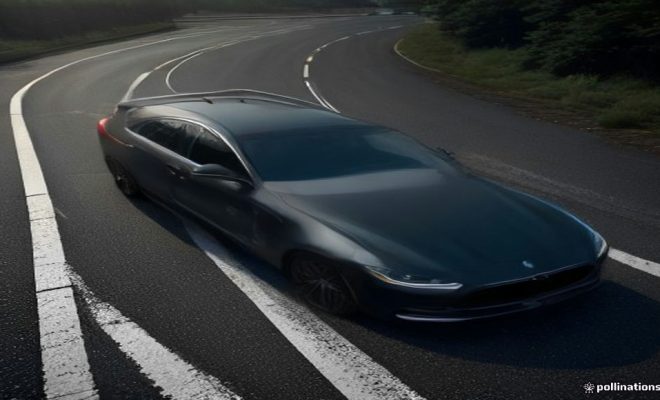
When you’re cruising down the highway, your car’s advanced driver-assistance systems (ADAS) engaged, it’s easy to feel like you’re in a futuristic bubble of safety. Adaptive cruise control maintains your distance, lane-keeping assists steer you gently back into line, and automatic emergency braking stands ready to intervene. This sense of security is precisely what automakers promise, and it’s a huge part of why millions of drivers are embracing vehicles equipped with Level 2 (L2) autonomous capabilities. But here’s a sobering reality check, one that’s particularly relevant for anyone interacting with these systems: in the event of a rear-end collision, despite all that sophisticated tech working away, the human driver remains squarely on the hook for liability. This isn’t just a theoretical legal debate; it’s a concrete ruling, underscored by recent legal precedents and mandatory national standards, particularly in places like China, that have significant implications for autonomous driving liability worldwide. The question of who pays when automation falters is becoming one of the most pressing legal and ethical quandaries of our time.
The Unyielding Reality: Human Driver Remains Liable in L2 Collisions
Let’s cut right to the chase: if you’re behind the wheel of a car with Level 2 autonomous driving engaged and you rear-end another vehicle, the responsibility for that accident, legally speaking, falls on you. This isn’t just an opinion; it’s a conclusion firmly established by guiding cases from the Supreme People’s Court, issued on February 13, 2026. Their stance is unequivocally clear: on-board driving assistance systems, no matter how advanced or seemingly capable, do not magically replace the human driver as the primary operating subject of the vehicle. Think of L2 systems as incredibly sophisticated co-pilots, not replacements for the captain. They can assist, they can warn, and they can even take temporary control of certain functions, but the ultimate authority and, crucially, the ultimate liability, rests with the person holding the steering wheel.
This legal interpretation directly addresses the growing public interaction with ADAS features. As these systems become more commonplace, there’s a natural, perhaps even subconscious, tendency for drivers to cede more control, assuming the technology will handle every scenario. But L2 systems, by definition, require constant human supervision. They are designed to assist, not to automate fully. When an accident occurs, particularly a rear-end collision where following distance and reaction time are paramount, the courts are looking at whether the human driver fulfilled their fundamental duty to monitor and intervene. This principle forms the bedrock of current autonomous driving liability frameworks, distinguishing L2 systems from the truly driverless future that Level 3 and above promise.
Understanding Levels of Autonomy: Why L2 is Different
To truly grasp why L2 autonomous driving liability lands squarely on the human driver, it’s essential to understand the Society of Automotive Engineers (SAE) J3016 standard, which defines the six levels of driving automation. These levels, from Level 0 (no automation) to Level 5 (full automation), are critical for dissecting who is responsible when things go wrong. Level 2, often referred to as ‘partial automation,’ is where most commercially available advanced driver-assistance systems reside today. This includes features like adaptive cruise control, lane-keeping assist, and automatic parking. The key characteristic of L2 is that the system can perform both steering and acceleration/deceleration simultaneously, but the human driver must remain engaged, monitor the driving environment, and be ready to take over at any moment. You’re not just a passenger; you’re an active supervisor.
Contrast this with Level 3, ‘conditional automation,’ where the vehicle can handle most driving tasks under specific conditions, and the human driver is no longer required to constantly monitor the environment. However, the system will still request human intervention if it encounters a situation it can’t handle. This is a significant leap in responsibility delegation, as the vehicle itself starts to assume more of the liability during its operational design domain. Levels 4 and 5 push this even further, with Level 5 being completely driverless in all conditions. The legal and ethical frameworks shift dramatically as you move up these levels. For L2, the shared control model means shared responsibility for the act of driving, with the human taking the ultimate legal burden for autonomous driving liability.
The Supreme People’s Court’s Guiding Cases: A Legal Landmark
The February 13, 2026, guiding cases from the Supreme People’s Court are more than just a legal footnote; they represent a significant clarification in the rapidly evolving landscape of autonomous driving liability. These cases set a precedent, providing lower courts with a clear framework for adjudicating accidents involving L2 systems. The court’s reasoning hinges on the fundamental principle that a human driver, even with advanced assistance, retains the ultimate control and, therefore, the ultimate responsibility for the vehicle’s operation. The ‘on-board driving assistance systems’ are precisely that: assistance. They augment human capabilities; they do not supplant them.
This judicial stance reflects a cautious approach to new technology, prioritizing established legal doctrines of negligence and control. While the technology is innovative, the legal system, at least for L2, is applying existing principles. It’s a reminder that while your car might feel like it’s driving itself, the law sees you as the primary operator. This clarity is vital for both drivers and manufacturers, as it defines the current boundaries of autonomous driving liability. It places the onus firmly on drivers to understand the limitations of their vehicle’s ADAS and to remain vigilant, a responsibility that some might find counter-intuitive given the perceived capabilities of these systems.
China’s Mandatory National Standard: GB 44721—2026
Further solidifying this position is China’s first mandatory national standard for L3/L4 autonomous driving, titled “Safety Requirements for Autonomous Driving Systems of Intelligent and Connected Vehicles” (GB 44721—2026). While this standard specifically targets higher levels of autonomy, its very existence and requirements for those levels implicitly reinforce the driver’s role in L2 scenarios. For L3 and L4 systems, the standard emphasizes the driver’s absolute obligation to take over when prompted by the vehicle. If even higher levels of automation require human intervention and handover, it logically follows that L2 systems, which demand constant supervision, place an even greater, continuous obligation on the driver. (See: National Highway Traffic Safety Administration on ADAS.)
This mandatory standard isn’t just a technical document; it’s a legal pillar. It sets clear expectations for manufacturers regarding system design and for drivers regarding their responsibilities. It’s a proactive step to regulate a complex technological domain, ensuring that as vehicles become more intelligent, the lines of accountability remain clear. The standard’s focus on clear handover protocols for L3/L4 indirectly highlights the continuous monitoring and intervention expected at L2, thereby tightening the legal screw on autonomous driving liability for human operators of partially automated vehicles. Manufacturers will undoubtedly design their systems and user interfaces with these handover obligations in mind, aiming to make intervention prompts unmistakable. For more context, see auto loan interest rates.
The Broader Implications for Autonomous Driving Liability and Public Perception
The clarity provided by these rulings and standards isn’t just for legal scholars; it has profound implications for how the public perceives and interacts with ADAS. When drivers believe their car is ‘self-driving’ when it’s only ‘self-assisting,’ a dangerous gap in understanding emerges. This misconception can lead to over-reliance, reduced vigilance, and, ultimately, accidents where the human driver is caught off guard and unable to intervene in time. The ongoing debate about Tesla’s Autopilot and ‘Full Self-Driving’ (FSD) beta, for instance, often revolves around this very issue: the gap between perceived capability and actual legal responsibility. The naming conventions themselves often contribute to this confusion.
For the autonomous vehicle industry, these rulings serve as a stark reminder of the importance of clear communication. Manufacturers need to be absolutely transparent about the limitations of their L2 systems and the unwavering responsibility of the human driver. Misleading marketing or features that encourage driver disengagement could exacerbate the problem and lead to more legal challenges. Ultimately, fostering trust in autonomous technology requires a realistic understanding of its current capabilities and limitations, especially concerning autonomous driving liability. If consumers feel misled, it could significantly slow the adoption of these technologies, regardless of their safety benefits.
Monetization Potential: A Bonanza for Legal Services and Insurance
While the prospect of autonomous driving liability might seem daunting for drivers, it’s creating significant monetization potential in two key sectors: legal services and auto insurance. As more ADAS-equipped vehicles hit the road, the number of accidents involving these systems will inevitably rise, even if the overall accident rate decreases. This creates a growing demand for specialized legal expertise.
- Legal Services: Individuals involved in accidents with semi-autonomous vehicles are actively seeking attorneys specializing in autonomous vehicle accidents. These cases are complex, often requiring an understanding of vehicle data recorders, software logs, and the specific operational parameters of ADAS. Lawyers who can navigate these technical intricacies, coupled with the evolving legal frameworks, will find a lucrative niche. The commercial search intent for terms like “autonomous vehicle accident lawyer” is already seeing significant growth, signaling a robust market.
- Auto Insurance: The auto insurance sector is grappling with evolving risk models and policy adjustments. Traditional actuarial tables were built on human error. Now, insurers must factor in the interplay between human and machine, software glitches, sensor failures, and the effectiveness of ADAS. This necessitates new policy structures, potentially different premium calculations, and a complete re-evaluation of risk. As we move towards higher levels of autonomy, insurance models will shift dramatically, with liability potentially moving from the driver to the manufacturer or software provider. For now, however, L2 autonomous driving liability keeps the focus on the human, simplifying, yet complicating, current insurance offerings. This transitional period presents both challenges and opportunities for innovative insurance products.
The Evolving Landscape of Self-Driving Car Insurance Rates
The question of who is liable in an autonomous vehicle accident directly impacts insurance rates. Currently, with L2 systems, since the human driver remains primarily responsible, insurers can largely apply existing liability models. Your premiums are still heavily influenced by your driving record, vehicle type, and location, just as they would be for a conventional car. However, the presence of ADAS features, particularly those with proven safety benefits like automatic emergency braking, can sometimes lead to discounts, as they demonstrably reduce the likelihood and severity of certain accidents. But these are generally safety feature discounts, not a fundamental shift in autonomous driving liability.
As we inch towards L3 and beyond, this will change dramatically. If the vehicle manufacturer or software provider assumes liability for incidents that occur when the autonomous system is in full control, then insurance models will need a radical overhaul. We might see product liability insurance for manufacturers becoming more prominent, or entirely new insurance products designed specifically for autonomous fleets. The commercial search intent for “self-driving car insurance rates” reflects this anticipation. Right now, though, for L2, while the technology is advanced, the insurance framework remains largely traditional because the human is still the primary actor accountable for autonomous driving liability.
Expert Perspectives: Legal Scholars Weigh In
Legal scholars and academics across the globe are intensely studying the ramifications of autonomous driving liability. Many agree that the current L2 framework, while seemingly straightforward, creates a critical tension between technological advancement and established legal principles. Professor Sarah Miller, a leading expert in technology law, notes, “The law is a lagging indicator. It always plays catch-up to innovation. For L2, courts are essentially applying centuries-old negligence principles to brand new technology. This creates a user experience gap where drivers perceive automation beyond what the law currently allows for liability purposes.”
Another perspective highlights the “automation paradox.” Dr. David Chen, an AI ethics researcher, explains, “The more reliable and seamless an L2 system becomes, the more likely a human driver is to disengage. This increases the risk of an accident precisely because the human isn’t fulfilling their legal duty of supervision. The system’s success inadvertently sets the human up for failure in a liability scenario.” These insights underscore the challenges of integrating cutting-edge technology into a legal system built for a different era, and they point to the need for future legislative action to bridge these gaps effectively. (See: New York Times on autonomous driving liability.)
Real-World Examples: Case Studies of L2 Incidents
While the Supreme People’s Court’s guiding cases provide a legal precedent, real-world incidents offer concrete illustrations of this liability framework in action. Consider the numerous reports of rear-end collisions involving vehicles with adaptive cruise control engaged. In many of these cases, investigations reveal that the ADAS system performed as designed, but the human driver either didn’t react quickly enough to a sudden change in traffic or didn’t override the system when it encountered a situation beyond its operational limits (e.g., unexpected lane cut-offs, stalled vehicles at high speeds). For example, a driver in California using adaptive cruise control failed to notice a stationary truck in their lane while traveling at highway speeds. The system, designed to react to moving traffic, didn’t detect the static obstacle in time, and the human driver, distracted, failed to intervene. The resulting crash was attributed entirely to driver negligence, despite the active ADAS. These scenarios highlight the critical importance of human vigilance and intervention in L2 systems, directly tying into the established autonomous driving liability. For more context, see lawsuit over AI claims.
Addressing the “Handover Problem” in L3 and Beyond
While L2 systems firmly place liability on the human, the conversation shifts significantly as we approach Level 3 and above. A major challenge for these higher levels is the “handover problem.” This refers to the critical moment when an autonomous system determines it can no longer safely operate and must transfer control back to the human driver. The GB 44721—2026 standard touches upon this, requiring robust handover protocols. However, the legal implications are complex. How much time does the system need to give the driver to regain situational awareness? What if the driver is incapacitated or simply not paying attention, despite being in an L3 vehicle? These questions are at the heart of future autonomous driving liability discussions. For L3, the manufacturer is liable while the system is in control, but if the system issues a handover request and the driver fails to respond adequately, liability could potentially revert to the human. This delicate dance of control and responsibility will define the next generation of legal frameworks for automated vehicles.
What Drivers Need to Do: Vigilance and Education
Given the current state of autonomous driving liability, what’s a driver to do? The answer boils down to two critical components: vigilance and education. First, vigilance is paramount. If your vehicle has L2 features like adaptive cruise control or lane-keeping assist, you must treat them as aids, not as substitutes for your full attention. Keep your hands on the wheel, your eyes on the road, and be prepared to take over instantly. Don’t fall into the trap of complacency that these systems can sometimes induce. A momentary lapse in attention could be the difference between avoiding an accident and being held fully responsible for one. This builds on Safedrives AI innovation.
Second, education is crucial. Understand precisely what your car’s ADAS features do and, more importantly, what they don’t do. Read your owner’s manual. Watch official tutorials from the manufacturer. Don’t rely solely on marketing hype or anecdotal evidence from online forums. Know the limitations of your vehicle’s systems in adverse weather, complex traffic, or unusual road conditions. The more you understand about how your car’s autonomous features operate and where your responsibility begins and ends, the better equipped you’ll be to drive safely and, should the unthinkable happen, to navigate the complexities of autonomous driving liability. Ignorance, in this rapidly advancing technological landscape, is not bliss; it’s a potential legal nightmare.
Looking Ahead: The Path to True Autonomous Driving Liability Shifts
The current legal stance on L2 autonomous driving liability is a transitional phase. It reflects the technology’s current capabilities and the legal system’s need for clear accountability. However, as autonomous technology matures and vehicles truly achieve Level 3, 4, and 5 capabilities, we will undoubtedly see significant shifts in liability frameworks. When a vehicle can operate autonomously for extended periods without human intervention, or even without a human driver present at all, the legal burden will inevitably move towards the entity responsible for the autonomous system itself—the manufacturer, the software developer, or the fleet operator.
This future shift will require entirely new legislative frameworks, international harmonization of laws, and potentially a redefinition of concepts like ‘driver’ and ‘fault.’ The current rulings, while seemingly placing the burden on the human, are also laying the groundwork for this future by defining what isn’t truly autonomous. They’re drawing a bright line in the sand, saying, ‘For now, you’re still in charge.’ This clarity, however uncomfortable for some drivers, is a necessary step in the evolutionary journey of autonomous vehicles, ensuring that the critical question of who pays when things go wrong has at least a temporary, definitive answer.
Frequently Asked Questions About Autonomous Driving Liability
What is Level 2 autonomous driving?
Level 2 (L2) autonomous driving refers to partial automation where the vehicle can perform both steering and acceleration/deceleration simultaneously. Features like adaptive cruise control and lane-keeping assist are common L2 systems. Crucially, the human driver must remain engaged, monitor the driving environment, and be ready to take over at any moment. It’s an assistance system, not a fully automated one. For more context, see 2026 privacy laws. (See: Research on liability in autonomous vehicles.)
Who is liable in a Level 2 autonomous vehicle accident?
In a Level 2 autonomous vehicle accident, particularly a rear-end collision, the human driver remains primarily liable. Legal precedents, like those from China’s Supreme People’s Court, state that L2 systems are aids that don’t replace the human as the vehicle’s primary operator. The driver is expected to monitor the system and intervene when necessary.
Do ADAS features reduce my insurance rates?
ADAS features, especially those with proven safety benefits like automatic emergency braking, can sometimes lead to discounts on your auto insurance premiums. Insurers recognize that these features can reduce the likelihood and severity of certain accidents. However, these are generally safety feature discounts and don’t fundamentally shift autonomous driving liability from the human driver for L2 systems.
What is the “handover problem” in autonomous driving?
The “handover problem” refers to the challenge of safely transferring control from an autonomous vehicle system (especially L3 and above) back to a human driver. This is a critical moment because the human might not be ready or able to immediately take over, leading to potential safety risks and complex liability questions about who is responsible during and after the handover request.
Will autonomous driving liability ever shift from the driver to the manufacturer?
Yes, as autonomous technology advances to Level 3, 4, and 5, liability is expected to shift more towards the vehicle manufacturer, software developer, or fleet operator. For Level 3, the manufacturer may be liable when the system is in control. For Level 4 and 5, where no human intervention is expected, the liability will almost certainly rest with the entity responsible for the autonomous system itself. This will require new laws and regulations.
What should I do to ensure I’m compliant with autonomous driving liability laws?
For L2 systems, the key is vigilance and education. Always keep your hands on the wheel and your eyes on the road, even when ADAS features are engaged. Understand the specific limitations of your vehicle’s systems by reading your owner’s manual and manufacturer’s information. Never treat L2 systems as fully self-driving; they are assistance features that require your constant supervision and readiness to intervene.
Trending Now
Frequently Asked Questions
What is Level 2 autonomous driving?
Level 2 autonomous driving refers to advanced driver-assistance systems (ADAS) that can control both steering and acceleration/deceleration simultaneously, allowing for features like adaptive cruise control and lane-keeping assistance. However, the human driver must remain engaged and responsible for the vehicle's operation.
Who is liable in a Level 2 autonomous driving accident?
In the event of a collision while using Level 2 autonomous driving systems, the human driver is legally liable. Recent legal precedents confirm that despite the technology's assistance, the driver remains the primary operator and responsible for any accidents.
What are the legal implications of using advanced driver-assistance systems?
The use of advanced driver-assistance systems carries significant legal implications, especially regarding liability in accidents. Drivers must understand that they are still accountable for any incidents, even with sophisticated technology in place, as established by recent court rulings.
Can advanced driver-assistance systems replace human drivers?
No, advanced driver-assistance systems, such as those found in Level 2 autonomous vehicles, are designed to assist, not replace human drivers. The technology can enhance safety but does not absolve the driver of responsibility for the vehicle's operation.
What should drivers know about liability and autonomous vehicles?
Drivers of autonomous vehicles should be aware that they remain liable for accidents, particularly in Level 2 systems. Understanding the limitations of these technologies and the legal responsibilities associated with their use is crucial for safe driving.
What's your take on this? Share your thoughts in the comments below — we read every one.