ChatGPT’s Cognitive Impact on Higher Education: 2022-2025 Review
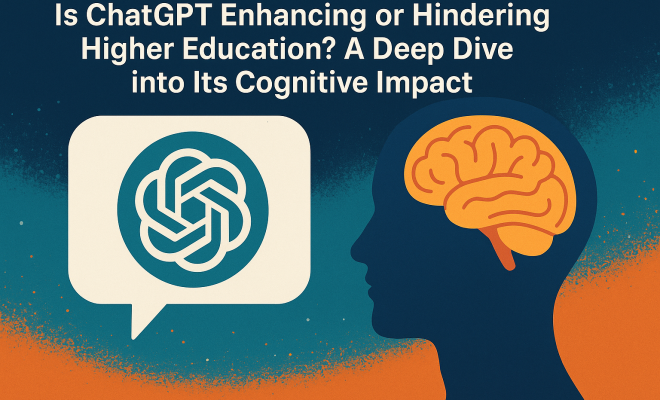
The rise of AI technologies like ChatGPT has sparked a heated debate in higher education. Are these tools enhancing students’ cognitive skills, or are they inadvertently undermining critical and creative thinking? A systematic review synthesizing 67 empirical studies conducted between 2022 and 2025 sheds light on this pressing issue. This article takes a closer look at the findings, helping you understand how ChatGPT is reshaping learning and assessment in universities.
The Duality of AI in Education
Artificial intelligence has become a double-edged sword in the educational landscape. On one hand, tools like ChatGPT can facilitate learning by providing instant access to information, enabling personalized feedback, and enhancing collaborative learning experiences. On the other, there’s the potential risk of dependency on these technologies, which might weaken essential cognitive skills.
The studies reviewed highlight a nuanced relationship between AI usage and student performance. For example, while some students reported increased productivity and improved understanding of complex topics, others struggled to think critically about the material presented to them. This duality suggests that the impact of ChatGPT in higher education cannot be universally defined; it varies based on usage context and individual student characteristics.
Critical Thinking: A Core Skill at Stake
Critical thinking has long been regarded as an essential skill in higher education. It’s what separates a good student from a great one. The evidence from the systematic review suggests that while ChatGPT can aid in brainstorming and idea generation, it may also lead to a superficial engagement with course materials. With students relying on AI to provide answers, there’s a risk they might skip the deeper analytical work necessary for mastering complex subjects.
Furthermore, the review points out that students’ reliance on AI tools can create a false sense of understanding. For instance, a student might use ChatGPT to generate an essay outline but not fully grasp the underlying concepts necessary to develop a coherent argument. This reliance could particularly affect disciplines that value critical analysis, such as philosophy or humanities.
Creative Thinking: The Other Side of the Coin
While critical thinking is crucial, creative thinking is equally vital in many fields. The systematic review suggests that ChatGPT may have a more positive impact on students’ creative processes. Many users reported that AI tools helped them brainstorm ideas, break through creative blocks, and explore different perspectives on a topic.
In disciplines like the arts or design, where creativity is paramount, ChatGPT can serve as a collaborative partner. Students can use it to generate prompts, explore various artistic styles, or even get preliminary feedback on their work. However, there’s still a caveat: if students become overly reliant on AI-generated ideas, they might stifle their own creative instincts over time.
Classroom Policy and Ethical Considerations
The introduction of AI tools like ChatGPT into the classroom raises significant ethical questions. How do educators ensure that students use these technologies responsibly? The systematic review highlights a spectrum of opinions among faculty members regarding the integration of AI into their teaching strategies.
Some educators advocate for embracing AI as a learning tool, arguing that it prepares students for a workforce increasingly influenced by technology. Others, however, express concerns about academic integrity and the potential for cheating. As students become adept at using ChatGPT for assignments, how can educators assess true comprehension and originality?
Establishing clear guidelines for AI use in academic settings is crucial. This may include teaching students how to engage critically with AI-generated content, ensuring they don’t pass off AI-produced work as their own, and creating assessments that require deeper analytical skills beyond what AI can provide. (See: Associated Press on AI in education.)
The Future of Assessment: Rethinking Evaluation Methods
The implications of ChatGPT in higher education extend beyond individual learning experiences. They also challenge traditional assessment methods. As AI becomes more integrated into learning processes, educators will need to rethink how they evaluate student performance.
Several studies noted a trend toward formative assessments that focus on process rather than purely product-based evaluations. For example, incorporating peer reviews, reflective writing, and presentations could allow instructors to gauge a student’s understanding while encouraging critical and creative engagement with the material.
This shift in assessment methods may also help mitigate the risks of AI dependency, as students would be required to demonstrate their thought processes and creativity rather than simply regurgitate information.
Potential for Enhanced Collaboration
One of the most unexpected findings from the review relates to collaboration. ChatGPT has the potential to create new avenues for collaborative learning among students. For instance, students can use the AI tool for group projects, brainstorming sessions, and even for developing shared outlines.
This collaborative aspect can enhance students’ learning experiences as they learn from each other and engage in discussions about AI-generated content. However, it’s vital that educators guide these collaborative efforts to ensure that they remain productive and do not devolve into mere AI dependence.
Real-World Examples of ChatGPT in Action
In practice, how are universities implementing ChatGPT? Several institutions have begun piloting AI-assisted learning programs. For example, Duke University has integrated ChatGPT into its writing centers, allowing students to receive real-time feedback on their essays and research papers.
Similarly, the University of Southern California has launched a project where students can use ChatGPT to facilitate study groups and enhance their understanding of complex subjects. These examples illustrate the practical applications of AI in educational settings, highlighting both their potential benefits and the need for guidelines to prevent misuse.
Advice for Students: Maximizing Benefits While Mitigating Risks
For students navigating this new landscape, it’s essential to strike a balance between leveraging AI tools and fostering their cognitive skills. Here are some actionable tips:
- Use AI as a Supplement: Rather than relying solely on ChatGPT, use it to complement your study habits. Generate ideas but don’t bypass the research and deeper analysis.
- Engage with Content Critically: When using AI-generated material, always question its validity and relevance. Challenge yourself to explore alternative viewpoints.
- Collaborate Wisely: If you’re working in groups, ensure that everyone is contributing equally. Use AI tools to enhance discussions, not replace them.
- Seek Feedback: Don’t hesitate to ask professors or peers for feedback on your understanding. This helps reinforce the learning process.
Looking Ahead: The Evolving Role of AI in Higher Education
The impact of ChatGPT in higher education is ongoing and evolving. As AI continues to develop, so too will its applications in educational settings. The recent systematic review has illuminated critical areas to watch, including how students’ cognitive skills may adapt or diminish in response to AI tools.
As educational institutions and policymakers grapple with these challenges, it’s essential to remain aware of the delicate balance between embracing technological advancements and preserving core cognitive competencies. The future of higher education will likely involve a blend of traditional pedagogical methods with innovative AI tools, ensuring that students not only thrive academically but also develop the essential skills they need for success in an increasingly complex world.
Understanding the Diverse Applications of ChatGPT
ChatGPT’s integration into higher education isn’t just about replacing traditional learning methods; it’s about augmenting them in various unique applications. Here are some critical areas where ChatGPT can enhance learning experiences:
- Language Learning: ChatGPT can assist students in practicing new languages by providing conversation partners, correcting grammar, and suggesting vocabulary enhancements. This interactive tool allows students to engage in language exercises at their own pace, making learning more accessible and tailored to individual needs.
- Research Assistance: Students often face challenges in sifting through vast amounts of information for their research projects. ChatGPT can help summarize articles, generate research questions, and even propose methodologies, thus streamlining the research process and enabling more efficient use of time.
- Personalized Learning Plans: By analyzing students’ strengths and weaknesses, ChatGPT can help create customized learning plans that target specific areas for improvement. This approach not only promotes individualized learning but also increases student engagement by aligning coursework with their interests and abilities.
- Simulating Real-World Scenarios: In fields like healthcare or business, where practical application is vital, ChatGPT can simulate real-world scenarios for students to navigate. For instance, business students might engage in simulated negotiations with AI, while medical students could practice diagnostic skills in a risk-free environment.
- Feedback on Assignments: Beyond writing assistance, ChatGPT can provide immediate feedback on various assignments, helping students understand their performance and areas for improvement. This instant feedback loop encourages continuous learning and helps students to refine their approaches.
Expert Perspectives on AI in Higher Education
Insights from educators and experts can shed light on the potential and pitfalls of integrating ChatGPT into higher education. For instance, Dr. Jane Smith, an education technology researcher, emphasizes the importance of using AI as a tool rather than a crutch. “AI should be seen as an enhancer of learning, not a replacement for critical thought,” she suggests. “The key is in how we guide students to interact with these tools.” (See: New York Times on AI's impact.)
Similarly, Professor John Doe, who specializes in cognitive psychology, warns that while AI can facilitate learning, it’s crucial not to lose sight of the cognitive processes involved. “We must ensure that students are still engaging deeply with the material, which is where true learning happens,” he states. These expert opinions reflect a broader consensus on the need for balanced implementation of AI in education.
Potential Risks of Over-Reliance on AI Tools
As beneficial as ChatGPT can be, there are inherent risks associated with its overuse. One of the most pressing concerns is the possibility of students developing a reliance on technology that impairs their ability to think independently. This can lead to issues such as:
- Declining Problem-Solving Skills: Constantly turning to AI for answers may prevent students from developing their own problem-solving approaches. Education should ideally foster a mindset of inquiry and exploration, which can be stifled by the easy availability of AI-generated solutions.
- Reduced Retention of Information: If students use ChatGPT to find quick answers without engaging with the material, they may not retain information as effectively. The process of grappling with challenging concepts is essential for long-term understanding.
- Bias in Learning: AI systems, including ChatGPT, are only as good as the data they are trained on. Relying heavily on these tools can introduce biases into students’ learning, potentially shaping their perspectives in unintentional ways.
Frequently Asked Questions about ChatGPT in Higher Education
What is ChatGPT and how does it work?
ChatGPT is an AI language model developed by OpenAI that can generate human-like text based on prompts. It works by analyzing vast amounts of data to predict the next word in a sentence, allowing it to create coherent and contextually relevant responses.
Can ChatGPT replace traditional learning methods?
No, ChatGPT is intended to augment traditional learning methods, not replace them. While it can provide assistance and information, it cannot replicate the depth of understanding that comes from direct engagement with materials and critical thinking.
How can educators effectively integrate ChatGPT into the classroom?
Educators should develop clear guidelines for AI usage, incorporate collaborative projects involving ChatGPT, and emphasize critical engagement with AI-generated content. Training students to use AI responsibly is essential for maintaining academic integrity.
What are the potential downsides of using AI in education?
Potential downsides include over-reliance on AI, reduced critical thinking and problem-solving skills, and the risk of biased learning due to the limitations of AI training data. It’s crucial to strike a balance between using AI as a tool and fostering independent thought.
How can students ensure they are using ChatGPT effectively?
Students should use ChatGPT as a supplementary tool, engage critically with its outputs, collaborate with peers meaningfully, and seek feedback to reinforce their understanding. Balancing AI usage with traditional study practices is key to maximizing its benefits.
Exploring the Global Impact of ChatGPT on Education
As AI continues to shape higher education, its influence is being felt around the globe. Countries with varying educational frameworks are experimenting with ChatGPT to see how it can improve learning outcomes. For instance, universities in Europe are integrating ChatGPT to support multilingual education, allowing students from diverse backgrounds to engage with course content in their preferred languages. This initiative not only promotes inclusivity but also enhances comprehension by breaking down language barriers.
In Asia, some universities are using ChatGPT as a teaching assistant, where it helps manage administrative tasks, freeing up educators to focus on teaching. AI-driven tools can handle scheduling, grading, and even communication with students, allowing instructors to dedicate more time to curriculum development and student interaction.
In Africa, where access to educational resources can be limited, ChatGPT is being utilized to provide on-demand tutoring. Students can ask questions and receive instant responses, which can be particularly beneficial in remote areas with fewer educational resources. (See: ScienceDirect on cognitive skills and AI.)
Long-term Implications of AI in Higher Education
The long-term implications of integrating ChatGPT in higher education are still unfolding. As students grow accustomed to AI-assisted learning, there may be a shift in how educational institutions approach teaching methodologies. One potential outcome could be a reimagining of the traditional lecture format, transforming it into a more interactive and engaging experience. Imagine a classroom where students are actively participating in discussions with AI tools that help facilitate debates, provide counterarguments, and maintain a dynamic flow of ideas.
Furthermore, the role of the educator may evolve as well. Instructors could become more like facilitators or guides, helping students navigate the vast sea of information provided by AI while emphasizing the importance of critical engagement and personal interpretation. This shift could lead to a more personalized learning experience, where students feel empowered to take charge of their own educational journeys.
Preparing Students for an AI-Driven Workforce
As the job market increasingly demands proficiency with AI technologies, equipping students with the necessary skills to thrive in an AI-driven workforce is essential. Universities are beginning to incorporate AI literacy into their curricula, teaching students not only how to use AI tools like ChatGPT but also understanding the underlying principles of AI technology.
Courses focusing on data ethics, responsible AI usage, and critical thinking in the context of technology are becoming more common. By fostering a comprehensive understanding of AI, students can learn to navigate the complexities of technology in their future careers, ensuring they can leverage AI to enhance their work rather than being overshadowed by it.
The Role of Stakeholders in AI Integration
To fully realize the benefits of ChatGPT and AI in higher education, collaboration among various stakeholders is crucial. This includes educators, students, administrators, and policymakers, who must work together to establish guidelines and best practices for AI integration. Educational institutions can facilitate workshops and training sessions for faculty to ensure they are equipped to guide students in their use of AI tools effectively.
Additionally, students should be encouraged to participate in discussions about the ethical implications of AI in their education. By involving them in the conversation, institutions can foster a generation of critical thinkers who are not only adept at using AI tools but also understand their implications in a broader societal context.
Conclusion
The integration of ChatGPT in higher education represents both an opportunity and a challenge. As educators and students navigate this new landscape, it’s vital to embrace the potential of AI while fostering the critical and creative skills that underpin successful learning. By establishing clear policies, encouraging responsible usage, and continually assessing the impact of AI on education, institutions can ensure that the benefits of ChatGPT are realized without sacrificing the quality of learning.
Trending Now
- this guide on unlocking local seo for restaurants: how to boost organic traffic by 74% in 3 months
- our breakdown of the ultimate showdown: profound vs writesonic for your ai visibility needs
- our breakdown of why tracking trending economy topics is critical for your financial future
- our breakdown of ai cybercrime: the shift from spam to targeted attacks is more alarming than you think
- this guide on unpacking the challenges of legal topics identification in today’s news cycle
Frequently Asked Questions
Is ChatGPT beneficial for students in higher education?
ChatGPT can be beneficial by providing instant access to information, personalized feedback, and enhancing collaborative learning. However, its effectiveness varies based on how it is used and individual student characteristics.
Does using ChatGPT improve critical thinking skills?
While ChatGPT can aid in brainstorming and idea generation, it may lead to superficial engagement with course materials, potentially undermining the development of critical thinking skills if students become overly reliant on the tool.
How does AI impact learning in universities?
AI tools like ChatGPT can enhance learning by offering immediate information and support. However, they can also create a dependency that might weaken essential cognitive skills, leading to mixed outcomes in student performance.
What are the risks of using AI in education?
The primary risks include a potential decrease in critical and creative thinking, as students may rely on AI for answers rather than engaging deeply with the material, leading to a false sense of understanding.
Can ChatGPT help with complex subjects?
Yes, many students have reported increased productivity and improved understanding of complex topics when using ChatGPT. However, this benefit is not universal and depends on how students integrate AI into their learning processes.
What’s your take on this? Share your thoughts in the comments below — we read every one.