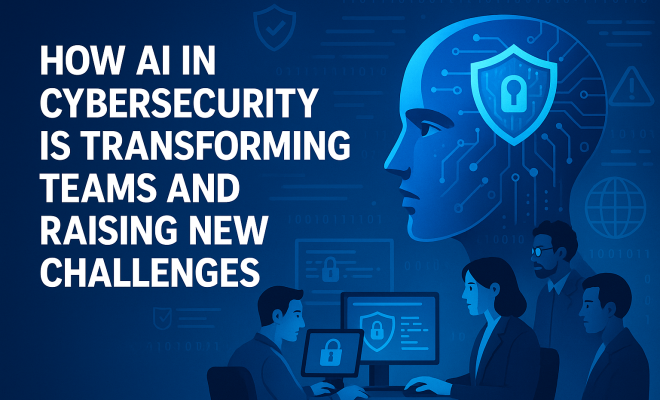
How AI in Cybersecurity Is Transforming Teams and Raising New Challenges
“`html
The Rising Pressure on Cybersecurity Teams
As the digital landscape evolves, the role of cybersecurity professionals is becoming increasingly demanding. Reports indicate that the integration of AI in cybersecurity is not merely a technological shift; it’s a transformative force reshaping the very fabric of cybersecurity teams. With the growing reliance on artificial intelligence, Chief Information Security Officers (CISOs) are experiencing heightened pressure, as the complexity surrounding defense mechanisms, detection protocols, and team management continues to rise.
The Role of AI in Cybersecurity
Artificial intelligence is often touted as a double-edged sword in the cybersecurity arena. On one hand, AI enhances the capability to detect threats, analyze vast amounts of data, and automate responses to incidents. On the other, it introduces complexities that can overwhelm existing teams. For instance, while AI can process and analyze data at speeds unattainable by humans, it also demands a new level of expertise from cybersecurity teams. They must not only be adept at traditional security measures but also understand AI’s algorithms and data analytics, which can be a daunting task.
Increased Complexity and Job Stress
The infusion of AI into cybersecurity isn’t just about adopting new tools; it’s about adapting to an entirely new operational paradigm. As the Dark Reading article highlights, cybersecurity jobs are becoming more complex and stressful. The skills required are rapidly evolving, pushing professionals to continuously upskill. This pressure isn’t just felt by junior staff; even seasoned CISOs are grappling with the implications of AI-enhanced security frameworks.
Job roles that were once clearly defined are now merging and expanding. For instance, a security analyst might find themselves needing to delve deeper into AI methodologies to effectively manage automated systems. As a result, the job landscape is shifting, with demand for roles that blend cybersecurity expertise and AI proficiency growing significantly.
The Demand for Cybersecurity Experts
Despite the stresses associated with AI integration, the demand for cybersecurity expertise remains robust. Companies are scrambling to hire skilled professionals who can navigate both traditional security challenges and the nuances of AI systems. This demand spans full-time positions as well as part-time roles, reflecting the versatility needed in today’s cybersecurity landscape.
According to industry reports, the number of cybersecurity job openings continues to soar, indicating that organizations recognize the critical need for skilled personnel. However, this demand also raises questions about job security among existing staff. Do these AI advancements mean that traditional cybersecurity roles will become obsolete, or will they simply evolve?
Will AI Replace Security Staff?
The fear of job displacement due to AI is a pressing concern for many cybersecurity professionals. As AI systems become more capable, will there still be a need for human oversight? While it’s true that AI can automate many tasks, experts suggest that it can’t fully replace the nuanced judgment and strategic thinking that human professionals bring to the table.
AI can process and analyze threats quickly, but it lacks the contextual understanding that human experts possess. For example, a cybersecurity analyst may identify patterns in data that an AI might misinterpret, leading to potential vulnerabilities. Thus, rather than replacing jobs, AI is poised to augment the capabilities of security teams, making their roles more strategic and specialized.
Leadership Challenges in the Age of AI
CISOs and other cybersecurity leaders are navigating a uniquely challenging environment. With AI in cybersecurity altering the skills landscape and operational dynamics, these leaders must adapt their strategies to manage both their teams and the technologies they deploy effectively. The pressure to stay ahead of potential threats while integrating new technologies can be overwhelming.
Moreover, the expectations from upper management are rising. Leaders are expected to not only understand the technical aspects of AI but also to communicate their strategic importance to broader business goals. This requires a blend of technical knowledge, leadership acumen, and communication skills — a trifecta that’s tough to balance. (See: AI in Cybersecurity: What You Need to Know.)
Training and Upskilling: A Necessity
Given the rapid changes in the cybersecurity landscape, training and upskilling have become essential. Organizations need to invest in their workforce, ensuring that employees are equipped with the knowledge and skills necessary to leverage AI technologies effectively. This includes not only technical training but also education on how to interpret AI-generated insights and make informed security decisions.
Many companies are adopting a culture of continuous learning, where employees are encouraged to pursue certifications and training sessions related to AI and cybersecurity. This proactive approach not only helps in retaining talent but also boosts overall team morale and confidence, as team members feel supported in their professional growth.
The Future of Cybersecurity Teams
So, what does the future hold for cybersecurity teams in an AI-driven world? While the challenges are undeniable, there are numerous opportunities on the horizon. As AI continues to evolve, it can lead to the creation of entirely new roles and specialties within cybersecurity.
For instance, roles focused on the ethical implications of AI, bias in algorithms, and AI governance are emerging. Security teams will increasingly require individuals who can navigate these complex issues, blending technical expertise with ethical considerations. This shift indicates a future where cybersecurity professionals are not just technicians but strategic thinkers who can influence the broader organizational strategy.
The Importance of AI in Threat Intelligence
One of the most significant areas where AI in cybersecurity proves its worth is in threat intelligence. By leveraging machine learning algorithms, cybersecurity teams can analyze vast datasets to uncover patterns and predict potential threats. These predictive analytics allow organizations to be proactive rather than reactive in their security strategies.
For example, AI can analyze historical attack data to identify common tactics used by cybercriminals. This intelligence can inform security protocols, enabling teams to fortify their defenses against likely attack vectors. Organizations utilizing AI-driven threat intelligence platforms have reported a significant reduction in the time it takes to detect and respond to threats, enhancing overall security posture.
Real-World Examples of AI in Cybersecurity
Many organizations are already seeing the benefits of incorporating AI into their cybersecurity frameworks. Take Darktrace, for instance, which uses AI to create an ‘immune system’ for networks. By mirroring human learning, Darktrace’s AI can identify unusual patterns within network traffic, allowing it to detect attacks in real-time. Their software has been instrumental in many cases, preventing significant breaches by alerting security teams before the attacks escalated.
Similarly, CrowdStrike employs AI algorithms for threat hunting and incident response. Their Falcon platform uses AI to analyze behavioral patterns across endpoints, helping teams to identify potential threats quickly. In a notable incident, a major multinational corporation avoided a potential data breach thanks to Falcon’s AI-driven alerts, which pinpointed anomalous behavior early on.
Statistics on AI’s Impact in Cybersecurity
The incorporation of AI in cybersecurity is not just a trend; it’s a necessity backed by compelling statistics. According to a report from cybersecurity firm McKinsey, organizations that implement AI-driven solutions see a reduction in breach detection times by up to 50%. This statistic highlights the efficiency AI brings to the table.
Furthermore, a recent study by Capgemini revealed that 69% of executives believe AI will become a critical component in their cybersecurity strategies. As organizations continue to recognize the value of AI, investments in these technologies are expected to rise, with the global AI in cybersecurity market projected to reach $38.2 billion by 2026, according to MarketsandMarkets.
Addressing Ethical Concerns in AI-Driven Cybersecurity
While AI brings numerous advantages, it also raises important ethical concerns that must be addressed. The potential for biases in AI algorithms can lead to security tools that unfairly target specific groups or fail to recognize certain types of threats. Cybersecurity teams must ensure that their AI systems are trained on diverse datasets to avoid these pitfalls. (See: CISA Publications on Cybersecurity.)
Moreover, transparency in AI decision-making processes is crucial. Organizations should strive to understand how AI arrives at its conclusions, which will be essential for compliance with regulations like GDPR. Adopting ethical guidelines for AI development and implementation can help mitigate risks and foster trust among stakeholders.
AI and the Evolution of Cyber Threats
As AI technologies mature, cyber threats are evolving too. Malicious actors are beginning to harness AI to execute more sophisticated attacks. For instance, AI can enable attackers to automate phishing campaigns, crafting personalized messages that are more convincing than traditional attempts. This raises the stakes for cybersecurity teams, who must now compete not only with human ingenuity but with automated systems designed to exploit vulnerabilities.
Adversarial AI is another emerging concern, where attackers intentionally manipulate AI systems to misclassify threats or evade detection. For example, by subtly altering the input of a machine learning model, an attacker may cause it to overlook a significant security breach. This cat-and-mouse game between defenders and attackers underscores the critical need for ongoing innovation in cybersecurity strategies and tools.
Emerging Technologies Enhancing AI in Cybersecurity
Beyond traditional AI applications, a range of emerging technologies is set to amplify the effectiveness of AI in cybersecurity. One such area is the Internet of Things (IoT). As more devices become interconnected, the volume of potential entry points for cybercriminals increases. AI can help manage and monitor these devices, identifying anomalies and potential threats across diverse environments.
Another fascinating development is the use of blockchain technology to enhance cybersecurity measures. Blockchain can provide a decentralized and tamper-proof method for storing and sharing threat intelligence. By integrating AI with blockchain, organizations can create a more secure and transparent ecosystem for managing data and responding to threats.
Industry-Specific Applications of AI in Cybersecurity
Different industries face unique cybersecurity challenges, and AI is being tailored to meet these specific needs. In the financial sector, for instance, AI is used to detect fraudulent transactions in real-time. Machine learning algorithms can analyze transaction patterns and alert teams to suspicious activities, significantly reducing the risk of financial loss.
In healthcare, the implications of cybersecurity breaches can be dire, affecting patient safety and privacy. AI can help secure medical devices and patient data by identifying vulnerabilities and ensuring compliance with data protection regulations. As hospitals and clinics increasingly rely on digital tools, AI becomes essential in safeguarding sensitive information.
FAQ About AI in Cybersecurity
What are the main benefits of using AI in cybersecurity?
The primary benefits of AI in cybersecurity include enhanced threat detection, automated responses to incidents, predictive analytics, and improved efficiency in managing large amounts of security data.
Will AI eliminate jobs in cybersecurity?
While AI will automate certain tasks, it is more likely to transform roles rather than eliminate them. Cybersecurity professionals will need to adapt, focusing on strategic oversight and advanced problem-solving skills. (See: The Role of AI in Cybersecurity.)
How can organizations ensure ethical AI use in cybersecurity?
Organizations can ensure ethical AI use by training their systems on diverse datasets, maintaining transparency in AI decision-making, and adhering to regulatory guidelines regarding data privacy and protection.
What should cybersecurity professionals do to prepare for AI integration?
Cybersecurity professionals should focus on upskilling in AI and data analytics, pursuing relevant certifications, and staying informed about the latest AI technologies and their implications for cybersecurity.
How does AI enhance threat detection in organizations?
AI enhances threat detection by analyzing large datasets quickly and efficiently, identifying patterns that may indicate a breach, and learning from previous incidents to improve future responses.
What are some challenges organizations face when implementing AI in cybersecurity?
Organizations may face challenges such as the need for specialized expertise, high implementation costs, integration with existing systems, and potential biases in AI algorithms that could impact security outcomes.
Can small businesses benefit from AI in cybersecurity?
Absolutely! Small businesses can leverage AI-driven solutions to enhance their security posture without the need for large teams. Automated systems can help identify threats and protect valuable data efficiently.
Conclusion: Embracing Change
Adapting to AI in cybersecurity is not just a necessity; it’s an opportunity for growth and innovation. While the challenges posed by AI are significant, they also pave the way for more sophisticated, resilient cybersecurity practices. As professionals in the field, it’s crucial to embrace these changes with a mindset geared towards learning and adaptation.
The road ahead may be rocky, but those who invest in their skills and stay informed about technological advancements will find themselves at the forefront of a rapidly changing industry. As we move into this new era of cybersecurity, let’s focus on collaboration, continuous improvement, and strategic foresight to navigate the complexities brought forth by AI.
“`
Trending Now
Frequently Asked Questions
How is AI changing the cybersecurity landscape?
AI is transforming the cybersecurity landscape by enhancing threat detection, automating responses, and analyzing data at unprecedented speeds. However, it also introduces complexities that require cybersecurity teams to adapt their skills and knowledge, making the profession more demanding.
What challenges do cybersecurity teams face with AI integration?
With AI integration, cybersecurity teams face challenges such as increased job complexity, the need for advanced technical skills, and the pressure to continuously upskill. The rapid evolution of required competencies can lead to heightened stress levels among professionals.
What skills are needed for cybersecurity professionals in an AI-driven environment?
In an AI-driven environment, cybersecurity professionals must possess a blend of traditional security skills and an understanding of AI algorithms and data analytics. This dual expertise is essential for effectively managing automated systems and adapting to new operational paradigms.
How does AI impact the roles of Chief Information Security Officers (CISOs)?
AI impacts CISOs by increasing the complexity of defense mechanisms and team management. They must navigate the challenges of integrating AI into security frameworks while ensuring their teams are equipped with the necessary skills to handle advanced technologies.
Are cybersecurity jobs becoming more stressful due to AI?
Yes, cybersecurity jobs are becoming more stressful due to the integration of AI. The evolving landscape requires professionals to continuously learn and adapt, leading to increased pressure and complexity in their roles, affecting both junior staff and experienced CISOs.
Have you experienced this yourself? We’d love to hear your story in the comments.