The Tech Edvocate

Top Menu

  • Advertisement
  • Apps
  • Home Page
  • Home Page Five (No Sidebar)
  • Home Page Four
  • Home Page Three
  • Home Page Two
  • Home Tech2
  • Icons [No Sidebar]
  • Left Sidbear Page
  • Lynch Educational Consulting
  • My Account
  • My Speaking Page
  • Newsletter Sign Up Confirmation
  • Newsletter Unsubscription
  • Our Brands
  • Page Example
  • Privacy Policy
  • Protected Content
  • Register
  • Request a Product Review
  • Shop
  • Shortcodes Examples
  • Signup
  • Start Here
    • Governance
    • Careers
    • Contact Us
  • Terms and Conditions
  • The Edvocate
  • The Tech Edvocate Product Guide
  • Topics
  • Write For Us
  • Advertise

Main Menu

  • Start Here
    • Our Brands
    • Governance
      • Lynch Educational Consulting, LLC.
      • Dr. Lynch’s Personal Website
      • Careers
    • Write For Us
    • The Tech Edvocate Product Guide
    • Contact Us
    • Books
    • Edupedia
    • Post a Job
    • The Edvocate Podcast
    • Terms and Conditions
    • Privacy Policy
  • Topics
    • Assistive Technology
    • Child Development Tech
    • Early Childhood & K-12 EdTech
    • EdTech Futures
    • EdTech News
    • EdTech Policy & Reform
    • EdTech Startups & Businesses
    • Higher Education EdTech
    • Online Learning & eLearning
    • Parent & Family Tech
    • Personalized Learning
    • Product Reviews
  • Advertise
  • Tech Edvocate Awards
  • The Edvocate
  • Pedagogue
  • School Ratings

logo

The Tech Edvocate

  • Start Here
    • Our Brands
    • Governance
      • Lynch Educational Consulting, LLC.
      • Dr. Lynch’s Personal Website
        • My Speaking Page
      • Careers
    • Write For Us
    • The Tech Edvocate Product Guide
    • Contact Us
    • Books
    • Edupedia
    • Post a Job
    • The Edvocate Podcast
    • Terms and Conditions
    • Privacy Policy
  • Topics
    • Assistive Technology
    • Child Development Tech
    • Early Childhood & K-12 EdTech
    • EdTech Futures
    • EdTech News
    • EdTech Policy & Reform
    • EdTech Startups & Businesses
    • Higher Education EdTech
    • Online Learning & eLearning
    • Parent & Family Tech
    • Personalized Learning
    • Product Reviews
  • Advertise
  • Tech Edvocate Awards
  • The Edvocate
  • Pedagogue
  • School Ratings
  • A Visitors Guide to Long Beach (CA), United States

  • A Visitor’s Guide to Fresno (CA), United States

  • A Visitors Guide to New Orleans (LA), United States

  • A Visitors Guide to Sacramento (CA), United States

  • A Visitors Guide to Lyon, France

  • JisuLife Ultra2 Portable Fan: A Powerful Multi-Function Cooling Solution

  • A Visitors Guide to Viña del Mar, Chile

  • A Visitors Guide to Århus, Denmark

  • A Visitors Guide to Bakersfield (CA), United States

  • A Visitors Guide to Aurora (CO), United States

Digital & Mobile Technology
Home›Digital & Mobile Technology›What Satellites Does Dish Network Use?

What Satellites Does Dish Network Use?
By Matthew Lynch
May 15, 2023
0
Spread the love

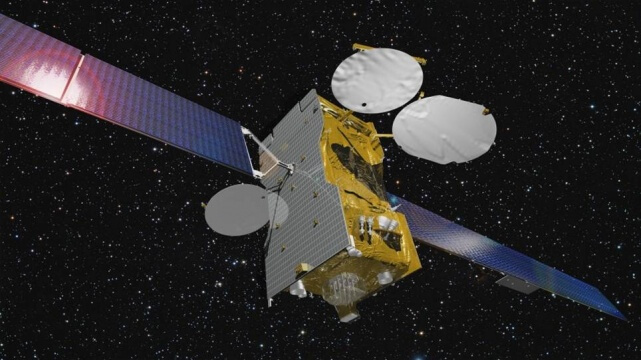
Dish Network is a company that provides television services to its customers using satellite technology. Satellites have been a fundamental part of Dish Network’s operations, which rely on a network of satellites in geostationary orbit to deliver programming to customers across the U.S.

Dish Network uses a fleet of satellites to provide digital television services. These satellites are launched into space and are placed into specific “orbital slots.” This orbital slot is the location in the constellation where the satellite stays in a fixed position in relation to the earth. The company currently uses a mix of satellites, including EchoStar-19, EchoStar-23, Anik F3, and Nimiq.

EchoStar-19, also called Jupiter 2, was launched in 2016 and is the newest addition to the Dish Network satellite fleet. It operates in the Ka-band frequency range, specifically designed for high definition (HD) and ultra-high-definition (UHD) program transmission, and has a planned 15-year service life. The satellite covers the United States, including Hawaii, and parts of Alaska.

EchoStar-23 was launched in 2017, and it’s designed to offer superior TV coverage to Dish customers in Hawaii. This satellite is equipped with a S-band payload, which allows it to transmit signals in different frequencies for better coverage in specific areas.

The Anik F3 satellite was launched in 2007 and is in geostationary orbit over North America. It has a C-band transponder capacity of 24 high-power channels for North American television broadcasters. The satellite provides comprehensive coverage over the United States, including Alaska and Hawaii.

The Nimiq (Nimiq 4) satellite operates in the Ku-band frequency range and offers programming coverage in the United States, including Puerto Rico, and Canada. The satellite is equipped with flexible multiple spot beam technology, allowing it to provide coverage over a large area with customized beams for optimal reception.

Dish Network is continually investing in its satellite infrastructure, and with each new satellite launch, the company is leveraging the latest in technological advancements so that customers can enjoy the best possible television viewing experience. The satellites used by Dish Network provide reliable, high-quality programming that delivers an array of channel offerings, including live TV, sports, news, and movies.


Previous Article

What to Look for in a Gaming ...

Next Article

What to Do When Your PC Game ...

Matthew Lynch

Related articles More from author

  • Digital & Mobile Technology

    How to Access iCloud From Your Android Phone

    June 12, 2023
    By Matthew Lynch
  • Digital & Mobile Technology

    SIP Service Providers That Offer Free SIP Accounts

    June 3, 2023
    By Matthew Lynch
  • Digital & Mobile Technology

    What Is Bark? The Social Monitoring App Explained

    August 1, 2023
    By Matthew Lynch
  • Digital & Mobile Technology

    192.168.2.1 Default IP Address for Some Home Network Routers

    June 12, 2023
    By Matthew Lynch
  • Digital & Mobile Technology

    Tips to Buy Safely on AliExpress and Avoid Frauds or Scams

    August 5, 2023
    By Matthew Lynch
  • Digital & Mobile Technology

    What Does “Pending” Mean on Snapchat?

    June 8, 2023
    By Matthew Lynch

Search

Login & Registration

  • Register
  • Log in
  • Entries feed
  • Comments feed
  • WordPress.org

Newsletter

Signup for The Tech Edvocate Newsletter and have the latest in EdTech news and opinion delivered to your email address!

About Us

Since technology is not going anywhere and does more good than harm, adapting is the best course of action. That is where The Tech Edvocate comes in. We plan to cover the PreK-12 and Higher Education EdTech sectors and provide our readers with the latest news and opinion on the subject. From time to time, I will invite other voices to weigh in on important issues in EdTech. We hope to provide a well-rounded, multi-faceted look at the past, present, the future of EdTech in the US and internationally.

We started this journey back in June 2016, and we plan to continue it for many more years to come. I hope that you will join us in this discussion of the past, present and future of EdTech and lend your own insight to the issues that are discussed.

Newsletter

Signup for The Tech Edvocate Newsletter and have the latest in EdTech news and opinion delivered to your email address!

Contact Us

The Tech Edvocate
910 Goddin Street
Richmond, VA 23231
(601) 630-5238
[email protected]

Copyright © 2025 Matthew Lynch. All rights reserved.