Gamers vs. Critics: Why Wolverine Game Reviews Are Sparking a Culture War
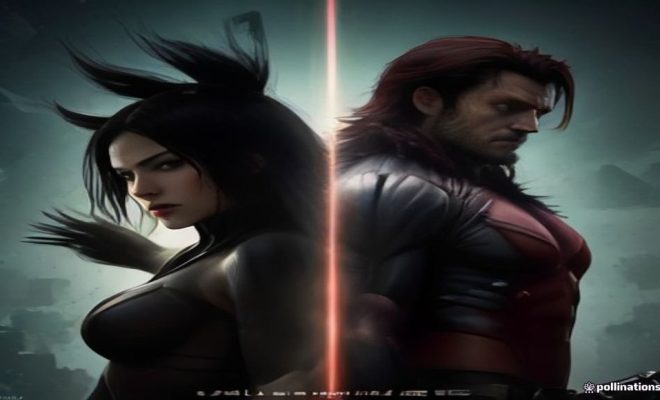
When Insomniac Games, the studio behind the critically acclaimed Marvel’s Spider-Man series, announced they were tackling Wolverine, the internet collectively held its breath. The potential for a brutal, visceral, and emotionally charged experience starring everyone’s favorite adamantium-clawed mutant seemed limitless. Fast forward to September 15, 2026, the official launch date, and what we got was… complicated. The game, titled Marvel’s Wolverine, landed with a thud that echoed not just through the gaming world, but across social media, igniting a genuine ‘culture war’ between professional critics and the everyday players. It’s a fascinating, and at times frustrating, case study in the modern gaming landscape, where the chasm between expert opinions and public sentiment seems to widen with every major release. Digging into these divergent Wolverine game reviews reveals a deeper story about expectations, algorithms, and what truly makes a game ‘good’ in the eyes of different audiences.
The Critical Consensus: A Surprisingly Warm Reception
Let’s start with the professionals. When aggregated on Metacritic, Marvel’s Wolverine pulled in an average score of 77. Now, 77 isn’t a terrible score by any stretch. It suggests a game that’s generally good, perhaps even enjoyable, but certainly not a masterpiece. However, for Insomniac Games, a studio renowned for its consistently high-performing PlayStation exclusives, this was a notable dip. In fact, it marks their lowest-rated PlayStation single-player title in years. Think about that for a moment. This is the team that delivered Ratchet & Clank: Rift Apart, Marvel’s Spider-Man, and Marvel’s Spider-Man: Miles Morales, all of which garnered scores in the high 80s and low 90s. A 77, in this context, felt almost like a stumble.
Many critics pointed to a perceived lack of innovation, suggesting that while the core gameplay loop was solid, it leaned too heavily on established Insomniac formulas without pushing the envelope. Some reviews described the combat as competent but repetitive, lacking the depth or tactical nuance that might distinguish a Wolverine experience from, say, a Spider-Man one. There was a sense that the game played it safe, offering a polished but ultimately predictable adventure. This wasn’t the groundbreaking, genre-redefining title many had hoped for, and the critical Wolverine game reviews reflected that sentiment with a collective shrug rather than a roar of approval.
Player Power: Overwhelmingly Positive Wolverine Game Reviews
Now, here’s where things get interesting – and contentious. If you hopped over to the PlayStation store after launch, you’d be met with a starkly different picture. Thousands of players had weighed in, and their collective judgment was overwhelmingly positive. We’re talking about a stellar 4.83 out of 5 rating. That’s almost perfect! This isn’t just a handful of enthusiastic fans; it’s a significant volume of user data indicating widespread player satisfaction. How can a game be deemed merely ‘good’ by professionals and almost ‘excellent’ by the people actually spending their hard-earned money and time on it? This dichotomy is at the heart of the ongoing debate surrounding Marvel’s Wolverine.
Player comments often lauded the visceral combat, the faithful portrayal of Wolverine’s character, and the sheer fun factor of tearing through enemies with adamantium claws. Many users expressed satisfaction with the game’s narrative, the voice acting, and the overall polish that Insomniac is known for. It seems that for many players, the game delivered exactly what they wanted: a solid, engaging single-player experience starring a beloved Marvel character. They weren’t necessarily looking for revolution; they were looking for an enjoyable time, and by their own accounts, they found it in spades. These positive Wolverine game reviews stand in stark contrast to the critical assessment, begging the question: who’s right?
The ‘Blue Trail’ Controversy and Social Media Backlash
Adding fuel to this already simmering fire was a specific gameplay mechanic that became a lightning rod for criticism, particularly on social media: the ‘blue trail.’ This visual cue, which guides players through the environment, was perceived by many as overly simplistic and linear, emblematic of a larger issue with the game’s design. Critics and a vocal segment of the online community argued that it treated players like they needed constant hand-holding, stripping away any sense of exploration or challenge. It felt like a subtle but significant affront to player agency, a sign that the game was designed to be consumed rather than truly explored.
The backlash was fierce and widespread. Social media platforms became arenas for what Insomniac’s community director, James Stevenson, later described as a ‘relentless onslaught’ of negativity. Memes, scathing hot takes, and direct comparisons to other, more ‘open’ or ‘challenging’ titles flooded timelines. This isn’t just about a blue line; it’s about what that blue line represents in the eyes of a certain segment of the gaming populace – a perceived infantilization of the player, a homogenization of game design, and a move away from the complex, player-driven experiences some gamers crave. The ‘blue trail’ became a symbol, an easy target for those who felt the game lacked ambition, and it certainly colored many of the negative Wolverine game reviews.
Insomniac’s Response: Algorithms and the Amplification of Negativity
The developers at Insomniac weren’t silent in the face of this storm. James Stevenson, the studio’s community director, stepped forward to address the negativity, offering a perspective that pointed squarely at the mechanics of social media itself. He argued that the ‘relentless onslaught’ was amplified by algorithms, which are designed to push engaging (often controversial or negative) content to a wider audience. This isn’t a new observation; we’ve all seen how a single negative tweet can spiral into a viral phenomenon, while a thousand positive ones might barely register. Stevenson’s comments suggested that the perceived overwhelming negativity might not truly reflect the overall sentiment, but rather the amplified voice of a vocal minority.
This perspective, while understandable from a developer facing intense scrutiny, also sparked further debate. Some argued it was an attempt to deflect legitimate criticism, while others sympathized with the studio, acknowledging the often-toxic environment of online discourse. It highlights a crucial challenge for game developers today: how do you engage with your community and receive feedback when the platforms designed for connection can just as easily become conduits for disproportionate negativity? Stevenson’s insights into the algorithmic nature of social media offer a nuanced lens through which to view the polarized Wolverine game reviews and the broader ‘culture war’ they ignited. (See: BBC report on gaming culture.)
The Widening Chasm: Critics vs. Players in the Modern Era
The disparity in Marvel’s Wolverine reviews isn’t an isolated incident; it’s a symptom of a larger trend. We’ve seen similar divergences with other major releases, where critical consensus often clashes sharply with player sentiment. Why is this happening more frequently now? One theory is that critics and players often approach games with fundamentally different objectives and expectations. Critics, particularly those working for established publications, often have to consider a game’s technical merits, its innovation, its influence on the wider industry, and its artistic ambition. They’re looking for something that pushes boundaries, tells a unique story, or perfects a mechanic in a novel way. They’re also often playing dozens, if not hundreds, of games a year, making them highly attuned to repetition or derivative design.
Players, on the other hand, might simply be looking for fun, escapism, or a chance to inhabit the shoes of a beloved character. They might be less concerned with how a game innovates and more concerned with how it makes them feel. If a game delivers on the promise of an exciting adventure, even if its mechanics aren’t groundbreaking, many players will be perfectly satisfied. This isn’t to say one perspective is inherently ‘better’ than the other, but recognizing these differing lenses is crucial to understanding the ongoing friction. The Wolverine game reviews perfectly encapsulate this growing divide, forcing us to consider whose opinion matters most, and why.
Deconstructing ‘Derivative’ and ‘Simplistic’: A Matter of Perspective
Terms like ‘derivative’ and ‘simplistic’ were thrown around frequently in the critical Wolverine game reviews. But what do these terms really mean in the context of player enjoyment? For a critic, a game being ‘derivative’ might mean it borrows too heavily from other titles without adding its own unique spin, potentially leading to a feeling of déjà vu. ‘Simplistic’ could imply that gameplay mechanics lack depth, strategic options, or long-term engagement.
However, for a player, what’s derivative to one might be familiar and comforting to another. If you enjoyed the combat in Spider-Man, then a similar, polished combat system in Wolverine might be exactly what you want. What’s simplistic to a seasoned critic who analyzes game design for a living might be intuitive and accessible to a casual player looking to unwind after a long day. The ‘blue trail,’ for example, might be seen as simplistic, but for someone who just wants to enjoy the story and action without getting lost, it’s a convenience, not a flaw. This difference in interpretation is key to understanding why player scores soared while critical ones stagnated. It’s a classic case of one person’s trash being another’s treasure, or at least, one person’s 7/10 being another’s 9/10.
The Influence of Studio Reputation and Fan Expectations
Insomniac Games has cultivated an enviable reputation for quality, particularly with their Marvel titles. This comes with a double-edged sword: immense anticipation, but also sky-high expectations. When a studio consistently delivers exceptional experiences, anything less than extraordinary can feel like a disappointment. Critics, aware of Insomniac’s pedigree, might have judged Marvel’s Wolverine against the studio’s own incredibly high bar, rather than against the broader landscape of gaming. This isn’t necessarily unfair; it’s a natural consequence of consistent excellence.
For fans, that reputation often translates into a deep trust and loyalty. They know Insomniac delivers polished, fun games, and they’re often willing to overlook minor flaws or a lack of groundbreaking innovation if the core experience is enjoyable. This pre-existing goodwill can undoubtedly influence player Wolverine game reviews, creating a buffer against negative sentiment. When you love a developer, you’re often more forgiving, more willing to focus on the positives, and perhaps less inclined to nitpick. This emotional connection plays a significant role in how games are received, particularly for established franchises and beloved developers.
Navigating the Post-Launch Narrative: A Developer’s Dilemma
For Insomniac, navigating this post-launch narrative must have been a complex challenge. On one hand, they had a game that, by player metrics, was a huge success. On the other, they were facing an intense social media onslaught and a critical reception that signaled a departure from their usual stellar scores. How do you respond to that? Do you lean into the player positivity and dismiss the critics? Do you acknowledge the critical feedback and promise to do better, potentially alienating your satisfied player base? James Stevenson’s comments about algorithmic amplification suggest a strategy of validating the player experience while subtly pushing back against the notion that the online negativity represents the majority view.
This is the modern developer’s dilemma. In an era where every tweet and every review is magnified, managing the narrative around a game’s launch requires a delicate touch. It’s not just about making a good game; it’s about managing expectations, engaging with diverse feedback, and understanding the complex dynamics of online discourse. The story of Marvel’s Wolverine provides a powerful lesson in this regard, showcasing how a game can be both a critical ‘miss’ and a player ‘hit’ simultaneously, and how developers are increasingly caught in the crossfire.
Examining the Impact of Accessibility Features on Reviews
Beyond the ‘blue trail’ controversy, the broader discussion around accessibility features also played a role in how Marvel’s Wolverine was perceived. Insomniac has a strong track record of implementing robust accessibility options in their games, making them enjoyable for a wider audience. This commitment often earns praise from critics and players alike, as it reflects an inclusive design philosophy. (See: New York Times on video game reviews.)
However, some of the very features designed to enhance accessibility – such as simplified combat options or pervasive navigation aids – can sometimes be misinterpreted or criticized by a segment of the hardcore gaming community. While these features are typically optional, their presence can, for some, contribute to a perception that the game is “too easy” or “dumbed down.” It’s a delicate balance for developers: how do you provide options that empower all players without inadvertently alienating those who crave maximum challenge and minimal assistance? The critical Wolverine game reviews, in some instances, may have inadvertently conflated the presence of comprehensive accessibility options with a perceived lack of inherent challenge, even if these features could be toggled off. This highlights a nuanced aspect of modern game design and review culture, where what’s seen as a positive for one group can be viewed as a negative by another, particularly when it touches on the contentious topic of difficulty.
The Role of Narrative and Character Portrayal
One area where player and critic opinions seemed to align more closely, or at least where players offered more effusive praise, was the game’s narrative and character portrayal. Wolverine, as a character, comes with decades of rich comic book history, a complex personality, and a very specific power set. Insomniac’s track record with Marvel’s Spider-Man suggested they understood how to adapt these iconic characters to a video game medium while respecting their core identity.
Many player reviews specifically highlighted the authenticity of Wolverine’s character, praising the voice acting, the writing, and the way the game captured his feral nature alongside his gruff heroism. The story, while perhaps not groundbreaking in its structure, was often described as engaging and emotionally resonant, hitting the right notes for fans of the character. This strong character work and narrative execution are often key to player satisfaction, even if the gameplay mechanics don’t revolutionize the genre. For many, simply getting to be Wolverine, and experiencing a well-told story in his shoes, was enough to make the game a success, regardless of its Metascore. This shows that even if gameplay innovation was a sticking point, the fundamental character fantasy was delivered strongly, which is a significant factor in positive Wolverine game reviews from the audience.
Comparisons to Other Character-Driven Action Games
To fully understand the critical and player reception of Marvel’s Wolverine, it’s helpful to compare it to other character-driven action games. Insomniac’s own Marvel’s Spider-Man series is an obvious benchmark, but we can also look at games like the Batman: Arkham series or even more recent titles like God of War (2018) and God of War Ragnarök. These games are renowned for their strong character portrayals, engaging combat, and often, their narrative depth.
Critics often hold new entries in this genre to the standards set by these titans. If Marvel’s Wolverine offered combat that felt less fluid than Spider-Man’s web-slinging, or a world that felt less meticulously crafted than Gotham City in Arkham Knight, then it would naturally receive a lower critical score. However, players, especially those less steeped in the entire genre’s history, might simply enjoy the game on its own merits, without constantly comparing it to the very best the industry has to offer. They might see it as a solid entry in a beloved genre, rather than a missed opportunity to redefine it. This difference in comparative frameworks explains a lot of the critical-player divide. Critics judge against the peak, players judge against their personal enjoyment threshold, and Marvel’s Wolverine seems to have hit that threshold for the vast majority of its audience.
What Does This Mean for the Future of Wolverine and Insomniac?
So, what’s the takeaway from this whole saga for Insomniac and the future of the Wolverine franchise? Firstly, it’s a reminder that player satisfaction is paramount. While critical acclaim is always welcome, a game that resonates deeply with its audience, leading to a 4.83 out of 5 rating, is ultimately a commercial and cultural success. Insomniac has clearly tapped into what a significant portion of gamers wants from a Wolverine experience, even if it didn’t align perfectly with critical desires for innovation.
Secondly, it highlights the need for a more nuanced understanding of game reviews. Perhaps a single Metacritic score, while useful, doesn’t fully capture the multifaceted appeal of a game in today’s diverse market. We might need to look more closely at user scores, qualitative player feedback, and even social media sentiment (filtered through the algorithmic noise) to get a complete picture. For Insomniac, the data suggests that while they might want to address some of the critical feedback regarding innovation and linearity for future titles, they also have a winning formula that clearly delights their core audience. The future of Wolverine, despite the initial critical shrug, looks bright based on the sheer volume of positive player sentiment. After all, a satisfied player base is the ultimate metric for long-term success, and these Wolverine game reviews, when viewed holistically, paint a very positive picture indeed.
Frequently Asked Questions About Marvel’s Wolverine Reviews
Q1: What was the Metacritic score for Marvel’s Wolverine?
Marvel’s Wolverine received an average Metacritic score of 77, which, while indicating a generally good game, was considered a dip for Insomniac Games’ typically higher-rated PlayStation exclusives. (See: Scientific study on gaming expectations.)
Q2: How did player reviews compare to critical reviews for the game?
Player reviews were overwhelmingly positive, with the game achieving a stellar 4.83 out of 5 rating on the PlayStation store. This stands in stark contrast to the more lukewarm critical reception.
Q3: What was the ‘blue trail’ controversy?
The ‘blue trail’ was a visual navigation cue in the game that guided players through environments. It became a point of contention, with critics and some players arguing it was overly simplistic and indicative of a lack of player agency or exploration.
Q4: Why do critics and players often disagree on game scores?
Critics often evaluate games based on technical innovation, industry influence, and artistic ambition, playing many games a year. Players, conversely, often prioritize fun, escapism, character portrayal, and overall enjoyment, sometimes being less concerned with groundbreaking mechanics if the core experience is satisfying. These differing objectives contribute to the score disparity.
Q5: How did Insomniac Games respond to the mixed reception?
James Stevenson, Insomniac’s community director, suggested that negative social media feedback was amplified by algorithms and didn’t necessarily reflect the overall sentiment of the player base. His response aimed to validate player satisfaction while acknowledging the online discourse.
Q6: Does studio reputation affect how games are reviewed?
Absolutely. For critics, a studio like Insomniac, known for high-quality titles, faces higher expectations, meaning anything less than extraordinary can feel like a disappointment. For players, a strong studio reputation often translates into trust and loyalty, making them more forgiving of minor flaws and more likely to focus on the positives, influencing their Wolverine game reviews.
Q7: What does the review disparity mean for the future of the Wolverine franchise?
Despite the critical shrug, the overwhelming positive player sentiment (4.83/5) suggests the game was a commercial and cultural success with its target audience. This indicates a bright future for the Wolverine franchise, as Insomniac seems to have found a winning formula that resonates deeply with players, even if critics desired more innovation.
Trending Now
Frequently Asked Questions
Why is there a culture war over Wolverine game reviews?
The culture war stems from the stark contrast between the reception of Marvel's Wolverine by professional critics and everyday gamers. Critics generally rated the game positively, while players expressed disappointment, leading to heated discussions about expectations, game quality, and the evolving landscape of video game reviews.
What is the Metacritic score for Marvel's Wolverine?
Marvel's Wolverine has an average Metacritic score of 77, indicating that while it is generally considered a good game, it falls short of the high standards set by previous titles from Insomniac Games, which often scored in the high 80s and low 90s.
How does Marvel's Wolverine compare to other Insomniac games?
Marvel's Wolverine is Insomniac's lowest-rated PlayStation single-player title in recent years, with a score of 77. This contrasts sharply with their previous successes like Marvel's Spider-Man and Ratchet & Clank: Rift Apart, which received much higher ratings, highlighting a perceived decline in innovation.
What criticisms did Marvel's Wolverine receive from reviewers?
Critics noted a perceived lack of innovation in Marvel's Wolverine, suggesting that while the gameplay was solid, it relied too heavily on established formulas from Insomniac's previous games, failing to introduce fresh elements that could have elevated the experience.
What expectations did gamers have for Marvel's Wolverine?
Gamers had high expectations for Marvel's Wolverine due to Insomniac's successful track record with the Spider-Man series. Many anticipated a brutal and emotionally charged experience, which contributed to the disappointment felt when the game did not meet these lofty expectations.
Agree or disagree? Drop a comment and tell us what you think.