The Tech Edvocate

Top Menu

  • Advertisement
  • Apps
  • Home Page
  • Home Page Five (No Sidebar)
  • Home Page Four
  • Home Page Three
  • Home Page Two
  • Home Tech2
  • Icons [No Sidebar]
  • Left Sidbear Page
  • Lynch Educational Consulting
  • My Account
  • My Speaking Page
  • Newsletter Sign Up Confirmation
  • Newsletter Unsubscription
  • Our Brands
  • Page Example
  • Privacy Policy
  • Protected Content
  • Register
  • Request a Product Review
  • Shop
  • Shortcodes Examples
  • Signup
  • Start Here
    • Governance
    • Careers
    • Contact Us
  • Terms and Conditions
  • The Edvocate
  • The Tech Edvocate Product Guide
  • Topics
  • Write For Us
  • Advertise

Main Menu

  • Start Here
    • Our Brands
    • Governance
      • Lynch Educational Consulting, LLC.
      • Dr. Lynch’s Personal Website
      • Careers
    • Write For Us
    • The Tech Edvocate Product Guide
    • Contact Us
    • Books
    • Edupedia
    • Post a Job
    • The Edvocate Podcast
    • Terms and Conditions
    • Privacy Policy
  • Topics
    • Assistive Technology
    • Child Development Tech
    • Early Childhood & K-12 EdTech
    • EdTech Futures
    • EdTech News
    • EdTech Policy & Reform
    • EdTech Startups & Businesses
    • Higher Education EdTech
    • Online Learning & eLearning
    • Parent & Family Tech
    • Personalized Learning
    • Product Reviews
  • Advertise
  • Tech Edvocate Awards
  • The Edvocate
  • Pedagogue
  • School Ratings

logo

The Tech Edvocate

  • Start Here
    • Our Brands
    • Governance
      • Lynch Educational Consulting, LLC.
      • Dr. Lynch’s Personal Website
        • My Speaking Page
      • Careers
    • Write For Us
    • The Tech Edvocate Product Guide
    • Contact Us
    • Books
    • Edupedia
    • Post a Job
    • The Edvocate Podcast
    • Terms and Conditions
    • Privacy Policy
  • Topics
    • Assistive Technology
    • Child Development Tech
    • Early Childhood & K-12 EdTech
    • EdTech Futures
    • EdTech News
    • EdTech Policy & Reform
    • EdTech Startups & Businesses
    • Higher Education EdTech
    • Online Learning & eLearning
    • Parent & Family Tech
    • Personalized Learning
    • Product Reviews
  • Advertise
  • Tech Edvocate Awards
  • The Edvocate
  • Pedagogue
  • School Ratings
  • Shocking: Mercury Skin Bleachers Still Flood Amazon, Temu, and TikTok Shop

  • Shocking: 195,000 Heated Blankets Recalled After Dozens Suffer Burns – Is Yours One of Them?

  • The $4 Billion Comeback: How Manus Defied Geopolitical Odds to Double Its Valuation

  • This Israeli Startup Accidentally Unleashed AI Cyberattacks on Real Companies

  • This PlayStation Exclusive Just Vanished Forever — And It’s a Warning to All Gamers

  • The Jaw-Dropping Truth Behind Marvel’s Wolverine AI Scare

  • The September 2026 AI Surge: Why Your Business Needs to Adapt Now

  • The Billion-Dollar AI Slowdown Lawsuit That Could Shatter Big Tech

  • The Brutal Truth: Why Your Student Loan Discharge Is Stuck in Limbo

  • 7 Critical Lessons From Russia’s Election Cyber Onslaught

Edtech Research
Home›Edtech Research›What is Pipelining?

What is Pipelining?

By Matthew Lynch
May 10, 2023
0
Spread the love

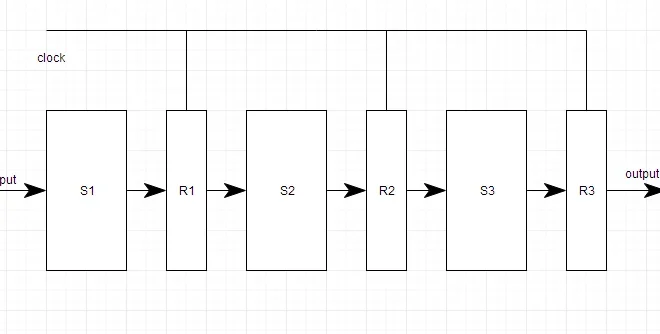
Pipelining is a concept in computer architecture where a whole process is divided into several smaller stages to increase efficiency and performance. It is a technique that allows a single instruction to be processed by multiple stages of the processor, simultaneously. It was first introduced in the 1960s but became widely used in the 1980s.

In pipelining, the processor is divided into multiple smaller stages such as instruction fetch, decode, execution, and write-back. Each stage performs a separate task in the processing of instructions. Therefore, multiple instructions can be processed simultaneously by different stages.

The basic idea behind pipelining is to reduce the time between the execution of two instructions. This is achieved by overlapping the execution of one instruction with the instruction fetch of the next instruction. When one stage finishes processing an instruction, it passes it to the next stage, which continues the processing of the instruction. Thus, the entire instruction execution process becomes more streamlined, and the overall performance is increased.

The advantages of pipelining are many. It improves the overall processing speed of the system and enables the execution of multiple instructions simultaneously. It also helps in reducing the complexity of the processor since the processor is broken down into smaller stages. Pipelining also allows more efficient use of resources such as memory and the CPU.

However, pipelining also has its disadvantages. One of the main disadvantages is that pipelining can increase the amount of time needed for an instruction to complete if there is a dependency between two instructions. This is referred to as a “pipeline stall,” and it requires the processor to wait until the dependency is resolved before proceeding with the next instruction. Additionally, pipelining can also increase the power consumption of a system since multiple stages need to be actively working in parallel.

In conclusion, pipelining is a valuable technique that helps to improve the overall efficiency and performance of a processor. However, it is not a silver bullet and should be used with care. Hardware designers must consider tradeoffs between pipeline depth and frequency, pipeline strength, and other factors to ensure that their pipelines are optimally balanced with the system’s necessary resources. In short, pipelining enables faster and simultaneous processing of instructions, making it an essential technique in modern computing.


Previous Article

What is Phase Shift?

Next Article

What Is PlayStation Plus, and Is It ...

Matthew Lynch

Related articles More from author

  • Edtech Research

    The strange underground homes in the middle of the Australian desert

    February 4, 2024
    By Matthew Lynch
  • Edtech Research

    What is the British Standards Institution (BSI)?

    May 13, 2023
    By Matthew Lynch
  • Edtech Research

    What is Exploratory Testing?

    May 7, 2023
    By Matthew Lynch
  • Edtech ResearchOnline Learning & eLearning

    Is an eGPU Worth Buying ?

    March 27, 2023
    By Matthew Lynch
  • Edtech ResearchHigher Education EdTech

    As K Thru 12 VR Use Grows, Researchers Consider Its Impact On Children

    January 22, 2020
    By Matthew Lynch
  • Edtech Research

    Designing with Open Educational Resources (OER)

    October 8, 2020
    By Matthew Lynch

Search

Login & Registration

  • Log in
  • Entries feed
  • Comments feed
  • WordPress.org

Newsletter

Signup for The Tech Edvocate Newsletter and have the latest in EdTech news and opinion delivered to your email address!

About Us

Since technology is not going anywhere and does more good than harm, adapting is the best course of action. That is where The Tech Edvocate comes in. We plan to cover the PreK-12 and Higher Education EdTech sectors and provide our readers with the latest news and opinion on the subject. From time to time, I will invite other voices to weigh in on important issues in EdTech. We hope to provide a well-rounded, multi-faceted look at the past, present, the future of EdTech in the US and internationally.

We started this journey back in June 2016, and we plan to continue it for many more years to come. I hope that you will join us in this discussion of the past, present and future of EdTech and lend your own insight to the issues that are discussed.

Newsletter

Signup for The Tech Edvocate Newsletter and have the latest in EdTech news and opinion delivered to your email address!

Contact Us

The Tech Edvocate
910 Goddin Street
Richmond, VA 23231
(601) 630-5238
[email protected]

Copyright © 2026 Matthew Lynch. All rights reserved.