How to use table saw safely
“`html
Using a table saw can be one of the most rewarding experiences for woodworkers, offering precision cuts and efficiency that few other tools can match. However, with that power comes a significant responsibility – ensuring table saw safety should always be your top priority. From protective gear to proper techniques, understanding how to use a table saw safely can prevent accidents that lead to severe injuries.
1. Understanding the Risks
Before diving into the operational aspects of a table saw, it’s crucial to grasp the potential hazards associated with its use. Table saws operate at high speeds, and the exposed blade poses a significant risk if not handled properly. According to the U.S. Consumer Product Safety Commission, table saws account for approximately 30,000 injuries annually, which can range from minor cuts to life-altering amputations. This staggering statistic underscores the necessity of table saw safety.
Common risks include kickback, where the wood is violently pushed back towards the operator, and blade contact, which can have devastating results. Understanding these risks can help you develop a mindset that prioritizes caution and preparedness when using this powerful tool.
2. Essential Safety Gear
Wearing the right protective equipment is non-negotiable when it comes to table saw safety. At a minimum, you should always wear safety glasses to protect your eyes from flying debris. Additionally, hearing protection is crucial, particularly if you’re working for extended periods, as saws can produce noise levels that might damage your ears over time.
Don’t forget about personal protective clothing. Avoid loose-fitting garments, as they can get caught in the saw. Instead, opt for snug-fitting clothes and keep long hair tied back. Wearing sturdy, non-slip shoes can also help you maintain your balance while operating the saw.
3. Setting Up the Workspace
A well-organized and safe workspace is vital for enhancing table saw safety. Start by ensuring that your work area is clean and free from clutter. This includes removing any unnecessary tools, materials, or obstacles that could cause trips or falls.
Lighting is another crucial factor to consider. A well-lit workspace allows for better visibility, reducing the risk of mistakes. Ideally, position your table saw near a power outlet to prevent tripping over extension cords. Lastly, set up your saw at a comfortable height, ensuring you have ample space to maneuver materials safely.
4. Correctly Positioning the Workpiece
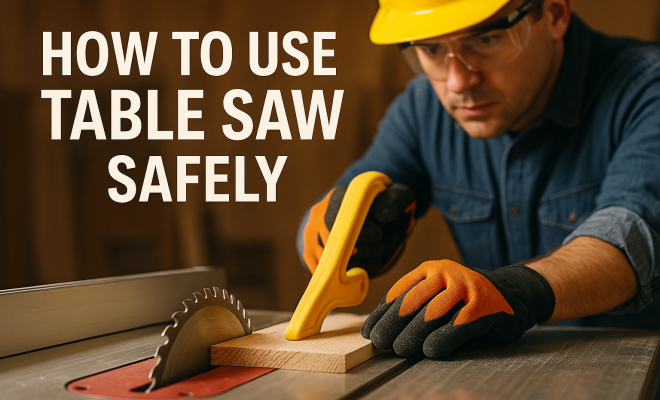
Properly positioning your workpiece is essential for safe and accurate cuts. Always use the table saw fence or miter gauge to guide your wood. Avoid using your hands to push wood through the blade; instead, employ push sticks or push blocks to keep your hands at a safe distance from the blade.
When working with larger sheets of plywood or lumber, consider using roller stands or additional supports to prevent the material from tipping or falling during cutting. This not only helps maintain stability but also enhances your control over the workpiece, significantly contributing to overall table saw safety.
5. Understanding the Saw’s Controls
Familiarize yourself with the controls and settings of your table saw before operating it. This includes knowing how to adjust the blade height and angle, as well as how to properly engage and disengage the saw’s power switch. Understanding these functions can help prevent accidents caused by improper adjustments or unexpected operation. (See: U.S. Consumer Product Safety Commission.)
Additionally, make sure that all safety features, such as blade guards and riving knives, are installed and functioning correctly. These components are designed to protect you from accidents and should never be removed while the saw is in use. Checking these elements routinely can significantly enhance your table saw safety.
6. Proper Technique for Cutting
Employing the right cutting techniques is crucial when using a table saw. Always cut with the blade spinning toward the front of the saw, as this will reduce the risk of kickback. Maintain a steady feed rate; forcing the wood through the blade can lead to erratic cuts and increase the likelihood of accidents.
Use slow, controlled movements when you push material through the blade. Rushing can lead to errors, which could result in injury. If you experience resistance while cutting, stop the saw immediately and investigate the cause instead of forcing the wood through. Staying calm and using the right technique can significantly enhance your overall table saw safety.
7. Regular Maintenance and Inspection
Regular maintenance of your table saw is essential for keeping it in good working condition and ensuring table saw safety. This includes checking the blade for dullness, as a dull blade requires more force to cut, increasing the risk of accidents. Regularly clean the saw and its surrounding area to remove sawdust and debris that can obstruct your view or impair the saw’s operation.
Additionally, inspect other components, such as the fence and miter gauge, for accuracy and alignment. Misaligned or damaged parts can lead to inaccuracies during cutting, which can also create dangerous situations. Implementing a maintenance routine can help ensure your table saw remains safe and effective for years to come.
8. Responding to Emergencies
Even with the best safety practices in place, accidents can still happen. Knowing how to respond effectively is a crucial aspect of table saw safety. First, ensure that you know the location of your first aid kit and how to use it. In case of a serious injury, such as a laceration, apply pressure to the wound and seek medical attention immediately.
Moreover, it’s beneficial to have a clear emergency plan in place. This includes informing all workers or assistants of the procedure to follow in case of an accident. Practicing these response protocols can make the difference in a critical situation.
9. Understanding Table Saw Features
Modern table saws come equipped with various features designed to enhance table saw safety. One of these features is the blade guard, which shields the user from the blade during operation. Some saws also have riving knives, which keep the kerf open to prevent kickback by allowing the wood to slide smoothly past the blade.
Another valuable feature is the electric brake. This mechanism stops the blade within seconds after the power is cut, significantly reducing the chance of injury from accidental contact. Familiarizing yourself with these features not only improves safety but also enhances your overall woodworking experience.
10. Common Mistakes to Avoid
There are several common mistakes that amateur woodworkers make when using table saws. One major error is failing to use a push stick. Even if the blade guard is in place, using your hands to guide the wood can put you at risk of injury. Always keep your hands at least six inches away from the blade.
Another mistake is ignoring the importance of alignment. Ensure that the blade is parallel to the fence and that the fence itself is properly adjusted. Misalignment can lead to binding, which can cause kickback. Taking the time to set up your cuts correctly can significantly enhance table saw safety.
11. Wood Types and Their Impact on Safety
Different types of wood can behave differently when cut on a table saw, which can affect safety. For instance, hardwoods typically require more force to cut than softwoods, which can increase the risk of kickback if not handled properly. It’s essential to be aware of the properties of the wood you’re working with, including its grain direction and moisture content, as they can impact cutting behavior. (See: National Institutes of Health.)
Additionally, certain woods like plywood or MDF can produce more sawdust, which can obscure your view and increase the likelihood of a mishap. Adjusting your technique and taking added precautions when working with these materials can help ensure a safer cutting experience.
12. Expert Perspectives on Table Saw Safety
Industry experts emphasize that education is a critical component of table saw safety. Workshops and training sessions can provide valuable insights into best practices and emerging technologies in woodworking safety. Renowned woodworkers often recommend enrolling in classes that focus not just on techniques but also on safety protocols.
For instance, many experienced woodworkers advocate for using saws with built-in safety systems. They argue that investing in these saws is worth it, considering the potential cost of injuries. Additionally, they stress the importance of community and sharing knowledge with peers to create a culture of safety within woodworking environments.
13. Statistics You Should Know
Statistics continue to highlight the critical importance of table saw safety. Research indicates that approximately 67% of table saw injuries involve lacerations to fingers and hands. Furthermore, about 20% of these injuries require surgical intervention, with some cases leading to permanent disabilities. Knowing these figures can serve as a wake-up call for woodworkers to prioritize their safety measures.
Another striking statistic is that nearly half of the injuries occur when the operator is rushed or distracted. This reinforces the need to maintain focus and adhere to safety protocols regardless of project deadlines or other pressures.
14. Frequently Asked Questions (FAQ)
What is the safest way to use a table saw?
The safest way to use a table saw is to wear appropriate personal protective equipment, including safety glasses and hearing protection, and to employ proper techniques, such as using push sticks and ensuring that your workspace is organized and free of distractions.
How often should I inspect my table saw for safety?
You should inspect your table saw before each use, checking for any signs of wear or damage to the blade, guards, and other components. Regular maintenance routines should be established based on how frequently you use the saw, ideally at least once a month.
Can I use a table saw without a blade guard?
No, using a table saw without a blade guard is highly discouraged. The blade guard is a crucial safety feature designed to protect you from accidental contact with the blade. Always ensure it is in place and functioning properly before operating the saw.
What should I do if I experience kickback?
If you experience kickback, the first step is to stay calm. Immediately release the material and turn off the saw. Assess the situation to identify if the fence is misaligned or if the blade is dull. Implement better safety measures for your next cut to prevent future incidents.
Are newer table saws safer than older models?
In many cases, yes. Newer models often come equipped with advanced safety features such as flesh detection technology, electric brakes, and improved blade guards. While these features can enhance safety, they do not replace the need for proper techniques and personal responsibility. (See: Occupational Safety and Health Administration.)
15. Best Practices for Teaching Table Saw Safety
When teaching newcomers about table saw safety, it’s essential to start with the basics. Begin by explaining the machine’s components, how they work, and the specific safety features built into the saw. Use visual aids and demonstrations to solidify understanding.
Hands-on training is invaluable. Allow trainees to operate the saw under supervision, reinforcing the importance of each safety measure. Encourage them to ask questions about what they don’t understand and provide constructive feedback on their technique. The more comfortable they feel, the more likely they are to follow safety protocols consistently.
16. Advanced Safety Techniques
Once a woodworker is comfortable with the basics, it’s beneficial to explore advanced safety techniques. For example, teach the concept of “cutting the push stick” where the woodworker learns to use push sticks and blocks effectively to maintain distance from the blade. Discuss the importance of using feather boards to stabilize the wood, preventing it from shifting during cuts, which can lead to accidents.
Also, discuss the significance of blade height adjustment. The blade should only be high enough to clear the material being cut. Setting it too high can increase the risk of kickback and accidental contact with the blade. By mastering these techniques, woodworkers can operate a table saw with increased confidence and safety.
17. Table Saw Safety Resources
There are numerous resources available to help improve table saw safety. Organizations like the National Woodworking Association and the American Woodworker Association offer training programs, online tutorials, and safety guidelines tailored to both beginners and advanced woodworkers.
Additionally, consider investing in books written by woodworking experts focused on safety practices. Online forums and woodworking communities also serve as platforms for sharing experiences and tips related to table saw safety. Engaging with these resources can deepen your understanding and promote a culture of safety in your woodworking activities.
18. Conclusion
Using a table saw can be both safe and enjoyable when the proper precautions are taken. By understanding the risks, investing in the right protective gear, maintaining a clean and organized workspace, and employing sound techniques, you can minimize the chances of accidents and injuries. Remember, safety should never be an afterthought; it’s an integral part of every woodworking project.
“`
Trending Now
Frequently Asked Questions
What are the safety precautions for using a table saw?
When using a table saw, always wear safety glasses and hearing protection. Ensure your workspace is organized, avoid loose clothing, and tie back long hair. Use proper techniques to handle the material and stay aware of potential hazards like kickback and blade contact.
What protective gear should I use when operating a table saw?
Essential protective gear includes safety glasses to shield your eyes from debris, hearing protection for prolonged exposure to noise, snug-fitting clothing to prevent entanglement, and sturdy, non-slip shoes to maintain balance while using the saw.
What are the common risks associated with table saws?
Common risks include kickback, where the wood is forcefully pushed back towards the operator, and blade contact, which can lead to severe injuries. Awareness of these dangers is crucial for safe operation.
How can I prevent kickback when using a table saw?
To prevent kickback, ensure the wood is properly supported and aligned with the blade. Use push sticks and feather boards to guide the material and maintain control, keeping hands away from the blade.
Why is it important to set up a safe workspace for table saw use?
A safe and organized workspace minimizes distractions and hazards, allowing for better focus and control while using the table saw. It helps prevent accidents and ensures that tools and materials are easily accessible.
Have you experienced this yourself? We’d love to hear your story in the comments.