The Tech Edvocate

Top Menu

  • Advertisement
  • Apps
  • Home Page
  • Home Page Five (No Sidebar)
  • Home Page Four
  • Home Page Three
  • Home Page Two
  • Home Tech2
  • Icons [No Sidebar]
  • Left Sidbear Page
  • Lynch Educational Consulting
  • My Account
  • My Speaking Page
  • Newsletter Sign Up Confirmation
  • Newsletter Unsubscription
  • Our Brands
  • Page Example
  • Privacy Policy
  • Protected Content
  • Register
  • Request a Product Review
  • Shop
  • Shortcodes Examples
  • Signup
  • Start Here
    • Governance
    • Careers
    • Contact Us
  • Terms and Conditions
  • The Edvocate
  • The Tech Edvocate Product Guide
  • Topics
  • Write For Us
  • Advertise

Main Menu

  • Start Here
    • Our Brands
    • Governance
      • Lynch Educational Consulting, LLC.
      • Dr. Lynch’s Personal Website
      • Careers
    • Write For Us
    • The Tech Edvocate Product Guide
    • Contact Us
    • Books
    • Edupedia
    • Post a Job
    • The Edvocate Podcast
    • Terms and Conditions
    • Privacy Policy
  • Topics
    • Assistive Technology
    • Child Development Tech
    • Early Childhood & K-12 EdTech
    • EdTech Futures
    • EdTech News
    • EdTech Policy & Reform
    • EdTech Startups & Businesses
    • Higher Education EdTech
    • Online Learning & eLearning
    • Parent & Family Tech
    • Personalized Learning
    • Product Reviews
  • Advertise
  • Tech Edvocate Awards
  • The Edvocate
  • Pedagogue
  • School Ratings

logo

The Tech Edvocate

  • Start Here
    • Our Brands
    • Governance
      • Lynch Educational Consulting, LLC.
      • Dr. Lynch’s Personal Website
        • My Speaking Page
      • Careers
    • Write For Us
    • The Tech Edvocate Product Guide
    • Contact Us
    • Books
    • Edupedia
    • Post a Job
    • The Edvocate Podcast
    • Terms and Conditions
    • Privacy Policy
  • Topics
    • Assistive Technology
    • Child Development Tech
    • Early Childhood & K-12 EdTech
    • EdTech Futures
    • EdTech News
    • EdTech Policy & Reform
    • EdTech Startups & Businesses
    • Higher Education EdTech
    • Online Learning & eLearning
    • Parent & Family Tech
    • Personalized Learning
    • Product Reviews
  • Advertise
  • Tech Edvocate Awards
  • The Edvocate
  • Pedagogue
  • School Ratings
  • Toxic Pills: This Supplement Scandal Puts Millions at Risk

  • Urgent Dog Supplement Recall: This Stealthy Threat Could Be Hiding in Your Pantry!

  • Staggering: Climate Tech Fundraising Collapses — Is AI to Blame?

  • Global AI stocks tumble as industry’s biggest names sound alarm – The Straits Times

  • Sony’s Controversial Move: Why the Last of Us Part II Multiplayer Mod Got Axed

  • Trump’s Wild AI Claims: Is There a ‘Sick Conspiracy’ Against Tech?

  • This One Thing Is Turning Classrooms Into Culture War Battlegrounds

  • Your AI Detector Is Useless: Why Universities Are Scrapping ‘Catch & Ban’ for This

  • Terrifying: AI Is About to Break Cybersecurity – And No One Is Ready

  • Volkswagen’s Staggering Miscalculation: 50,000 Jobs Vanish as EV Dream Sours

Digital & Mobile Technology
Home›Digital & Mobile Technology›First Come, First Served (FCFS)

First Come, First Served (FCFS)
By Matthew Lynch
May 28, 2023
0
Spread the love

First Come, First Served (FCFS) is a scheduling algorithm used in computer operating systems and other applications. This scheduling algorithm follows a simple rule: the task that arrives first is executed first. The first-come, first-served algorithm is also known as the first-in, first-out (FIFO) algorithm.

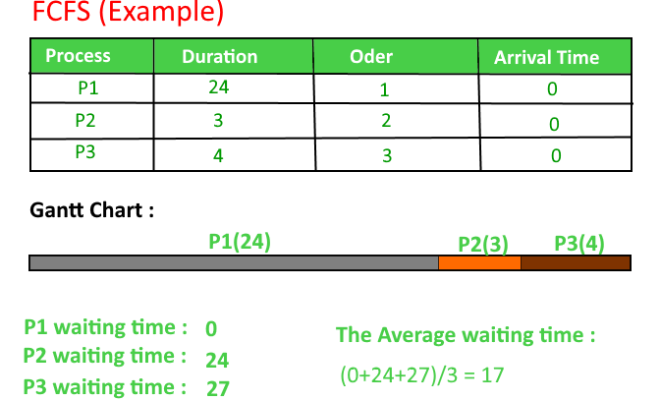
In the FCFS scheduling algorithm, the operating system allocates the CPU (central processing unit) to the first task that requests it. The CPU remains allocated to that task until it finishes its processing or goes into the waiting state, where it has to wait for some event to occur.

FCFS is a non-preemptive scheduling algorithm, which means that once a task acquires the CPU, it continues to use it until it completes its execution or gets blocked due to some reason. In other words, the CPU of the system is assigned to a process, and it remains assigned to that process until the process terminates, or the process enters the waiting state.

In this type of scheduling, processes are scheduled according to the order in which they arrive in the ready queue. The ready queue is a waiting area where processes are loaded while they wait for their turn to execute on the CPU. The FCFS algorithm works based on the principle of first-come, first-served, so the process that first arrived in the queue gets executed first, and the other processes have to wait until the earlier ones complete.

When the CPU is idle, the first process in the queue is selected and moved into the running state. The operating system then assigns resources to it so that it can execute its instructions. In case the process needs to wait for any input/output (I/O) operation or any other event, it goes into the waiting state. The ready queue then selects the next process in the queue.

One disadvantage of the FCFS scheduling algorithm is that it can lead to a problem known as the “convoy effect.” This effect occurs when a process with a long execution time, known as a CPU-bound process, takes up the CPU, and other processes have to wait, which can hurt performance.

In summary, the FCFS algorithm assigns the CPU to a process that’s first in line, and it remains with that process until it completes or goes into the waiting state. However, this algorithm is not as efficient as some alternatives since it can lead to a convoy effect and can cause delays of all other jobs, especially CPU-bound jobs.  

Previous Article

Top 8 Ways to Fix Safari Not ...

Next Article

Fitbit vs. Apple Watch: Which Is the ...

Matthew Lynch

Related articles More from author

  • Digital & Mobile Technology

    How to Convert MOV to MP4 on a Mac

    August 5, 2023
    By Matthew Lynch
  • Digital & Mobile Technology

    How to Use Apple’s Clips App

    July 24, 2023
    By Matthew Lynch
  • Digital & Mobile Technology

    How to Fix the “Windows Installer Service could not be accessed” Error in Windows 7

    May 28, 2023
    By Matthew Lynch
  • Digital & Mobile Technology

    How to Add Comic Book Speech Balloons and Text Bubbles to Your Photos

    July 29, 2023
    By Matthew Lynch
  • Digital & Mobile Technology

    How To Backup and Move VirtualBox Machines

    May 18, 2023
    By Matthew Lynch
  • Digital & Mobile Technology

    Best Smart Clothes of 2023

    June 8, 2023
    By Matthew Lynch

Search

Login & Registration

  • Log in
  • Entries feed
  • Comments feed
  • WordPress.org

Newsletter

Signup for The Tech Edvocate Newsletter and have the latest in EdTech news and opinion delivered to your email address!

About Us

Since technology is not going anywhere and does more good than harm, adapting is the best course of action. That is where The Tech Edvocate comes in. We plan to cover the PreK-12 and Higher Education EdTech sectors and provide our readers with the latest news and opinion on the subject. From time to time, I will invite other voices to weigh in on important issues in EdTech. We hope to provide a well-rounded, multi-faceted look at the past, present, the future of EdTech in the US and internationally.

We started this journey back in June 2016, and we plan to continue it for many more years to come. I hope that you will join us in this discussion of the past, present and future of EdTech and lend your own insight to the issues that are discussed.

Newsletter

Signup for The Tech Edvocate Newsletter and have the latest in EdTech news and opinion delivered to your email address!

Contact Us

The Tech Edvocate
910 Goddin Street
Richmond, VA 23231
(601) 630-5238
[email protected]

Copyright © 2026 Matthew Lynch. All rights reserved.