The Tech Edvocate

Top Menu

  • Advertisement
  • Apps
  • Home Page
  • Home Page Five (No Sidebar)
  • Home Page Four
  • Home Page Three
  • Home Page Two
  • Home Tech2
  • Icons [No Sidebar]
  • Left Sidbear Page
  • Lynch Educational Consulting
  • My Account
  • My Speaking Page
  • Newsletter Sign Up Confirmation
  • Newsletter Unsubscription
  • Our Brands
  • Page Example
  • Privacy Policy
  • Protected Content
  • Register
  • Request a Product Review
  • Shop
  • Shortcodes Examples
  • Signup
  • Start Here
    • Governance
    • Careers
    • Contact Us
  • Terms and Conditions
  • The Edvocate
  • The Tech Edvocate Product Guide
  • Topics
  • Write For Us
  • Advertise

Main Menu

  • Start Here
    • Our Brands
    • Governance
      • Lynch Educational Consulting, LLC.
      • Dr. Lynch’s Personal Website
      • Careers
    • Write For Us
    • The Tech Edvocate Product Guide
    • Contact Us
    • Books
    • Edupedia
    • Post a Job
    • The Edvocate Podcast
    • Terms and Conditions
    • Privacy Policy
  • Topics
    • Assistive Technology
    • Child Development Tech
    • Early Childhood & K-12 EdTech
    • EdTech Futures
    • EdTech News
    • EdTech Policy & Reform
    • EdTech Startups & Businesses
    • Higher Education EdTech
    • Online Learning & eLearning
    • Parent & Family Tech
    • Personalized Learning
    • Product Reviews
  • Advertise
  • Tech Edvocate Awards
  • The Edvocate
  • Pedagogue
  • School Ratings

logo

The Tech Edvocate

  • Start Here
    • Our Brands
    • Governance
      • Lynch Educational Consulting, LLC.
      • Dr. Lynch’s Personal Website
        • My Speaking Page
      • Careers
    • Write For Us
    • The Tech Edvocate Product Guide
    • Contact Us
    • Books
    • Edupedia
    • Post a Job
    • The Edvocate Podcast
    • Terms and Conditions
    • Privacy Policy
  • Topics
    • Assistive Technology
    • Child Development Tech
    • Early Childhood & K-12 EdTech
    • EdTech Futures
    • EdTech News
    • EdTech Policy & Reform
    • EdTech Startups & Businesses
    • Higher Education EdTech
    • Online Learning & eLearning
    • Parent & Family Tech
    • Personalized Learning
    • Product Reviews
  • Advertise
  • Tech Edvocate Awards
  • The Edvocate
  • Pedagogue
  • School Ratings
  • A Visitor’s Guide to Fresno (CA), United States

  • A Visitors Guide to New Orleans (LA), United States

  • A Visitors Guide to Sacramento (CA), United States

  • A Visitors Guide to Lyon, France

  • JisuLife Ultra2 Portable Fan: A Powerful Multi-Function Cooling Solution

  • A Visitors Guide to Viña del Mar, Chile

  • A Visitors Guide to Århus, Denmark

  • A Visitors Guide to Bakersfield (CA), United States

  • A Visitors Guide to Aurora (CO), United States

  • A Visitor’s Guide to Toledo (OH), United States

Digital & Mobile Technology
Home›Digital & Mobile Technology›What Is USB 3.0?

What Is USB 3.0?

By Matthew Lynch
May 30, 2023
0
Spread the love

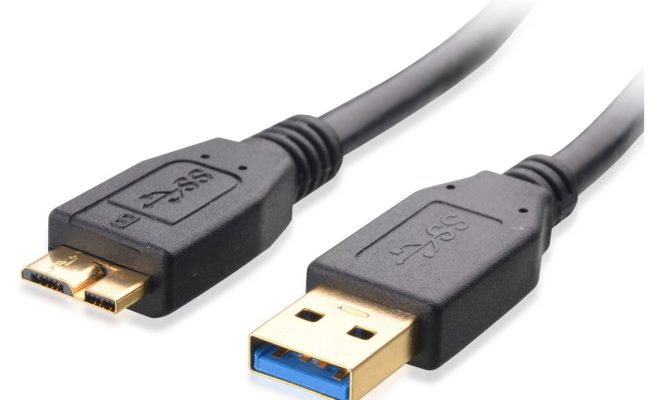
USB 3.0, also known as SuperSpeed USB, is the third major version of the Universal Serial Bus standard for interfacing computers and electronic devices. It was introduced in November 2008 and offers significant improvements over its predecessors, USB 1.0/1.1 and USB 2.0, in terms of speed and power management.

The main advantage of USB 3.0 is its increased data transfer rate, which is up to 5 Gbps, making it 10 times faster than USB 2.0’s 480 Mbps. This high-speed transfer allows for quicker file transfers, faster backup times, and smooth video and audio streaming, among other things. For example, a 25GB high-definition movie can be transferred in just 70 seconds using USB 3.0, whereas it would take approximately 14 minutes with USB 2.0.

Another significant improvement of USB 3.0 is its enhanced power management. It allows for more efficient power usage with devices that require more power, such as external hard drives, while also cutting down on energy consumption for lower-powered devices. USB 3.0 can also charge devices faster than previous versions, with up to 900mA of power compared to 500mA in USB 2.0.

USB 3.0 ports and cables are backwards compatible with USB 2.0 devices, which means that the new technology will still work with older devices. However, the transfer speed will be limited to the older standard’s capacity. Conversely, USB 2.0 devices can be connected to a USB 3.0 port, but they won’t benefit from the faster transfer rate.

As with every new technology, there are always some drawbacks to consider. One of the main disadvantages of USB 3.0 is that it generates more heat than USB 2.0, which can cause operating temperatures to soar quickly, particularly when using the higher-powered devices for extended periods. However, this can be mitigated by investing in high-quality cable and technology components that are designed to enable better air circulation, manage voltage effectively, reduce electromagnetic interference, and more.

In conclusion, USB 3.0 is an excellent example of how technology continues to mature and improve over time. With its increased data transfer rate, improved power management, and backward compatibility, it’s quickly becoming the industry standard for connecting electronic devices. As prices continue to drop and more companies across various industries adopt the technology, it’s likely that USB 3.0 will become even more ubiquitous in the years to come.


Previous Article

Best Free Data Recovery Software Tools of ...

Next Article

How to Fix a Cracked Phone Screen

Matthew Lynch

Related articles More from author

  • Digital & Mobile Technology

    How to Find Your Phone’s IP Address on Android or iPhone

    August 3, 2023
    By Matthew Lynch
  • Digital & Mobile Technology

    What is Cyberlaw?

    May 6, 2023
    By Matthew Lynch
  • Digital & Mobile Technology

    How to Get a List of All the Apps Installed on Your Android Device

    August 5, 2023
    By Matthew Lynch
  • Digital & Mobile Technology

    What is Web Mining?

    May 14, 2023
    By Matthew Lynch
  • Digital & Mobile Technology

    What Is a Multi-Touch Screen?

    June 12, 2023
    By Matthew Lynch
  • Digital & Mobile Technology

    Norton vs. McAfee: Which Internet Security Suite Is Better?

    June 15, 2023
    By Matthew Lynch

Search

Login & Registration

  • Register
  • Log in
  • Entries feed
  • Comments feed
  • WordPress.org

Newsletter

Signup for The Tech Edvocate Newsletter and have the latest in EdTech news and opinion delivered to your email address!

About Us

Since technology is not going anywhere and does more good than harm, adapting is the best course of action. That is where The Tech Edvocate comes in. We plan to cover the PreK-12 and Higher Education EdTech sectors and provide our readers with the latest news and opinion on the subject. From time to time, I will invite other voices to weigh in on important issues in EdTech. We hope to provide a well-rounded, multi-faceted look at the past, present, the future of EdTech in the US and internationally.

We started this journey back in June 2016, and we plan to continue it for many more years to come. I hope that you will join us in this discussion of the past, present and future of EdTech and lend your own insight to the issues that are discussed.

Newsletter

Signup for The Tech Edvocate Newsletter and have the latest in EdTech news and opinion delivered to your email address!

Contact Us

The Tech Edvocate
910 Goddin Street
Richmond, VA 23231
(601) 630-5238
[email protected]

Copyright © 2025 Matthew Lynch. All rights reserved.