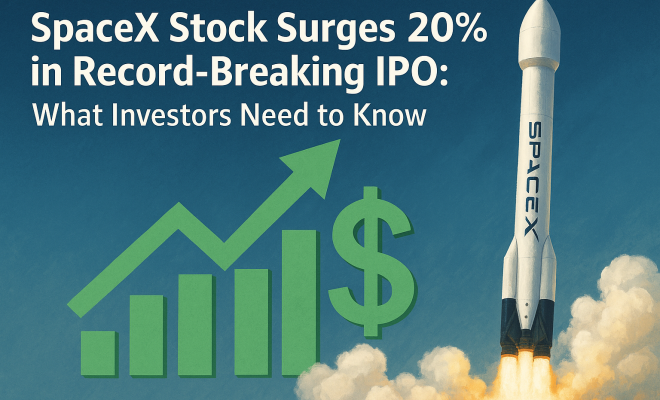
SpaceX Stock Surges 20% in Record-Breaking IPO: What Investors Need to Know
“`html
On June 15, 2026, SpaceX made waves in the financial markets as its stock took off, surging by 20% in its first full day of trading. The excitement surrounding this record-breaking IPO on Nasdaq is palpable, with investors eagerly snapping up shares. With around 244 million shares changing hands, the stock closed at an impressive $192.50, marking a significant increase of $31 from its previous close. This incredible debut has positioned SpaceX as not only a leader in the aerospace industry but also one of the most talked-about private startup listings in recent memory.
1. The IPO Phenomenon: What Made SpaceX’s Listing Special
SpaceX’s IPO stands out against a backdrop of increasingly competitive markets. The company’s entry into public trading hasn’t just been about raising capital; it signals a new era where private ventures can achieve unprecedented valuations. Elon Musk’s pioneering vision for space travel, coupled with substantial investor interest, has created a perfect storm for this monumental debut.
The hype surrounding the IPO can be attributed to several factors. Firstly, the company has consistently hit ambitious milestones, from launching commercial satellites to plans for Mars colonization. Secondly, Musk’s influence as a charismatic leader has garnered significant media attention, making the company a household name. This unique combination of innovation and celebrity has created a surge of interest, leading to the dramatic rise in SpaceX stock.
2. Investor Demand Drives Prices Up: A Closer Look at Trading Volume
The trading volume on SpaceX’s debut day speaks volumes about market sentiment. Approximately 244 million shares changing hands reflects an immense appetite for SpaceX stock, indicating that investors see substantial potential in the company’s business model. This level of activity is not just a fluke; it underscores a broader trend of investor buoyancy, particularly in tech and aerospace sectors that promise future growth.
High trading volumes often serve as a barometer for investor confidence. When shares trade at such high volumes, it can indicate that traders are aggressively buying in, believing that the company’s future prospects are bright. For SpaceX, this enthusiasm could be attributed to its past successes and ambitious future plans, including the Starship program and potential missions to Mars.
3. Understanding Wall Street’s Mixed Reactions
Despite the overall bullish sentiment, Wall Street is divided on SpaceX stock. While some analysts are optimistic about its future, others are more cautious. For instance, CFRA initiated coverage with a sell rating, setting a target price at $115. This conservative outlook raises questions about the sustainability of the recent price surge.
Conversely, NewStreet Research took a more favorable view, setting a target price of $165. This disparity reflects the inherent volatility of the stock market and underscores the debate surrounding SpaceX’s valuation. Investors are advised to consider these varying perspectives when making decisions, as differing analyses can lead to significant fluctuations in stock performance.
4. The Elon Musk Factor: How Leadership Influences Perception
Elon Musk’s involvement in SpaceX is undeniably a major factor in the company’s stock performance. His reputation as a visionary entrepreneur has attracted both attention and investment. With a track record of success, from PayPal to Tesla, Musk’s brand power cannot be overstated. Investors often find themselves drawn to companies led by prominent figures, believing their leadership will drive success.
Additionally, Musk’s bold promises and ambitious timelines contribute to the stock’s allure. When he announces advancements or new projects, the market often reacts enthusiastically. However, those same announcements can lead to skepticism if timelines slip or goals are not met, creating a complex relationship between investor sentiment and Musk’s proclamations.
5. Valuation Debate: What Drives SpaceX’s Market Worth?
One of the most contentious aspects of SpaceX’s stock is its valuation. As with many tech startups, determining true market value is challenging, especially when traditional metrics like earnings and revenue are not as firm as they are in established companies. The current valuation of SpaceX reflects not just its existing technology but also future potential — a speculative assessment that can lead to dramatic swings in stock price.
Investors need to weigh the potential for future contracts and projects against the current market price. With an ambitious roadmap, including plans for satellite internet through Starlink and potential lunar missions, SpaceX’s valuation suggests that many investors are betting heavily on its future success rather than its past performance. (See: SpaceX IPO coverage by NY Times.)
6. Market Comparisons: How SpaceX Stacks Up Against Competitors
When examining SpaceX’s debut, it’s useful to compare it with other aerospace companies. Rivals like Boeing and Northrop Grumman, which also operate in the commercial space sector, provide a benchmark for performance. These companies have their own sets of advantages and challenges, but SpaceX’s innovative approach — particularly with reusable rockets — gives it a unique edge.
However, this comparison poses risks. For example, if competitors start to close the technological gap or outperform in contract acquisition, SpaceX’s market position could be threatened. Investors need to keep a keen eye on both the internal developments at SpaceX and the external competitive landscape.
7. Future Prospects: What Lies Ahead for SpaceX Stock
Looking forward, the future of SpaceX stock hinges on several key factors. The company’s ability to secure lucrative contracts with NASA and private entities will play a crucial role. With ongoing developments in satellite technology and the push for commercial space travel, SpaceX is poised to benefit from increasing demand.
Additionally, advancements in technology, such as improvements in rocket reusability and cost efficiency, could bolster SpaceX’s bottom line, further driving stock prices upward. However, investors must remain vigilant about the risks associated with such a fast-moving industry, where delays and technical challenges can have significant financial repercussions.
8. Understanding the FOMO Phenomenon: The Psychology of Investing
The surge in SpaceX stock can also be attributed to the Fear of Missing Out (FOMO) phenomenon that often influences investor behavior. In an age where information spreads rapidly, news of a successful IPO can lead to a rush of investment activity. Investors may fear missing out on potential gains, which can drive prices even higher.
FOMO is particularly pronounced in high-profile stocks like SpaceX, where media coverage amplifies excitement and potential. Emotional responses can lead to frenzied buying behavior, further inflating stock prices. Understanding this psychological aspect is crucial for investors aiming to navigate the stock market effectively, ensuring they balance excitement with sound investment principles.
9. Final Thoughts: Navigating the Future of SpaceX Stock
As SpaceX stock rises and falls in the coming weeks and months, investors face a blend of excitement and uncertainty. With the company’s ambitious goals and a charismatic leader at the helm, the potential for growth is significant. However, the mixed opinions from analysts remind us that caution is warranted.
Ultimately, staying informed and understanding both the market dynamics and the broader trends in the aerospace industry will be essential for anyone looking to invest in SpaceX stock. As the story of this innovative company unfolds, it’s clear that all eyes will remain on SpaceX — and the implications extend far beyond just its stock price.
10. The Role of Government Contracts: SpaceX and Public Sector Partnerships
Government contracts significantly impact SpaceX’s financial stability and stock performance. Contracts with NASA, such as the Commercial Crew Program, have been vital for SpaceX’s early funding and credibility in the aerospace sector. As SpaceX continues to partner with government agencies for both transportation and exploration missions, the stability of these contracts plays a crucial role in investor confidence.
In 2026, SpaceX secured a $2.9 billion contract to develop the lunar lander for NASA’s Artemis program, which aims to return humans to the Moon. This contract not only boosts SpaceX’s revenue projections but also enhances its reputation as a reliable aerospace contractor. Investors typically view such government contracts favorably, as they bring a degree of reliability amidst the volatility of commercial contracts.
However, reliance on government contracts can be a double-edged sword. Any changes in political leadership or budget allocations could affect funding for space projects, potentially impacting SpaceX’s bottom line. Investors should monitor government policies and spending on space exploration closely, as these factors could influence the future trajectory of SpaceX stock.
11. Technological Innovation: SpaceX’s Edge in the Market
Technological innovation is at the core of SpaceX’s business model. The company has revolutionized space travel through reusable rocket technology, which drastically reduces the cost of launching payloads into orbit. The Falcon 9 rocket, which has been reused numerous times, showcases SpaceX’s commitment to making space more accessible. This innovation not only saves money but also allows for more frequent launches, creating additional revenue opportunities. (See: CDC on space health and technology.)
Looking ahead, SpaceX is gearing up for the launch of Starship, a fully reusable spacecraft designed for missions to Mars and beyond. The successful development and deployment of Starship could further cement SpaceX’s dominance in the aerospace industry and significantly impact its stock performance. Investors are keenly watching Starship’s progress, as it represents both a technological leap and a potential revenue stream from interplanetary missions.
Statistics show that the global space economy is projected to reach $1 trillion by 2040, with commercial spaceflight playing a significant role in this growth. As SpaceX continues to innovate and expand its capabilities, it stands to benefit substantially from this burgeoning market, making it a compelling option for investors focusing on long-term growth.
12. Market Sentiment and Social Media Influence: The New Age of Investing
In today’s investing landscape, social media plays a pivotal role in shaping market sentiment. Platforms like Twitter, Reddit, and stock trading apps have transformed how investors gather information and make decisions. SpaceX, with its high-profile leader in Elon Musk, is frequently discussed across these platforms, which can lead to rapid fluctuations in stock prices based on public sentiment.
For instance, posts or tweets from Musk can lead to immediate movements in SpaceX stock, as his statements often shape investor confidence and market perception. This phenomenon highlights the importance of considering social media trends when analyzing the stock’s performance. Understanding the impact of digital platforms on stock trading is crucial, as it adds a layer of complexity to traditional investment strategies.
However, investors must be cautious. The rapid dissemination of information can lead to misinformation or overreactions, resulting in volatile stock movements. Therefore, it’s essential to balance insights from social media with rigorous analysis and reliable data when making investment decisions regarding SpaceX stock.
13. Environmental Considerations: Addressing Sustainability in Space Exploration
As the world increasingly emphasizes sustainability, SpaceX’s environmental impact is under scrutiny. Launching rockets traditionally involves significant carbon emissions and resource consumption. However, SpaceX is actively investing in technologies aimed at reducing its ecological footprint. For instance, its Raptor engines are designed for greater efficiency, which could lessen their environmental impact compared to older rocket technologies.
Moreover, SpaceX’s goal of colonizing Mars raises questions about the long-term sustainability of such endeavors. Investors are beginning to consider the environmental implications of space exploration as part of their investment criteria. Companies that prioritize sustainability may attract socially conscious investors, potentially influencing stock performance.
As regulations around environmental practices in aerospace continue to evolve, SpaceX will need to stay ahead of the curve. By prioritizing sustainable practices, SpaceX not only aligns with global trends but also improves its public image, which can translate into a more favorable market perception and ultimately, a positive impact on its stock price.
14. FAQs About SpaceX Stock
- Is SpaceX a publicly traded company?
Yes, SpaceX went public on June 15, 2026, marking its debut on Nasdaq. - What factors influence the price of SpaceX stock?
Several factors influence SpaceX’s stock price, including government contracts, technological advancements, investor sentiment, and market trends in the aerospace sector. - How can I invest in SpaceX stock?
You can invest in SpaceX stock through a brokerage account once it becomes available for trading. Ensure you do your research and understand the risks involved. - What are the risks associated with investing in SpaceX stock?
Risks include market volatility, reliance on government contracts, technological challenges, and competition from other aerospace companies. - What are analysts saying about SpaceX stock?
Analysts have mixed opinions on SpaceX stock, with some expressing optimism about its growth potential while others are more cautious about its high valuation. - What is SpaceX’s long-term growth potential?
SpaceX’s long-term growth potential is tied to its ability to innovate, secure contracts, and capitalize on the expanding commercial space industry.
15. Investment Strategies for SpaceX Stock
When considering an investment in SpaceX stock, developing a well-thought-out strategy is essential. Given the volatility often associated with tech stocks, employing a multi-faceted approach can help mitigate risks and maximize potential returns.
One strategy investors might consider is dollar-cost averaging. This approach involves consistently investing a fixed amount of money over time, regardless of the stock price. It helps smooth out the effects of market volatility and reduces the risk of making poor investment decisions based on short-term market fluctuations. (See: NASA's partnership with SpaceX.)
Another strategy is to keep an eye on key milestones for SpaceX. Significant events, such as successful launches or contract announcements, can dramatically influence stock prices. By being aware of upcoming events, investors can position themselves to take advantage of potential price movements, whether upward or downward.
Finally, diversifying your portfolio is crucial. While SpaceX may be an appealing investment, putting all your eggs in one basket can expose you to unnecessary risks. By spreading your investments across various sectors, you can protect your overall financial health while still being able to benefit from SpaceX’s potential growth.
16. The Importance of Research and Due Diligence
Investors interested in SpaceX stock should prioritize thorough research and due diligence. Analyzing financial statements, understanding the company’s competitive position, and keeping up with industry trends are all essential components of a successful investment strategy. Consideration of external factors, such as changes in government policies impacting space exploration, can also be crucial.
Additionally, following expert analysts and reports can provide valuable insights into the company’s performance and potential challenges. Engaging in communities, whether online forums or investment clubs, can also equip investors with diverse perspectives and strategies regarding SpaceX stock.
17. Global Impact and SpaceX’s Role
SpaceX is not just a player in the financial markets; it has become a significant force in global space exploration and technology. The company’s initiatives, such as the Starlink satellite constellation, aim to provide internet access worldwide, especially in underserved regions. This could enhance global connectivity and offer new business opportunities in emerging markets.
Furthermore, SpaceX’s ambitions to establish a human presence on Mars could reshape the future of humanity. The company’s plans include not only transporting astronauts but also facilitating scientific research and possibly even colonization. This long-term vision could inspire a new generation of scientists, engineers, and entrepreneurs, further enhancing the company’s reputation and stock value over time.
In a world increasingly focused on technological advancements and global challenges, the role of companies like SpaceX will only become more pronounced. As they push the boundaries of exploration and innovation, the implications for investors can be significant, making them an attractive choice in a diversified investment strategy.
“`
Trending Now
Frequently Asked Questions
Why did SpaceX stock surge 20% on its IPO?
SpaceX stock surged 20% on its IPO due to high investor demand and excitement surrounding the company's innovative projects and Elon Musk's leadership. The record-breaking debut saw around 244 million shares traded, reflecting strong market interest and confidence in SpaceX's future potential in the aerospace industry.
What makes SpaceX's IPO special?
SpaceX's IPO is special as it marks a significant milestone for private companies achieving unprecedented valuations. The company's consistent success in launching commercial satellites and ambitious plans for Mars colonization, combined with Elon Musk's media presence, has generated immense interest and positioned SpaceX as a leader in the aerospace sector.
How many shares were traded on SpaceX's IPO day?
On SpaceX's IPO day, approximately 244 million shares were traded. This high trading volume indicates a strong appetite among investors for SpaceX stock, showcasing their confidence in the company's business model and future growth prospects in the competitive aerospace market.
What factors contributed to the hype around SpaceX's IPO?
The hype surrounding SpaceX's IPO can be attributed to several factors, including the company's track record of achieving ambitious milestones, Elon Musk's charismatic leadership, and the growing investor interest in innovative tech and aerospace sectors. These elements combined created a perfect storm for the stock's impressive debut.
What impact does SpaceX's IPO have on the aerospace industry?
SpaceX's IPO has a significant impact on the aerospace industry as it signals a new era where private ventures can achieve high valuations and attract substantial investor interest. This sets a precedent for other startups and highlights the growing confidence in the commercial space sector's potential for future growth and innovation.
Have you experienced this yourself? We’d love to hear your story in the comments.