Shein’s $500M Everlane Bid: A Brand Integrity Crisis Unfolds
“`html
Shein Everlane Acquisition: A Collision of Ideologies
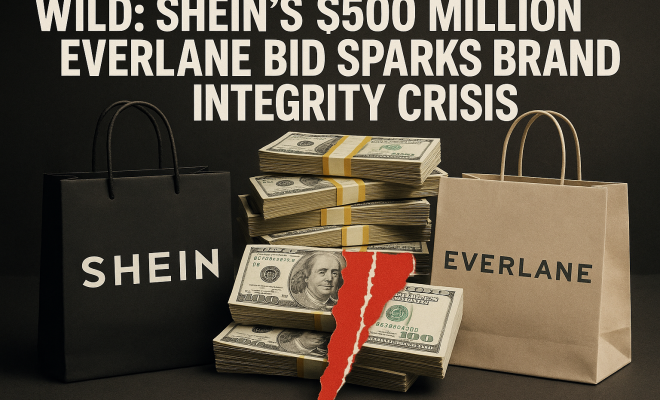
It’s the kind of news that makes you do a double-take, then scroll back to confirm you read it right. Shein, the undisputed titan of ultra-fast fashion, is reportedly poised to acquire Everlane, a brand built on the very antithesis of Shein’s operational model. Puck first broke the story, suggesting a half-billion-dollar deal – $500 million, to be exact – that has sent shockwaves through the fashion industry and ignited a furious debate across social media platforms. Think about it: a company synonymous with breakneck speed, trend replication, and a less-than-stellar environmental record potentially swallowing a brand that has staked its entire reputation on ethical production, radical transparency, and timeless basics. It’s not just an acquisition; it’s a cultural clash of epic proportions, and the Shein Everlane acquisition is forcing consumers, industry insiders, and even casual observers to confront uncomfortable truths about brand values, corporate survival, and the future of fashion itself.
For years, Everlane has cultivated a loyal following by peeling back the curtain on its supply chain. They’ve detailed factory costs, explained pricing markups, and championed initiatives aimed at reducing their environmental footprint. Their marketing often hinged on the idea of conscious consumption – buying fewer, better things that last. Then there’s Shein, a digital juggernaut that churns out thousands of new items daily, often at prices so low they seem impossible. Their business model thrives on fleeting trends, encouraging frequent, often impulsive, purchases. To say these two companies represent opposing poles of the fashion universe would be an understatement. The sheer audacity of the Shein Everlane acquisition proposal has left many consumers feeling betrayed, wondering if Everlane’s long-held principles were merely a veneer, easily shed for a hefty payout.
The Unraveling of Everlane’s Ethical Façade?
For a brand like Everlane, built on the promise of ‘radical transparency,’ this reported acquisition by Shein feels like a profound betrayal to many of its long-time customers. Everlane didn’t just sell clothes; it sold an ethos. They told stories about the factories where their garments were made, sometimes even profiling the workers. They broke down the cost of materials, labor, and transport, proudly displaying what they called ‘true cost’ alongside their retail price. This wasn’t just good marketing; for many, it was a genuine commitment that resonated deeply in an industry often criticized for its opacity and exploitative practices.
Now, imagine those same customers grappling with the news of a Shein Everlane acquisition. Shein, a company that has faced numerous allegations ranging from copyright infringement to questionable labor practices and a massive environmental impact due to its sheer volume of production. The cognitive dissonance is palpable. How can a brand that prided itself on ‘ethical factories’ and ‘sustainable materials’ suddenly align itself with a company that, in the eyes of many, embodies everything they claimed to stand against? It raises uncomfortable questions about the authenticity of brand values in an increasingly consolidated market. Was Everlane’s transparency merely a strategic differentiator, or a deeply held belief system? The public reaction suggests a widespread feeling that it might have been the former, leaving a bitter taste for those who genuinely invested in Everlane’s mission.
Shein’s Quest for Legitimacy and Market Diversification
So, why would Shein want Everlane? On the surface, it seems counterintuitive. Shein’s strength lies in its lightning-fast production cycle, its ability to capitalize on micro-trends, and its direct-to-consumer model that leverages social media influencers to reach a massive, primarily younger, audience. Everlane, on the other hand, targets a slightly older, more discerning demographic, prioritizing timeless design and perceived quality over fleeting trends. However, look a little closer, and the strategic rationale for the Shein Everlane acquisition begins to emerge.
Shein is a powerhouse, no doubt, but it’s also a brand constantly battling a perception problem. Allegations of unethical labor, environmental irresponsibility, and design theft dog its every move. Acquiring Everlane could be a calculated move to inject a much-needed dose of legitimacy and perceived ethical credibility into Shein’s overall corporate portfolio. It’s a way to signal to investors and perhaps even regulators that Shein is serious about diversifying its offerings and potentially improving its image. Furthermore, Everlane’s customer base, while smaller than Shein’s, represents a demographic with higher disposable income and a greater willingness to spend on quality and perceived ethical value. This acquisition could open up an entirely new market segment for Shein, allowing it to tap into consumers who would never, under any circumstances, consider buying directly from Shein’s primary platform. It’s about broadening appeal, mitigating risk, and perhaps, cleaning up a tarnished reputation one acquisition at a time.
The Fast Fashion Conundrum: Can Ethics Be Bought?
The reported Shein Everlane acquisition throws a harsh spotlight on one of the fashion industry’s most enduring dilemmas: can fast fashion ever truly be ethical or sustainable? Everlane’s appeal was its promise that you could buy stylish, well-made clothes without contributing to exploitation or excessive waste. They offered a path to conscious consumption within a consumerist society. Shein, by contrast, epitomizes the very forces that make ethical fashion so challenging – rapid production, low prices, and immense volume. The sheer scale of Shein’s operations means even small improvements in individual product lines are often overshadowed by the overall impact of its business model.
If this deal goes through, it forces us to ask: does Everlane’s ethical framework get integrated into Shein, or does Everlane simply become another brand under the Shein umbrella, gradually diluting its original mission? The prevailing sentiment among consumers suggests the latter. Many fear that Shein will either strip away Everlane’s transparency to cut costs or, worse, that Everlane’s existing ethical commitments will be rendered meaningless by association with its new parent company. This isn’t just about a business transaction; it’s about whether the very concept of an ‘ethical’ brand can survive when subsumed by a corporate entity whose core values appear diametrically opposed. Can you truly buy ethics, or do they have to be built from the ground up, ingrained in every fiber of a company’s being?
Consumer Outrage and the Power of Social Media
You didn’t need to look far to see the immediate fallout from the Shein Everlane acquisition news. Social media, as it often does, became the primary battleground for consumer outrage. Instagram comments, Twitter threads, and TikTok videos exploded with reactions ranging from disbelief to anger to outright calls for boycotts. Long-time Everlane customers expressed feelings of betrayal, using words like ‘hypocrisy’ and ‘sellout.’ Many felt that Everlane had, in essence, sold its soul for $500 million, abandoning the very principles that attracted them in the first place. (See: Shein's impact on fast fashion.)
This widespread digital outcry underscores the growing power of consumer sentiment, particularly when it comes to brand integrity and perceived ethical breaches. In an age of instant information and highly engaged online communities, companies can no longer operate in a vacuum. Consumers are increasingly discerning, not just about the product itself, but about the values and practices of the companies behind them. This isn’t just about losing a few customers; it’s about a significant blow to brand reputation that could take years, if not decades, to repair. The sheer volume of negative engagement highlights a critical lesson for any brand considering such a high-stakes acquisition: ignore your core customer base’s values at your peril.
The Ripple Effect: What This Means for the Fashion Industry
The implications of the Shein Everlane acquisition extend far beyond just these two brands. This potential merger could act as a bellwether for the broader fashion industry, signaling a new era of consolidation and the blurring of lines between previously distinct market segments. If Shein, a company built on speed and low cost, can successfully absorb a brand like Everlane, which was founded on ethical principles and transparency, what does that mean for other ‘conscious’ brands struggling to compete in a hyper-competitive market?
It raises questions about the viability of genuinely ethical fashion at scale, especially when faced with the financial might of fast fashion giants. Will other smaller, ethically-minded brands be forced to compromise their values to survive, perhaps by seeking similar acquisitions or by cutting corners to compete on price? Or will this incident galvanize consumers to support truly independent and transparent brands even more fiercely? This deal could accelerate a trend where sustainability becomes less about genuine systemic change and more about corporate greenwashing – a veneer of ethical practices overlaid onto fundamentally unsustainable business models. It’s a critical moment that could reshape investor confidence in ethical fashion and force a re-evaluation of what ‘sustainability’ truly means in the context of mass production.
Understanding the Economics Behind the Deal
While the ethical and reputational aspects are front and center for consumers, it’s crucial to remember that a $500 million transaction is fundamentally an economic decision. Everlane, despite its strong brand identity and loyal following, has likely faced its own set of financial challenges. The retail landscape is brutal, with intense competition, rising production costs, and shifting consumer habits. Maintaining a transparent, ethically-sourced supply chain isn’t cheap, and passing those costs onto consumers can make it difficult to achieve significant scale and profitability, especially when competing with ultra-low-cost alternatives.
For Everlane’s stakeholders – founders, investors, and employees – a $500 million offer from Shein could represent a compelling exit strategy or a lifeline, providing much-needed capital for growth, technological upgrades, or simply to stay afloat in a tough market. From Shein’s perspective, this isn’t just about acquiring a brand; it’s about acquiring intellectual property, a customer database, potentially some valuable supply chain relationships, and a perceived ‘seal of approval’ in the ethical space. The economics of market share, brand diversification, and long-term strategic positioning often outweigh the immediate ethical concerns for corporate decision-makers. This deal, if it happens, highlights the immense financial pressure even well-intentioned brands can face, making them vulnerable to acquisition by larger, less ethically constrained entities.
The Future of Transparency in Fashion
Everlane pioneered ‘radical transparency’ as a core brand tenet, effectively setting a new standard for how fashion companies could communicate with their customers. They showed that consumers cared about where their clothes came from and how they were made. But if the Shein Everlane acquisition proceeds, what does that mean for the future of transparency in fashion?
Will other brands be deterred from making similar commitments, fearing that their hard-won ethical credentials could be compromised by a future acquisition? Or will this event serve as a stark reminder that transparency, while valuable, must be deeply embedded and protected, perhaps through legal structures or independent oversight, to truly withstand the pressures of the market? The fear is that if Everlane, the poster child for transparency, can so easily be absorbed by a company with an opaque supply chain, it might discourage others from even trying. It underscores the fragility of ethical commitments when confronted with significant financial incentives. Moving forward, consumers will likely scrutinize claims of transparency even more rigorously, demanding not just information, but verifiable action and accountability from brands, especially those under larger corporate umbrellas.
Navigating the New Fashion Landscape: Advice for Consumers and Brands
So, where does this leave us, the consumers, and what can brands learn from this seismic shift? For consumers, the Shein Everlane acquisition is a powerful reminder that truly ethical consumption requires constant vigilance. Don’t simply trust a brand’s marketing claims; dig deeper. Research their parent companies, look for third-party certifications, and understand that even well-intentioned brands can face pressures that compromise their original mission. If ethical and sustainable fashion is important to you, consider supporting smaller, independent brands that have a clear, verifiable commitment to their values, or even explore second-hand and vintage options.
For brands, especially those built on ethical foundations, this situation offers a critical lesson: your values are your most valuable asset. If you decide to sell or merge, consider the long-term impact on your brand’s integrity and customer loyalty. Transparency alone isn’t enough; it must be backed by consistent action and a deep understanding of your customer’s expectations. This incident should serve as a wake-up call, prompting brands to think about how they can future-proof their ethical commitments, perhaps through benefit corporation status, stronger governance structures, or by building a truly resilient community that can advocate for their values, even in the face of immense financial offers. The fashion landscape is changing rapidly, and navigating it successfully will require both consumers and brands to be more informed, more discerning, and more committed to their principles than ever before.
This reported Shein Everlane acquisition isn’t just another business deal; it’s a profound cultural moment for the fashion industry. It forces us to question the very definition of ‘ethical’ and ‘sustainable’ in an era dominated by corporate giants. Whether it signals the triumph of fast fashion or a renewed call for genuine accountability, one thing is clear: the conversation around brand integrity in fashion has just gotten a whole lot louder.
The Broader Trend of Consolidation in Retail
While the Shein Everlane acquisition news is specifically about fashion, it’s also part of a much wider trend across the retail sector: consolidation. Larger, often digitally native, companies are snapping up smaller, niche brands. This isn’t unique to fashion. We see it in beauty, home goods, and even food. The reasons are pretty consistent: access to new customer demographics, expansion into different price points, acquiring specialized supply chains or manufacturing capabilities, and eliminating potential competitors. For the acquiring company, it’s about growth and market dominance. For the acquired company, it might be about survival, realizing investor returns, or gaining access to capital and infrastructure they simply couldn’t build on their own. (See: Everlane's ethical production practices.)
What makes the Shein Everlane acquisition so striking is the stark contrast in their public personas and operational philosophies. When a conglomerate buys another brand, there’s often some level of alignment. Here, the ideological gap feels immense. This makes it a fascinating case study in how far a company is willing to stretch its brand identity, and how much consumers are willing to forgive or forget, in the pursuit of market share and profitability. It also highlights the increasing pressure on independent brands to either scale rapidly or risk being absorbed by entities that might not share their founding principles.
Investor Perspectives: Risk vs. Reward
From an investor’s standpoint, the Shein Everlane acquisition presents a complex risk-reward calculation. For Shein’s investors, Everlane offers a chance to diversify revenue streams, appeal to a higher-income demographic, and potentially mitigate some of the reputational risks associated with Shein’s core business. If Shein can successfully integrate Everlane and maintain its brand equity, it could open up significant new growth avenues. However, there’s also the risk of alienating Everlane’s loyal customer base, leading to a decline in sales and essentially paying a premium for a brand whose value then diminishes under new ownership. The brand “Everlane” is intrinsically tied to its ethical image; if that image is tarnished, the value proposition to Shein significantly weakens.
For Everlane’s investors, a $500 million payout could represent a strong return, especially if the brand was facing increasing financial pressures or struggling to achieve further growth independently. It’s a clear exit strategy. The question for them would be whether the ethical cost of such an acquisition outweighs the financial gain, though in the world of venture capital and private equity, financial returns often take precedence. This deal could be seen as a validation of Everlane’s brand building, even if its ultimate destination contradicts its origin story. It’s a reminder that businesses, regardless of their mission, often operate within a financial reality driven by stakeholder expectations.
The Potential for Greenwashing Concerns
A significant concern arising from the Shein Everlane acquisition is the potential for greenwashing. Greenwashing is when a company or organization spends more time and money on marketing itself as environmentally friendly than on minimizing its environmental impact. If Shein acquires Everlane, critics might argue that Shein is simply buying a reputation for sustainability without making fundamental changes to its own highly impactful business model. It could allow Shein to point to Everlane as proof of its commitment to ethics and sustainability, while the vast majority of Shein’s operations continue as before, with their rapid production and high volume.
This isn’t just a theoretical concern; it’s a common tactic in various industries. By acquiring a smaller, genuinely sustainable brand, a larger, less sustainable parent company can attempt to improve its public image without truly addressing its core environmental footprint. Consumers are increasingly aware of greenwashing, and this type of acquisition could backfire if the public perceives it as an insincere attempt to deflect criticism rather than a genuine move towards more ethical practices across the entire corporate structure. It places a huge burden on Shein to demonstrate, through verifiable actions, that Everlane’s ethical principles will not only be preserved but potentially extended or amplified under its ownership.
What Shein Could Learn (or Ignore) from Everlane’s Supply Chain
Everlane built its reputation on painstaking supply chain transparency, often highlighting specific factories and their working conditions. Shein, on the other hand, operates with a much more opaque and decentralized network of thousands of manufacturers, allowing for its incredible speed and volume. If the Shein Everlane acquisition goes through, there’s a possibility Shein could learn from Everlane’s approach to supply chain management.
Imagine Shein adopting even a fraction of Everlane’s transparency standards for a specific line, or implementing some of its ethical sourcing practices. This would be a monumental shift for Shein and could genuinely improve its overall impact. However, it’s also highly probable that Shein might view Everlane’s supply chain as a niche asset, useful for a particular brand segment, without integrating those practices into its core, ultra-fast fashion operations. The challenge for Shein would be to reconcile the speed and cost-efficiency of its existing model with the slower, more deliberate, and often more expensive practices required for true transparency and ethical production. It remains to be seen if the operational benefits of Everlane’s model are seen as transferable or simply as a premium feature for a specific brand in its portfolio.
Frequently Asked Questions About the Shein Everlane Acquisition
Q1: Is the Shein Everlane acquisition confirmed?
A1: As of the latest reports, the acquisition is rumored and was initially broken by Puck, citing sources familiar with the discussions. Neither Shein nor Everlane has publicly confirmed the deal. Until an official announcement is made, it remains a reported proposal.
Q2: Why is the potential Shein Everlane acquisition such a big deal?
A2: It’s a big deal because the two brands represent polar opposites in the fashion industry. Everlane built its brand on ‘radical transparency’ and ethical production, while Shein is known for ultra-fast fashion, low prices, and faces criticisms regarding labor practices and environmental impact. The potential merger of such contrasting ideologies has sparked widespread debate and consumer concern. (See: Sustainability in the fashion industry.)
Q3: What does Everlane stand to gain from this acquisition?
A3: Everlane could gain significant financial capital, potentially a $500 million payout, which could provide an exit strategy for investors, fund future growth, or offer a lifeline in a challenging retail market. It could also benefit from Shein’s vast logistical network and global reach, if managed strategically.
Q4: What does Shein stand to gain from acquiring Everlane?
A4: Shein could gain access to a new, higher-income customer demographic, diversify its brand portfolio, and potentially improve its corporate image by associating with a brand known for ethical practices. It could also acquire Everlane’s intellectual property, design expertise, and potentially some ethical supply chain relationships.
Q5: How are Everlane’s customers reacting to the news?
A5: Many long-time Everlane customers have expressed strong feelings of betrayal and disappointment on social media platforms. They feel that Everlane is abandoning its core ethical principles for financial gain, leading to widespread calls for boycotts and a general sense of disillusionment.
Q6: Will Everlane’s ethical practices continue under Shein’s ownership?
A6: This is a major concern. While it’s possible Shein might maintain Everlane as a distinct brand with its existing ethical framework, many consumers fear that Everlane’s transparency and ethical commitments will be diluted or compromised to align with Shein’s cost-cutting and speed-focused operations. Shein would need to make a very clear public commitment and demonstrate tangible actions to reassure consumers.
Q7: What is ‘radical transparency’ in fashion?
A7: ‘Radical transparency’ is a business practice where a company openly shares detailed information about its operations, particularly its supply chain, manufacturing costs, labor practices, and pricing structures. Everlane pioneered this approach to build trust and educate consumers about the true cost of clothing.
Q8: What is greenwashing?
A8: Greenwashing is a marketing tactic where a company presents itself as more environmentally friendly or sustainable than it actually is, often through deceptive advertising or by highlighting minor eco-friendly initiatives while its core business remains damaging to the environment. The Shein Everlane acquisition raises concerns about potential greenwashing if Shein uses Everlane’s reputation to deflect criticism from its own practices without making significant systemic changes.
“`
Trending Now
Frequently Asked Questions
What is the significance of Shein's bid for Everlane?
Shein's $500 million bid for Everlane represents a clash of ideologies in the fashion industry. While Shein is known for ultra-fast fashion and low prices, Everlane stands for ethical production and transparency. This acquisition has sparked debate about brand integrity and consumer values in fashion.
How does Shein's business model differ from Everlane's?
Shein operates on a model of rapid production and trend replication, releasing thousands of new items daily at low prices. In contrast, Everlane focuses on ethical practices, transparency in pricing, and promoting sustainable consumption, encouraging customers to buy fewer, high-quality items.
What reactions has the fashion industry had to the Shein-Everlane acquisition?
The proposed acquisition has generated significant backlash from consumers and industry insiders alike. Many are questioning Everlane's commitment to its ethical principles, fearing that the deal may compromise its brand values and authenticity in favor of financial gain.
Could Shein's acquisition of Everlane change the brand's identity?
Yes, there is concern that Shein's acquisition could lead to a shift in Everlane's brand identity. As a brand built on ethical practices, Everlane's values may be at risk if it aligns more closely with Shein’s fast-fashion model, potentially alienating its loyal customer base.
What are the potential implications for consumers if Shein acquires Everlane?
If Shein acquires Everlane, consumers may face a dilution of Everlane’s commitment to ethical practices. This could lead to a shift in product offerings, marketing strategies, and overall brand messaging, challenging consumers to reconsider their purchasing decisions based on brand values.
What did we miss? Let us know in the comments and join the conversation.