Is AI Stifling Creativity in 2026 Fashion Trends?
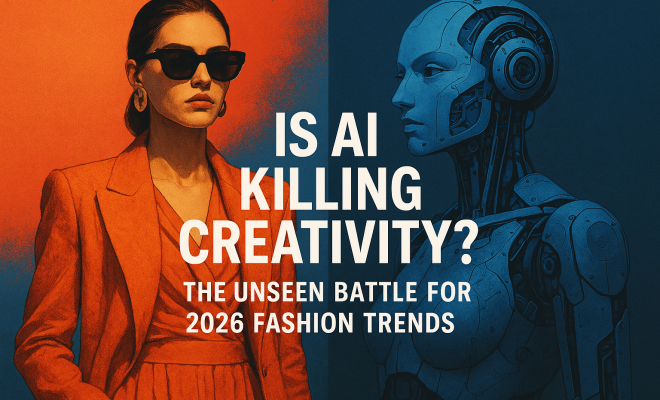
The Shifting Sands of Style: Are We Losing Fashion’s Soul?
Remember when fashion felt like a grand pronouncement, a carefully crafted statement from designers that filtered down to the streets over seasons, sometimes even years? It wasn’t just about what was ‘in’; it was about artistry, about a vision, about genuine self-expression. Fast forward to today, and particularly as we gaze toward 2026 fashion trends, many industry insiders and keen observers are asking a troubling question: has fashion lost its artistic core? It’s a sentiment echoing through online forums and industry debates, suggesting that the very essence of what makes fashion an art form is being eroded, replaced by something altogether more transient and, frankly, less soulful.
This isn’t just a lament from purists longing for a bygone era. There’s a tangible shift happening, driven by forces that are reshaping not only how we consume fashion but how it’s created. The core argument, one gaining considerable traction, is that the relentless pace of modern trend cycles, largely dictated by the insatiable appetite of social media, is creating an environment where genuine artistic endeavor struggles to breathe. Think about it: how much time does a designer truly have to develop a cohesive narrative, to explore a concept deeply, when the demand is for constant newness, for viral moments that are here today and forgotten by tomorrow?
This accelerated cycle isn’t just affecting designers; it’s trickling down to you and me, the consumers. We’re finding ourselves caught in a peculiar bind, where the pressure to conform to fleeting micro-trends is subtly, yet powerfully, stifling our innate desire for self-expression. It feels as if we’re dressing not for ourselves, not for our personal stories, but for algorithms. We’re chasing likes, trying to fit into a digital aesthetic, rather than embracing the glorious, sometimes messy, individuality that fashion has historically celebrated. It’s a fear, an underlying anxiety, that our personal style might be deemed ‘irrelevant’ if it doesn’t align with the latest TikTok sensation.
The Algorithmic Overlords: How Social Media Dictates 2026 Fashion Trends
Let’s be honest: social media has fundamentally altered nearly every aspect of our lives, and fashion is no exception. Platforms like TikTok, Instagram, and Pinterest have become the undisputed arbiters of taste, dictating what’s hot and what’s not at an unprecedented speed. While this democratized fashion in some ways, allowing smaller creators and diverse voices to emerge, it also introduced a new kind of tyranny: the tyranny of the algorithm. What goes viral, what gets pushed into your feed, often becomes the de facto trend, regardless of its artistic merit or longevity.
The problem is that these algorithms are designed for engagement, not necessarily for fostering creativity or personal style. They favor novelty, repetition, and easily digestible content. This translates into rapid-fire micro-trends – think ‘cottagecore’ morphing into ‘dark academia’ into ‘coastal grandmother’ in the blink of an eye. For brands, the pressure is immense. They feel compelled to churn out collections at breakneck speed to capitalize on these fleeting moments, often sacrificing quality and original thought in the process. Why invest months in developing a truly innovative design when a slightly tweaked version of a viral item will sell out in days?
This endless chase for the next big thing creates a superficiality that is antithetical to art. Art requires depth, reflection, and a willingness to challenge norms. When fashion becomes a series of quick hits, a constant stream of newness driven by algorithmic preferences, it risks becoming a commodity rather than a cultural statement. The consumer, in turn, feels a constant pressure to keep up, to buy into the latest aesthetic, lest they be left behind. It’s an exhausting cycle that leaves little room for individual exploration or the development of a truly personal fashion identity. The result? A diluted landscape where genuine innovation struggles to rise above the noise of ephemeral fads, making the forecast for authentic 2026 fashion trends a bit hazy.
The Erosion of Self-Expression: Dressing for the Algorithm, Not Yourself
Perhaps one of the most disheartening consequences of this hyper-accelerated trend cycle is the chilling effect it has on genuine self-expression. Think about it: when you scroll through your feed, how often do you see truly unique, unconventional styles celebrated over the perfectly curated, algorithm-friendly aesthetic? There’s a subtle but pervasive pressure to conform, to dress in a way that garners likes and positive comments, rather than reflecting your authentic self.
This fear of genuine self-expression isn’t just about what you wear; it’s about what you *don’t* wear. It’s about hesitating to put together an outfit that feels deeply personal but might not fit neatly into a trending hashtag. It’s about seeing a piece of clothing you adore, but then questioning if it’s ‘on trend’ enough to be validated by your online peers. This internal negotiation is a significant departure from fashion’s historical role as a tool for individual identity formation and rebellion. Historically, fashion allowed us to signal our affiliations, our beliefs, our unique personalities to the world. Now, it often feels like we’re signaling our conformity to a digital consensus.
The irony is that many social media platforms started with the promise of empowering individual voices. Yet, in practice, they’ve often created echo chambers where certain aesthetics are amplified, and anything outside those parameters gets less visibility. This creates a feedback loop: people see what’s popular, emulate it, and in doing so, reinforce its popularity, further marginalizing truly unique expressions. If this trajectory continues, the vibrant tapestry of individual style that once characterized our streets could become a much more homogenous, algorithm-approved landscape by the time we fully embrace 2026 fashion trends.
Beyond the Hype: The Rise of “Quiet Luxury” and Timelessness
In contrast to the relentless churn of micro-trends, a counter-movement has been quietly gaining momentum: “quiet luxury.” This isn’t just another passing fad; it represents a deeper desire for quality, craftsmanship, and pieces that transcend seasonal shifts. Think well-tailored garments, premium fabrics, and understated designs that prioritize longevity over flash. It’s an aesthetic that whispers rather than shouts, focusing on inherent value and sophisticated simplicity. This trend suggests a longing for garments that tell a story not of fleeting popularity, but of enduring style and personal investment. (See: impact of social media on fashion.)
This shift aligns with a broader consumer awakening around sustainability. When you buy into quiet luxury or invest in timeless pieces, you’re inherently making a more sustainable choice. You’re opting for items designed to last, reducing the demand for fast fashion’s disposable cycles. It’s a move away from the ‘wear once, discard’ mentality driven by social media. For 2026 fashion trends, this could mean a significant return to appreciating construction, fabric innovation, and classic silhouettes, allowing individual style to shine through the quality of chosen pieces rather than their fleeting trend status. For more on this, see social media in education.
What’s particularly interesting is how this trend challenges the very algorithms that push novelty. Quiet luxury thrives on subtle details, nuanced textures, and a personal connection to the garment – things that are harder to capture in a viral TikTok snippet. It requires a more discerning eye and a slower consumption pace, encouraging individuals to build a wardrobe thoughtfully rather than impulsively. This could be a powerful way for consumers to reclaim agency and redefine what “fashionable” truly means.
The AI Uprising: Ethical Dilemmas in Fashion’s Digital Frontier
As if the algorithmic pressures weren’t enough, fashion is grappling with another monumental shift: the escalating controversy surrounding the use of AI-generated models and imagery. This isn’t just about a cool new filter; we’re talking about sophisticated AI that can create entire campaigns, complete with photorealistic models who don’t actually exist. On one hand, it offers brands unparalleled flexibility, cost savings, and the ability to create highly customized visuals. On the other, it raises a storm of significant ethical questions, particularly concerning job displacement for human creatives.
Consider the ripple effect: if brands can generate perfect models, perfect lighting, and perfect backdrops with a few clicks and a subscription, what happens to the photographers, the stylists, the makeup artists, the set designers, and yes, the models themselves? These are not just roles; they are careers, often built on years of training, talent, and passion. The fashion industry has always been a significant employer of creative talent, providing livelihoods for countless individuals who bring their unique human touch to every project.
The shift to AI isn’t hypothetical; it’s happening now. Companies are experimenting, and some are fully embracing AI-generated content for product shots, social media campaigns, and even virtual try-ons. While proponents argue that AI can free up human creatives for more conceptual work, the fear is palpable: that the immediate cost-cutting benefits will overshadow the long-term impact on human creativity and employment. This isn’t just about economics; it’s about the very soul of an industry that has always thrived on human connection and human artistry.
‘Dystopian’ Debates: The Human Cost of AI in Creative Industries
It’s not an exaggeration to say that critics are labeling the replacement of human talent with AI for cost-cutting as ‘dystopian.’ This isn’t hyperbole; it’s a deeply felt concern articulated by artists, activists, and even some industry leaders. The emotional charge in these online debates is undeniable, highlighting a fundamental clash between technological advancement and human value. People are genuinely worried, and rightly so, about the future of creative work and authenticity in an industry that has always celebrated the unique spark of human ingenuity.
The argument goes beyond mere job loss. It touches upon the very definition of art itself. Can a machine truly create art, or does art require a human consciousness, a lived experience, an emotional resonance that only a human can bring? When we see an AI-generated model, however flawless, are we connecting with it in the same way we connect with a human face, a human expression, a human story? Many argue that something vital is lost – an authenticity, a relatability, a vulnerability that AI, by its very nature, cannot replicate.
This ‘dystopian’ label stems from the fear of a future where creativity is commodified and automated, where the unique contributions of individual artists are deemed unnecessary in favor of efficiency and cost-effectiveness. It’s a future where the beauty and imperfection of human artistry are polished away by algorithms, leaving behind something technically perfect but emotionally sterile. As we look ahead to 2026 fashion trends, this debate isn’t just a side note; it’s a central, existential crisis for an industry wrestling with its identity in the digital age.
Authenticity Under Attack: The Fading Line Between Real and Rendered
One of the most insidious effects of the rise of AI in fashion imagery is the blurring of lines between what’s real and what’s rendered. For decades, fashion photography, while often aspirational, still grounded itself in a tangible reality. The models were real people, the clothes were real garments, and the settings were real locations (or meticulously constructed sets). There was an understanding that while the images were aspirational, they were rooted in a physical world.
Now, with AI, that foundation is crumbling. We can’t always tell if the influencer we’re following is human, if the stunning outfit is actually a physical garment, or if the entire scene is a digital construct. This constant ambiguity creates a sense of unease and distrust. If we can’t trust what we’re seeing, how can we form a genuine connection with a brand, a campaign, or even a trend? Authenticity, once a cornerstone of fashion’s appeal, is becoming a rare commodity. (See: Harvard University research on creativity.)
This isn’t just about ethical transparency; it has psychological implications. When our visual landscape is increasingly populated by unattainable, algorithmically perfect AI creations, what does that do to our self-perception? How does it affect our understanding of beauty, of reality, of what’s possible? The pursuit of perfection, already a major issue in the digital age, is amplified exponentially when the ‘models’ themselves are literally flawless digital creations. This erosion of authenticity is a silent crisis, one that threatens to make 2026 fashion trends feel more like a simulation than a lived experience.
The Creative’s Cry: Why Human Talent Still Matters
Despite the undeniable allure of AI’s efficiency and cost-saving potential, there’s a powerful and growing chorus championing the irreplaceable value of human talent. Why does it matter so much? Because creativity isn’t just about generating an image; it’s about storytelling, emotion, cultural context, and the unpredictable spark of human ingenuity. A human designer brings their life experiences, their cultural background, their triumphs and their struggles to their work. This imbues clothing with meaning, with a narrative that resonates on a deeper level than any algorithm can achieve.
Think of the iconic moments in fashion history: Alexander McQueen’s raw, emotional runway shows; Vivienne Westwood’s rebellious punk aesthetic; Iris van Herpen’s otherworldly, sculptural creations. These weren’t just garments; they were profound artistic statements, born from unique human perspectives. They challenged, they provoked, they inspired. Can an AI truly replicate that level of conceptual depth, that emotional resonance, that rebellious spirit?
Moreover, the process of creation itself is a human endeavor. The collaborative energy between a designer and their team, the meticulous handcraftsmanship, the serendipitous mistakes that lead to brilliant innovations – these are all intrinsically human. Reducing fashion to a purely algorithmic output strips away the very humanity that makes it so compelling. Human talent offers not just skill, but soul, vision, and the capacity for genuine surprise – qualities that should be central to how 2026 fashion trends unfold.
Resisting the Current: Nurturing Authenticity in a Digital Age
So, what can be done? Is the artistic core of fashion doomed to be swallowed by algorithms and AI? Not necessarily. There’s a growing movement, a quiet resistance, focused on nurturing authenticity and celebrating genuine creativity. For individuals, it means consciously stepping away from the pressure to conform. It means asking yourself: ‘Does this outfit genuinely reflect who I am, or am I dressing for the ‘gram?’ It involves curating your feed to follow creators who prioritize unique style over fleeting trends, and actively seeking out smaller, independent brands that champion craftsmanship and original design.
For brands and designers, it means making a conscious choice to prioritize artistry over immediate virality. It means investing in sustainable practices, in ethical production, and most importantly, in human talent. It means telling stories that matter, creating collections with a narrative, and embracing the beautiful imperfections that make fashion human. Some designers are already pushing back, explicitly stating their commitment to human models and handcrafted elements, using their platforms to advocate for the preservation of traditional skills and human creativity.
This isn’t about rejecting technology wholesale; it’s about using it as a tool to enhance human creativity, not replace it. Imagine AI assisting designers with pattern making or fabric innovation, rather than generating entire campaigns that displace human jobs. It’s about finding a balance, a symbiotic relationship where technology serves art, not the other way around. As we approach 2026 fashion trends, supporting human-centric creation is more vital than ever.
The Future of Fashion: Reclaiming Artistry for 2026 and Beyond
The questions being raised about fashion’s artistic core are not just academic; they are urgent. The decisions made today, by consumers, designers, brands, and tech developers, will profoundly shape the landscape of fashion for years to come. Will 2026 fashion trends be a homogenized blur of AI-generated perfection and algorithmic conformity, or will they represent a vibrant resurgence of human creativity and authentic self-expression?
The path forward requires intentionality. It demands that we, as fashion enthusiasts and participants, actively choose to support genuine artistry. This means valuing craftsmanship over fast fashion, seeking out originality over replication, and celebrating the diverse tapestry of human style. It also means holding brands accountable, asking tough questions about their use of AI, and advocating for ethical practices that protect human jobs and creativity. (See: fashion industry's changing landscape.)
Ultimately, fashion, at its best, is a powerful form of communication, a reflection of our culture, our dreams, and our identities. It’s too important to be reduced to a purely commercial, algorithm-driven enterprise. The fight to preserve fashion’s artistic soul isn’t just about clothes; it’s about preserving a vital aspect of human culture and creativity in an increasingly automated world. Let’s hope that by 2026, we’ll see a renewed commitment to the art form, where human imagination, not artificial intelligence, truly reigns supreme.
Frequently Asked Questions About 2026 Fashion Trends and the Industry’s Future
As we navigate these complex shifts, it’s natural to have questions about what all this means for the clothes we’ll wear and the industry itself. Here are some common questions and thoughts about the future of fashion:
Q1: Will fast fashion completely disappear by 2026?
While a complete disappearance is unlikely, fast fashion is facing increasing pressure from consumers and regulations regarding sustainability and ethical production. We expect to see a significant pivot towards more responsible practices within some fast fashion giants, and a growing consumer preference for conscious consumption. The rise of resale platforms and the demand for higher quality, durable items will certainly impact its market share, but its low price point accessibility will likely keep it a player, albeit a more scrutinized one, in 2026.
Q2: How can I identify genuine human creativity versus AI-generated designs?
This is becoming increasingly difficult, but there are some tell-tale signs. Look for imperfections – a slight asymmetry, a unique hand-drawn element, or a texture that has a natural variation. AI often aims for flawless symmetry and perfection, which can sometimes feel sterile. Genuine human creativity also tends to have a more distinct point of view, a narrative, or an emotional quality that feels deeply personal, rather than just an aggregation of popular styles. Supporting independent designers and brands that explicitly state their commitment to human craftsmanship is a great way to ensure you’re getting authentic work.
Q3: Are there any positive applications of AI in fashion?
Absolutely! AI isn’t inherently bad; it’s how we use it. AI can be a powerful tool for good in fashion, for instance, in optimizing supply chains to reduce waste, predicting material needs more accurately, or even designing sustainable fabrics. It can assist designers with repetitive tasks, allowing them more time for conceptual work. Personalization tools, virtual try-ons, and AI-powered recommendations can also enhance the customer experience without necessarily displacing human creativity. The key is to use AI to augment human talent, not to replace it entirely.
Q4: What role will virtual fashion and the metaverse play in 2026?
Virtual fashion and the metaverse are poised to become significant, though perhaps niche, components of 2026 fashion trends. We’ll likely see more brands experimenting with digital wearables, virtual storefronts, and immersive experiences. This could be a space for pure artistic expression, unconstrained by physical limitations, and a new revenue stream for designers. However, it’s unlikely to fully replace physical fashion because the sensory experience of touch, drape, and material is still paramount to how we relate to clothing in the real world. It will be an exciting complementary space, rather than a total replacement.
Q5: How can consumers support ethical and artistic fashion?
Your choices as a consumer have immense power. Start by researching brands – look for transparency in their supply chains, ethical labor practices, and sustainable material sourcing. Prioritize quality over quantity, investing in timeless pieces you’ll wear for years. Support independent designers and artisans, whose work often embodies unique artistic vision. Engage with fashion critically: question what you see on social media, follow creators who inspire genuine self-expression, and don’t feel pressured to conform to fleeting trends. Buying second-hand or renting clothes also significantly reduces your environmental impact and supports a more circular economy.
Trending Now
Frequently Asked Questions
Is AI taking over the fashion industry?
AI is influencing the fashion industry by streamlining design processes and predicting trends. However, many argue that this reliance on technology can undermine the artistic essence of fashion, leading to a loss of creativity and individuality.
How is social media affecting fashion trends?
Social media accelerates the pace of fashion trends, creating a demand for constant newness. This rapid cycle can stifle genuine artistic expression, as designers focus on producing viral content rather than exploring deeper narratives.
Are fashion designers losing their creativity?
Many industry insiders believe that the relentless demand for quick trends and social media visibility is hindering designers' ability to create meaningful and artistic collections, potentially leading to a decline in creativity.
What are the upcoming fashion trends for 2026?
While specific trends for 2026 are still developing, the discussion centers around the tension between fast fashion and artistic integrity, with many advocating for a return to deeper, more personal expressions in fashion.
How can consumers express individuality in fashion?
Consumers can embrace individuality in fashion by resisting the pressure to conform to fleeting trends. Focusing on personal style and meaningful choices can help reclaim the essence of self-expression in a rapidly changing fashion landscape.
What did we miss? Let us know in the comments and join the conversation.