Meet Jimothy: The Uniquely Round Raccoon Captivating the World
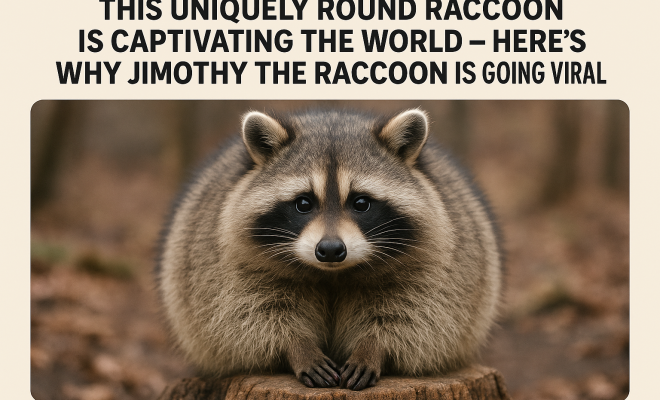
In a world often saturated with disheartening news and fleeting digital fads, a truly heartwarming story has emerged from the Pacific Northwest, specifically Seattle, capturing the collective imagination and affection of millions. It’s the story of Jimothy the raccoon, an unlikely internet celebrity whose distinctive appearance has transformed him into a symbol of resilience, cuteness, and the unexpected joy found in the animal kingdom.
His journey from an ordinary, nocturnal urban dweller to a global phenomenon began with a single viral video. On July 14, Kiana Hall, a Seattle resident, posted a short clip to Instagram featuring a remarkably round raccoon waddling through her yard. The internet, as it often does, did the rest. Within hours, Jimothy the raccoon wasn’t just a local curiosity; he was a sensation, sparking an explosion of social media shares, fan art, and an outpouring of genuine adoration.
What makes Jimothy so special, you ask? It’s his undeniably unique physique. Unlike the sleek, agile raccoons many of us picture, Jimothy possesses an unusually compact, almost spherical body. This striking feature, while adorable to human eyes, is actually attributed by wildlife veterinarians to a spinal abnormality, likely a form of short spine syndrome. But as we’ll explore, this condition, far from hindering him, has only amplified his charm and made him an emblem of thriving against the odds.
The Viral Spark: How Jimothy the Raccoon Captured Hearts Overnight
The internet can be a strange, wonderful place, and sometimes, a single piece of content can ignite a global phenomenon. For Jimothy the raccoon, that moment arrived on July 14. Kiana Hall, a Seattle local, shared a video on Instagram that, unbeknownst to her at the time, would change a humble raccoon’s life – and ours – forever. The footage showcased a raccoon unlike any other: remarkably round, almost perfectly spherical, moving with a charming, waddling gait. It was instantly captivating.
What resonated so deeply with viewers? Firstly, there’s the undeniable cuteness factor. Jimothy’s unique shape gives him an almost cartoonish appeal, a living, breathing plush toy. This visual novelty immediately drew people in. But beyond the initial ‘aww’ factor, there was a sense of wonder. People were genuinely curious: what *was* that? Why did this raccoon look so different?
The video spread like wildfire across Instagram, then TikTok, X (formerly Twitter), and Reddit. Users weren’t just watching; they were sharing, commenting, and creating. Memes featuring Jimothy popped up faster than you could say ‘trash panda.’ His image became a template for humor, inspiration, and pure, unadulterated joy. This rapid dissemination wasn’t just about the algorithm; it was driven by a genuine human desire to share something delightful and unexpected. In a digital landscape often dominated by negativity, Jimothy offered a refreshing, innocent escape.
Understanding Jimothy’s Unique Physique: Short Spine Syndrome
While Jimothy’s roundness is undeniably endearing, it’s also a significant indicator of his underlying condition. Wildlife veterinarians who have observed videos and images of Jimothy the raccoon have largely concluded that his distinctive shape is due to a spinal abnormality, most likely a condition known as short spine syndrome. This isn’t a condition unique to raccoons; it can affect various animal species, including dogs and cats, though it’s relatively rare.
Short spine syndrome is a congenital disorder where vertebrae are compressed, fused, or underdeveloped, leading to a significantly shortened and often curved spinal column. Imagine a slinky that’s been squished down – that’s a simplified visual. In Jimothy’s case, this means his body is much more compact than a typical raccoon’s, giving him that strikingly round, almost hunched appearance. His neck might appear nearly absent, and his torso seems to flow directly into his head.
It’s important to understand that while his appearance is unusual, wildlife experts confirm that Jimothy appears to be functioning remarkably well. He’s been observed climbing, foraging, and moving with an agility that belies his condition. This resilience is a key part of his appeal. He’s not just cute; he’s a survivor, adapting to his unique physical challenges with apparent grace and determination. His story isn’t one of hardship, but of thriving, which makes his journey all the more inspiring.
From Social Media Star to Cultural Icon: Jimothy’s Impact on Seattle
Jimothy the raccoon didn’t just become an internet meme; he rapidly transcended the digital realm to become a tangible cultural icon, particularly in his home city of Seattle. This isn’t a fleeting online trend; it’s a genuine groundswell of local pride and affection. The city has truly embraced its spherical ambassador, and the signs of Jimothy-mania are everywhere.
One of the most striking examples is the mural that quickly appeared, immortalizing Jimothy’s iconic silhouette on a city wall. Public art, especially murals, often reflects the pulse of a community, and Jimothy’s presence there signifies his deep integration into Seattle’s visual landscape. But it doesn’t stop there. People have been getting tattoos of Jimothy – a permanent declaration of their adoration. This isn’t something you do for just any viral sensation; it speaks to a deeper connection, a feeling that Jimothy represents something meaningful to them. (See: Raccoon facts and health information.)
The dedication to Jimothy is also evident in the creation of a dedicated subreddit. Online communities form around shared interests, and a subreddit purely for Jimothy the raccoon demonstrates the sustained engagement and desire for connection among his fans. These aren’t just casual likes; these are active participants building a community around a shared affection. The city itself is even planning a formal proclamation, an official acknowledgment of Jimothy’s unique status. How many raccoons can say that? It’s a testament to the profound, positive impact this little creature has had.
The Ripple Effect: Jimothy Beyond Seattle
While Seattle might be Jimothy’s home and the epicenter of his burgeoning fame, his influence has radiated far beyond the city limits. His story is a perfect example of how local charm can achieve global resonance, sparking joy and engagement across continents. The ripple effect of Jimothy the raccoon’s celebrity is truly remarkable, reaching into unexpected corners of popular culture and public life.
Perhaps one of the most delightful instances of his widespread appeal was his unexpected appearance at an MLB game. Imagine the roar of the crowd, not for a home run, but for a mascot race featuring a character designed in Jimothy’s likeness! This kind of crossover into major sports entertainment speaks volumes about his broad appeal. He’s not just for animal lovers or internet enthusiasts; he’s become a figure that transcends typical demographics, capable of bringing a smile to faces in diverse settings.
Social media platforms continue to buzz with his image. From fan art contests to speculative theories about his daily life, the conversation around Jimothy remains vibrant. He’s become a shorthand for ‘something unexpectedly cute and resilient.’ This widespread sharing and adaptation of his image demonstrate a collective human need for lighthearted, feel-good content, especially when it comes wrapped in such an endearing package. Jimothy has become a universal symbol, proving that sometimes, the most unique individuals are the ones who capture the most hearts.
Why Jimothy the Raccoon Resonates: The Psychology of Cuteness and Resilience
Why has Jimothy the raccoon, a creature with a physical anomaly, become such a beloved figure? The answer lies in a fascinating blend of evolutionary psychology and our innate human capacity for empathy. There are two primary drivers at play here: the power of cuteness and the inspiring narrative of resilience.
First, let’s talk about cuteness. Jimothy’s round, compact form, often perceived as disproportionate, triggers what scientists call ‘kinderschema’ or ‘baby schema.’ This refers to a set of features – large eyes, a rounded face, a small nose, and often a somewhat clumsy gait – that we instinctively associate with infants. These features activate our caregiving instincts, making us feel protective, nurturing, and overwhelmingly affectionate. Jimothy, with his spherical body and seemingly innocent demeanor, hits all these evolutionary buttons. He’s not just cute; he’s ‘irresistibly cute,’ almost scientifically engineered to elicit an ‘aww’ response.
Beyond cuteness, there’s the powerful narrative of resilience. Knowing that Jimothy has a spinal condition, yet appears to live a normal, healthy, and active life, is incredibly inspiring. He’s not just surviving; he’s thriving. In a world where many feel overwhelmed by challenges, seeing a small creature overcome its unique hurdles with apparent joy and functionality offers a powerful, heartwarming message. Jimothy symbolizes the ability to adapt, to find joy in one’s circumstances, and to demonstrate strength even when facing physical differences. This combination of adorable vulnerability and tenacious spirit creates a compelling, deeply resonant story that speaks to our better nature.
The Ethics of Online Animal Celebrity: Admiration vs. Intervention
As Jimothy the raccoon’s star continues to rise, it naturally brings up an important, often complex, discussion about the ethics of animal celebrity in the digital age. While the outpouring of affection for Jimothy is overwhelmingly positive, it’s crucial to consider the line between admiration and potential intervention or disruption to a wild animal’s life.
For now, Jimothy appears to be a healthy, independent wild animal. Wildlife veterinarians have confirmed that despite his short spine syndrome, he seems to climb, forage, and generally behave like any other raccoon. This is key. The current approach, largely one of observation and appreciation from a respectful distance, seems appropriate. His fame stems from candid observations of his natural behavior, not from being put on display or interacted with directly.
However, the sheer volume of attention could, in some scenarios, lead to well-meaning but ultimately harmful actions. For example, if people were to start actively seeking him out, attempting to feed him, or trying to get close for photos, it could habituate him to humans, making him less wary and potentially putting him at risk. It could also disrupt his natural foraging patterns or expose him to dangers he’d normally avoid. The balance lies in celebrating Jimothy’s existence without interfering with his wildness. His story is beautiful precisely because he remains a wild creature, living life on his own terms, inspiring us from a safe and respectful distance. His fame should serve as a reminder of the wonder of urban wildlife, not an invitation for human encroachment.
Raccoons in Urban Environments: A Broader Context for Jimothy
Jimothy the raccoon isn’t just a unique individual; he’s also a representative of a species that has masterfully adapted to urban environments across North America. Raccoons, often dubbed ‘trash pandas’ for their scavenging habits, are incredibly intelligent and adaptable creatures, and their presence in cities like Seattle is a testament to their resilience and ingenuity.
Urban raccoons face a unique set of challenges and opportunities. They learn to navigate human infrastructure – climbing fences, scaling buildings, and even figuring out how to open ‘raccoon-proof’ bins. Their diet becomes incredibly varied, shifting from natural berries and insects to whatever discarded edibles they can find. This close proximity to humans means they’re often observed, sometimes as a nuisance, but often, as in Jimothy’s case, as a source of fascination.
Jimothy’s story, while unique due to his physical condition, highlights the broader reality of urban wildlife. These animals are our neighbors, living alongside us, often unseen, but always present. His celebrity has, perhaps inadvertently, brought a spotlight onto the lives of urban raccoons in general, fostering a greater appreciation and understanding of their place in our shared ecosystems. It encourages us to look closer, to observe, and to recognize the wildness that persists even in the heart of bustling cities. Jimothy reminds us that nature is always finding a way, even if it’s in our own backyards. (See: CDC information on raccoons as pets.)
Expert Perspectives on Short Spine Syndrome in Wildlife
While Jimothy is a beloved individual, his condition, Short Spine Syndrome, is something wildlife experts and veterinarians have encountered in various species, albeit rarely. Dr. Eleanor Vance, a veterinary geneticist specializing in congenital abnormalities, explains that “Short spine syndrome results from a failure of the vertebrae to form properly during embryonic development. Instead of distinct, segmented bones, you get a fusion or compression. In a wild animal like Jimothy, it’s truly remarkable to see such a high level of functional adaptation.”
According to Dr. Vance, the severity of the syndrome can vary greatly. “Some animals are severely impacted, with neurological deficits or significant pain, making survival in the wild nearly impossible. Jimothy’s case appears to be on the milder end of the spectrum in terms of functional impairment, which is why he can climb and forage effectively. His internal organs likely have adapted to the compressed space, and his musculature compensates for the lack of spinal flexibility.”
The fact that Jimothy is thriving in an urban environment, which presents its own unique challenges, speaks volumes about his individual resilience. Most wild animals with such a visible congenital condition would likely succumb early in life due to impaired mobility or vulnerability to predators. Jimothy’s ability to not only survive but become a local fixture is a testament to his strong will and perhaps a bit of luck in finding reliable food sources in Kiana Hall’s yard.
The Science of Viral Animal Videos: Why Some Pets (and Wild Animals) Break the Internet
Jimothy’s rise to stardom isn’t just a heartwarming tale; it’s also a fascinating case study in the dynamics of internet virality, especially concerning animals. What makes one animal video explode while others remain obscure? Social media analysts point to several factors at play with Jimothy the raccoon.
First, there’s the element of novelty. Jimothy’s appearance is genuinely unique. He doesn’t look like an average raccoon, making him instantly memorable and shareable. People often share things that surprise, delight, or challenge their perceptions. Second, the emotional response. Jimothy elicits a powerful ‘aww’ factor combined with admiration for his resilience. Content that evokes strong positive emotions tends to spread faster. Third, accessibility and relatability. The video was shot casually in a backyard, making it feel authentic and immediate. It wasn’t a staged production, which often resonates more with online audiences.
Finally, the narrative potential. Jimothy’s story quickly became one of triumph over adversity, a little underdog (or under-raccoon!) making his way in the world. Humans are hardwired for stories, and a compelling narrative, even a simple one, significantly boosts content’s viral potential. Jimothy wasn’t just a cute animal; he was a character in an unfolding, feel-good story that everyone wanted to be a part of. This combination of unique visuals, strong emotional hooks, and a compelling narrative created the perfect storm for internet stardom.
Responsible Wildlife Interaction: A Lesson from Jimothy
Jimothy’s fame offers a prime opportunity to educate the public on responsible wildlife interaction, particularly in urban settings. It’s easy to get swept up in the cuteness and forget that raccoons are wild animals, not pets. Wildlife rehabilitation centers and conservation groups often use stories like Jimothy’s to emphasize key messages.
The primary message is “observe, don’t interfere.” While it’s tempting to want to help or feed a seemingly vulnerable animal, it often does more harm than good. Feeding wild animals can lead to habituation, where they lose their natural fear of humans and become dependent on handouts. This can result in aggressive behavior, increased risk of injury from cars or other animals, and even the spread of diseases. A fed animal is often a dead animal in the long run.
Secondly, if you’re concerned about a wild animal’s health, contact local animal control or a wildlife rehabilitator, rather than attempting to intervene yourself. They have the expertise and equipment to assess the situation safely and determine if intervention is truly necessary. Jimothy, despite his condition, has clearly demonstrated his ability to forage and live independently. His story is a beautiful example of how nature finds a way, and our role is largely to appreciate it from a respectful distance, ensuring we don’t inadvertently disrupt its delicate balance.
The Enduring Appeal of Jimothy the Raccoon and What He Represents
What is it about Jimothy the raccoon that ensures his story will linger long after the initial viral surge? It’s more than just his adorable appearance; it’s what he has come to represent in our collective consciousness. Jimothy embodies a powerful and comforting narrative that resonates deeply in an often-turbulent world.
He is, first and foremost, a symbol of hope and resilience. In a society that sometimes values perfection and conformity, Jimothy, with his unique physical form, reminds us that differences can be strengths, and that thriving against the odds is not only possible but can also be incredibly endearing. His ability to live a full, apparently joyful life despite his spinal condition offers a gentle but potent message: don’t let perceived limitations define you. (See: Urban wildlife and raccoon behavior.)
Beyond resilience, Jimothy represents the unexpected joy found in the natural world, even in the most urbanized settings. He’s a reminder that beauty and wonder aren’t confined to pristine wilderness but can be found in our backyards, in the creatures that share our spaces. His story encourages us to slow down, observe, and appreciate the small, everyday miracles around us. He reminds us that sometimes, the most extraordinary things come in the most unassuming, and in this case, round, packages.
Jimothy the raccoon isn’t just a viral sensation; he’s a phenomenon that speaks to our shared humanity – our capacity for wonder, our empathy for the vulnerable, and our desire for stories that uplift and inspire. He’s a testament to the power of a single, unique creature to bring a global community together, reminding us that sometimes, the simplest things can spark the greatest joy. Here’s to Jimothy, the round raccoon who waddled his way into our hearts and stayed there, proving that true charm knows no bounds.
Frequently Asked Questions About Jimothy the Raccoon
Q: Where does Jimothy the raccoon live?
A: Jimothy lives in Seattle, Washington. His initial viral video was captured in a resident’s backyard there, and he continues to be seen in the local area, making him a true Seattle icon.
Q: What is Short Spine Syndrome?
A: Short spine syndrome is a congenital condition where an animal’s vertebrae are compressed, fused, or underdeveloped. This leads to a significantly shortened and often curved spinal column, giving animals like Jimothy a very compact, hunched, or spherical appearance. It’s rare but can affect various species.
Q: Is Jimothy in pain or suffering due to his condition?
A: Based on observations from wildlife veterinarians and experts, Jimothy appears to be functioning remarkably well. He’s been seen climbing, foraging, and moving with agility that suggests he isn’t in significant pain or distress. While his appearance is unusual, he seems to have adapted successfully to his physical challenges, living a typical raccoon life.
Q: Should I try to find Jimothy and feed him if I’m in Seattle?
A: No, it’s really important not to interfere with wild animals like Jimothy. Feeding raccoons can make them dependent on humans, lose their natural fear, and potentially put them at risk of injury or disease. The best way to appreciate Jimothy is from a respectful distance, allowing him to live wild and free.
Q: Are there other raccoons like Jimothy?
A: While Jimothy’s level of internet fame is unique, short spine syndrome can occur in other raccoons and various animal species. It’s a rare condition, so finding another raccoon with such a distinct and perfectly spherical appearance is unlikely, but similar spinal abnormalities do exist in the wild.
Q: How has Jimothy impacted the perception of raccoons?
A: Jimothy has undoubtedly softened the public’s perception of raccoons. Often viewed as pests or ‘trash pandas,’ Jimothy has showcased their intelligence, adaptability, and undeniable cuteness. His story has fostered a greater appreciation for urban wildlife and the unique individuals within these populations.
Trending Now
Frequently Asked Questions
Why is Jimothy the raccoon going viral?
Jimothy the raccoon gained viral fame after a video of him waddling through a yard was posted on Instagram. His unique, round physique and charming demeanor captured the hearts of millions, turning him into an internet sensation almost overnight.
What makes Jimothy the raccoon special?
Jimothy is special due to his distinctive, compact, almost spherical body, which is a result of a spinal abnormality known as short spine syndrome. This unique feature, combined with his adorable personality, has made him a symbol of resilience and joy.
Who is Kiana Hall and what is her connection to Jimothy?
Kiana Hall is a Seattle resident who posted the original viral video of Jimothy the raccoon on Instagram. Her video showcased Jimothy's charming waddle and unique appearance, sparking widespread interest and admiration for the raccoon.
What is short spine syndrome in raccoons?
Short spine syndrome is a spinal abnormality that affects the physical structure of animals like Jimothy the raccoon. It results in a compact body shape, which, while unusual, has not hindered Jimothy's ability to thrive and charm his audience.
How has Jimothy the raccoon impacted social media?
Jimothy's rise to fame has led to an explosion of social media shares, fan art, and an outpouring of affection from fans worldwide. His story brings a heartwarming break from negative news, reminding people of the joy found in unexpected places.
Agree or disagree? Drop a comment and tell us what you think.