Unbelievable Antarctica Ice Gain: Distant Ocean Warming Fuels Record Snowfall
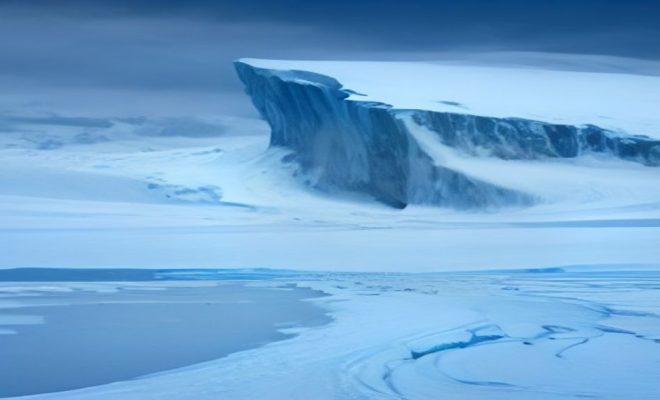
When you hear about Antarctica, what often comes to mind is melting ice, rising sea levels, and the stark visual of crumbling glaciers. It’s a narrative deeply ingrained in our collective consciousness, and for good reason: the continent *is* losing ice, particularly from its western regions, contributing significantly to global sea-level rise. But what if I told you that, very recently, one massive part of Antarctica actually experienced an astonishing, record-breaking gain in ice? Not just a little bump, but a staggering 695 billion tons of ice added in just two years.
That’s right, between 2021 and 2023, East Antarctica defied expectations, temporarily slowing the continent’s overall long-term ice loss. This isn’t some fringe theory or climate denial talking point; it’s the finding of a rigorous study published in the prestigious journal Nature, conducted by researchers from the Chinese Academy of Sciences. And the reason for this massive Antarctica ice gain? It’s even more surprising, pointing to a complex, interconnected global climate system where warming thousands of miles away in the tropical ocean played a pivotal, unexpected role.
The Shocking Scale of East Antarctica’s Ice Surge
Let’s really grapple with that number: 695 billion tons. To put that into perspective, imagine a block of ice so immense it would take your breath away. This isn’t just a minor fluctuation; it’s a colossal addition. This incredible Antarctica ice gain was concentrated in East Antarctica, a region that, despite its vastness, often receives less media attention than the more rapidly changing West Antarctic Ice Sheet. While West Antarctica and the Antarctic Peninsula have been shedding ice at an accelerating rate for decades, East Antarctica has historically been considered more stable, though not immune to change.
This recent surge fundamentally altered the short-term balance sheet for the entire continent. While it didn’t reverse the long-term trend of Antarctic ice loss, it certainly put a significant brake on it for those two years. For scientists, this kind of observation is gold. It challenges our assumptions, forces us to refine our models, and underscores just how dynamic and intricate Earth’s climate system truly is. It also serves as a potent reminder that climate science is a field of continuous discovery, where new data can unveil previously unappreciated mechanisms.
The Unseen Hand: Tropical Ocean Warming and Atmospheric Rivers
So, how did East Antarctica manage such a monumental ice gain? The answer, as the Chinese Academy of Sciences researchers uncovered, lies far from the frigid polar landscape. The culprit – or perhaps, the benefactor in this specific instance – was warming in the tropical ocean, thousands of miles away. Specifically, these distant tropical warmings altered atmospheric circulation patterns, effectively creating superhighways of moisture directed straight towards East Antarctica. Think of them as atmospheric rivers, but on a grand, planetary scale.
These atmospheric rivers are not uncommon phenomena; they’re responsible for a significant amount of precipitation in many parts of the world. However, the sheer volume and persistence of moisture delivery to East Antarctica during this period were exceptional. This wasn’t just a light dusting; it was an onslaught of heavy snowfall, burying vast swathes of the ice sheet under fresh layers of white. This mechanism elegantly demonstrates the concept of ‘teleconnections’ in climate science – where events in one part of the world can have profound and sometimes counterintuitive impacts thousands of miles away.
A Deep Dive into Atmospheric Teleconnections
Let’s unpack these teleconnections a bit further, because they’re absolutely central to understanding this Antarctica ice gain. The tropical oceans are massive heat engines, driving much of the global atmospheric circulation. When sea surface temperatures in these regions warm, it’s not just a localized heating event. It changes the temperature and pressure gradients in the atmosphere above, influencing the strength and direction of prevailing winds, jet streams, and storm tracks across vast distances.
In this particular case, the tropical warming acted like a giant pump, drawing more moisture into the atmosphere and then, through a series of atmospheric waves and circulation adjustments, directing that moisture-laden air towards the Antarctic continent. Imagine a complex set of dominoes: a warming ocean surface (domino 1) triggers changes in local atmospheric convection (domino 2), which propagates as atmospheric waves (domino 3) that then steer moisture-rich air currents (domino 4) towards the polar regions, resulting in heavy snowfall (domino 5) and the observed Antarctica ice gain.
The Role of Specific Climate Patterns
While the study points to generalized tropical warming, it’s highly likely that specific climate patterns, such as phases of the El Niño-Southern Oscillation (ENSO) or the Indian Ocean Dipole (IOD), played a role in orchestrating this atmospheric ballet. These natural climate oscillations, when influenced by underlying global warming trends, can create conditions ripe for these long-distance moisture transports. Understanding the precise interplay of these natural cycles with anthropogenic warming is one of the grand challenges in climate science, and this study offers a compelling piece of that puzzle.
The Counterintuitive Nature of Polar Dynamics
For many, the idea of Antarctica gaining ice in an era of global warming seems utterly counterintuitive. It’s easy to jump to conclusions, perhaps even to interpret such a finding as evidence against the broader consensus on climate change. However, this would be a misinterpretation. The scientific reality is far more nuanced and complex than simple cause-and-effect relationships.
Here’s the crucial point: global warming doesn’t mean every single place on Earth warms uniformly or experiences the exact same effects. Instead, it alters the *entire system*, leading to a myriad of localized and regional responses, some of which might appear contradictory at first glance. For example, while the poles are warming faster than the global average, leading to widespread ice melt, increased atmospheric moisture due to a warmer world can also lead to increased snowfall in certain polar regions, especially if atmospheric circulation patterns are favorably aligned. (See: Antarctica ice loss and climate change.)
This East Antarctica ice gain is a perfect illustration of this complexity. The very warming that is driving long-term ice loss elsewhere on the continent, and indeed globally, also created the conditions for this localized, temporary surge in snowfall. It’s a reminder that climate change isn’t just about temperature; it’s about disruptions to energy balances, hydrological cycles, and atmospheric dynamics across the planet.
Does This Mean Antarctica is ‘Fine’? Not So Fast.
It’s vital to clarify that this short-term Antarctica ice gain in one region does not negate the overwhelming evidence of long-term, accelerating ice loss across the continent, particularly in West Antarctica and the Antarctic Peninsula. These regions are experiencing rapid melt from both ocean warming (undercutting glaciers from below) and atmospheric warming (melting from above).
The 695 billion tons gained in East Antarctica, while substantial, represents a temporary reprieve in the face of a much larger, ongoing decline. Think of it like a bank account: you might get a bonus one month, but if your overall spending far outstrips your income year after year, that bonus doesn’t solve your underlying financial problems. Similarly, this snowfall gain doesn’t fundamentally alter the trajectory of Antarctic ice loss and its contribution to global sea-level rise.
Scientists use sophisticated satellite measurements and ground observations to monitor these changes. Studies consistently show that since the 1990s, Antarctica has been losing ice at an accelerating rate. The Intergovernmental Panel on Climate Change (IPCC) reports highlight this loss as a significant contributor to global sea-level rise, with potential implications for coastal communities worldwide. This new finding adds a layer of detail to our understanding but doesn’t overturn the fundamental concerns.
The Broader Implications for Climate Modeling and Prediction
This study on East Antarctica’s ice gain is incredibly valuable for refining our climate models. Global climate models are powerful tools, but they are constantly being improved as new data emerges and our understanding of Earth’s complex systems deepens. Accurately simulating precipitation over polar ice sheets, especially the immense scale of Antarctica, is crucial for predicting future ice sheet behavior and sea-level rise.
If models don’t adequately capture these teleconnections and the resulting heavy snowfall events, they might underestimate future ice sheet mass balance in certain regions, or conversely, misattribute changes. This research provides concrete observational evidence that modelers can use to test and enhance their simulations, ensuring that our projections for the future are as robust and accurate as possible. It pushes the boundaries of our understanding, revealing the intricate dance between distant climate phenomena and local ice sheet dynamics.
Furthermore, understanding these mechanisms helps in predicting extreme weather events. If we can better grasp how tropical warming influences snowfall in Antarctica, it could potentially lead to better seasonal forecasts for other regions connected by similar atmospheric pathways. This isn’t just about ice; it’s about the predictive power of climate science as a whole.
The Unsettling Truth: A Warmer World Can Mean More Snow
It might sound paradoxical, but a warmer world can, in some circumstances, lead to *more* snowfall, particularly in very cold regions like the interior of East Antarctica. Here’s why: for it to snow, you need two things – cold temperatures and moisture. In extremely cold environments, the air is often very dry, limiting snowfall despite the freezing temperatures. As the atmosphere warms globally, it can hold more moisture (a basic principle of thermodynamics).
If that increased moisture is then transported to a region that is still cold enough for precipitation to fall as snow (which much of East Antarctica’s high interior undoubtedly is), you get heavier snowfall. So, the irony is that global warming, by increasing atmospheric moisture content, can fuel these massive snowfall events, at least temporarily, in specific cold regions. It’s a testament to the intricate and sometimes counterintuitive ways our planet responds to changes in its energy balance.
What This Means for the Future of Antarctica and Sea Level Rise
While this particular Antarctica ice gain event was significant, it’s crucial to look at the bigger picture. The long-term trend for Antarctica is one of overall mass loss. Scientific consensus, backed by decades of data from satellites like GRACE and ICESat, shows that the continent is losing ice, with West Antarctica and the Antarctic Peninsula being major contributors to global sea-level rise. This new study doesn’t change that fundamental outlook.
However, it does add a layer of complexity to future predictions. Will these heavy snowfall events become more frequent or intense in a warmer world? If so, could they partially offset some of the melt from other regions, at least for a time? Or will the increasing rates of melt, particularly from ocean-driven processes in West Antarctica, simply overwhelm any gains from snowfall?
These are the kinds of questions scientists are grappling with. The dynamic interplay between increasing snowfall in some areas and accelerating melt in others makes predicting the exact future contribution of Antarctica to sea-level rise incredibly challenging. What this research emphatically tells us, though, is that the system is exquisitely sensitive and deeply interconnected. We can’t view any part of it in isolation. (See: study published in Nature.)
Beyond the Headlines: Nuance in Climate Science
This finding, published in Nature, has strong viral potential precisely because it seems to go against the dominant narrative of ice melt. It’s easy for such discoveries to be cherry-picked or misrepresented in broader discussions about climate change. However, as human beings, it’s our responsibility to engage with the full scientific picture, not just the parts that fit a pre-conceived notion.
The beauty of scientific inquiry lies in its continuous refinement. When observations challenge existing understanding, it’s not a sign of failure; it’s a sign of progress. It pushes us to ask deeper questions, to look for more intricate connections, and ultimately, to build a more complete and accurate understanding of our planet. The East Antarctica ice gain is a perfect example of this process in action: a surprising observation leading to a profound discovery about the interconnectedness of our global climate.
So, the next time you hear about Antarctica, remember that it’s a continent of immense scale and complexity. While the alarms about melting ice are valid and urgent, the story of its ice sheets is also one of surprising dynamics, distant connections, and the endless quest for scientific understanding. This record snowfall isn’t a ‘get out of jail free’ card for climate action, but it’s a fascinating, sobering reminder of how interconnected and sometimes counterintuitive our planet’s systems truly are.
The History of Antarctic Ice Change: A Snapshot
To truly appreciate the significance of this recent East Antarctica ice gain, it helps to understand the historical context of Antarctic ice changes. For much of the 20th century, particularly before the widespread adoption of satellite monitoring, our understanding was limited. Early expeditions provided glimpses, but a comprehensive, continent-wide view was missing. It wasn’t until the 1990s that satellite altimetry and gravimetry missions, like the European Remote Sensing (ERS) satellites and later the Gravity Recovery and Climate Experiment (GRACE), began providing consistent, accurate data on ice sheet mass balance.
These satellites revolutionized our understanding. They showed that while some parts of Antarctica, particularly East Antarctica, appeared relatively stable or even gained a small amount of ice early on, West Antarctica and the Antarctic Peninsula were unequivocally losing ice. Over the last three decades, the rate of ice loss has accelerated dramatically. According to studies compiled by the Ice Sheet Mass Balance Inter-comparison Exercise (IMBIE), Antarctica lost an average of 76 billion tons of ice per year from 1992 to 2002, a figure that jumped to 252 billion tons per year from 2012 to 2017. That’s a huge increase, and most of it came from West Antarctica and the Peninsula.
The recent East Antarctic ice gain, while substantial in its own right, momentarily bucked this continental trend, but it’s important to see it as an anomaly within a much longer, more worrying pattern of overall ice loss. It’s like a small ripple in a powerful, unidirectional current. The underlying forces driving the long-term decline, particularly ocean warming around the vulnerable West Antarctic Ice Sheet, remain largely unchanged.
Expert Perspectives: What Scientists Are Saying
When a study like this emerges, it sparks considerable discussion within the scientific community. Experts aren’t just looking at the headline number; they’re dissecting the methodology, the data sources, and the broader implications. Dr. Andrew Shepherd, a prominent glaciologist from the University of Leeds and co-lead of the IMBIE project, has often stressed the importance of these nuanced findings. He might point out that while snowfall adds mass, the stability of the ice sheet is also dictated by ice dynamics – how fast glaciers flow into the ocean and calve icebergs. Even if snowfall increases, if the discharge of ice into the ocean accelerates even faster, the net effect is still loss.
Oceanographers, like those studying the Southern Ocean, would emphasize the role of warm ocean currents eroding the undersides of floating ice shelves, especially in West Antarctica. They’d explain that this process is largely independent of surface snowfall and is a primary driver of instability for marine-terminating glaciers. So, even with more snow on top, if the “feet” of the glaciers are melting away from below, the long-term outlook remains concerning.
Meteorologists, on the other hand, would zero in on the atmospheric river phenomenon, praising the study for connecting distant tropical warming to polar precipitation. They might discuss how a warming global atmosphere holds more moisture, making these “atmospheric rivers” potentially more potent, but also how their precise pathways and frequency are still areas of active research and modeling challenges. The consensus is clear: this study adds a valuable piece to the puzzle, but it doesn’t fundamentally change the grim reality of Antarctic ice loss.
Comparing East vs. West Antarctica: Why the Differences?
It’s crucial to understand why East and West Antarctica often behave so differently. They’re like two distinct characters on the same stage. (See: NOAA climate data and reports.)
- West Antarctic Ice Sheet (WAIS): This region is largely marine-based, meaning much of its ice sheet rests on bedrock that is below sea level. This makes it inherently unstable. Warm ocean currents can easily reach the base of its ice shelves, melting them from below. Once an ice shelf thins or collapses, the glaciers behind it can accelerate their flow into the ocean. It’s often referred to as a “runaway” or “marine ice sheet instability” scenario, where the loss can become self-sustaining.
- East Antarctic Ice Sheet (EAIS): In contrast, the EAIS is far larger, thicker, and mostly rests on bedrock above sea level. This configuration makes it much more stable against ocean warming. While some coastal areas are vulnerable, the vast interior, where this snowfall gain occurred, is extremely cold and high in elevation. It’s less susceptible to direct melt from rising temperatures, making snowfall a more dominant factor in its mass balance.
So, while West Antarctica is critically vulnerable to ocean warming, East Antarctica’s interior is more influenced by atmospheric moisture transport and snowfall. This study highlights that distinction perfectly – a massive snowfall event in the interior of the EAIS, driven by atmospheric teleconnections, while the WAIS continues its rapid retreat due to ocean-driven melt.
Frequently Asked Questions About Antarctica Ice Gain
Q1: Does this East Antarctica ice gain disprove climate change?
No, absolutely not. This finding does not disprove climate change. It highlights the complex and sometimes counterintuitive regional effects of a warming planet. While global temperatures are rising and overall Antarctic ice is decreasing, localized atmospheric patterns can lead to increased snowfall in specific, very cold regions like East Antarctica’s interior. It’s a nuance within the broader picture of global warming.
Q2: If Antarctica is gaining ice in some places, why are we still worried about sea level rise?
The concern about sea-level rise from Antarctica remains very high because the continent, on the whole, is losing ice at an accelerating rate. The recent gain in East Antarctica was temporary and localized. West Antarctica and the Antarctic Peninsula are losing ice much faster due to ocean warming and glacier dynamics. The net balance for the entire continent is still a significant loss, contributing substantially to global sea-level rise.
Q3: What are atmospheric rivers and how do they connect to tropical warming?
Atmospheric rivers are long, narrow corridors of concentrated moisture in the atmosphere, often described as “rivers in the sky.” They transport huge amounts of water vapor from the tropics to higher latitudes. Tropical ocean warming can intensify these rivers by increasing evaporation and altering global atmospheric circulation patterns, effectively steering more moisture towards polar regions, leading to heavy snowfall events like the one observed in East Antarctica.
Q4: How do scientists measure changes in Antarctica’s ice mass?
Scientists use a combination of methods:
- Satellite Gravimetry: Missions like GRACE and GRACE-FO measure tiny changes in Earth’s gravitational field, which are directly related to changes in ice mass.
- Satellite Altimetry: Satellites like ICESat and CryoSat-2 use lasers or radar to measure the height of the ice sheet surface. Repeated measurements show whether the ice is thickening or thinning.
- Radar Interferometry: This technique uses radar to measure the speed of glacier flow, which helps calculate how much ice is discharged into the ocean.
- Ground Observations: Limited ground-based measurements, such as ice core drilling and GPS stations, provide localized data for calibration and detailed studies.
Q5: Could increased snowfall in Antarctica eventually offset ice loss?
It’s unlikely in the long term. While increased snowfall can add mass to the ice sheet, the rates of ice loss from melting, particularly in West Antarctica, are projected to outpace potential snowfall gains. As global temperatures continue to rise, the balance will likely shift further towards melt. Also, much of the snowfall occurs in the very cold interior where it takes centuries or millennia to flow to the coast, whereas melt can happen much faster.
Q6: What role do natural climate cycles like El Niño play in these events?
Natural climate cycles like El Niño-Southern Oscillation (ENSO) or the Indian Ocean Dipole (IOD) can significantly influence atmospheric circulation patterns, including the formation and steering of atmospheric rivers. While the study points to generalized tropical warming, it’s very probable that specific phases of these natural cycles, potentially amplified by human-caused warming, helped create the conditions for the massive snowfall event in East Antarctica. Understanding this interplay is crucial for accurate climate predictions.
Trending Now
Frequently Asked Questions
Is Antarctica gaining or losing ice?
Recent findings indicate that East Antarctica experienced a record-breaking gain of 695 billion tons of ice between 2021 and 2023, temporarily slowing the continent's overall long-term ice loss. This gain is significant, especially considering that West Antarctica has been losing ice for decades.
What caused the ice gain in Antarctica?
The remarkable ice gain in East Antarctica is attributed to complex interactions within the global climate system, particularly the warming of distant tropical oceans. This unexpected influence played a pivotal role in the record snowfall that contributed to the ice accumulation.
How much ice did East Antarctica gain?
East Antarctica gained an astonishing 695 billion tons of ice between 2021 and 2023. This significant addition marks a temporary shift in the ice balance of the continent, contrasting with the ongoing ice loss in West Antarctica.
Why is East Antarctica important?
East Antarctica is crucial for understanding global sea-level rise and climate change. Although historically more stable than its western counterpart, recent record ice gains highlight its dynamic nature and the interconnectedness of global climate systems.
What does the ice gain mean for climate change?
While the recent ice gain in East Antarctica is noteworthy, it does not reverse the long-term trend of ice loss across the continent. It emphasizes the complexity of climate change and how different regions can influence one another, making predictions challenging.
Have you experienced this yourself? We'd love to hear your story in the comments.