Google’s $99 Home Speaker (2026): A Smart Home Revolution?
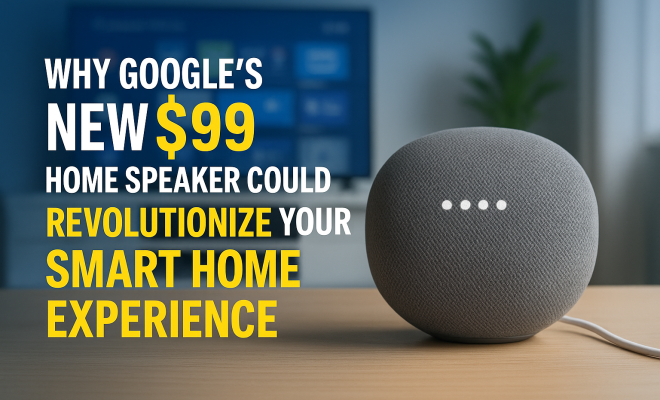
Google is shaking up the smart speaker market with the launch of its new Google Home Speaker, priced at $99. This marks the first major release in six years, and it’s not just a fresh coat of paint on old technology. Set to ship on June 25, 2026, this device promises to elevate user interaction thanks to its integration of advanced AI capabilities through Gemini.
1. A Fresh Take on Smart Speakers
For many, the smart speaker category has felt stagnant, with incremental updates and minor tweaks. Google’s new offering, however, is aiming to turn that perception on its head. The Google Home Speaker doesn’t just rely on enhanced audio quality but introduces a complete rethinking of how users interact with their devices. Gemini is at the heart of this transformation, allowing for more fluid, multi-step conversations that feel less like a series of commands and more like a natural dialogue.
This shift is significant, as traditional smart speakers often operate on rigid command structures, leading to frustrating interactions. With Gemini, users can ask complex questions or give nuanced commands without worrying about the exact phrasing. This advancement positions Google as a frontrunner in the AI assistant race, demonstrating a commitment to not only hardware innovation but also user experience.
2. What Makes Gemini Stand Out?
Gemini is more than just a voice recognition system; it embodies Google’s vision for a smarter, more conversational AI. This system is designed to understand context and follow the flow of conversation, making interactions feel much more human-like. Unlike its predecessor, which often required specific commands, Gemini’s capabilities mean you can engage in multi-layered conversations without worrying about falling into a script.
For instance, you might ask, “What’s the weather like today?” and then follow up with, “How about this weekend?” Gemini will recognize the context and provide relevant information without needing you to repeat or rephrase your initial command. This not only enhances user satisfaction but could also change the way people perceive smart home technologies.
3. Impressive Audio Features
The Google Home Speaker boasts a significant upgrade in its audio capabilities. With 360-degree sound, this new device ensures that music, podcasts, and alerts are evenly distributed throughout the room, creating an immersive listening experience. This feature is particularly appealing for users who enjoy hosting gatherings or simply want a quality audio experience without having to rearrange furniture.
Unlike many traditional speakers that focus sound in one direction, the 360-degree technology allows sound to fill the space, making every corner of the room feel alive with sound. Whether you’re cooking in the kitchen or lounging on the couch, you won’t miss a beat. This is particularly important as more consumers invest in audio experiences that rival professional equipment, and the Google Home Speaker delivers on that front.
4. Subscription Model: Home Premium
In a move that could spark debate among tech enthusiasts, Google is offering some of the most exciting features behind a paid subscription model. The Home Premium plan, starting at $10 per month, allows users to access advanced features like Gemini Live, Camera History Search, and Home Briefs. This strategy aligns with a growing trend in the tech industry, where companies seek to monetize advanced features through subscriptions.
While the initial price of the Google Home Speaker is appealing, the added recurring cost could deter some potential buyers. The challenge for Google will be to convince users that the premium features are worth the extra investment. Features like real-time notifications and customizable home information could be game-changers, but they need to be compelling enough to warrant a monthly fee.
5. Gemini Live: Real-Time Interactions
One of the standout features of the new speaker is Gemini Live, which allows real-time interactions between the user and the speaker. Imagine being able to ask follow-up questions seamlessly while your speaker provides answers based on previous queries. This feature represents a significant leap in how we interact with technology, making it feel less like talking to a machine and more like having a conversation with a friend.
The potential applications for Gemini Live in day-to-day situations are vast. Whether you’re trying to get cooking tips while preparing dinner or seeking advice on home repairs, having a speaker that can engage in a dialogue opens up new possibilities for utility and convenience. This feature could drastically enhance how users engage with their smart home systems, making it an essential selling point.
6. Camera History Search: Your Home, Your Way
Another enticing feature tied to the subscription model is the Camera History Search. This function allows users to access footage or images captured by their home security devices quickly. If you need to check what happened while you were away, this feature could save you time and hassle. It’s particularly appealing for families who want to keep an eye on children or pets while they’re not at home.
The implementation of Camera History Search illustrates Google’s broader approach to integrating security with daily life. As smart home technology evolves, having access to security features bundled with audio and AI capabilities will likely become a standard expectation among consumers. This makes the Google Home Speaker not just another gadget but a potential hub for managing various aspects of your home. (See: Impact of technology on communication.)
7. Home Briefs: Keeping You Informed
The Home Briefs feature promises to keep users updated on essential information customized to their preferences. This can include news, weather, reminders, and any alerts you might need throughout the day. The idea is to create a personalized briefing that considers your interests and priorities, allowing you to start your day informed.
This feature adds a layer of usefulness to the Google Home Speaker that could appeal to busy professionals, parents, or anyone looking to streamline their mornings. Imagine receiving a tailored summary while you prepare breakfast; it not only saves time but makes your morning routine smoother. In a world where information overload is common, having a smart speaker that can curate and deliver relevant updates is invaluable.
8. Market Position and Future Implications
The introduction of the Google Home Speaker into a competitive market presents both challenges and opportunities for Google. With rivals like Amazon’s Echo series and Apple’s HomePod, the need to differentiate is more crucial than ever. By focusing on AI enhancements and offering unique features, Google aims to establish itself as the go-to option for consumers looking to upgrade their smart home experience.
Moreover, the subscription model could set a new precedent in the smart speaker market. As consumers become accustomed to monthly payments for premium content and features across various platforms, this approach might just become the norm. Google’s gamble on combining an affordable entry price with ongoing costs could lead to a broader discussion on value and sustainability in technology investments.
As we look forward to the official launch date of June 25, 2026, it’s evident that the Google Home Speaker has the potential to redefine user interaction and set a new standard for smart home devices. With its innovative features, there’s a lot to be excited about, and it seems Google is ready to lead the charge.
9. Comparing Google Home Speaker with Competitors
When evaluating the Google Home Speaker, it’s essential to consider how it stacks up against its main competitors in the market. Amazon’s Echo series and Apple’s HomePod have established themselves as household names, each with unique features that cater to different types of users.
The Amazon Echo, for instance, excels in its vast ecosystem of compatible smart home devices. With a more extensive range of integrations, Echo users can control everything from lights to thermostats effortlessly. However, its voice assistant, Alexa, often requires explicit commands, which can be less conversational than Google’s Gemini.
On the other hand, Apple’s HomePod emphasizes superior sound quality and seamless integration with Apple products. For users heavily invested in Apple’s ecosystem, the HomePod may provide a more cohesive experience. Yet, it lacks some of the advanced AI conversational features that make the Google Home Speaker stand out.
In terms of pricing, the Google Home Speaker’s initial cost is competitive, particularly when considering the feature set it offers. While both Amazon and Apple have models that start at varying prices, Google’s subscription model could make it more appealing for consumers looking for comprehensive features without a hefty upfront investment.
10. Statistics and Trends in Smart Speaker Usage
Understanding the landscape of smart speakers requires looking at the statistics and trends that shape user behavior. According to a recent study, over 40% of U.S. households now own at least one smart speaker, with that number projected to grow in the coming years. This surge indicates a strong demand for devices that enhance home automation and entertainment.
Another interesting statistic is that around 70% of smart speaker users interact with their devices daily. The most common activities include playing music, checking the weather, and setting reminders, which underscores the importance of a seamless user experience. With features like Gemini Live, the Google Home Speaker is well-positioned to capture a significant share of this engaged audience.
Moreover, as consumers increasingly prioritize privacy and security, features like the Camera History Search tied to the Google Home Speaker’s subscription plan could become significant selling points. A survey showed that over 60% of users are concerned about data privacy related to smart home devices, highlighting the need for brands to address these concerns transparently.
11. Expert Perspectives on Smart Speakers
Experts from various fields have weighed in on the evolution of smart speakers and their implications for the future. According to tech analyst Sarah Johnson, “The integration of AI capabilities like those in Gemini will redefine how users interact with technology at home. This is not just about convenience; it’s about creating an ecosystem where technology complements daily life seamlessly.”
In a similar vein, cybersecurity expert Mark Chen highlighted the importance of security features in the design of smart speakers. “As more personal data is shared with these devices, manufacturers must prioritize user privacy and security. Features like Camera History Search have the potential to enhance security but must be implemented with robust protections.”
Market researcher Laura Timmons also pointed out that the subscription model could reshape consumer expectations. “As we move towards a service-oriented economy, offering premium features through subscriptions may become the standard in tech. Google is effectively testing the waters with this approach, which could set benchmarks for others to follow.”
12. Frequently Asked Questions (FAQ)
What is the release date of the Google Home Speaker?
The Google Home Speaker is set to ship on June 25, 2026. (See: Google Home Speaker and AI advancements.)
How much does the Google Home Speaker cost?
The retail price for the Google Home Speaker is $99, which is competitive within the smart speaker market.
What are the key features of Gemini?
Gemini brings multi-layered conversation capabilities, allowing users to interact with the speaker in a more natural and fluid manner. It understands context and can respond based on previous queries.
What is the Home Premium subscription?
The Home Premium subscription is an optional service priced at $10 per month, providing access to advanced features such as Gemini Live, Camera History Search, and Home Briefs.
Can I use the Google Home Speaker without a subscription?
Yes, you can use the Google Home Speaker without a subscription, but you will miss out on the advanced features offered through the Home Premium plan.
How does the Google Home Speaker compare to Amazon Echo and Apple HomePod?
The Google Home Speaker differentiates itself with its advanced conversational AI capabilities, competitive pricing, and unique features like Camera History Search. While the Echo and HomePod have their strengths, the Google Home Speaker focuses on enhancing the user experience through innovative technology.
Will the Google Home Speaker integrate with my existing smart home devices?
Yes, the Google Home Speaker is designed to integrate with a wide variety of smart home devices, making it a central hub for controlling your smart home ecosystem.
What kind of audio quality can I expect?
You can expect high-quality audio with 360-degree sound distribution, making it suitable for various listening environments.
Is the Camera History Search feature secure?
While Camera History Search offers convenience for viewing security footage, Google emphasizes the importance of user privacy and security. Additional details will be provided on how this feature will protect user data.
13. The Future of Smart Speakers
As technology continues to evolve, the future of smart speakers like the Google Home Speaker appears promising. With AI advancements and an increasing emphasis on user experience, we can expect to see even smarter and more intuitive home assistants. Features such as improved natural language processing, better contextual understanding, and enhanced integration with various smart home systems are likely to be developed.
Moreover, the expansion of IoT (Internet of Things) technology will enable smarter interactions not only with speakers but also with other household devices. Imagine a scenario where your smart speaker can communicate with your refrigerator to suggest recipes based on available ingredients or remind you to buy groceries when supplies are low. This level of integration will make smart speakers invaluable in daily life.
Additionally, as consumer awareness of data privacy increases, companies will need to be more transparent about how data is used and protected. The Google Home Speaker will need to stay ahead of this curve by implementing strong privacy measures and clear communication about user data handling.
14. Personalization and User Experience
Personalization is a key aspect that will likely define the evolution of smart speakers. The Google Home Speaker aims to provide tailored experiences based on user preferences and interactions. For instance, through machine learning, it can learn your habits, routines, and favorite activities over time, making it more efficient in anticipating your needs.
Consider how your speaker can play your favorite music genre during your morning routine or remind you of your upcoming appointments without you having to ask. By leveraging user data responsibly, Google can create a more engaging and personalized experience that keeps users coming back for more.
Additionally, the ability to create multiple user profiles may enhance the personalization factor. Each family member could have tailored responses and suggestions based on their habits and preferences, making it a truly family-oriented device.
15. Environmental Considerations
As awareness of environmental issues rises, consumers are increasingly looking for eco-friendly options in technology. The Google Home Speaker has the potential to address this concern by incorporating sustainable materials and energy-efficient features. Google has already made strides in this area, committing to sustainability in its product designs.
For instance, using recycled materials in the speaker’s construction can appeal to environmentally-conscious consumers, while energy-saving modes that minimize power consumption when not in use could enhance its appeal. The ability to monitor and control energy usage across smart devices can also play a part in promoting a greener lifestyle.
As eco-friendly practices become more integral to the tech industry, the Google Home Speaker could set a standard by combining advanced technology with environmental responsibility.
16. The Role of Voice Technology
Voice technology is rapidly becoming an integral part of our daily lives, and the Google Home Speaker is at the forefront of this trend. With advancements in speech recognition, voice control is becoming more accurate and user-friendly. Users can expect their interactions with the speaker to feel even more natural, reducing the friction often associated with voice commands.
As more people become comfortable speaking to their devices, voice technology will likely expand beyond simple commands to complex interactions that mimic conversations. The potential for applications in education, entertainment, and customer service is vast. For example, the speaker could facilitate language learning by allowing users to practice pronunciation or engage in dialogues, making learning more interactive.
Experts predict that as voice technology continues to improve, it will be used in increasingly sophisticated ways, blending seamlessly into everyday tasks and enhancing user experience across various applications.
17. Conclusion
The launch of the Google Home Speaker represents a pivotal moment in the evolution of smart home devices. With its innovative features, focus on user experience, and strategic subscription model, Google is positioning itself as a leader in the smart speaker market. As we move into a future where smart technology becomes increasingly integrated into our lives, the potential for the Google Home Speaker to enhance daily routines and improve convenience is immense.
Ultimately, the success of the Google Home Speaker will depend on its ability to adapt to consumer needs, privacy concerns, and the ever-evolving landscape of technology. With a strong foundation, Google is set to redefine what we expect from smart speakers in the years to come.
Trending Now
Frequently Asked Questions
What is the price of Google's new home speaker?
Google's new home speaker is priced at $99. This marks a significant entry into the smart speaker market, especially as it is the first major release in six years, promising enhanced features and user interaction.
When will Google's new home speaker be available?
The new Google Home Speaker is set to ship on June 25, 2026. This release is highly anticipated as it introduces advanced AI capabilities that aim to improve user interactions significantly.
What is Gemini and how does it improve smart speakers?
Gemini is Google's advanced AI system integrated into the new home speaker. It allows for more fluid, multi-step conversations, enabling users to interact in a more natural and human-like manner compared to traditional smart speakers.
How does the new Google Home Speaker differ from older models?
The new Google Home Speaker differs from older models by offering a complete rethinking of user interaction, thanks to Gemini's conversational AI capabilities. This allows for more nuanced and context-aware responses, enhancing the overall user experience.
What advancements does the new Google Home Speaker offer?
The new Google Home Speaker offers advancements such as enhanced audio quality and the Gemini AI system, which facilitates more natural dialogue and context-aware interactions, moving beyond rigid command structures typical of traditional smart speakers.
What did we miss? Let us know in the comments and join the conversation.