The Tech Edvocate

Top Menu

  • Advertisement
  • Apps
  • Home Page
  • Home Page Five (No Sidebar)
  • Home Page Four
  • Home Page Three
  • Home Page Two
  • Home Tech2
  • Icons [No Sidebar]
  • Left Sidbear Page
  • Lynch Educational Consulting
  • My Account
  • My Speaking Page
  • Newsletter Sign Up Confirmation
  • Newsletter Unsubscription
  • Our Brands
  • Page Example
  • Privacy Policy
  • Protected Content
  • Register
  • Request a Product Review
  • Shop
  • Shortcodes Examples
  • Signup
  • Start Here
    • Governance
    • Careers
    • Contact Us
  • Terms and Conditions
  • The Edvocate
  • The Tech Edvocate Product Guide
  • Topics
  • Write For Us
  • Advertise

Main Menu

  • Start Here
    • Our Brands
    • Governance
      • Lynch Educational Consulting, LLC.
      • Dr. Lynch’s Personal Website
      • Careers
    • Write For Us
    • The Tech Edvocate Product Guide
    • Contact Us
    • Books
    • Edupedia
    • Post a Job
    • The Edvocate Podcast
    • Terms and Conditions
    • Privacy Policy
  • Topics
    • Assistive Technology
    • Child Development Tech
    • Early Childhood & K-12 EdTech
    • EdTech Futures
    • EdTech News
    • EdTech Policy & Reform
    • EdTech Startups & Businesses
    • Higher Education EdTech
    • Online Learning & eLearning
    • Parent & Family Tech
    • Personalized Learning
    • Product Reviews
  • Advertise
  • Tech Edvocate Awards
  • The Edvocate
  • Pedagogue
  • School Ratings

logo

The Tech Edvocate

  • Start Here
    • Our Brands
    • Governance
      • Lynch Educational Consulting, LLC.
      • Dr. Lynch’s Personal Website
        • My Speaking Page
      • Careers
    • Write For Us
    • The Tech Edvocate Product Guide
    • Contact Us
    • Books
    • Edupedia
    • Post a Job
    • The Edvocate Podcast
    • Terms and Conditions
    • Privacy Policy
  • Topics
    • Assistive Technology
    • Child Development Tech
    • Early Childhood & K-12 EdTech
    • EdTech Futures
    • EdTech News
    • EdTech Policy & Reform
    • EdTech Startups & Businesses
    • Higher Education EdTech
    • Online Learning & eLearning
    • Parent & Family Tech
    • Personalized Learning
    • Product Reviews
  • Advertise
  • Tech Edvocate Awards
  • The Edvocate
  • Pedagogue
  • School Ratings
  • O seară în ritmul tău: atmosfera divertismentului de cazinou pe internet

  • Outrageous: AppLovin Hit With Lawsuit Over AI Claims — What Investors Need to Know

  • 9 Critical Ways AI Investment Fraud Is Quietly Draining Your Bank Account

  • Is the AI Bubble Bursting? OpenAI’s Funding Woes Revealed

  • Why Millions Are Skipping College for These 7 Online Courses Right Now

  • The Astonishing Truth About PS5 Pro vs Xbox Ally X Financing

  • The Urgent Truth About 2026 Privacy Laws: Why Your Business Could Face Catastrophic Fines

  • Shocking: Esports Pros Reveal the Critical Steps to Protect Your Earnings

  • The Staggering Truth About These New Weight Loss Drugs — And Why You Need to Know

  • The Quiet Crisis: Why Your Auto Loan Interest Rates Are Still Skyrocketing

Digital & Mobile Technology
Home›Digital & Mobile Technology›What is Logical Topology?

What is Logical Topology?
By Matthew Lynch
May 23, 2023
0
Spread the love

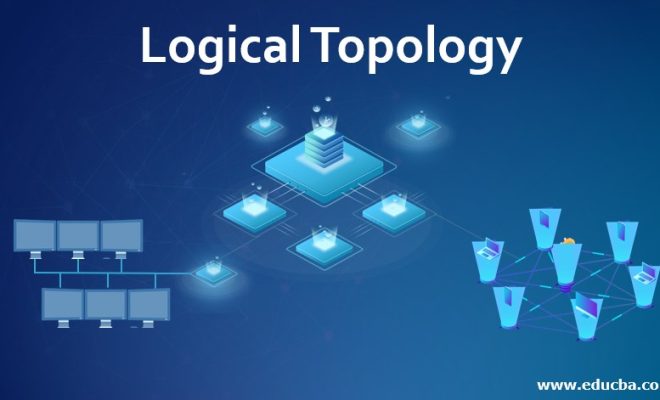
Logical topology is an essential component of computer networking that describes the way how data travels across a network. Logical topology is the way how data communication occurs between network devices. It emphasizes the flow of data packets across a network rather than physical connections. Therefore, logical topology depends on the communication protocols, data transmission standards, and access methods utilized by the network.

In simple terms, logical topology defines how data travels between nodes on a network. This topology emphasizes the data path that a message takes from one device to another, irrespective of the physical connections between them. Logical topology is highly relevant in today’s network environment, where data transmission happens with increasing volume and speed.

Logical topology types include bus topology, star topology, tree topology, mesh topology, and ring topology.

The bus topology refers to a network arrangement that connects all nodes to a single cable that transmits data back and forth. This topology has a linear structure, and messages can travel in both directions. The topology is highly efficient in small networks, but when the network grows, it can experience significant performance issues.

Star topology connects devices to a central hub or switch. This arrangement ensures that all messages pass through the hub, which acts as the central control point. Star topology is highly reliable and provides better performance than the bus topology, but the hub can become a single point of failure if not appropriately maintained.

The tree topology, also known as hierarchical topology, is a hybrid of bus and star topology, whereby multiple stars connect to a single backbone (bus) network. This creates a hierarchical arrangement that provides more control, better scalability, and higher reliability.

Mesh topology ensures that each device is directly connected to every other device on the network. This topology offers excellent redundancy, fault-tolerance, and scalability. Large networks with heavy traffic benefit significantly from mesh topology.

Ring topology connects devices in a circular arrangement, whereby each device communicates with two other devices next to it. Messages travel around the ring in one direction and encounter all devices on the network. Ring topology is highly reliable and efficient for small networks, but can experience significant performance issues when network traffic is high.

In conclusion, logical topology outlines the flow of data packets from the source to the destination. It defines the communication protocols, transmission standards, and access methods employed by the network. Logical topology determines the network’s efficiency, reliability, scalability, and security. Therefore, design and configuration of logical topology must be carefully studied to create a robust and effective network infrastructure.

Previous Article

What is Live Support?

Next Article

What is Long Term Evolution (LTE)?

Matthew Lynch

Related articles More from author

  • Digital & Mobile Technology

    What is a Quad-Core Processor?

    April 18, 2023
    By Matthew Lynch
  • Digital & Mobile Technology

    How to Open the Snipping Tool in Windows 11

    June 6, 2023
    By Matthew Lynch
  • Digital & Mobile TechnologyEdTech Startups & Businesses

    What is Database Backup?

    May 6, 2023
    By Matthew Lynch
  • Digital & Mobile Technology

    4 Color, 6 Color, and 8 Color Process Printing

    July 14, 2023
    By Matthew Lynch
  • Digital & Mobile Technology

    How to Upgrade From Windows 7 to Windows 10

    June 1, 2023
    By Matthew Lynch
  • Digital & Mobile Technology

    Canon PIXMA TR4520 Review

    June 15, 2023
    By Matthew Lynch

Search

Login & Registration

  • Log in
  • Entries feed
  • Comments feed
  • WordPress.org

Newsletter

Signup for The Tech Edvocate Newsletter and have the latest in EdTech news and opinion delivered to your email address!

About Us

Since technology is not going anywhere and does more good than harm, adapting is the best course of action. That is where The Tech Edvocate comes in. We plan to cover the PreK-12 and Higher Education EdTech sectors and provide our readers with the latest news and opinion on the subject. From time to time, I will invite other voices to weigh in on important issues in EdTech. We hope to provide a well-rounded, multi-faceted look at the past, present, the future of EdTech in the US and internationally.

We started this journey back in June 2016, and we plan to continue it for many more years to come. I hope that you will join us in this discussion of the past, present and future of EdTech and lend your own insight to the issues that are discussed.

Newsletter

Signup for The Tech Edvocate Newsletter and have the latest in EdTech news and opinion delivered to your email address!

Contact Us

The Tech Edvocate
910 Goddin Street
Richmond, VA 23231
(601) 630-5238
[email protected]

Copyright © 2026 Matthew Lynch. All rights reserved.