The Tech Edvocate

Top Menu

  • Advertisement
  • Apps
  • Home Page
  • Home Page Five (No Sidebar)
  • Home Page Four
  • Home Page Three
  • Home Page Two
  • Home Tech2
  • Icons [No Sidebar]
  • Left Sidbear Page
  • Lynch Educational Consulting
  • My Account
  • My Speaking Page
  • Newsletter Sign Up Confirmation
  • Newsletter Unsubscription
  • Our Brands
  • Page Example
  • Privacy Policy
  • Protected Content
  • Register
  • Request a Product Review
  • Shop
  • Shortcodes Examples
  • Signup
  • Start Here
    • Governance
    • Careers
    • Contact Us
  • Terms and Conditions
  • The Edvocate
  • The Tech Edvocate Product Guide
  • Topics
  • Write For Us
  • Advertise

Main Menu

  • Start Here
    • Our Brands
    • Governance
      • Lynch Educational Consulting, LLC.
      • Dr. Lynch’s Personal Website
      • Careers
    • Write For Us
    • The Tech Edvocate Product Guide
    • Contact Us
    • Books
    • Edupedia
    • Post a Job
    • The Edvocate Podcast
    • Terms and Conditions
    • Privacy Policy
  • Topics
    • Assistive Technology
    • Child Development Tech
    • Early Childhood & K-12 EdTech
    • EdTech Futures
    • EdTech News
    • EdTech Policy & Reform
    • EdTech Startups & Businesses
    • Higher Education EdTech
    • Online Learning & eLearning
    • Parent & Family Tech
    • Personalized Learning
    • Product Reviews
  • Advertise
  • Tech Edvocate Awards
  • The Edvocate
  • Pedagogue
  • School Ratings

logo

The Tech Edvocate

  • Start Here
    • Our Brands
    • Governance
      • Lynch Educational Consulting, LLC.
      • Dr. Lynch’s Personal Website
        • My Speaking Page
      • Careers
    • Write For Us
    • The Tech Edvocate Product Guide
    • Contact Us
    • Books
    • Edupedia
    • Post a Job
    • The Edvocate Podcast
    • Terms and Conditions
    • Privacy Policy
  • Topics
    • Assistive Technology
    • Child Development Tech
    • Early Childhood & K-12 EdTech
    • EdTech Futures
    • EdTech News
    • EdTech Policy & Reform
    • EdTech Startups & Businesses
    • Higher Education EdTech
    • Online Learning & eLearning
    • Parent & Family Tech
    • Personalized Learning
    • Product Reviews
  • Advertise
  • Tech Edvocate Awards
  • The Edvocate
  • Pedagogue
  • School Ratings
  • The Chew That Changed My Training: Why Nitraflex Pre-Workout Chews Deliver Unbelievable Pumps

  • The Brutal Truth: Why Your AI Skills Training Is Failing (And How to Fix It)

  • 8 Essential AI Upskilling Programs Your Business Needs to Thrive Now

  • One Critical Mistake Companies Make With AI Skills Training

  • The AI Career Showdown: Which Path Pays More And Fits You Best?

  • The Shocking Truth About the Highest Paying AI Jobs in 2026

  • The Staggering Truth About 5 AI Job Roles That Will Redefine Your Career by 2026

  • Crypto Crackdown: Is the FCA’s Iron Fist Crushing Innovation, or Just Protecting You?

  • 7 Critical Steps to Survive the Crypto Crackdown: How to Navigate FCA Regulations

  • This One Thing Is Quietly Reshaping Illegal Crypto Trading — And Regulators Are Panicking

Digital & Mobile Technology
Home›Digital & Mobile Technology›Understanding How AM/FM Radio Works

Understanding How AM/FM Radio Works
By Matthew Lynch
June 4, 2023
0
Spread the love

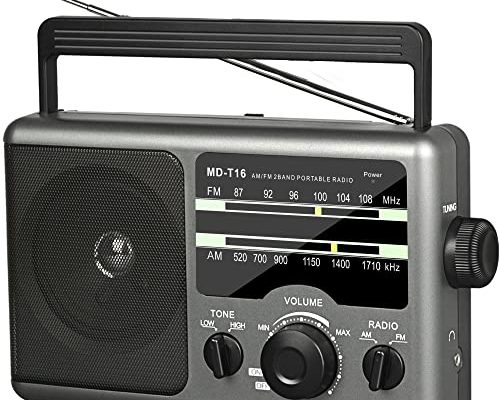
Radio is an essential part of most people’s lives. We listen to the news, music, and talk shows while we drive, cook, or even while we’re at work. But most of us don’t know how radio broadcasting works. In this article, we’ll explore the basics of AM/FM radio and how they function.

What is AM/FM radio?

AM stands for “Amplitude Modulation” and FM stands for “Frequency Modulation”. AM/FM is how radio signals are transmitted from a broadcasting station to your radio receiver. These signals are transmitted through the airwaves and picked up by your car or home radio.

Understanding AM Radio

AM radio is a broadcasting technology that uses amplitude modulation to transmit audio signals. This means that the amplitude (or strength) of the radio signal varies in proportion to the audio signal. The audio is converted into an electrical signal, which is then applied to the carrier wave. The amplitude of the carrier wave is then varied by the electrical signal, resulting in the AM radio signal we hear.

AM radio signals have a limited frequency range, which makes them more susceptible to interference like static and hissing sounds. This interference can be caused by natural phenomena like lightning strikes or man-made interference from electronic devices. However, these issues are mitigated by AM radio’s wider coverage area that can reach long distances.

Understanding FM Radio

FM radio is a broadcasting technology that uses frequency modulation to transmit audio signals. With FM radio, the amplitude of the carrier wave remains constant, and the frequency of the wave is varied by the audio signal. This results in a much higher-quality audio signal with less interference.

FM radio signals have a much narrower frequency range than AM radio signals, which makes them less susceptible to interference. However, FM radio signals don’t cover as much distance as AM radio signals, which makes them more suited for use in cities.

How Radio Broadcasting Works

Radio broadcasting stations use powerful transmitters to transmit their signals. These transmitters convert the audio signal into an electrical signal that is amplified and sent to the antenna. The antenna then converts the electrical signal into radio waves, which are transmitted at a certain frequency.

Your radio receiver picks up these radio waves and converts them back into an electrical signal. The electrical signal is then sent to the radio’s speaker, where it’s converted into sound that we can hear.

Conclusion

Understanding how AM/FM radio works can help you appreciate the technology behind your favorite music and talk shows. AM and FM radio stations have different strengths and weaknesses, but both play an important role in broadcasting information and entertainment to millions of people across the world.


Previous Article

What Is a BlackBerry Phone?

Next Article

The 5 Best Budget Home Theater Starter ...

Matthew Lynch

Related articles More from author

  • Digital & Mobile Technology

    Spotify Is Working on a Karaoke Mode and Free Offline Play

    August 3, 2023
    By Matthew Lynch
  • Digital & Mobile Technology

    What Is a PDD File?

    June 11, 2023
    By Matthew Lynch
  • Digital & Mobile Technology

    What Is Coinbase? What Is Coinbase Pro?

    September 7, 2023
    By Matthew Lynch
  • Digital & Mobile Technology

    Terabytes, Gigabytes, & Petabytes: How Big Are They?

    May 30, 2023
    By Matthew Lynch
  • Digital & Mobile Technology

    How to Download a WAV File

    May 28, 2023
    By Matthew Lynch
  • Digital & Mobile Technology

    iPhone Hotspot Not Working? How to Fix iPhone Tethering

    June 22, 2023
    By Matthew Lynch

Search

Login & Registration

  • Log in
  • Entries feed
  • Comments feed
  • WordPress.org

Newsletter

Signup for The Tech Edvocate Newsletter and have the latest in EdTech news and opinion delivered to your email address!

About Us

Since technology is not going anywhere and does more good than harm, adapting is the best course of action. That is where The Tech Edvocate comes in. We plan to cover the PreK-12 and Higher Education EdTech sectors and provide our readers with the latest news and opinion on the subject. From time to time, I will invite other voices to weigh in on important issues in EdTech. We hope to provide a well-rounded, multi-faceted look at the past, present, the future of EdTech in the US and internationally.

We started this journey back in June 2016, and we plan to continue it for many more years to come. I hope that you will join us in this discussion of the past, present and future of EdTech and lend your own insight to the issues that are discussed.

Newsletter

Signup for The Tech Edvocate Newsletter and have the latest in EdTech news and opinion delivered to your email address!

Contact Us

The Tech Edvocate
910 Goddin Street
Richmond, VA 23231
(601) 630-5238
[email protected]

Copyright © 2026 Matthew Lynch. All rights reserved.