The Tech Edvocate

Top Menu

  • Advertisement
  • Apps
  • Home Page
  • Home Page Five (No Sidebar)
  • Home Page Four
  • Home Page Three
  • Home Page Two
  • Home Tech2
  • Icons [No Sidebar]
  • Left Sidbear Page
  • Lynch Educational Consulting
  • My Account
  • My Speaking Page
  • Newsletter Sign Up Confirmation
  • Newsletter Unsubscription
  • Our Brands
  • Page Example
  • Privacy Policy
  • Protected Content
  • Register
  • Request a Product Review
  • Shop
  • Shortcodes Examples
  • Signup
  • Start Here
    • Governance
    • Careers
    • Contact Us
  • Terms and Conditions
  • The Edvocate
  • The Tech Edvocate Product Guide
  • Topics
  • Write For Us
  • Advertise

Main Menu

  • Start Here
    • Our Brands
    • Governance
      • Lynch Educational Consulting, LLC.
      • Dr. Lynch’s Personal Website
      • Careers
    • Write For Us
    • The Tech Edvocate Product Guide
    • Contact Us
    • Books
    • Edupedia
    • Post a Job
    • The Edvocate Podcast
    • Terms and Conditions
    • Privacy Policy
  • Topics
    • Assistive Technology
    • Child Development Tech
    • Early Childhood & K-12 EdTech
    • EdTech Futures
    • EdTech News
    • EdTech Policy & Reform
    • EdTech Startups & Businesses
    • Higher Education EdTech
    • Online Learning & eLearning
    • Parent & Family Tech
    • Personalized Learning
    • Product Reviews
  • Advertise
  • Tech Edvocate Awards
  • The Edvocate
  • Pedagogue
  • School Ratings

logo

The Tech Edvocate

  • Start Here
    • Our Brands
    • Governance
      • Lynch Educational Consulting, LLC.
      • Dr. Lynch’s Personal Website
        • My Speaking Page
      • Careers
    • Write For Us
    • The Tech Edvocate Product Guide
    • Contact Us
    • Books
    • Edupedia
    • Post a Job
    • The Edvocate Podcast
    • Terms and Conditions
    • Privacy Policy
  • Topics
    • Assistive Technology
    • Child Development Tech
    • Early Childhood & K-12 EdTech
    • EdTech Futures
    • EdTech News
    • EdTech Policy & Reform
    • EdTech Startups & Businesses
    • Higher Education EdTech
    • Online Learning & eLearning
    • Parent & Family Tech
    • Personalized Learning
    • Product Reviews
  • Advertise
  • Tech Edvocate Awards
  • The Edvocate
  • Pedagogue
  • School Ratings
  • A Visitors Guide to Oklahoma City (OK), United States

  • A Visitor’s Guide to Tucson, Arizona, United States

  • A Visitor’s Guide to Hamilton, Canada

  • Beware of Fiverr: You Might Get Scammed

  • The Future of Artificial Intelligence: Navigating the Next Frontier

  • Best Home Backup Generators for 2026

  • Online Learning Platforms: Transforming Education in the Digital Age

  • Fastest Growing Sectors of the EdTech Market: Exploring Emerging Trends

  • The Best Video Games of All Time

  • What is the Best Gaming Platform on the Market?

Digital & Mobile Technology
Home›Digital & Mobile Technology›Steps to Understanding IP Subnetting

Steps to Understanding IP Subnetting
By Matthew Lynch
April 10, 2023
0
Spread the love

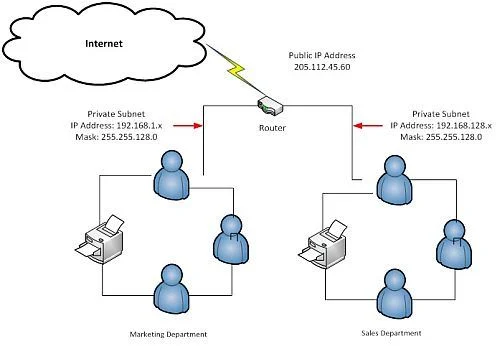
Subnetting is a technique used to divide a single network into smaller, more manageable subnetworks. IP subnetting is an important concept in computer networking and is crucial to understanding the basics of TCP/IP. In this article, we’ll discuss the steps to understanding IP subnetting.

1. Understand the basics of IP addressing

Before you can understand IP subnetting, you need to understand the basics of IP addressing. IP addresses are the unique identifying numbers assigned to every device connected to a network. An IP address is a 32-bit number written in dotted decimal format. Each digit represents 8 bits or one byte. For example, the IP address 192.168.1.1 is comprised of four numbers, each representing one byte.

2. Know the different classes of IP addresses

There are five classes of IP addresses: A, B, C, D, and E. Classes A, B, and C are used for normal network addressing, while D and E are reserved for special use.

– Class A: This class is used for networks with a large number of hosts. It has a default subnet mask of 255.0.0.0 and supports up to 126 networks.

– Class B: This class is used for medium-sized networks. It has a default subnet mask of 255.255.0.0 and supports up to 16,384 networks.

– Class C: This class is used for smaller networks. It has a default subnet mask of 255.255.255.0 and supports up to 2 million networks.

3. Learn about subnet masks

A subnet mask is a 32-bit number used to divide an IP address into network and host bits. The bits with a value of 1 in the subnet mask represent the network bits, while the bits with a value of 0 represent the host bits.

For example, if you have an IP address of 192.168.1.1 and a subnet mask of 255.255.255.0, the first three octets (192.168.1) represent the network portion, while the last octet (1) represents the host portion.

4. Understand the concept of subnetting

IP subnetting is the process of dividing a single network into multiple smaller subnetworks. Subnetting is achieved by extending the subnet mask to include additional bits for the network portion.

For example, if you have a Class C network with an IP address of 192.168.1.0 and a default subnet mask of 255.255.255.0, you can subnet the network into multiple subnetworks by extending the subnet mask.

5. Learn how to calculate subnet masks

To calculate a subnet mask, you need to determine the number of bits needed to represent the number of subnetworks required for your network. You can then use these bits to extend the subnet mask.

For example, if you need four subnetworks, you will need to add two more bits to the network portion of the default Class C network mask of 255.255.255.0. The resulting subnet mask would be 255.255.255.192, which would create four subnetworks with 62 hosts each.

In conclusion, understanding IP subnetting is essential to managing and designing networks. By following the steps outlined above, you can gain a solid understanding of IP subnetting and how to apply it to your network.


Previous Article

The Art of Staying Human-centric When You’re ...

Next Article

Plus Power Supply Ratings and What They ...

Matthew Lynch

Related articles More from author

  • Digital & Mobile Technology

    How to Set Up Google Home for Multiple Users

    June 30, 2023
    By Matthew Lynch
  • Digital & Mobile Technology

    The Top 10 Best 10-Hour Long Videos on YouTube

    June 2, 2023
    By Matthew Lynch
  • Digital & Mobile Technology

    Best Sites Like Craigslist to Find Used Items for Sale

    June 22, 2023
    By Matthew Lynch
  • Digital & Mobile Technology

    How to Reset or Change the Password for Your Verizon FIOS Router

    May 4, 2023
    By Matthew Lynch
  • Digital & Mobile Technology

    GSM vs. EDGE vs. CDMA vs. TDMA

    July 31, 2023
    By Matthew Lynch
  • Digital & Mobile Technology

    Brother HL-L2370DW Review

    July 4, 2023
    By Matthew Lynch

Search

Login & Registration

  • Register
  • Log in
  • Entries feed
  • Comments feed
  • WordPress.org

Newsletter

Signup for The Tech Edvocate Newsletter and have the latest in EdTech news and opinion delivered to your email address!

About Us

Since technology is not going anywhere and does more good than harm, adapting is the best course of action. That is where The Tech Edvocate comes in. We plan to cover the PreK-12 and Higher Education EdTech sectors and provide our readers with the latest news and opinion on the subject. From time to time, I will invite other voices to weigh in on important issues in EdTech. We hope to provide a well-rounded, multi-faceted look at the past, present, the future of EdTech in the US and internationally.

We started this journey back in June 2016, and we plan to continue it for many more years to come. I hope that you will join us in this discussion of the past, present and future of EdTech and lend your own insight to the issues that are discussed.

Newsletter

Signup for The Tech Edvocate Newsletter and have the latest in EdTech news and opinion delivered to your email address!

Contact Us

The Tech Edvocate
910 Goddin Street
Richmond, VA 23231
(601) 630-5238
[email protected]

Copyright © 2025 Matthew Lynch. All rights reserved.