The Tech Edvocate

Top Menu

  • Advertisement
  • Apps
  • Home Page
  • Home Page Five (No Sidebar)
  • Home Page Four
  • Home Page Three
  • Home Page Two
  • Home Tech2
  • Icons [No Sidebar]
  • Left Sidbear Page
  • Lynch Educational Consulting
  • My Account
  • My Speaking Page
  • Newsletter Sign Up Confirmation
  • Newsletter Unsubscription
  • Our Brands
  • Page Example
  • Privacy Policy
  • Protected Content
  • Register
  • Request a Product Review
  • Shop
  • Shortcodes Examples
  • Signup
  • Start Here
    • Governance
    • Careers
    • Contact Us
  • Terms and Conditions
  • The Edvocate
  • The Tech Edvocate Product Guide
  • Topics
  • Write For Us
  • Advertise

Main Menu

  • Start Here
    • Our Brands
    • Governance
      • Lynch Educational Consulting, LLC.
      • Dr. Lynch’s Personal Website
      • Careers
    • Write For Us
    • The Tech Edvocate Product Guide
    • Contact Us
    • Books
    • Edupedia
    • Post a Job
    • The Edvocate Podcast
    • Terms and Conditions
    • Privacy Policy
  • Topics
    • Assistive Technology
    • Child Development Tech
    • Early Childhood & K-12 EdTech
    • EdTech Futures
    • EdTech News
    • EdTech Policy & Reform
    • EdTech Startups & Businesses
    • Higher Education EdTech
    • Online Learning & eLearning
    • Parent & Family Tech
    • Personalized Learning
    • Product Reviews
  • Advertise
  • Tech Edvocate Awards
  • The Edvocate
  • Pedagogue
  • School Ratings

logo

The Tech Edvocate

  • Start Here
    • Our Brands
    • Governance
      • Lynch Educational Consulting, LLC.
      • Dr. Lynch’s Personal Website
        • My Speaking Page
      • Careers
    • Write For Us
    • The Tech Edvocate Product Guide
    • Contact Us
    • Books
    • Edupedia
    • Post a Job
    • The Edvocate Podcast
    • Terms and Conditions
    • Privacy Policy
  • Topics
    • Assistive Technology
    • Child Development Tech
    • Early Childhood & K-12 EdTech
    • EdTech Futures
    • EdTech News
    • EdTech Policy & Reform
    • EdTech Startups & Businesses
    • Higher Education EdTech
    • Online Learning & eLearning
    • Parent & Family Tech
    • Personalized Learning
    • Product Reviews
  • Advertise
  • Tech Edvocate Awards
  • The Edvocate
  • Pedagogue
  • School Ratings
  • The Silent Revolution: How AI Property Valuation Is Quietly Reshaping Real Estate

  • The Astonishing Truth: Why Your Dream Car Is Now a $52,000 Illusion

  • Toxic Algorithms: Why Your Bank’s AI Could Cost You Everything

  • OpenAI’s GPT-6 Cyber: A Dangerous New AI Threat or Our Ultimate Digital Guardian?

  • This Game-Changing Natural Ozempic Alternative Just Blew Up on Social Media

  • Bónuszösszeg, ingyen pörgetés és befizetési feltétel: üdvözlő és befizetés nélküli kaszinóajánlatok magyar játékosoknak

  • 9 Critical Reasons Why Athexio Might Be The Investment You Need (Or Should Avoid)

  • A Single Breakthrough Could Finally Kill Range Anxiety for Millions of EV Owners

  • Your Money, Their AI: The Secret Agents Invading Bank Accounts

  • US Battery as a Service Market Shifts Toward Fleet-Based Energy

Students
Home›Students›Micro-learning and the Short Attention Span

Micro-learning and the Short Attention Span
By Matthew Lynch
October 3, 2022
0
Spread the love

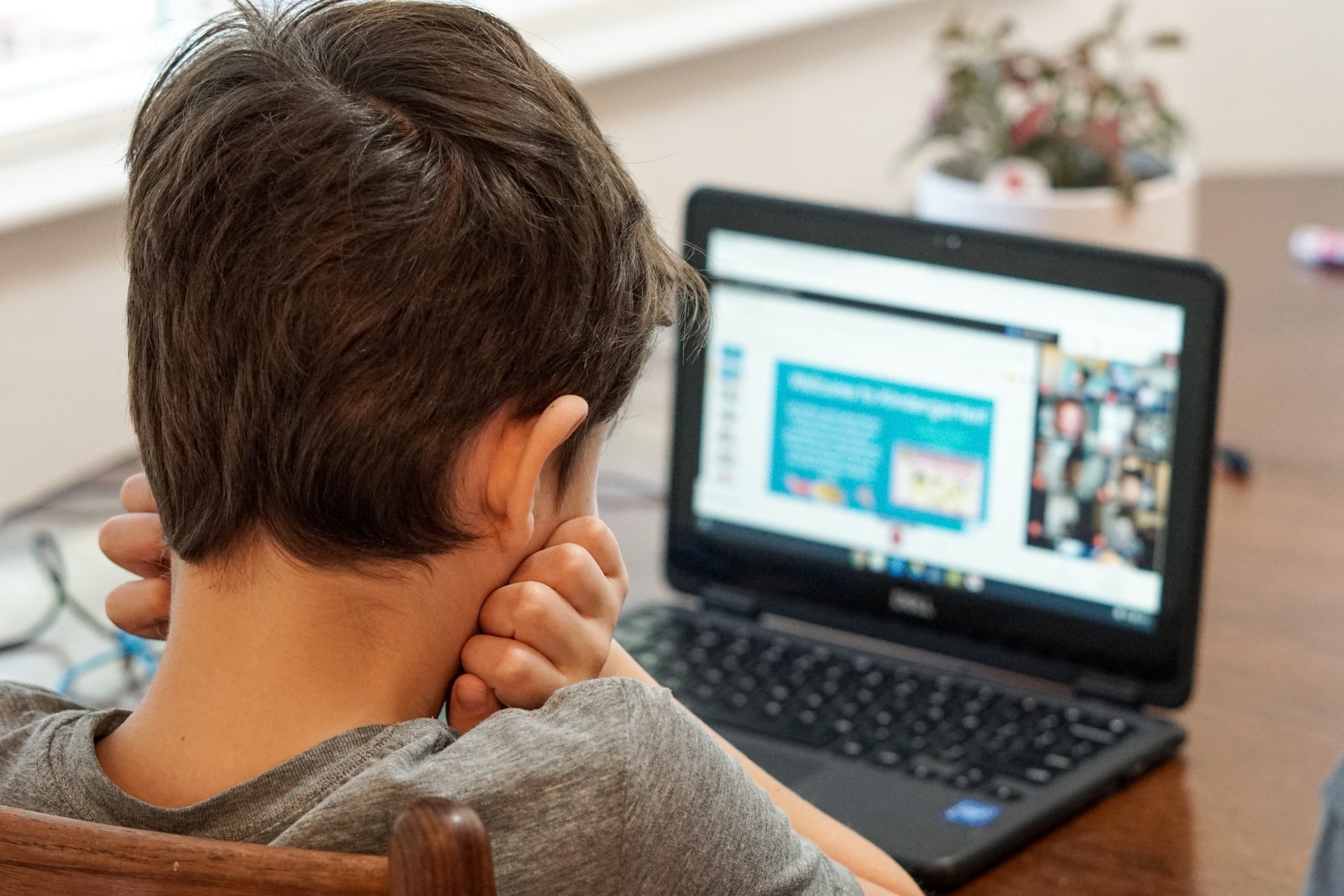
In your teaching career, do you recall the one or two students who were distracted by a light breeze just blowing slightly from the air conditioner? Did you try every possible trick to regain their attention but to no avail?

There is a solution that involves a pivot in your style of instruction called micro-learning. The beauty of this strategy is that when employed properly, it engages the whole group of students, and helps them to retain important information.

Students’ Abilities to “Sit Still and Listen”

To begin with, variances of attention span have always been a challenge because every student is different, and instructional methods are not in the one-size-fits-all category. For example, on average, teens require one or two short breaks while completing an hour to two-hour task. For young children, you’re looking at five minutes of undivided attention.

To meet the challenge of differentiating instruction and keeping your students’ attention, you can look at micro learning as a possible solution.

What is Micro Learning?

Microlearning manifests itself in a variety of forms. Some instructors create short explainer videos. Others incorporate short but meaningful games. Either way, teachers make the most of five to seven minutes of focusing on just one objective. The rationale behind the short time period is to cater to an already short attention span.

In other words, the human brain retains more information when it’s presented in smaller “chunks,” say for instance, five to nine facts or details. However, the most important factor about micro-learning is that each lesson must build on the previous one and work towards a common goal. Therefore, micro-learning can be employed for reinforcement and guided practice and not just to introduce a new concept or skill.

How Does Micro Learning Engage Students with a Short Attention Span?

In the case of providing an uploaded video or slideshow, micro-learning benefits the student who accesses the information during the time of day when he or she is most able to learn. In other words, the early risers of your group can view the presentation in the morning whereas those who function better later in the day can do so in the afternoon. The brevity of the lesson makes it more accessible to more students along with the scheduling flexibility.

Likewise, when you incorporate questions or short exercises into your mini-lesson, you’re allowing the students to take in the most important points or skills in such a way that you can see who’s catching on and who’s struggling.

Finally, shorter lessons have proven to be more effective for individuals with short attention spans. Texts and video presentations tend to have more impact when they are focused on one important objective and when they are concise.

Also, micro learning involves more opportunities for students to interact with material and with each other. When you include “brain breaks” or short collaborative exercises, this method delivers more impactful learning.

Ways to Incorporate Micro Learning

So, if you’re looking to incorporate micro learning activities into your lesson planning, here are a few ideas:

●     Create short videos to introduce new concepts or to review previous content

●     Limit your live streams to 10 to 15 minutes but remain online and available for individual questions

●     Add some short, guided practice exercises to gauge students ‘understanding

●     Allow for shorter, more focused homework assignments to shorten screen time when necessary

Basically, you’re keeping your goals specific and focused and passing along short yet impactful nuggets of information to your students. Plus, one final point to remember is that micro learning helps with decreasing the feeling of being overwhelmed by long virtual meetings and too much screen time. Your students will be ready and able to move on to the next step.


 

Previous Article

Why Higher Education is in Trouble

Next Article

Building Your Child’s Memory

Matthew Lynch

Related articles More from author

  • Students

    What is Astroturfing?

    May 5, 2023
    By Matthew Lynch
  • Students

    Best Free Tools For Publishing Student Work

    March 20, 2023
    By Matthew Lynch
  • Students

    3 Top Online Dictionaries For Students

    October 12, 2023
    By Matthew Lynch
  • Students

    8 Key Components to Bringing a Connected Campus to Life

    October 31, 2022
    By Matthew Lynch
  • Students

    What is Application Sharing?

    May 5, 2023
    By Matthew Lynch
  • Students

    What is AutoArchive in Outlook and How Does it Work?

    May 5, 2023
    By Matthew Lynch

Search

Login & Registration

  • Log in
  • Entries feed
  • Comments feed
  • WordPress.org

Newsletter

Signup for The Tech Edvocate Newsletter and have the latest in EdTech news and opinion delivered to your email address!

About Us

Since technology is not going anywhere and does more good than harm, adapting is the best course of action. That is where The Tech Edvocate comes in. We plan to cover the PreK-12 and Higher Education EdTech sectors and provide our readers with the latest news and opinion on the subject. From time to time, I will invite other voices to weigh in on important issues in EdTech. We hope to provide a well-rounded, multi-faceted look at the past, present, the future of EdTech in the US and internationally.

We started this journey back in June 2016, and we plan to continue it for many more years to come. I hope that you will join us in this discussion of the past, present and future of EdTech and lend your own insight to the issues that are discussed.

Newsletter

Signup for The Tech Edvocate Newsletter and have the latest in EdTech news and opinion delivered to your email address!

Contact Us

The Tech Edvocate
910 Goddin Street
Richmond, VA 23231
(601) 630-5238
[email protected]

Copyright © 2026 Matthew Lynch. All rights reserved.