The Tech Edvocate

Top Menu

  • Advertisement
  • Apps
  • Home Page
  • Home Page Five (No Sidebar)
  • Home Page Four
  • Home Page Three
  • Home Page Two
  • Home Tech2
  • Icons [No Sidebar]
  • Left Sidbear Page
  • Lynch Educational Consulting
  • My Account
  • My Speaking Page
  • Newsletter Sign Up Confirmation
  • Newsletter Unsubscription
  • Our Brands
  • Page Example
  • Privacy Policy
  • Protected Content
  • Register
  • Request a Product Review
  • Shop
  • Shortcodes Examples
  • Signup
  • Start Here
    • Governance
    • Careers
    • Contact Us
  • Terms and Conditions
  • The Edvocate
  • The Tech Edvocate Product Guide
  • Topics
  • Write For Us
  • Advertise

Main Menu

  • Start Here
    • Our Brands
    • Governance
      • Lynch Educational Consulting, LLC.
      • Dr. Lynch’s Personal Website
      • Careers
    • Write For Us
    • The Tech Edvocate Product Guide
    • Contact Us
    • Books
    • Edupedia
    • Post a Job
    • The Edvocate Podcast
    • Terms and Conditions
    • Privacy Policy
  • Topics
    • Assistive Technology
    • Child Development Tech
    • Early Childhood & K-12 EdTech
    • EdTech Futures
    • EdTech News
    • EdTech Policy & Reform
    • EdTech Startups & Businesses
    • Higher Education EdTech
    • Online Learning & eLearning
    • Parent & Family Tech
    • Personalized Learning
    • Product Reviews
  • Advertise
  • Tech Edvocate Awards
  • The Edvocate
  • Pedagogue
  • School Ratings

logo

The Tech Edvocate

  • Start Here
    • Our Brands
    • Governance
      • Lynch Educational Consulting, LLC.
      • Dr. Lynch’s Personal Website
        • My Speaking Page
      • Careers
    • Write For Us
    • The Tech Edvocate Product Guide
    • Contact Us
    • Books
    • Edupedia
    • Post a Job
    • The Edvocate Podcast
    • Terms and Conditions
    • Privacy Policy
  • Topics
    • Assistive Technology
    • Child Development Tech
    • Early Childhood & K-12 EdTech
    • EdTech Futures
    • EdTech News
    • EdTech Policy & Reform
    • EdTech Startups & Businesses
    • Higher Education EdTech
    • Online Learning & eLearning
    • Parent & Family Tech
    • Personalized Learning
    • Product Reviews
  • Advertise
  • Tech Edvocate Awards
  • The Edvocate
  • Pedagogue
  • School Ratings
  • Devastating: Why Your Car Insurance Rates Are Skyrocketing in 2026 – And What You Can Do

  • 10,000+ Victims: This Accounting Giant’s Data Breach Just Got Much Worse

  • The Hidden Cost of EVs: Why Your Battery Could Cost More Than Your Car in 2026

  • Jensen Huang’s Shock Exit: This Unbelievable Scandal Just Rocked Nvidia and the AI World

  • Big Walk developer House House Confirms ‘Sparing’ Use of Gen AI – Press Start

  • Baffling: How a Cyber Breach at South Korea’s Top Security Watchdog Exposed Millions

  • Wenn Ordnung den Bildschirm beruhigt: Warum klare Abläufe Casino-Unterhaltung einladender machen

  • Reddit AI Reviews: The Quiet Reshaping of Online Opinion

  • The Chilling Truth: Iran Cyberattacks Europe’s Food and Blood Supplies

  • Anthropic’s $3.4 Billion Bet on Gas: The Unseen Cost of AI’s Future

Education Leadership
Home›Education Leadership›Is Class Size Important?

Is Class Size Important?

By Matthew Lynch
November 29, 2022
0
Spread the love

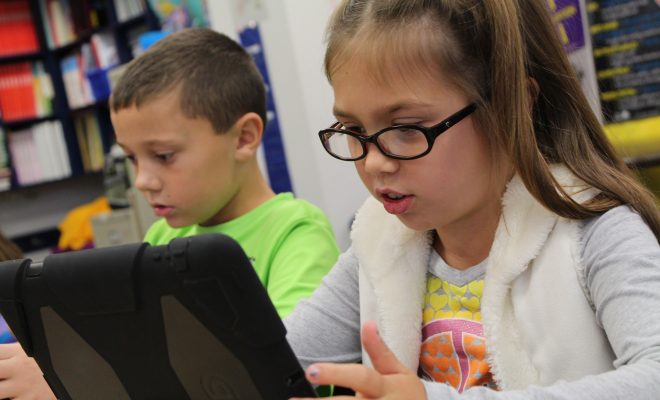
Many issues are under the focus of education activists and researchers, but shouldn’t it be simple to concur on the necessity of lower class sizes in PreK-12 classrooms? Maybe. Continue reading to learn more. When we talk about small class sizes, we generally refer to elementary school classrooms with 20 or fewer students and high school courses with 20 to 25 students. Small class sizes are popular among parents, teachers, and politicians to improve academic attainment and handle classroom management issues. In the previous two decades, at least 80% of the states in the union have implemented some kind of class size reduction law or policy.

Despite more than forty years of research, the success of this common technique is surprisingly difficult to assess, leading to several disputes. According to most education scholars, small class sizes in primary school are associated with improved academic success and graduation rates for students from poor socioeconomic backgrounds.

Their argument is over whether the benefits of lower class sizes warrant the astronomical price tag, especially where education funding is scarce. These researchers have recently attempted to determine the processes that allow reduced class sizes to operate and who benefits the most.

Here are some of the more intriguing findings from their study:

Small class sizes are beneficial because they allow teachers to provide more tailored teaching to students, which is likely why academic attainment improves. Teachers can boost their efficacy without necessarily changing what they are doing.

In smaller groups, classroom management attempts are more effective. Children appear to be paying greater attention as well.

For smaller class sizes to operate, they must be accompanied by appropriate administrative and parental assistance.

Students in smaller groups appear to do better than those in bigger ones. We always knew that, but it’s wonderful to have scientific evidence to back it up.

If the actual area in which they are gathered is reduced, smaller class sizes do not have the same good impacts. The more room you have, the better it is.

Smaller class sizes assist students with special needs. To be clear, we are talking about students with impairments who are integrated into normal education classes.

students were shown to be more attentive and have stronger interactions with their teachers and classmates in classrooms with fewer students.

Students in smaller groups spent more time on the assignment than students in larger groups.

Small-classroom teachers said they had additional time to differentiate lessons.

Students who had small class sizes in elementary school were more inclined to maintain their achievement throughout their K-12 careers and attend college.

Teacher retention is improved when class sizes are kept small. Retention rates rise as class sizes decrease.

The quality of the teachers might influence the efficacy of smaller classes. If you put a lousy teacher in a classroom with 20 or fewer students, the outcomes will certainly be terrible. Supports such as professional development and high-quality curricular resources can help to maximize the benefits of smaller classes.

That is all there is to it. Smaller class sizes have a favorable influence on PreK-12 students’ academic success, engagement, and conduct when the conditions are perfect.  What are your thoughts regarding this? Is there something we are overlooking?

Previous Article

Taking Math Class Outdoors

Next Article

Causes of Autism Spectrum Disorder

Matthew Lynch

Related articles More from author

  • Early Childhood & K-12 EdTechEducation Leadership

    9 Tips for Being a Education Leader in the Digital Age

    February 22, 2018
    By Matthew Lynch
  • Education Leadership

    Know the Why and How Before Adopting EdTech

    January 8, 2020
    By Matthew Lynch
  • Education Leadership

    IT Leadership Roles Reflect Changes on Campus

    January 26, 2022
    By Matthew Lynch
  • Education Leadership

    How Forgiveness Separates The Good Education Leaders From The Bad

    June 25, 2023
    By Matthew Lynch
  • Education Leadership

    Great Education Leaders Challenge the Status Quo

    December 26, 2024
    By Matthew Lynch
  • Education Leadership

    Teacher Effectiveness: Developing What Matters Most

    June 4, 2022
    By Matthew Lynch

Search

Login & Registration

  • Log in
  • Entries feed
  • Comments feed
  • WordPress.org

Newsletter

Signup for The Tech Edvocate Newsletter and have the latest in EdTech news and opinion delivered to your email address!

About Us

Since technology is not going anywhere and does more good than harm, adapting is the best course of action. That is where The Tech Edvocate comes in. We plan to cover the PreK-12 and Higher Education EdTech sectors and provide our readers with the latest news and opinion on the subject. From time to time, I will invite other voices to weigh in on important issues in EdTech. We hope to provide a well-rounded, multi-faceted look at the past, present, the future of EdTech in the US and internationally.

We started this journey back in June 2016, and we plan to continue it for many more years to come. I hope that you will join us in this discussion of the past, present and future of EdTech and lend your own insight to the issues that are discussed.

Newsletter

Signup for The Tech Edvocate Newsletter and have the latest in EdTech news and opinion delivered to your email address!

Contact Us

The Tech Edvocate
910 Goddin Street
Richmond, VA 23231
(601) 630-5238
[email protected]

Copyright © 2026 Matthew Lynch. All rights reserved.