Master Tire Inflation: Boost Performance & Safety Now
“`html
When it comes to maintaining your vehicle, understanding how to inflate tires properly is crucial. Many drivers overlook this essential task, yet proper tire inflation is key not only for your vehicle’s performance but also for your safety. In this comprehensive guide, we’ll cover everything from the significance of tire inflation to practical advice on how to ensure your tires are always at the optimal pressure.
1. The Importance of Proper Tire Inflation
Why should you care about how to inflate tires? Proper tire inflation is vital for several reasons. Firstly, it affects your vehicle’s fuel efficiency. Under-inflated tires can increase rolling resistance, causing your engine to work harder and consume more fuel. According to the U.S. Department of Energy, keeping your tires properly inflated can improve gas mileage by up to 3%. That’s not just good for your wallet; it’s also beneficial for the environment.
Secondly, tire inflation impacts vehicle safety. Tires that are too low can lead to blowouts, decreased traction, and longer stopping distances. Furthermore, incorrect tire pressure can affect steering and handling, making your vehicle more difficult to control. In fact, the National Highway Traffic Safety Administration (NHTSA) emphasizes that under-inflated tires contribute to approximately 600 fatalities each year in the U.S. alone.
Additionally, well-inflated tires can enhance tire longevity. Tires wear more evenly and last longer when inflated to the correct pressure. This not only saves you money in the long run but also reduces the environmental impact of tire disposal.
2. Understanding Tire Pressure: PSI Explained
Tire pressure is measured in pounds per square inch (PSI). Each vehicle has a recommended PSI, which can usually be found on a sticker inside the driver’s side door or in the owner’s manual. For most passenger vehicles, the recommended PSI typically ranges between 30 and 35 PSI.
It’s essential to check your tire pressure regularly—at least once a month and before long trips. Keep in mind that tire pressure can fluctuate with temperature changes. For every 10-degree drop in temperature, tire pressure can decrease by about 1 PSI. Hence, monitoring your tires during seasonal changes is crucial.
It’s worth noting that tire specifications may differ for front and rear tires. Always check if your vehicle has varying PSI recommendations for different axle groups, as this will maximize performance and safety.
3. Tools You’ll Need to Inflate Tires
Inflating tires requires a few basic tools. Here’s what you’ll need:
- Tire Pressure Gauge: This tool measures the current pressure of your tires, ensuring you know if they need air.
- Air Compressor or Tire Inflator: Various options are available, including portable inflators that plug into your vehicle’s power outlet or gas station air pumps.
- Valve Cap Remover: While usually not necessary, having a small tool to help remove the valve cap can be beneficial if it’s stuck.
Having these tools on hand will streamline the process of inflating tires, making it easy and efficient. You might also consider keeping a portable tire inflator in your trunk for emergencies, especially if you do a lot of driving in remote areas.
4. How to Check Tire Pressure
Before you can learn how to inflate tires, you need to check their pressure. Here’s a step-by-step guide:
- Remove the Valve Cap: Start by removing the valve cap on the tire you want to check. Keep it in a safe place so you don’t lose it.
- Use the Tire Pressure Gauge: Press the gauge onto the valve stem. Make sure you have a good seal to avoid air escaping. The gauge will provide a reading of the current pressure.
- Record the PSI: Take note of the reading and compare it to the recommended PSI for your vehicle.
Repeating this process for all four tires is recommended. Don’t forget to check the spare tire, too! (See: National Highway Traffic Safety Administration.)
For those who may not have a traditional gauge, smartphone apps that connect to tire pressure monitors are also available, providing convenience and modern technology to tire maintenance.
5. How to Inflate Tires: Step-by-Step Instructions
Now that you know how to check tire pressure, here’s how to inflate them:
- Prepare Your Equipment: Set up your air compressor or find an air pump at a gas station.
- Check and Adjust Pressure: Before adding air, check your tire’s current pressure. If it’s below the recommended PSI, proceed to inflate the tire.
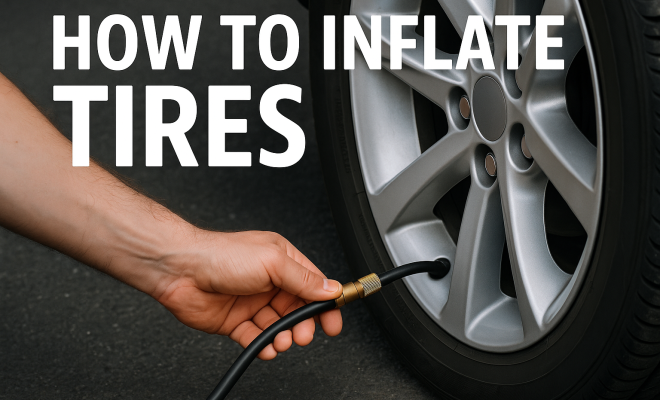
- Attach the Air Hose: Connect the air hose from the compressor to the tire’s valve stem. You should hear air flowing in.
- Monitor the Pressure: If your inflator has a built-in gauge, watch it closely. If using a separate gauge, periodically check the tire pressure while inflating.
- Remove the Hose and Replace the Valve Cap: Once you’ve reached the desired PSI, remove the hose carefully to avoid losing air. Replace the valve cap securely.
Remember to repeat this process for each tire as needed. Safety is paramount, so don’t rush!
Don’t forget about the importance of tire balancing and alignment, which can also affect the overall performance of your vehicle. A tire that is not balanced correctly can lead to uneven wear and potentially result in the need for premature replacement.
6. Common Mistakes to Avoid
While learning how to inflate tires, it’s essential to be aware of common mistakes that can lead to issues:
- Over-Inflation: Adding too much air can lead to poor handling and increased wear on the tires. Always follow the manufacturer’s recommended PSI.
- Ignoring Temperature Changes: Failing to adjust tire pressure based on temperature fluctuations can lead to under or over-inflated tires.
- Checking Pressure When Tires Are Hot: Always check tire pressure when tires are cold for the most accurate reading.
- Neglecting the Spare Tire: Many people overlook checking their spare tire. Ensuring it’s properly inflated can save you in an emergency.
By avoiding these pitfalls, you’ll ensure your tires remain in optimal condition.
Another common mistake is not knowing the difference between the recommended PSI for cold vs. hot tires. A tire that has been driven on will naturally heat up and increase in pressure, so always check your PSI when the tires are cold for the most accurate reading.
7. When to Inflate Tires
Knowing when to inflate tires is just as crucial as knowing how. Here are key times to check your tire pressure:
- Before Long Trips: Always check your tire pressure before embarking on a long journey.
- Change of Seasons: Tire pressure can fluctuate with temperature changes, so check before the onset of summer or winter.
- After Hitting a Pothole: If you’ve hit a pothole or curb hard, inspect the tires for damage and check the pressure.
- If You Notice Uneven Wear: If your tires show signs of uneven wear, it might be time to check the pressure as well as the alignment.
Regular maintenance will help prolong the life of your tires and ensure safer driving.
8. The Environmental Impact of Proper Tire Inflation
Properly inflated tires don’t just benefit drivers—they also have a positive impact on the environment. Under-inflated tires contribute to increased fuel consumption, resulting in higher carbon emissions. A study from the Environmental Protection Agency (EPA) estimated that correcting tire pressure could reduce greenhouse gas emissions by billions of pounds annually.
Moreover, maintaining tire pressure can extend the lifespan of your tires, meaning less waste. Fewer tires being replaced leads to reduced rubber waste, contributing to a healthier planet. So, when you learn how to inflate tires properly, you’re also playing your part in protecting the environment.
In addition to reducing emissions, awareness of tire maintenance can also help reduce the environmental impact of manufacturing new tires, which involves significant natural resources and energy. By keeping tires in good condition, you contribute to a reduction in resource consumption. (See: U.S. Department of Energy on tire inflation.)
9. Expert Perspectives on Tire Maintenance
Automotive experts emphasize that tire maintenance is integral to overall vehicle care. According to automotive mechanics and safety engineers, ignoring tire pressure can lead to suboptimal handling and increased wear on suspension components. Industry professionals recommend integrating tire pressure checks into your monthly vehicle maintenance routine.
Experts suggest that vehicle owners take advantage of technology, such as Tire Pressure Monitoring Systems (TPMS), which can alert drivers when tire pressure is low. While these systems are helpful, they shouldn’t replace regular manual checks.
Additionally, some automotive technicians recommend that tire rotation be conducted every 5,000 to 8,000 miles to ensure even wear, which ties into how well tires are inflated. Proper inflation can extend the time between rotations, saving you time and money.
10. Frequently Asked Questions (FAQ)
Q1: How often should I check my tire pressure?
A1: It’s recommended to check your tire pressure at least once a month and before long trips. Changes in temperature can affect pressure, so checking more frequently during seasonal shifts is also wise.
Q2: Can I inflate my tires with a regular air compressor?
A2: Yes, a regular air compressor can be used to inflate tires. Just ensure you have a pressure gauge handy to monitor PSI accurately.
Q3: What should I do if my tire pressure is consistently low?
A3: If your tire pressure is consistently low, there may be a slow leak, improper bead seating, or another issue. It’s best to have a professional inspect the tire.
Q4: Is it safe to drive on under-inflated tires?
A4: No, driving on under-inflated tires is unsafe. It can lead to blowouts, decreased handling, and increased wear on the tires.
Q5: Can over-inflated tires cause problems?
A5: Yes, over-inflated tires can lead to poor handling, reduced traction, and increased risk of a blowout. Always stick to the manufacturer’s recommended PSI.
Q6: How can I tell if my tires are under-inflated without a gauge?
A6: While a gauge is the most accurate method, visually inspecting your tires can help. If they appear flatter than usual or if the edges show more wear than the center, they could be under-inflated.
11. The Role of Tire Maintenance in Overall Vehicle Safety
While many people focus on oil changes and brakes, tire maintenance is equally important for vehicle safety. Tires are the only point of contact between your vehicle and the road. Incorrect tire pressure can lead to compromised grip, especially in wet or icy conditions, which can significantly increase stopping distances and decrease vehicle handling performance. (See: CDC on tire safety and health.)
In fact, a study conducted by the AAA showed that 70% of drivers do not know how to properly check tire pressure, which raises concerns as improper tire inflation is a significant factor in driving-related accidents. Regular checks ensure not only your safety but also that of your passengers and other road users.
12. How Tire Type Affects Inflation Needs
Your tire type can also influence how you approach maintaining tire pressure. For instance, performance tires may require different PSI levels compared to all-season or winter tires. Always refer to the manufacturer’s specifications, as some performance tires are designed to operate at higher pressures for better handling. It’s essential to adjust your inflation habits based on the type of tire you have.
Additionally, off-road tires often have lower PSI when used in softer terrains to enhance traction. However, when returning to paved roads, it’s critical to inflate them back to the recommended levels to avoid excessive wear or blowouts.
13. Tips for Airing Up Tires at the Gas Station
Using a gas station air pump can be convenient but may come with challenges. Here are some tips to make the process smoother:
- Bring Change: Many air pumps require coins to operate, so make sure to have some on hand.
- Check the Gauge: Some gas station air pumps have built-in gauges, but they may not always be accurate. Use your own tire pressure gauge for reliable readings.
- Don’t Rush: Take your time when inflating. It’s easy to accidentally over-inflate, especially if you’re not paying attention.
By following these tips, you can make the most of your gas station stop and ensure that your tires are properly inflated.
14. Storing Your Vehicle: Inflation Considerations
If you plan to store your vehicle for an extended period, special considerations for tire inflation are necessary. Ideally, tires should be inflated to the recommended PSI before storage. However, if the vehicle will be stored in extremely hot or cold conditions, you may want to slightly over-inflate them to account for pressure changes. Monitor the tires periodically during the storage period to ensure they remain inflated properly.
15. Conclusion: Making Tire Maintenance a Habit
Understanding how to inflate tires is a fundamental aspect of vehicle maintenance that everyone should master. By regularly checking tire pressure and ensuring proper inflation, you can enhance your vehicle’s performance, improve safety, and even contribute to environmental sustainability.
Ultimately, making tire maintenance a habit isn’t just about knowing how to inflate tires; it’s about committing to responsible vehicle ownership. So, grab your tire pressure gauge and air compressor, and make it a routine. Your car—and the planet—will thank you!
“`
Trending Now
Frequently Asked Questions
What is the correct tire pressure for my vehicle?
The correct tire pressure for your vehicle is typically measured in pounds per square inch (PSI) and can be found on a sticker inside the driver’s side door or in the owner’s manual. Most passenger vehicles recommend a PSI range between 30 and 35.
How can I tell if my tires are under-inflated?
You can tell if your tires are under-inflated by checking for visual signs such as a bulging sidewall or uneven tread wear. Additionally, you should regularly use a tire pressure gauge to measure the PSI and ensure it meets the recommended levels.
What are the dangers of under-inflated tires?
Under-inflated tires can lead to blowouts, decreased traction, and longer stopping distances, which significantly affects vehicle safety. The NHTSA reports that under-inflated tires contribute to approximately 600 fatalities each year in the U.S.
How does tire inflation affect fuel efficiency?
Proper tire inflation is crucial for fuel efficiency. Under-inflated tires increase rolling resistance, causing your engine to work harder and consume more fuel. Keeping tires inflated can improve gas mileage by up to 3%, benefiting both your wallet and the environment.
How often should I check my tire pressure?
You should check your tire pressure at least once a month and before long trips. Temperature fluctuations and regular driving can cause tire pressure to change, making it essential to ensure your tires are always at the optimal pressure.
Have you experienced this yourself? We’d love to hear your story in the comments.