The Staggering Truth About America’s Mega Carbon Removal Plant
“`html
Imagine a giant vacuum cleaner, not for dust bunnies, but for the very air we breathe. Now imagine that vacuum is about to become the largest of its kind on Earth, poised to suck half a million metric tons of carbon dioxide out of the atmosphere every single year. That’s the vision behind Stratos, Occidental Petroleum’s ambitious direct air capture (DAC) plant in West Texas. This isn’t some far-off sci-fi fantasy; it’s a real-world project, and it’s sparking serious debate.
Initially, we were told Stratos would be operational sooner, but like many cutting-edge endeavors, it’s hitting a few snags. The new target for this massive carbon removal plant to begin operations is the end of 2026, a full two years beyond its original projection. This delay, coupled with the sheer scale of the undertaking and the ongoing controversies surrounding carbon capture technologies, has pushed Stratos into the spotlight. Is it a game-changer for climate action, a necessary evil, or just a drop in the bucket? Let’s dive into the fascinating, complex world of this groundbreaking facility.
1. Stratos: A Monumental Undertaking in West Texas
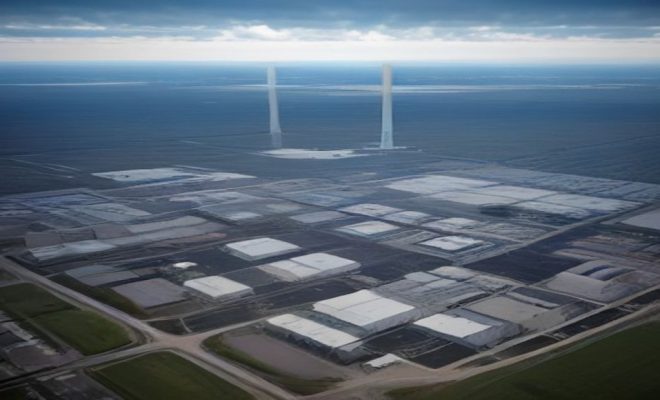
When we talk about a carbon removal plant, we’re not just talking about a small experimental setup. Stratos, spearheaded by Occidental Petroleum, is designed to be a colossal industrial facility, strategically located in the Permian Basin of West Texas. This isn’t a coincidence; the region is rich in geological formations suitable for storing captured CO2, a crucial component of any effective carbon capture and storage (CCS) operation.
The scale of Stratos truly sets it apart. Once fully operational, it’s projected to remove an astounding 500,000 metric tons of CO2 from the atmosphere annually. To put that into perspective, the largest existing DAC plant currently captures around 36,000 tons per year. That’s a massive leap – over 13 times the capacity of the current record holder. This isn’t just an incremental improvement; it’s a paradigm shift in the potential scale of direct air capture, aiming to prove that such large-scale operations are not only possible but economically viable.
The choice of the Permian Basin isn’t just about geology; it also leverages existing infrastructure. This region is a hub for oil and gas operations, meaning there’s already an extensive network of pipelines and expertise in subsurface injection. This can significantly reduce the lead time and cost associated with building new infrastructure for CO2 transport and storage. Furthermore, the availability of energy resources in the basin, even if they are fossil-fuel-based initially, allows for a more immediate scale-up. The long-term goal for such facilities is often to power them with renewable energy, but the immediate practicality of the Permian Basin’s energy grid helps kickstart the project.
2. The Delay and Its Ripple Effects
Originally, Occidental Petroleum had set an earlier timeline for Stratos to come online. However, the complexities inherent in designing, constructing, and commissioning such an unprecedented facility have pushed the start date to the end of 2026. Delays are, unfortunately, a common feature of large-scale, first-of-a-kind industrial projects, especially those pushing the boundaries of technology and engineering.
While a two-year delay might seem significant, it underscores the intricate challenges involved. These include everything from supply chain logistics for specialized equipment to securing the necessary permits and navigating the learning curve of scaling up a relatively nascent technology. For those eager to see tangible climate action, any delay can be frustrating, but it’s often a necessary evil to ensure the plant operates safely and efficiently in the long run. It also gives critics more time to scrutinize the project’s overall impact and effectiveness.
These delays aren’t unique to Stratos. Other large infrastructure projects, particularly those involving novel technologies, often face similar setbacks. For instance, large-scale renewable energy projects like offshore wind farms frequently encounter delays due to permitting complexities, environmental assessments, and grid connection issues. The DAC industry is still in its infancy, and scaling up from pilot projects to industrial behemoths involves a steep learning curve. Every component, from the sorbent materials that capture CO2 to the energy systems that regenerate them, needs to be robust and reliable on an unprecedented scale. This iterative process of design, testing, and refinement often uncovers unforeseen challenges, leading to schedule adjustments. The transparency around these delays, while potentially disappointing, can also be seen as a sign of the rigor applied to ensuring the plant’s long-term success rather than rushing an imperfect solution.
3. Monetizing Carbon Removal: A Business Model Emerges
Occidental Petroleum isn’t just building Stratos out of pure altruism; there’s a clear business strategy behind this enormous carbon removal plant. CEO Richard Jackson has indicated that the company plans to sell carbon capture services to major industrial emitters. Think about data centers, which have a massive and ever-growing energy footprint, or traditional power plant operators struggling to meet emissions targets. These companies are increasingly under pressure to decarbonize, and purchasing carbon removal credits offers a tangible way to offset their hard-to-abate emissions.
This monetization angle is crucial. It transforms carbon removal from a purely environmental endeavor into an economic one, potentially attracting more private investment. The idea is that companies willing to pay for carbon removal can effectively reduce their net emissions, contributing to their ESG (Environmental, Social, and Governance) goals and potentially avoiding future carbon taxes or penalties. It creates a market for atmospheric CO2, turning a pollutant into a commodity, at least in theory.
The emergence of this business model is heavily reliant on a robust carbon credit market. For Stratos to be truly viable, there needs to be a consistent demand for high-quality carbon removal credits, and these credits must command a price that justifies the significant operational costs of DAC. Currently, voluntary carbon markets are growing, with companies like Microsoft, Stripe, and Shopify actively investing in carbon removal technologies. These early adopters are helping to establish a price floor and build confidence in the market. However, for DAC to scale to the gigaton level, mandatory carbon markets or much stronger carbon pricing mechanisms will likely be needed to create a sufficiently large and stable demand. The integrity and verification of these carbon removal credits are also paramount to prevent greenwashing and ensure genuine climate benefits. Independent third-party verification is essential to ensure that every ton claimed as removed by the carbon removal plant is, in fact, permanently sequestered.
4. Government Backing: The Biden Administration’s Role
Building a facility of Stratos’s magnitude requires significant capital, and the U.S. government has stepped up to provide substantial support. In 2023, the Biden administration awarded Occidental Petroleum grants totaling up to $600 million for the project. This financial injection highlights a clear policy direction: the government sees direct air capture and other carbon removal technologies as vital tools in the fight against climate change. (See: carbon capture technology overview.)
This funding isn’t just a handout; it’s an investment in developing and scaling technologies that could be critical for meeting ambitious climate targets. The belief is that government support can de-risk early-stage, large-scale projects, paving the way for further private investment and technological innovation. It also signals to the market that carbon removal is a serious area of focus for federal climate policy, encouraging other players to enter the space.
Beyond direct grants, other government incentives play a critical role. The 45Q tax credit, for example, provides a tax credit for each ton of CO2 captured and stored, significantly improving the economics of projects like Stratos. For CO2 stored in saline geologic formations, the credit is $85 per metric ton, and for CO2 used for enhanced oil recovery (EOR) it’s $60 per metric ton. These federal incentives are designed to accelerate the deployment of carbon capture and storage technologies, making them more competitive with other decarbonization strategies. The Department of Energy has also established regional direct air capture hubs, further demonstrating a commitment to fostering a widespread carbon removal industry across the country. This comprehensive approach, combining grants, tax credits, and strategic regional investments, aims to overcome the “valley of death” that many nascent, capital-intensive technologies face between R&D and commercial deployment.
5. The Elephant in the Atmosphere: 500,000 Tons vs. 40 Billion Tons
Here’s where the public debate really heats up. While 500,000 metric tons of CO2 removal sounds like a lot – and it is, compared to current DAC capacity – it pales in comparison to the global scale of the problem. Humanity currently emits roughly 40 billion tons of CO2 into the atmosphere every single year. When you stack 500,000 tons against 40,000,000,000 tons, it’s clear that Stratos, while impressive, represents a tiny fraction of what’s needed. There’s a fuller look at Sf Climate Week 2026.
This discrepancy is at the heart of the controversy. Critics argue that focusing on a single, albeit large, carbon removal plant distracts from the urgent need to drastically cut emissions at the source. They worry that it creates a false sense of security or greenwashing opportunities for heavy emitters. Proponents, however, counter that every ton removed counts, and these initial large-scale projects are crucial for proving the technology, driving down costs, and building the necessary infrastructure for a future where gigatons of carbon need to be removed annually. It’s a classic chicken-and-egg scenario: do we stop emitting first, or do we start cleaning up while we’re still emitting?
To truly contextualize this, consider the scale of other climate solutions. A typical large offshore wind farm might offset several million tons of CO2 per year by displacing fossil fuel electricity generation. The electrification of transportation, if fully realized, could prevent billions of tons of emissions annually. So, while a carbon removal plant like Stratos is a step, it’s a very early step on a long journey. The analogy often used is that we’re trying to empty a bathtub while the tap is still running full blast. We absolutely need to turn off the tap (reduce emissions), but at some point, we also need to start bailing out the water (carbon removal) to prevent overflow and clean up past spills. The scientific consensus from bodies like the IPCC is that both aggressive emissions reductions and significant carbon removal will be necessary to meet the 1.5°C or 2°C warming targets. The debate isn’t about whether to do one or the other, but rather the appropriate balance and timing of these efforts.
6. The Broader Debate: Effectiveness and Necessity of Carbon Capture
The discussion around Stratos isn’t just about its capacity; it’s embedded in a much larger, more fundamental debate about carbon capture technologies themselves. Are they truly effective? Are they a necessary component of a comprehensive climate strategy, or a costly distraction that prolongs our reliance on fossil fuels?
On one side, proponents argue that reaching net-zero emissions will require a portfolio of solutions, and carbon removal, especially for hard-to-decarbonize sectors, is indispensable. They point to IPCC reports that often include carbon capture as a component of pathways to limit global warming. On the other side, environmental groups often raise concerns about the energy intensity of DAC plants, the potential for captured CO2 to be used for enhanced oil recovery (which then leads to more fossil fuel extraction), and the high costs involved. They argue that the focus should primarily be on renewable energy and energy efficiency.
A key point of contention is the energy footprint of DAC. Pulling CO2 directly from the air, where it’s present at relatively low concentrations (around 420 parts per million), requires significant energy to run fans, heat sorbent materials, and separate the CO2. If this energy comes from fossil fuels, the net climate benefit can be diminished or even negative, depending on the energy source’s emissions intensity. This is why proponents emphasize the need for DAC plants to be powered by renewable energy or other low-carbon sources. The use of captured CO2 for enhanced oil recovery (EOR) is another flashpoint. While EOR can provide an immediate revenue stream for carbon capture projects and ensure CO2 is stored underground, critics argue it incentivizes further fossil fuel extraction, undermining the very goal of decarbonization. The industry’s response is that the CO2 injected for EOR is permanently stored, and the incremental oil produced would likely be extracted elsewhere anyway, but the optics remain challenging for environmental advocates. The ethical implications of a carbon removal plant being tied to fossil fuel companies are also a recurring theme in this broader discussion.
7. Regulatory and Corporate Support: A Critical Foundation
Richard Jackson’s emphasis on the need for continued regulatory and corporate support for low-carbon investments is not just a passing comment; it’s a critical insight into the future of carbon removal. Projects like Stratos operate in a complex ecosystem that requires more than just technological prowess. They need clear government policies, incentives, and robust regulatory frameworks to thrive.
This includes things like tax credits (such as the 45Q tax credit in the U.S. for carbon capture), streamlined permitting processes, and long-term carbon pricing mechanisms that make carbon removal economically attractive. On the corporate side, it means securing off-take agreements – commitments from companies to purchase carbon removal credits – which provide the financial certainty needed to justify such massive investments. Without this foundational support, even the most innovative carbon removal plant could struggle to scale.
The development of a robust regulatory framework is crucial not only for financial incentives but also for ensuring environmental integrity and public trust. This involves clear guidelines for CO2 storage permanence, monitoring, reporting, and verification (MRV) protocols to guarantee that the carbon removed stays out of the atmosphere for geological timescales. Furthermore, streamlined permitting processes are essential to avoid lengthy delays that can deter investment. Many regions are still developing these frameworks, creating uncertainty for developers. On the corporate side, the willingness of major companies to commit to long-term carbon removal purchases is a strong signal to the market. These off-take agreements provide the upfront capital and revenue predictability that project developers need to secure financing from banks and investors. Without this twin support from both government policy and corporate demand, the carbon removal industry, including facilities like the Stratos carbon removal plant, would struggle to move beyond the experimental phase.
8. Beyond Stratos: The Future of Carbon Removal Plants
While Stratos is currently grabbing headlines, it’s important to remember that it’s just one piece of a much larger puzzle. The ambition isn’t just to build one massive carbon removal plant; it’s to develop and deploy an entire industry capable of removing billions of tons of CO2 annually. This will require not only more DAC plants but also a diverse array of other carbon removal technologies, from enhanced weathering to bioenergy with carbon capture and storage (BECCS), and even nature-based solutions like reforestation.
The lessons learned from Stratos – from its engineering challenges to its economic model and regulatory hurdles – will be invaluable for future projects. It serves as a proving ground for the technology and a bellwether for the nascent carbon removal industry. The hope is that as more plants come online, economies of scale will kick in, driving down costs and making carbon removal a more accessible and widely adopted solution for climate change. (See: carbon capture and storage research.)
The Stratos carbon removal plant represents a bold, expensive, and controversial bet on technology as a solution to climate change. Its delayed opening and the ongoing debate about its efficacy against the backdrop of global emissions highlight the immense challenges ahead. Yet, it also symbolizes a growing recognition that simply reducing emissions might not be enough; we may also need to actively pull carbon out of the air. Whether Stratos ultimately becomes a beacon of hope or a cautionary tale, its journey will undoubtedly shape our understanding of what it takes to tackle one of humanity’s greatest challenges.
9. The Technology Behind Direct Air Capture (DAC)
Understanding how a carbon removal plant like Stratos works is key to appreciating its complexity. Direct Air Capture isn’t a single technology; rather, it encompasses several approaches, though most rely on chemical reactions. The most common methods involve either liquid solvents or solid sorbents.
With liquid DAC systems, large fans draw ambient air into a contactor tower. Inside, the air passes through a liquid chemical solution, typically a strong alkali like potassium hydroxide. This solution chemically binds with the CO2, forming a carbonate. The CO2-rich liquid is then pumped to a regenerator, where it’s heated, releasing the concentrated CO2 as a gas. The regenerated liquid can then be reused. Climeworks, a leader in the DAC space, uses a solid sorbent approach. Their technology involves solid filter materials that chemically bind with CO2 at ambient temperatures. Once the filters are saturated, they are heated to release the concentrated CO2. The choice between liquid and solid systems often comes down to factors like energy efficiency, sorbent degradation, and overall cost. Stratos, being a project by Carbon Engineering (acquired by Occidental), uses a liquid-based absorption process, which is designed for continuous operation and large-scale deployment. This process involves a series of chemical reactions within closed loops, ensuring the capture chemicals are recycled, minimizing waste and maximizing efficiency. The energy requirements for these processes, particularly for heating the sorbents or solvents, are substantial, which is why powering them with low-carbon energy is a critical design consideration.
10. Environmental and Social Considerations: Beyond Carbon Removal
While the primary goal of a carbon removal plant is to mitigate climate change, its operation isn’t without broader environmental and social implications. The sheer scale of Stratos means it will have a footprint beyond just CO2 removal.
One major consideration is land use. Large industrial facilities require significant acreage for the plant itself, as well as for associated infrastructure like pipelines and energy generation facilities. This can lead to habitat disruption or competition for agricultural land. Water usage is another critical factor, especially in arid regions like West Texas. While some DAC technologies are designed to minimize water consumption, others can be water-intensive, which could strain local resources. Noise pollution from large fans and industrial machinery is also a potential concern for nearby communities. Furthermore, the socio-economic impacts on local communities are important. While a carbon removal plant can bring jobs and economic investment, there can also be concerns about industrialization, potential environmental risks, and equitable distribution of benefits. Engaging with local stakeholders, addressing their concerns, and ensuring transparency throughout the project lifecycle are crucial for gaining social license to operate. These aren’t insurmountable challenges, but they require careful planning, environmental impact assessments, and ongoing dialogue to ensure that climate solutions don’t create new problems.
11. Comparisons with Other Carbon Removal Approaches
Direct Air Capture, exemplified by the Stratos carbon removal plant, is just one strategy in the broader portfolio of carbon removal technologies. Understanding its place requires comparing it to other methods.
Nature-based Solutions: Reforestation and afforestation (planting new forests) are often cited as cost-effective carbon removal methods. Trees naturally absorb CO2 as they grow. However, these methods require vast amounts of land, are vulnerable to wildfires and disease, and the carbon storage can be impermanent. Soil carbon sequestration, where agricultural practices enhance carbon storage in soils, is another nature-based approach, but its scalability and permanence are still being researched.
Bioenergy with Carbon Capture and Storage (BECCS): This involves growing biomass, burning it for energy (electricity or biofuels), and then capturing the CO2 emissions from the combustion process for permanent storage. BECCS offers a way to generate energy while simultaneously removing CO2. However, it faces similar land use concerns as reforestation and raises questions about the sustainability of biomass sourcing.
Enhanced Weathering: This technique involves spreading pulverized silicate rocks (like basalt) on land or in oceans. These rocks naturally react with atmospheric CO2, sequestering it over time. The process is slow but has the potential for large-scale removal. Challenges include the energy required for mining and grinding rocks, and the logistics of widespread deployment.
Ocean Alkalinity Enhancement: This method involves adding alkaline minerals to the ocean to increase its CO2 absorption capacity. While theoretically promising, the environmental impacts on marine ecosystems are still largely unknown and require extensive research.
Compared to these, DAC offers a distinct advantage: it’s location-agnostic (to some extent, though proximity to storage is ideal) and can remove “legacy” CO2 directly from the atmosphere, rather than just preventing new emissions or relying on biological processes that can be reversed. However, DAC is currently one of the most energy-intensive and expensive carbon removal options. The goal for Stratos and subsequent carbon removal plants is to drive down these costs and energy demands through economies of scale and technological innovation, making it a more competitive option within the broader portfolio. (See: impact of direct air capture.)
Frequently Asked Questions (FAQ) about the Carbon Removal Plant Stratos
Q1: What exactly is a carbon removal plant like Stratos?
A carbon removal plant, specifically a Direct Air Capture (DAC) facility like Stratos, is an industrial installation designed to actively capture carbon dioxide (CO2) directly from the ambient air. Unlike point-source carbon capture, which captures CO2 from industrial flue gases, DAC targets the CO2 already diffused in the atmosphere. Stratos will use a liquid-based chemical process to absorb CO2, then concentrate and prepare it for permanent underground storage.
Q2: How much CO2 will Stratos remove annually, and how does that compare globally?
Once fully operational, Stratos is projected to remove 500,000 metric tons of CO2 from the atmosphere each year. While this is a significant amount and over 13 times the capacity of the largest existing DAC plant, it’s a tiny fraction of the approximately 40 billion tons of CO2 humanity emits globally every year. It represents an important first step in scaling up the technology, but vastly more capacity will be needed to make a substantial global impact.
Q3: Why is Stratos being built in West Texas?
West Texas, particularly the Permian Basin, is an ideal location for a carbon removal plant due to several factors. Firstly, it boasts favorable geology for CO2 storage, with deep saline aquifers and depleted oil and gas reservoirs capable of safely and permanently sequestering large volumes of CO2. Secondly, the region has existing infrastructure from the oil and gas industry, including pipelines and subsurface injection expertise, which can be adapted for CO2 transport and storage, reducing development time and cost. Finally, the availability of energy resources in the basin supports the energy-intensive DAC process.
Q4: What is the current timeline for Stratos to begin operations?
The new target for the Stratos carbon removal plant to begin operations is the end of 2026. This is a two-year delay from its original projection, reflecting the complexities and challenges inherent in designing, constructing, and commissioning a first-of-its-kind, large-scale industrial facility.
Q5: How will Occidental Petroleum make money from Stratos?
Occidental Petroleum plans to monetize the carbon removal services offered by Stratos by selling carbon removal credits to other companies. Major industrial emitters, data centers, and other corporations under pressure to reduce their carbon footprint or meet ESG goals can purchase these credits to offset their emissions. This creates a market for captured atmospheric CO2, turning it into a valuable commodity.
Q6: What role does the U.S. government play in supporting Stratos?
The U.S. government, particularly the Biden administration, has provided significant financial and policy support for Stratos. This includes grants of up to $600 million and crucial tax incentives like the 45Q tax credit, which provides a financial incentive for each ton of CO2 captured and permanently stored. This support aims to de-risk large-scale carbon removal projects and accelerate the development of the DAC industry.
Q7: What are the main criticisms or controversies surrounding Stratos and DAC technology?
The main criticisms include:
- Scale vs. Emissions: The capacity of Stratos is small compared to global emissions, leading some to argue it distracts from the urgent need for emissions reductions.
- Energy Intensity: DAC plants require significant energy to operate. If this energy comes from fossil fuels, the net climate benefit can be reduced.
- Cost: DAC is currently an expensive technology, raising questions about its economic viability at scale without substantial subsidies.
- Enhanced Oil Recovery (EOR): While captured CO2 can be permanently stored in saline aquifers, its potential use for EOR (which extracts more oil) is a major concern for environmental groups, who see it as prolonging reliance on fossil fuels.
- Greenwashing: Critics worry that carbon removal credits might be used by heavy emitters to avoid genuine decarbonization efforts.
Q8: Is Stratos the only type of carbon removal plant?
No, Stratos represents Direct Air Capture (DAC), which is just one of several carbon removal approaches. Other methods include nature-based solutions like reforestation and soil carbon sequestration, bioenergy with carbon capture and storage (BECCS), enhanced weathering, and ocean alkalinity enhancement. Each method has its own advantages, disadvantages, and scalability challenges. Stratos is significant because it tackles legacy CO2 directly from the atmosphere using an engineered solution.
“`
Trending Now
Frequently Asked Questions
What is the Stratos carbon removal plant?
The Stratos carbon removal plant is a direct air capture facility being developed by Occidental Petroleum in West Texas. Once operational, it aims to remove 500,000 metric tons of carbon dioxide from the atmosphere each year, making it the largest of its kind globally. Related reading: The rise of renewable energy.
When will the Stratos plant be operational?
The Stratos plant is now projected to begin operations by the end of 2026, which is two years later than its original timeline due to various development challenges.
How does the Stratos plant compare to other carbon capture facilities?
Stratos is set to remove over 13 times more CO2 annually than the largest existing direct air capture plant, which captures around 36,000 tons per year, highlighting its monumental scale and potential impact.
Why is the location of the Stratos plant significant?
The Stratos plant is strategically located in the Permian Basin of West Texas, an area rich in geological formations ideal for storing captured CO2, which is essential for effective carbon capture and storage operations.
What are the controversies surrounding carbon capture technologies?
Carbon capture technologies, including the Stratos plant, face debates regarding their effectiveness, potential environmental impacts, and whether they distract from reducing carbon emissions at their source, raising questions about their role in climate action.
What did we miss? Let us know in the comments and join the conversation.