Unleash Your Inner Artist: A Beginner’s Guide to Drawing
“`html
Drawing is an art form that transcends time and culture, serving as a fundamental method of expression and communication. For many, starting a journey in drawing can feel daunting. But fear not! This guide to drawing for beginners will illuminate the path ahead, providing you with essential techniques, tips, and insights to unleash your inner artist.
1. The Importance of Drawing
Drawing is more than just making marks on paper; it’s an essential skill that stimulates creativity and improves hand-eye coordination. Whether you wish to illustrate stories, design characters, or simply jot down thoughts visually, the ability to draw empowers you to express your ideas more effectively. Drawing can also be therapeutic, providing a means to relieve stress and enhance mindfulness.
In today’s digital world, drawing remains relevant. From graphic design to visual storytelling in movies and video games, drawing is at the heart of many creative industries. Thus, developing drawing skills not only nurtures your creativity but can also open doors to professional opportunities.
2. Understanding Basic Tools and Materials
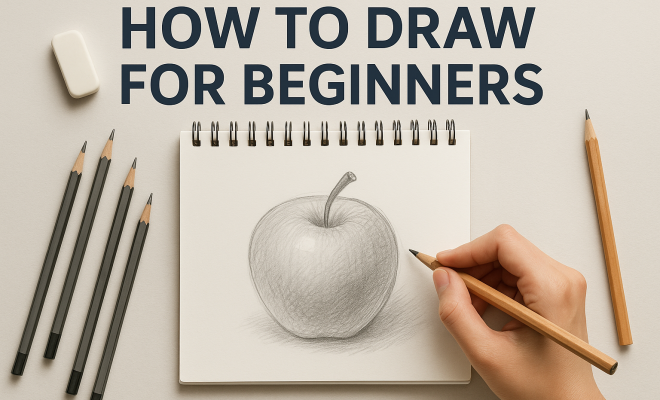
Before you dive into your first sketch, it’s crucial to gather the right tools. For drawing for beginners, you don’t need a fancy setup. Start with the basics:
- Pencils: A range of pencils from H (hard) to B (soft) will give you a variety of line qualities. H pencils create fine lines, while B pencils offer darker, bolder strokes.
- Paper: A simple sketchbook or any drawing pad will suffice. Look for paper that can withstand erasing and repeated drawing.
- Erasers: A kneaded eraser is versatile and gentle on paper, allowing you to remove mistakes without damaging your work.
- Ruler and Compass: For precise lines and circles, these tools can help you maintain proportions.
As you progress, you can explore other materials like ink pens, charcoal, or digital drawing tablets, but starting simple is key to building confidence.
3. Mastering the Fundamentals
When it comes to drawing for beginners, mastering the fundamentals is essential. Begin with the basic shapes: circles, squares, triangles, and cylinders. These shapes serve as the building blocks for more complex subjects. Spend time sketching them from different angles and in various sizes.
Next, focus on understanding lines and shading. Experiment with various line weights—thicker lines can convey strength, while thinner lines can suggest delicacy. Shading adds depth; practice creating gradients by varying the pressure on your pencil. This foundational skill will significantly enhance your future drawings.
4. Learning to Observe
One of the most crucial skills in drawing is the ability to observe. Good artists don’t just see—they truly look. Spend time examining objects, focusing on details such as proportions, shapes, and shadows. A helpful exercise is to draw from life. Set up a still life with common objects like fruit or household items and practice capturing their forms.
Rather than relying solely on memory, use your eyes to guide your hand. This practice will not only improve your drawing accuracy but will also enhance your understanding of the world around you. Observational drawing sharpens your skills and helps you develop a unique artistic voice.
5. Practicing Proportions and Perspective
Understanding proportions and perspective is vital for creating realistic drawings. Start with the human figure; practice sketching it in various poses. Learning the basic proportions of the body—like the head being approximately one-eighth of the overall height—will help you create more lifelike representations.
Perspective, particularly one-point and two-point perspective, is crucial for drawing environments. Mastering these concepts will allow you to depict depth and space convincingly. Use reference points on your paper to create a horizon line and vanishing points, which will guide your drawings of buildings, streets, and scenes.
6. Experimenting with Styles
Once you’ve grasped the basics, it’s time to explore different drawing styles. This phase is exciting and will help you discover your artistic preferences. From realism to abstract art, the choices are endless. Consider trying out various techniques such as line drawing, gestural drawing, or even cartoon styles. (See: Drawing – Wikipedia.)
Don’t hesitate to study the works of artists that inspire you. Analyze their techniques, how they use color, line, and form. Emulating different styles can also enhance your versatility as an artist. Just remember, while experimentation is key, developing your unique style will make your artwork distinctly yours.
7. Setting Up a Regular Practice Routine
Like any skill, drawing requires practice. Setting up a regular routine can significantly improve your abilities. Dedicate a specific time each day or week to draw, even if it’s just for 15-30 minutes. Consistency is crucial—it’s better to draw a little every day than to cram in longer sessions sporadically.
Use prompts to keep your practice interesting. Websites like Draw This or Instagram drawing challenges can provide themes and ideas that spark creativity. Keep a sketchbook handy for doodling ideas or practicing quick sketches, and don’t be afraid to make mistakes. Every scribble is a step towards improvement.
8. Seeking Feedback and Learning from Others
Receiving feedback is vital in any learning process. Join online communities related to drawing for beginners, such as forums or social media groups. Sharing your work can offer insights into your strengths and areas for improvement. Constructive criticism is invaluable, and connecting with fellow artists can motivate you to keep going.
You might also consider taking classes or workshops to learn from seasoned artists. Many online platforms offer affordable courses that cover a wide range of drawing techniques. Learning from others provides fresh perspectives that can inspire and challenge you creatively.
9. Staying Inspired and Motivated
Finally, staying inspired is essential for your drawing journey. Surround yourself with art—visit galleries, follow artists on social media, or engage with art books. Draw inspiration from various sources, whether nature, photography, or personal experiences.
Remember, the journey of drawing for beginners is a personal one. Celebrate your progress, no matter how small, and always keep a positive mindset. The most important thing is to enjoy the process. With patience and persistence, you’ll find joy in creating and continue to grow as an artist.
10. Exploring Digital Drawing
As technology evolves, digital drawing has become increasingly popular among both beginners and seasoned artists. If you’re curious about this medium, consider investing in a drawing tablet. Tablets like the Wacom Intuos or Huion models provide a great entry point into digital art, offering pressure sensitivity that mimics traditional drawing.
Software options vary, too. Programs like Procreate, Adobe Fresco, and Clip Studio Paint cater to different styles and needs. Procreate, for example, is incredibly user-friendly for beginners, providing a wide range of brushes and tools to experiment with.
Digital drawing offers unique opportunities—undoing mistakes is as simple as a click, and you can easily layer your work. As you explore this option, don’t forget to apply the traditional skills you’ve learned. Understanding fundamentals like proportion and perspective remains crucial, even in a digital format.
11. Understanding Color Theory
If you’re inclined towards adding color to your drawings, understanding color theory can significantly enhance your work. Basic concepts include the color wheel, primary colors, secondary colors, and complementary colors.
Experiment with mixing colors and creating palettes that resonate with your artistic vision. For example, knowing that blue and orange are complementary allows you to create vibrant contrasts to draw the viewer’s eye. You might start with colored pencils or watercolors, gradually moving to more complex mediums like acrylics or oils.
Practice creating shadows and highlights using color. This will not only give depth to your work but also create a more immersive experience for the viewer. Remember, color can convey emotions—warm colors are often associated with excitement, while cool colors can evoke calmness or sadness. (See: Harvard University resources on art.)
12. Incorporating Art History
Studying art history can provide you with insights into various techniques, styles, and cultural influences that shaped the art world. Learn about artists from different periods, such as the Renaissance, Impressionism, or contemporary art movements. Understanding their struggles, innovations, and accomplishments can inspire your own journey.
Try to visit museums or exhibitions whenever possible, as they can offer invaluable face-to-face experiences with the art that textbooks can’t replicate. If you’re unable to visit, consider virtual museum tours that many institutions offer. These resources can expand your understanding of context and technique.
13. Common Mistakes to Avoid
As a beginner, it’s easy to fall into certain pitfalls that can hinder your progress. Here are some common mistakes to watch out for:
- Skipping the Basics: Rushing into complex drawings without mastering fundamental techniques can lead to frustration. Take the time to build a strong foundation.
- Focusing Too Much on Perfection: Perfectionism can stifle creativity. Allow yourself to make mistakes and learn from them. Remember, every artist has their own unique style, and imperfections can add charm to your work.
- Neglecting to Observe: Failing to observe your subject accurately can lead to unrealistic drawings. Take the time to study and understand what you’re drawing.
- Not Using Reference Images: While drawing from memory is valuable, using reference images can aid significantly in accuracy and detail.
14. Frequently Asked Questions
What are the best pencils for beginners?
For beginners, a set of pencils that includes a range from H to B is ideal. Starting with a 2B pencil can be a good choice for general use, as it provides a nice balance between darkness and control.
How often should I practice drawing?
Consistency is key. Aim to practice at least a few times a week, even if it’s just for 15-30 minutes. The more you draw, the more you’ll improve.
Can I learn to draw on my own?
Absolutely! Many artists are self-taught. With the wealth of online resources, tutorials, and books available, you can learn at your own pace. However, joining a community or taking classes can help you gain valuable feedback and insights.
What should I draw if I’m stuck for ideas?
If you’re feeling uninspired, try to set a theme for each drawing session. Some ideas include drawing a favorite object, practicing gestures, or even sketching from photographs. Online challenges and prompts can also spark creativity.
Is it necessary to go to art school to become a good artist?
While art school can provide formal training and networking opportunities, it’s not a requirement to become a skilled artist. Many successful artists are self-taught and develop their skills through practice, observation, and experimentation.
How can I develop my unique style?
Developing a unique style takes time and experimentation. Try different techniques, study various artists, and draw inspiration from your experiences. Over time, you’ll begin to notice patterns in your work that reflect your individuality.
15. Resources for Continued Learning
To further your drawing journey, explore various resources available online and offline. Websites like Skillshare and Udemy offer a plethora of courses tailored for beginners, covering everything from basic techniques to advanced styles. YouTube is another fantastic resource, with countless tutorials available for free.
Books like “Drawing on the Right Side of the Brain” by Betty Edwards provide insightful strategies for enhancing observational skills. Additionally, consider checking out local libraries or bookstores for more art books, as they often have hidden gems that can offer both inspiration and instruction.
16. Engaging with the Art Community
Getting involved in your local or online art community can be incredibly beneficial. Participate in local art fairs, exhibitions, or workshops to meet fellow artists. Not only will this help you gain inspiration, but it can also provide networking opportunities that may lead to collaborations. (See: CDC on art and mental health.)
Online platforms like DeviantArt or ArtStation allow you to share your work, receive feedback, and connect with other artists globally. Engaging with others can enhance your learning experience and motivate you to keep creating.
17. Setting Goals for Artistic Growth
Setting goals can help you maintain focus on your artistic journey. Consider creating short-term and long-term goals. Short-term goals can include completing a specific number of sketches each week, while long-term goals might involve mastering a new technique or preparing for an exhibition.
Writing these goals down and tracking your progress not only keeps you accountable but also provides motivation as you see how far you’ve come. Celebrate achievements, no matter how small—they all contribute to your growth as an artist.
18. Inspiration from Famous Artists
Many artists draw inspiration from the lives and works of those who came before them. Studying the lives of renowned artists like Vincent van Gogh, Frida Kahlo, or Leonardo da Vinci can provide insight into their creative processes and challenges. Their stories often highlight the importance of perseverance, which can resonate deeply in your own artistic journey.
Try recreating some of their famous works as an exercise. This practice can deepen your understanding of their techniques and help you develop your style by incorporating elements you admire.
19. Common Tools for Advanced Techniques
As you progress in your drawing journey, you may want to explore more advanced techniques that require specific tools. For instance, if you’re interested in ink drawing, consider investing in a set of fine liners or brush pens. Charcoal can add dramatic effects, and using blending stumps can help you achieve smoother transitions in shading.
If you venture into painting, understanding the differences between acrylic, oil, and watercolor will be beneficial. Each medium has its unique properties and techniques that could take your skills to the next level. Experimentation at this stage can lead to new discoveries in your artistic style.
20. Your Path Forward
Embarking on the journey of drawing for beginners is about exploration and self-discovery. Embrace every moment, including the challenges, as they are all part of your growth as an artist. With each stroke of your pencil, you’re not just creating art—you’re building a connection with yourself and the world around you. So grab your tools, start drawing, and let your creativity shine! Remember, the journey is just as important as the destination.
“`
Trending Now
Frequently Asked Questions
What are the basic drawing tools I need as a beginner?
As a beginner, you should start with basic tools like a range of pencils (H for fine lines and B for darker strokes), a sketchbook or drawing pad, a kneaded eraser, and tools like a ruler and compass for precision. These essentials will help you build your skills without overwhelming you.
Why is drawing important for beginners?
Drawing is crucial for beginners as it enhances creativity and improves hand-eye coordination. It serves as a form of expression and communication, making it a valuable skill in various fields, including graphic design and visual storytelling. Additionally, drawing can be therapeutic, helping to relieve stress.
How can I improve my drawing skills as a beginner?
To improve your drawing skills, practice regularly and experiment with different techniques. Start with basic shapes and gradually progress to more complex subjects. Use the right tools, seek feedback, and consider studying drawing fundamentals to build a strong foundation.
What types of pencils are best for beginners?
For beginners, a range of pencils from H (hard) to B (soft) is ideal. H pencils create fine, light lines, while B pencils produce darker, bolder strokes. This variety allows beginners to experiment with different line qualities and develop their style.
Can drawing be therapeutic for beginners?
Yes, drawing can be therapeutic for beginners. It offers a creative outlet that helps relieve stress and enhances mindfulness. Engaging in drawing can provide a sense of calm and focus, making it a beneficial practice for mental well-being.
Agree or disagree? Drop a comment and tell us what you think.