The Tech Edvocate

Top Menu

  • Advertisement
  • Apps
  • Home Page
  • Home Page Five (No Sidebar)
  • Home Page Four
  • Home Page Three
  • Home Page Two
  • Home Tech2
  • Icons [No Sidebar]
  • Left Sidbear Page
  • Lynch Educational Consulting
  • My Account
  • My Speaking Page
  • Newsletter Sign Up Confirmation
  • Newsletter Unsubscription
  • Our Brands
  • Page Example
  • Privacy Policy
  • Protected Content
  • Register
  • Request a Product Review
  • Shop
  • Shortcodes Examples
  • Signup
  • Start Here
    • Governance
    • Careers
    • Contact Us
  • Terms and Conditions
  • The Edvocate
  • The Tech Edvocate Product Guide
  • Topics
  • Write For Us
  • Advertise

Main Menu

  • Start Here
    • Our Brands
    • Governance
      • Lynch Educational Consulting, LLC.
      • Dr. Lynch’s Personal Website
      • Careers
    • Write For Us
    • The Tech Edvocate Product Guide
    • Contact Us
    • Books
    • Edupedia
    • Post a Job
    • The Edvocate Podcast
    • Terms and Conditions
    • Privacy Policy
  • Topics
    • Assistive Technology
    • Child Development Tech
    • Early Childhood & K-12 EdTech
    • EdTech Futures
    • EdTech News
    • EdTech Policy & Reform
    • EdTech Startups & Businesses
    • Higher Education EdTech
    • Online Learning & eLearning
    • Parent & Family Tech
    • Personalized Learning
    • Product Reviews
  • Advertise
  • Tech Edvocate Awards
  • The Edvocate
  • Pedagogue
  • School Ratings

logo

The Tech Edvocate

  • Start Here
    • Our Brands
    • Governance
      • Lynch Educational Consulting, LLC.
      • Dr. Lynch’s Personal Website
        • My Speaking Page
      • Careers
    • Write For Us
    • The Tech Edvocate Product Guide
    • Contact Us
    • Books
    • Edupedia
    • Post a Job
    • The Edvocate Podcast
    • Terms and Conditions
    • Privacy Policy
  • Topics
    • Assistive Technology
    • Child Development Tech
    • Early Childhood & K-12 EdTech
    • EdTech Futures
    • EdTech News
    • EdTech Policy & Reform
    • EdTech Startups & Businesses
    • Higher Education EdTech
    • Online Learning & eLearning
    • Parent & Family Tech
    • Personalized Learning
    • Product Reviews
  • Advertise
  • Tech Edvocate Awards
  • The Edvocate
  • Pedagogue
  • School Ratings
  • A Visitors Guide to Long Beach (CA), United States

  • A Visitor’s Guide to Fresno (CA), United States

  • A Visitors Guide to New Orleans (LA), United States

  • A Visitors Guide to Sacramento (CA), United States

  • A Visitors Guide to Lyon, France

  • JisuLife Ultra2 Portable Fan: A Powerful Multi-Function Cooling Solution

  • A Visitors Guide to Viña del Mar, Chile

  • A Visitors Guide to Århus, Denmark

  • A Visitors Guide to Bakersfield (CA), United States

  • A Visitors Guide to Aurora (CO), United States

Assistive Technology
Home›Assistive Technology›How to Convert STL to G-Code: The Easiest Way

How to Convert STL to G-Code: The Easiest Way
By Matthew Lynch
June 15, 2023
0
Spread the love

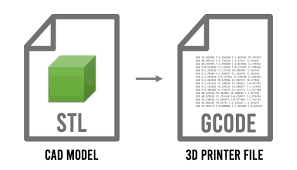
If you are a 3D printing enthusiast, you probably know that STL files are the standard format used by most 3D printing software. However, to bring your designs to life, you need to convert them into G-code, which is the language that tells your 3D printer how to move and extrude its nozzle. Fortunately, converting STL to G-Code is not a complicated process, and there are several easy ways to do it. In this article, we explain the easiest way to convert STL to G-Code.

Step 1: Choose an Slicer Software

The first step in converting STL to G-Code is to choose an appropriate slicer software. Slicer software is used to convert your STL file into a G-Code file that can be sent to your 3D printer. There are several slicer software options available, including Cura, Slic3r, and Simplify3D. However, for this guide, we’ll be using Cura.

Step 2: Import the STL File

To import the STL file into Cura, open the software and click on the “Open File” button in the top-left corner of the screen. Locate your STL file on your computer and select it. Your model will now appear on the virtual build plate inside Cura.

Step 3: Position and Scale the Model

Once you’ve imported your STL file into Cura, you may need to adjust its position and scale. This is done by clicking on the model and using the arrow keys to move it, or the scale tool to adjust its size. Make sure your model is positioned in the way you want it to print and is the correct size.

Step 4: Slice the Model

The final step is to slice your model, which will convert it from an STL file into a G-code file that your 3D printer can understand. To do this, click the “Prepare” button in the bottom-right corner of the screen. Cura will then generate a G-code file based on your STL model and your printer’s settings.

Step 5: Save the G-code File

Once the slicing process is complete, click on the “Save to Disk” button in the bottom-right corner of the screen. This will save the G-code file to your computer, ready to be transferred to your 3D printer.

Previous Article

Websites That Sudoku Lovers Need to Visit

Next Article

How to Use and Customize the Share ...

Matthew Lynch

Related articles More from author

  • Assistive Technology

    How to Use Sticky Notes in Windows 7 and Windows Vista

    June 23, 2023
    By Matthew Lynch
  • Assistive Technology

    How to Update Apple Maps on iPhone

    June 10, 2023
    By Matthew Lynch
  • Assistive Technology

    How to Authorize a Computer for Apple TV

    June 10, 2023
    By Matthew Lynch
  • Assistive Technology

    Google Home Mini vs. Google Nest Mini: What Are the Differences?

    June 9, 2023
    By Matthew Lynch
  • Assistive Technology

    How to Transfer Your Spotify Library to Apple Music for Free

    June 14, 2023
    By Matthew Lynch
  • Assistive Technology

    How to Configure Your Xbox Series X|S Controller

    June 10, 2023
    By Matthew Lynch

Search

Login & Registration

  • Register
  • Log in
  • Entries feed
  • Comments feed
  • WordPress.org

Newsletter

Signup for The Tech Edvocate Newsletter and have the latest in EdTech news and opinion delivered to your email address!

About Us

Since technology is not going anywhere and does more good than harm, adapting is the best course of action. That is where The Tech Edvocate comes in. We plan to cover the PreK-12 and Higher Education EdTech sectors and provide our readers with the latest news and opinion on the subject. From time to time, I will invite other voices to weigh in on important issues in EdTech. We hope to provide a well-rounded, multi-faceted look at the past, present, the future of EdTech in the US and internationally.

We started this journey back in June 2016, and we plan to continue it for many more years to come. I hope that you will join us in this discussion of the past, present and future of EdTech and lend your own insight to the issues that are discussed.

Newsletter

Signup for The Tech Edvocate Newsletter and have the latest in EdTech news and opinion delivered to your email address!

Contact Us

The Tech Edvocate
910 Goddin Street
Richmond, VA 23231
(601) 630-5238
[email protected]

Copyright © 2025 Matthew Lynch. All rights reserved.