The Tech Edvocate

Top Menu

  • Advertisement
  • Apps
  • Home Page
  • Home Page Five (No Sidebar)
  • Home Page Four
  • Home Page Three
  • Home Page Two
  • Home Tech2
  • Icons [No Sidebar]
  • Left Sidbear Page
  • Lynch Educational Consulting
  • My Account
  • My Speaking Page
  • Newsletter Sign Up Confirmation
  • Newsletter Unsubscription
  • Our Brands
  • Page Example
  • Privacy Policy
  • Protected Content
  • Register
  • Request a Product Review
  • Shop
  • Shortcodes Examples
  • Signup
  • Start Here
    • Governance
    • Careers
    • Contact Us
  • Terms and Conditions
  • The Edvocate
  • The Tech Edvocate Product Guide
  • Topics
  • Write For Us
  • Advertise

Main Menu

  • Start Here
    • Our Brands
    • Governance
      • Lynch Educational Consulting, LLC.
      • Dr. Lynch’s Personal Website
      • Careers
    • Write For Us
    • The Tech Edvocate Product Guide
    • Contact Us
    • Books
    • Edupedia
    • Post a Job
    • The Edvocate Podcast
    • Terms and Conditions
    • Privacy Policy
  • Topics
    • Assistive Technology
    • Child Development Tech
    • Early Childhood & K-12 EdTech
    • EdTech Futures
    • EdTech News
    • EdTech Policy & Reform
    • EdTech Startups & Businesses
    • Higher Education EdTech
    • Online Learning & eLearning
    • Parent & Family Tech
    • Personalized Learning
    • Product Reviews
  • Advertise
  • Tech Edvocate Awards
  • The Edvocate
  • Pedagogue
  • School Ratings

logo

The Tech Edvocate

  • Start Here
    • Our Brands
    • Governance
      • Lynch Educational Consulting, LLC.
      • Dr. Lynch’s Personal Website
        • My Speaking Page
      • Careers
    • Write For Us
    • The Tech Edvocate Product Guide
    • Contact Us
    • Books
    • Edupedia
    • Post a Job
    • The Edvocate Podcast
    • Terms and Conditions
    • Privacy Policy
  • Topics
    • Assistive Technology
    • Child Development Tech
    • Early Childhood & K-12 EdTech
    • EdTech Futures
    • EdTech News
    • EdTech Policy & Reform
    • EdTech Startups & Businesses
    • Higher Education EdTech
    • Online Learning & eLearning
    • Parent & Family Tech
    • Personalized Learning
    • Product Reviews
  • Advertise
  • Tech Edvocate Awards
  • The Edvocate
  • Pedagogue
  • School Ratings
  • A Visitors Guide to Long Beach (CA), United States

  • A Visitor’s Guide to Fresno (CA), United States

  • A Visitors Guide to New Orleans (LA), United States

  • A Visitors Guide to Sacramento (CA), United States

  • A Visitors Guide to Lyon, France

  • JisuLife Ultra2 Portable Fan: A Powerful Multi-Function Cooling Solution

  • A Visitors Guide to Viña del Mar, Chile

  • A Visitors Guide to Århus, Denmark

  • A Visitors Guide to Bakersfield (CA), United States

  • A Visitors Guide to Aurora (CO), United States

Assistive Technology
Home›Assistive Technology›How to Compare Processors

How to Compare Processors
By Matthew Lynch
June 10, 2023
0
Spread the love

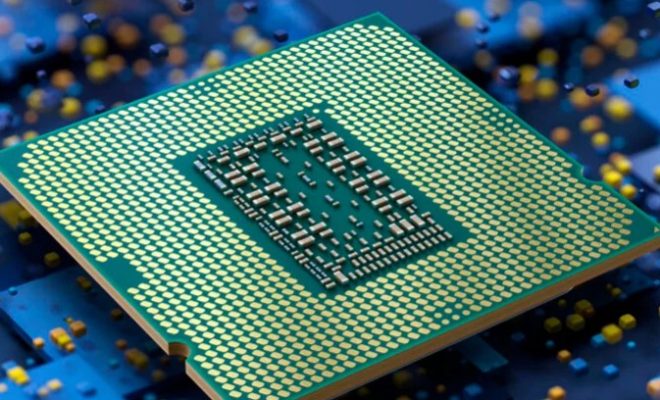
Processors are the heart and soul of any computer. The performance of a computer is dependent upon the processor installed in it. There are numerous processors available in the market, each promising to offer high-speed performance and multitasking capabilities. With so many options available in the market, it can be challenging to compare processors and select the best one for your needs. In this article, we will discuss the essential points to keep in mind while comparing processors.

1. Clock Speed

The clock speed is one of the critical factors that determine the performance of a processor. It is measured in GHz (Gigahertz) and indicates the number of instructions a processor can handle per second. A processor with a higher clock speed will be able to perform tasks faster. However, it is essential to note that a higher clock speed does not necessarily mean better performance. Other factors, such as the number of cores and cache size, also play a vital role.

2. Number of Cores

The number of cores a processor has is another critical factor to consider when comparing processors. Cores are like mini processors that work together to complete tasks. A dual-core processor will generally perform better than a single-core processor, and quad-core or more processors will perform even better, especially when it comes to multitasking. If you are someone who multitasks heavily or does a lot of video editing or gaming, it is recommended to go for a processor with four or more cores.

3. Cache Size

Cache is a high-speed memory that stores frequently used data for quick access. The larger the cache size, the faster the processor can access data, resulting in better performance. Typically, processors with a larger cache size will perform better than processors with a smaller cache size.

4. Integrated Graphics

Integrated graphics are suitable for basic tasks such as web browsing and video playback. If you do not plan on doing heavy-duty gaming or video editing, a processor with integrated graphics can save you a lot of money. However, if you plan on doing heavy-duty gaming or creative work, it is recommended to go for a graphics card along with a separate processor.

5. Power Consumption

The power consumption of a processor is an essential factor to consider if you are planning on using a laptop or a portable device. A processor that consumes less power will provide more battery life. Also, it is more cost-effective to go for a processor that consumes less power as it reduces the cost of cooling and electricity bills.

Conclusion

Comparing processors can be daunting, but keeping the above factors in mind can help make the process easier. Always consider your budget and your computing needs before selecting a processor. A little research can go a long way in helping you select the right processor for your needs.


Previous Article

How to Get Meltan in Pokémon Go ...

Next Article

How to Forget an Instagram Account on ...

Matthew Lynch

Related articles More from author

  • Assistive Technology

    How to Unsubscribe From YouTube Channels

    June 6, 2023
    By Matthew Lynch
  • Assistive Technology

    Reasons Wired Headphones Are Better Than Wireless Headphones

    June 5, 2023
    By Matthew Lynch
  • Assistive Technology

    How to Fix a Disabled iPad by Connecting to iTunes

    June 8, 2023
    By Matthew Lynch
  • Assistive Technology

    How to Get a Refund from Apple for the App Store, iTunes, and More

    June 6, 2023
    By Matthew Lynch
  • Assistive Technology

    How to Set up Two-Factor Authentication on iPhone

    June 10, 2023
    By Matthew Lynch
  • Assistive Technology

    Things to Consider Before Buying a New Printer

    June 12, 2023
    By Matthew Lynch

Search

Login & Registration

  • Register
  • Log in
  • Entries feed
  • Comments feed
  • WordPress.org

Newsletter

Signup for The Tech Edvocate Newsletter and have the latest in EdTech news and opinion delivered to your email address!

About Us

Since technology is not going anywhere and does more good than harm, adapting is the best course of action. That is where The Tech Edvocate comes in. We plan to cover the PreK-12 and Higher Education EdTech sectors and provide our readers with the latest news and opinion on the subject. From time to time, I will invite other voices to weigh in on important issues in EdTech. We hope to provide a well-rounded, multi-faceted look at the past, present, the future of EdTech in the US and internationally.

We started this journey back in June 2016, and we plan to continue it for many more years to come. I hope that you will join us in this discussion of the past, present and future of EdTech and lend your own insight to the issues that are discussed.

Newsletter

Signup for The Tech Edvocate Newsletter and have the latest in EdTech news and opinion delivered to your email address!

Contact Us

The Tech Edvocate
910 Goddin Street
Richmond, VA 23231
(601) 630-5238
[email protected]

Copyright © 2025 Matthew Lynch. All rights reserved.