The Tech Edvocate

Top Menu

  • Advertisement
  • Apps
  • Home Page
  • Home Page Five (No Sidebar)
  • Home Page Four
  • Home Page Three
  • Home Page Two
  • Home Tech2
  • Icons [No Sidebar]
  • Left Sidbear Page
  • Lynch Educational Consulting
  • My Account
  • My Speaking Page
  • Newsletter Sign Up Confirmation
  • Newsletter Unsubscription
  • Our Brands
  • Page Example
  • Privacy Policy
  • Protected Content
  • Register
  • Request a Product Review
  • Shop
  • Shortcodes Examples
  • Signup
  • Start Here
    • Governance
    • Careers
    • Contact Us
  • Terms and Conditions
  • The Edvocate
  • The Tech Edvocate Product Guide
  • Topics
  • Write For Us
  • Advertise

Main Menu

  • Start Here
    • Our Brands
    • Governance
      • Lynch Educational Consulting, LLC.
      • Dr. Lynch’s Personal Website
      • Careers
    • Write For Us
    • The Tech Edvocate Product Guide
    • Contact Us
    • Books
    • Edupedia
    • Post a Job
    • The Edvocate Podcast
    • Terms and Conditions
    • Privacy Policy
  • Topics
    • Assistive Technology
    • Child Development Tech
    • Early Childhood & K-12 EdTech
    • EdTech Futures
    • EdTech News
    • EdTech Policy & Reform
    • EdTech Startups & Businesses
    • Higher Education EdTech
    • Online Learning & eLearning
    • Parent & Family Tech
    • Personalized Learning
    • Product Reviews
  • Advertise
  • Tech Edvocate Awards
  • The Edvocate
  • Pedagogue
  • School Ratings

logo

The Tech Edvocate

  • Start Here
    • Our Brands
    • Governance
      • Lynch Educational Consulting, LLC.
      • Dr. Lynch’s Personal Website
        • My Speaking Page
      • Careers
    • Write For Us
    • The Tech Edvocate Product Guide
    • Contact Us
    • Books
    • Edupedia
    • Post a Job
    • The Edvocate Podcast
    • Terms and Conditions
    • Privacy Policy
  • Topics
    • Assistive Technology
    • Child Development Tech
    • Early Childhood & K-12 EdTech
    • EdTech Futures
    • EdTech News
    • EdTech Policy & Reform
    • EdTech Startups & Businesses
    • Higher Education EdTech
    • Online Learning & eLearning
    • Parent & Family Tech
    • Personalized Learning
    • Product Reviews
  • Advertise
  • Tech Edvocate Awards
  • The Edvocate
  • Pedagogue
  • School Ratings
  • Navigating the Challenges of Neurodiversity Support in Schools

  • The Best European Cities for Graduates to Live and Work

  • States With the Biggest School Enrollment Drops Revealed

  • Empowering Future Innovators: The Role of STEAM Education in Tribal Communities

  • The Personal Liability of Founders in AI Misrepresentation Cases

  • The Rise of Skilled Trades: A Viable Alternative to Traditional College Degrees

  • The Rise of U.S. Youth Soccer: A New Frontier for Investment

  • The Human Element in Language Learning: A Challenge with Preply

  • What Can Healthcare Engagement Learn From Sports Betting?

  • Addressing the Rise of Fatigue: Expert Insights from Patrice Bonfiglio

Assistive Technology
Home›Assistive Technology›Car Fuses and Fusible Links Explained

Car Fuses and Fusible Links Explained
By Matthew Lynch
June 4, 2023
0
Spread the love

Car fuses and fusible links are crucial components that protect the electrical system of your vehicle from damage. They are designed to act as a safety feature in case of electrical faults, overload or short circuits, and they prevent electrical fires, which can be dangerous and costly.

Fuses are usually small, colored plugs or cylinders that can be found inside the fuse box of your car. Their primary function is to interrupt the flow of electricity whenever there is a sudden, high-powered surge or an overload on any of your car’s electrical components. This interruption prevents the flow of power from causing damage to your car’s electrical system. Some of the common electrical components fuses protect include the radio, headlights, tail lights, air conditioning system, and dashboard lights.

Fuses vary in sizes and ratings, and each vehicle typically has a unique set of fuses that are specific to its electrical system. That is why it is essential to always replace a blown fuse or upgrade it with the correct one. When a fuse blows, you will notice that the affected electrical component stops working. To fix it, you need to locate the blown fuse and replace it with a new one.

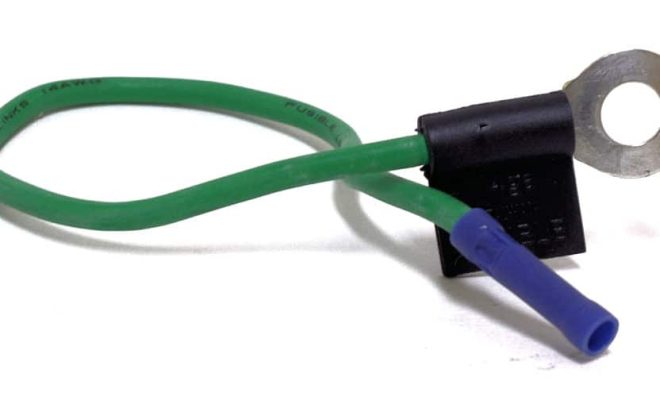
On the other hand, fusible links are heavy-duty wires that are designed to protect your car’s electrical system against high voltage surges. Unlike fuses, fusible links do not break when they are overloaded or short-circuited. Instead, they melt and cut off the current flow, allowing the component to cool down and prevent further damage.

Fusible links are usually located close to the battery, starter, alternator, or in the engine compartment. They also have color-coding that specifies their amperage rating, which is useful when replacing or diagnosing a blown fusible link.

It is important to know the differences between fuses and fusible links, and how they function in your car’s electrical system. It is also critical to keep your car’s electrical system in good condition, regularly inspecting your fuses and fusible links for wear and tear, and promptly replacing them when necessary.

In conclusion, car fuses and fusible links are essential components that protect your car’s electrical system from damage. Understanding how they work, and knowing how to diagnose and replace them correctly, can help keep your car running smoothly and prevent costly repairs. Regular maintenance of these components can save you a lot of time, money and headaches in the long run.


Previous Article

Correcting Audio Video Sync Problems in Home ...

Next Article

How to Lock a Mouse to One ...

Matthew Lynch

Related articles More from author

  • Assistive Technology

    How to Frame a Photo Like a Polaroid

    June 21, 2023
    By Matthew Lynch
  • Assistive Technology

    How to Add or Change a Profile Picture on Microsoft Teams

    June 6, 2023
    By Matthew Lynch
  • Assistive Technology

    Ways to Temporarily Disable Windows Security in Windows 11

    June 22, 2023
    By Matthew Lynch
  • Assistive Technology

    How to Print Web Pages in Google Chrome

    June 14, 2023
    By Matthew Lynch
  • Assistive Technology

    Ways to Keep Earbuds From Falling Out

    June 8, 2023
    By Matthew Lynch
  • Assistive Technology

    How to Fix a Slow Microsoft Edge on Win­dows 10 and Win­dows 11

    June 15, 2023
    By Matthew Lynch

Search

Login & Registration

  • Log in
  • Entries feed
  • Comments feed
  • WordPress.org

Newsletter

Signup for The Tech Edvocate Newsletter and have the latest in EdTech news and opinion delivered to your email address!

About Us

Since technology is not going anywhere and does more good than harm, adapting is the best course of action. That is where The Tech Edvocate comes in. We plan to cover the PreK-12 and Higher Education EdTech sectors and provide our readers with the latest news and opinion on the subject. From time to time, I will invite other voices to weigh in on important issues in EdTech. We hope to provide a well-rounded, multi-faceted look at the past, present, the future of EdTech in the US and internationally.

We started this journey back in June 2016, and we plan to continue it for many more years to come. I hope that you will join us in this discussion of the past, present and future of EdTech and lend your own insight to the issues that are discussed.

Newsletter

Signup for The Tech Edvocate Newsletter and have the latest in EdTech news and opinion delivered to your email address!

Contact Us

The Tech Edvocate
910 Goddin Street
Richmond, VA 23231
(601) 630-5238
[email protected]

Copyright © 2026 Matthew Lynch. All rights reserved.