The Tech Edvocate

Top Menu

  • Advertisement
  • Apps
  • Home Page
  • Home Page Five (No Sidebar)
  • Home Page Four
  • Home Page Three
  • Home Page Two
  • Home Tech2
  • Icons [No Sidebar]
  • Left Sidbear Page
  • Lynch Educational Consulting
  • My Account
  • My Speaking Page
  • Newsletter Sign Up Confirmation
  • Newsletter Unsubscription
  • Our Brands
  • Page Example
  • Privacy Policy
  • Protected Content
  • Register
  • Request a Product Review
  • Shop
  • Shortcodes Examples
  • Signup
  • Start Here
    • Governance
    • Careers
    • Contact Us
  • Terms and Conditions
  • The Edvocate
  • The Tech Edvocate Product Guide
  • Topics
  • Write For Us
  • Advertise

Main Menu

  • Start Here
    • Our Brands
    • Governance
      • Lynch Educational Consulting, LLC.
      • Dr. Lynch’s Personal Website
      • Careers
    • Write For Us
    • The Tech Edvocate Product Guide
    • Contact Us
    • Books
    • Edupedia
    • Post a Job
    • The Edvocate Podcast
    • Terms and Conditions
    • Privacy Policy
  • Topics
    • Assistive Technology
    • Child Development Tech
    • Early Childhood & K-12 EdTech
    • EdTech Futures
    • EdTech News
    • EdTech Policy & Reform
    • EdTech Startups & Businesses
    • Higher Education EdTech
    • Online Learning & eLearning
    • Parent & Family Tech
    • Personalized Learning
    • Product Reviews
  • Advertise
  • Tech Edvocate Awards
  • The Edvocate
  • Pedagogue
  • School Ratings

logo

The Tech Edvocate

  • Start Here
    • Our Brands
    • Governance
      • Lynch Educational Consulting, LLC.
      • Dr. Lynch’s Personal Website
        • My Speaking Page
      • Careers
    • Write For Us
    • The Tech Edvocate Product Guide
    • Contact Us
    • Books
    • Edupedia
    • Post a Job
    • The Edvocate Podcast
    • Terms and Conditions
    • Privacy Policy
  • Topics
    • Assistive Technology
    • Child Development Tech
    • Early Childhood & K-12 EdTech
    • EdTech Futures
    • EdTech News
    • EdTech Policy & Reform
    • EdTech Startups & Businesses
    • Higher Education EdTech
    • Online Learning & eLearning
    • Parent & Family Tech
    • Personalized Learning
    • Product Reviews
  • Advertise
  • Tech Edvocate Awards
  • The Edvocate
  • Pedagogue
  • School Ratings
  • Dramatic: AI Surveillance Giant Cuts Hundreds of Jobs Amid Privacy Backlash

  • Dramatic: Anthropic Claude AI Just Banned ‘Cruel’ Behavior — Here’s Why It Matters

  • This One Shift in Gaming VC Could Reshape the Entire Industry

  • The AI Doctor Is Coming: Is It a Miracle or a Menace?

  • Unmasking the AI Deepfake Threat: Why Corporate America’s Billions Are at Risk

  • Shocking: China’s AI Programmers Collapse — A Disturbing Glimpse Into Our Future?

  • Dramatic Spike: College Costs Projected to Soar 7.5% — Are You Ready?

  • 20 Million Records Exposed: The Reckless Truth Behind the Oracle Health Data Breach

  • The AI Cybersecurity Threat: A Dangerous New Frontier

  • Unbelievable: [Automaker Name]’s Self-Driving Cars Under Fire After Fatal Crash — Here’s What We Know

Digital & Mobile Technology
Home›Digital & Mobile Technology›How to Add More Ethernet Ports to Your Router

How to Add More Ethernet Ports to Your Router
By Matthew Lynch
May 17, 2023
0
Spread the love

Ethernet ports are essential for anyone who wants to connect multiple devices to their network. Unfortunately, most routers come with only a limited number of ports. If you’re constantly unplugging and reconnecting devices or have run out of ports, it may be time to add more.

There are several ways to add Ethernet ports to your router, and the following are some of the most popular methods:

1. Use a network switch

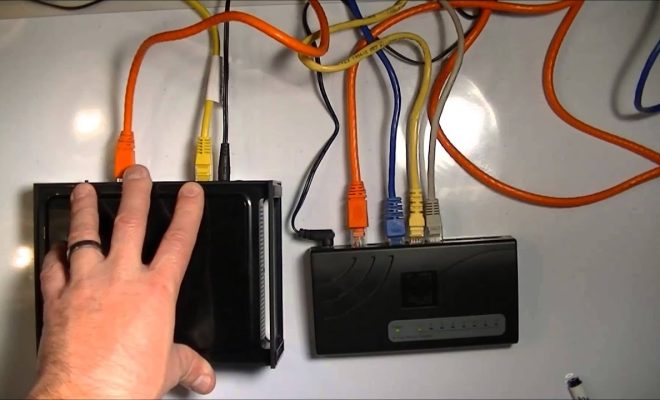
A network switch is the simplest and most straightforward way to add more Ethernet ports to your router. Switches come in various sizes, ranging from small, four-port models to larger 24-port switches. To use a network switch, you simply connect it to one of the Ethernet ports on your router and then connect your devices to the available ports on the switch.

One of the biggest advantages of using a switch is that it’s easy to set up and use. Additionally, most switches have built-in switching functions that help ensure all the devices connected to it receive the speeds they need.

2. Use a Powerline Adapter

If you don’t want to run cables all over your home, you can use a powerline adapter kit to add more Ethernet ports. These adapters use your home’s electrical wiring to extend your network.

To set up a powerline adapter, you plug one adapter into an electrical outlet near your router and connect it to the router via an Ethernet cable. You then plug the second adapter into an electrical outlet near the device you want to connect and connect it to the device via an Ethernet cable.

Powerline adapters are a great option for those who can’t run Ethernet cables throughout their home, but they do require your home’s wiring to be in good shape to work reliably.

3. Use a Wireless Access Point

A wireless access point (WAP) is a device that connects to your router wirelessly and extends the range of your wireless network. Some models also come with Ethernet ports, allowing you to connect wired devices to the network where wireless signals are weak or nonexistent.

To use a WAP, you’ll need to connect it to your router via an Ethernet cable and configure it to receive the wireless signal. Once set up, you can use the Ethernet ports on the WAP to connect devices to your network.

The only downside to using a WAP is that it can be difficult to set up if you’re not familiar with networking. However, if your home’s wiring is in good shape, a powerline adapter may be a better option.

4. Upgrade to a new router

If all else fails, you can always upgrade to a new router. Modern routers typically come with enough Ethernet ports to support most home networks. Additionally, new routers often support the latest wireless standards, which can provide faster speeds and better coverage than older models.

When shopping for a new router, be sure to look for one that meets your specific needs. If you have a large home with multiple floors, you’ll want to look for a model with a powerful antenna and good wireless range. If you play online games or stream media, you’ll want a model with Quality of Service (QoS) features that prioritize network traffic for more demanding applications.

In conclusion, there are several ways to add more Ethernet ports to your router, from simple switches to more complex powerline adapters and wireless access points. By examining your needs and determining which method is right for you, you’ll be able to expand your network and connect more devices.


Previous Article

How to Add Gmail to Your iPhone

Next Article

How to Add Music to Google Slides

Matthew Lynch

Related articles More from author

  • Digital & Mobile Technology

    What is a Key Generator (Keygen)?

    April 18, 2023
    By Matthew Lynch
  • Digital & Mobile Technology

    TikTok Shadowbanning: What It Is and How to Avoid It

    August 5, 2023
    By Matthew Lynch
  • Digital & Mobile Technology

    What Is a GIF, and How Do You Use Them?

    April 18, 2023
    By Matthew Lynch
  • Digital & Mobile Technology

    How to Enable Dark Mode on YouTube

    August 1, 2023
    By Matthew Lynch
  • Digital & Mobile Technology

    How to Create Customized Google Assistant Commands

    May 27, 2023
    By Matthew Lynch
  • Digital & Mobile Technology

    The Quick Guide to Snapchat Emoji Meanings

    May 30, 2023
    By Matthew Lynch

Search

Login & Registration

  • Log in
  • Entries feed
  • Comments feed
  • WordPress.org

Newsletter

Signup for The Tech Edvocate Newsletter and have the latest in EdTech news and opinion delivered to your email address!

About Us

Since technology is not going anywhere and does more good than harm, adapting is the best course of action. That is where The Tech Edvocate comes in. We plan to cover the PreK-12 and Higher Education EdTech sectors and provide our readers with the latest news and opinion on the subject. From time to time, I will invite other voices to weigh in on important issues in EdTech. We hope to provide a well-rounded, multi-faceted look at the past, present, the future of EdTech in the US and internationally.

We started this journey back in June 2016, and we plan to continue it for many more years to come. I hope that you will join us in this discussion of the past, present and future of EdTech and lend your own insight to the issues that are discussed.

Newsletter

Signup for The Tech Edvocate Newsletter and have the latest in EdTech news and opinion delivered to your email address!

Contact Us

The Tech Edvocate
910 Goddin Street
Richmond, VA 23231
(601) 630-5238
[email protected]

Copyright © 2026 Matthew Lynch. All rights reserved.