NASA’s Roman Telescope: A New Era in Exoplanet Discovery by 2027
“`html
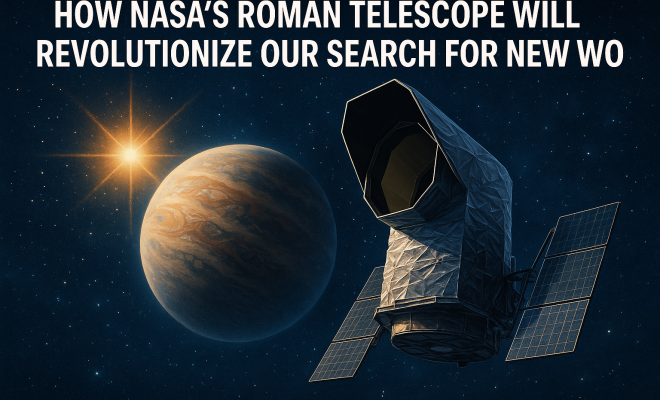
The quest to uncover planets beyond our solar system has taken a significant leap forward with NASA’s Roman Space Telescope. This advanced observatory is set to scan approximately 100 million stars, vastly expanding our understanding of the universe and the potential for life beyond Earth. With so much at stake, both scientifically and philosophically, it’s no wonder this mission has generated excitement across the globe.
The Ambitious Scope of the Roman Space Telescope
NASA’s Roman Telescope, named after the pioneering astronomer Nancy Grace Roman, is designed to explore the cosmos with unprecedented detail. Scheduled to launch in 2027, the telescope aims to deliver groundbreaking insights into exoplanets and the structures surrounding them. This ambitious project is not just a step; it’s a leap into the future of astronomy.
What sets the Roman Telescope apart is its remarkable capability to survey a staggering 100 million stars in our galaxy. By comparing it with previous missions, we can appreciate the scale of this endeavor. For instance, the Kepler Space Telescope discovered a mere 2,500 exoplanets during its mission. In contrast, Roman’s advanced technologies and methodologies mean it could potentially identify many more, offering a treasure trove of new worlds to study.
Why the Search for New Worlds Matters
The importance of this mission transcends mere scientific inquiry; it touches on fundamental questions about our existence. Are we alone in the universe? The discovery of new worlds—not just rocky planets, but those that may harbor life—could change our understanding of biology, chemistry, and even philosophy.
In recent years, the field of astrobiology has gained traction, focusing on the conditions necessary for life. With the Roman Telescope’s capabilities, scientists hope to find planets within the habitable zone, the region around a star where conditions may be just right for liquid water to exist. The existence of water is a key indicator of potential life, making these discoveries vital for future explorations.
How the Roman Telescope Achieves Its Goals
The Roman Telescope will employ a variety of innovative technologies to accomplish its mission. At the core of its design is a wide-field camera, which can capture images of vast sections of the sky all at once. This is a marked departure from previous telescopes that focused on narrower fields. As a result, Roman can gather data much more efficiently, scanning thousands of stars simultaneously.
Additionally, the telescope will use advanced gravitational microlensing techniques. This method allows scientists to detect distant planets by measuring the light from a background star that is magnified by the gravitational pull of a planet orbiting a foreground star. By observing the light curves produced by these microlensing events, researchers can infer the presence of planets that might otherwise remain hidden.
Comparing Roman with Other Missions
When it comes to space telescopes, the competition is fierce. The Roman Telescope will work alongside and complement existing and upcoming missions such as the James Webb Space Telescope (JWST) and the Transiting Exoplanet Survey Satellite (TESS). Each mission has its unique strengths that contribute to a more comprehensive understanding of the universe.
For example, JWST is designed to observe the infrared spectrum, allowing it to look at the early universe and study the atmospheres of distant planets. In contrast, TESS focuses on identifying nearby exoplanets by monitoring their transits across their host stars. Together with Roman, these missions create a multi-faceted approach to the study of exoplanets.
Public Interest: Why NASA’s Roman Telescope Excites Everyone
The enthusiasm surrounding the NASA Roman Telescope is palpable. People are naturally drawn to the idea of discovering new worlds and the tantalizing possibility of extraterrestrial life. The prospect of uncovering new planets, especially those in the habitable zone, fuels a sense of wonder and curiosity that resonates across all demographics. (See: NASA's Roman Space Telescope overview.)
Social media and mainstream news outlets have devoted significant coverage to the Roman mission, illustrating how it captures public imagination. This widespread interest is likely bolstered by our collective fascination with space exploration—one that transcends age, culture, and geography.
The Financial Commitment Behind the Mission
NASA’s investment in the Roman Telescope is a reflection of the importance placed on understanding our universe. The mission is funded with a budget of approximately $4.3 billion, a substantial commitment that underscores the belief in its potential impact.
Many experts argue that the benefits of such missions extend beyond immediate scientific gains. The advancements made in technology, engineering, and even education stemming from these initiatives contribute to a more informed society, capable of tackling pressing global challenges.
What to Expect When the Roman Telescope Launches
Upon its launch in 2027, the Roman Telescope will take its place alongside its predecessors—opening a new chapter in the search for extraterrestrial worlds. Its first year will involve extensive calibration and testing, ensuring that all systems function optimally for data collection.
Once operational, scientists will begin the extensive survey of 100 million stars, gathering data that could take years to analyze thoroughly. The anticipation surrounding its findings is enormous, with researchers already speculating on the types of planets that may be uncovered.
The Future of Astronomy and Astrobiology
The implications of the Roman Telescope’s discoveries could be monumental. As we inch closer to understanding the cosmos, we simultaneously broaden our knowledge of life itself. Each new planet identified may contain clues about the conditions that foster life, pushing the boundaries of our current understanding.
The telescope will also serve as a stepping stone for future missions. The insights garnered from this mission could inform the design and objectives of more advanced telescopes, further enhancing our capacity to explore the universe.
Inspiring the Next Generation of Scientists
As the Roman Telescope prepares for its launch, it’s vital to consider the broader impact of such missions on society. By generating excitement around space exploration, NASA has a unique opportunity to inspire future generations of scientists, engineers, and explorers. The public’s engagement with the Roman mission can serve as a catalyst for educational programs aimed at nurturing young minds interested in STEM fields.
Educational initiatives that highlight space exploration can motivate students to pursue careers in science and technology, ultimately shaping the future of our understanding of the cosmos.
How the Roman Space Telescope Operates
The Roman Telescope’s operations will be rooted in cutting-edge technology that enables it to operate efficiently and effectively. Its wide-field instrument will enable it to conduct surveys and collect data quickly. On top of that, the telescope will have a unique ability to capture light from distant stars and galaxies, allowing scientists to analyze not just the stars themselves but also their surrounding environments. This includes the examination of the dust and gas clouds that play critical roles in star formation.
Potential Discoveries and Their Impact
As the Roman Telescope embarks on its mission, the potential for groundbreaking discoveries is immense. Scientists anticipate that the telescope will identify a plethora of new exoplanets, some of which may be classified as “Earth-like” based on their size and distance from their host stars. These discoveries could provide crucial insights into the diversity of planetary systems and the potential for life outside our own.
Additionally, the data collected could shed light on the evolution of galaxies, the dynamics of dark matter, and the formation of cosmic structures. For instance, understanding how galaxies evolve may help scientists decipher the history of the universe. Furthermore, findings from the Roman Telescope could refine existing models of planetary formation and stability, facilitating the discovery of new planets in habitable zones. (See: New York Times article on Roman Telescope.)
The Role of Artificial Intelligence in Analyzing Data
As with many modern scientific endeavors, the analysis of data collected by the Roman Telescope will heavily rely on artificial intelligence (AI) and machine learning technologies. Given the enormous volume of data expected—from observing millions of stars to analyzing complex light curves—the use of AI will streamline data processing and help identify patterns that might be missed by human analysts.
AI algorithms can be trained to recognize signatures of exoplanets, classify stars, and predict the likelihood of certain conditions that could support life. This technology not only enhances the efficiency of data analysis but also opens up new avenues for exploration, allowing scientists to focus on interpreting findings rather than getting bogged down in initial data processing.
Challenges Faced by the Roman Telescope Mission
While the prospects for the Roman Telescope are bright, the mission does face several challenges. One of the most pressing is ensuring the telescope’s instruments remain calibrated and functional over its long operational lifetime. Space missions are notoriously unpredictable; hardware can fail due to the harsh conditions of space, including radiation exposure and extreme temperatures.
Additionally, the complexity of data management poses a challenge. With such a large volume of data being collected, the scientific community must develop robust systems for data storage, retrieval, and analysis. Collaboration among scientists and institutions will be crucial to ensure that the findings are accessible and beneficial to the global community.
Frequently Asked Questions (FAQ)
What is the Roman Space Telescope?
The Roman Space Telescope is a NASA space observatory designed to survey the universe and search for exoplanets, particularly within the habitable zones of stars. It’s set to launch in 2027 and will cover around 100 million stars in our galaxy.
Why is it named after Nancy Grace Roman?
Nancy Grace Roman, often referred to as the “Mother of Hubble,” was a pioneering astronomer who played a crucial role in the development of space telescopes. Naming the telescope after her honors her contributions to astronomy and highlights the importance of women in science.
How will the Roman Telescope contribute to our understanding of exoplanets?
The Roman Telescope will utilize advanced techniques such as gravitational microlensing and wide-field imaging to identify and study exoplanets, focusing on those in the habitable zone where conditions may support life.
What other missions will the Roman Telescope work alongside?
The Roman Telescope will complement the James Webb Space Telescope (JWST) and the Transiting Exoplanet Survey Satellite (TESS). Each of these missions has distinct capabilities that, when combined, provide a more comprehensive understanding of the universe and planetary systems.
How will the mission benefit society?
Beyond its scientific goals, the Roman Telescope mission will inspire future generations of scientists, contribute to educational programs, and foster advancements in technology and engineering that have broader applications beyond space exploration.
What are the expected outcomes of the Roman Telescope’s mission?
Researchers expect to gather significant data that could lead to the discovery of thousands of new exoplanets, many of which could be Earth-like in size and temperature. This data will enhance our understanding of planetary formation and the potential for life on other worlds. (See: Scientific article on exoplanet discovery.)
How will the Roman Telescope’s technology differ from previous telescopes?
The Roman Telescope’s wide-field camera allows it to capture vast areas of the sky in a single shot, drastically increasing the efficiency of surveys compared to previous telescopes, which focused on smaller sections. This capability allows for a more extensive and detailed exploration of the universe.
The Broader Implications of Discoveries
The discoveries made by the Roman Telescope could extend beyond the scientific community. As we find more Earth-like planets, the implications for philosophy, religion, and culture could be vast. Questions concerning humanity’s place in the universe and the existence of other life forms might lead to a shift in how people view their own existence.
Consider the impact of discovering an Earth-like planet in the habitable zone of a nearby star—it could spark a new genre of scientific and philosophical thought. Such a discovery would not only ignite interest in astrobiology but could also challenge existing paradigms and encourage new avenues of inquiry in various fields, from ethics to sociology.
Engaging the Public Through Citizen Science
NASA has a history of engaging the public in its missions, and the Roman Telescope is no exception. There are plans to incorporate elements of citizen science, allowing enthusiasts to participate in data analysis and contribute to the mission’s goals. This approach not only democratizes science but also fosters a greater appreciation for astronomy and space exploration.
Programs could involve analyzing light curves to look for exoplanets or even participating in outreach efforts to spread awareness about the discoveries being made. Engaging the public in this way creates a sense of ownership and excitement about space exploration, encouraging more people to take an interest in science and technology careers.
Final Thoughts on the NASA Roman Telescope
NASA’s Roman Telescope is not just a scientific instrument; it symbolizes humanity’s enduring quest for knowledge. As we prepare to survey 100 million stars, we are reminded of our innate curiosity and the desire to reach beyond our earthly confines. This mission has the potential to change how we view our place in the universe and our relationship with it.
Ultimately, as we stand on the brink of this exciting new chapter in astronomy, one thing is clear: the Roman Space Telescope is poised to reshape our understanding of the cosmos in ways we can only begin to imagine.
“`
Trending Now
Frequently Asked Questions
What is NASA's Roman Space Telescope?
NASA's Roman Space Telescope is an advanced observatory set to launch in 2027, designed to explore the cosmos in unprecedented detail by surveying approximately 100 million stars in our galaxy. It aims to revolutionize our understanding of exoplanets and the potential for life beyond Earth.
How will the Roman Telescope impact the search for exoplanets?
The Roman Telescope is expected to significantly enhance the search for exoplanets by utilizing advanced technologies and methodologies, potentially identifying thousands of new worlds compared to the 2,500 discovered by the Kepler Space Telescope.
Why is the search for new worlds important?
The search for new worlds is crucial as it addresses fundamental questions about our existence and the possibility of life beyond Earth. Discovering planets that may harbor life could reshape our understanding of biology, chemistry, and the universe itself.
When is the Roman Space Telescope scheduled to launch?
The Roman Space Telescope is scheduled for launch in 2027. This mission will mark a significant advancement in astronomical research and exploration.
What is the habitable zone in relation to the Roman Telescope?
The habitable zone refers to the region around a star where conditions may be suitable for liquid water to exist. The Roman Telescope aims to identify planets within this zone, which could potentially support life.
What did we miss? Let us know in the comments and join the conversation.