The Tech Edvocate

Top Menu

  • Advertisement
  • Apps
  • Home Page
  • Home Page Five (No Sidebar)
  • Home Page Four
  • Home Page Three
  • Home Page Two
  • Home Tech2
  • Icons [No Sidebar]
  • Left Sidbear Page
  • Lynch Educational Consulting
  • My Account
  • My Speaking Page
  • Newsletter Sign Up Confirmation
  • Newsletter Unsubscription
  • Our Brands
  • Page Example
  • Privacy Policy
  • Protected Content
  • Register
  • Request a Product Review
  • Shop
  • Shortcodes Examples
  • Signup
  • Start Here
    • Governance
    • Careers
    • Contact Us
  • Terms and Conditions
  • The Edvocate
  • The Tech Edvocate Product Guide
  • Topics
  • Write For Us
  • Advertise

Main Menu

  • Start Here
    • Our Brands
    • Governance
      • Lynch Educational Consulting, LLC.
      • Dr. Lynch’s Personal Website
      • Careers
    • Write For Us
    • The Tech Edvocate Product Guide
    • Contact Us
    • Books
    • Edupedia
    • Post a Job
    • The Edvocate Podcast
    • Terms and Conditions
    • Privacy Policy
  • Topics
    • Assistive Technology
    • Child Development Tech
    • Early Childhood & K-12 EdTech
    • EdTech Futures
    • EdTech News
    • EdTech Policy & Reform
    • EdTech Startups & Businesses
    • Higher Education EdTech
    • Online Learning & eLearning
    • Parent & Family Tech
    • Personalized Learning
    • Product Reviews
  • Advertise
  • Tech Edvocate Awards
  • The Edvocate
  • Pedagogue
  • School Ratings

logo

The Tech Edvocate

  • Start Here
    • Our Brands
    • Governance
      • Lynch Educational Consulting, LLC.
      • Dr. Lynch’s Personal Website
        • My Speaking Page
      • Careers
    • Write For Us
    • The Tech Edvocate Product Guide
    • Contact Us
    • Books
    • Edupedia
    • Post a Job
    • The Edvocate Podcast
    • Terms and Conditions
    • Privacy Policy
  • Topics
    • Assistive Technology
    • Child Development Tech
    • Early Childhood & K-12 EdTech
    • EdTech Futures
    • EdTech News
    • EdTech Policy & Reform
    • EdTech Startups & Businesses
    • Higher Education EdTech
    • Online Learning & eLearning
    • Parent & Family Tech
    • Personalized Learning
    • Product Reviews
  • Advertise
  • Tech Edvocate Awards
  • The Edvocate
  • Pedagogue
  • School Ratings
  • 100 Best Affiliate Marketing Apps

  • 100 Best Influencer Marketing Apps

  • 100 Best Content Marketing Apps

  • 100 Best SEO Apps

  • 100 Best Social Media Apps

  • 100 Best Email Marketing Apps

  • 100 Best Analytics Apps

  • 100 Best Business Intelligence Apps

  • The Wild West of Weight Loss: Why Millions Are Choosing Semaglutide Oral Alternatives

  • Why Millions Are Racing to Adopt These Game-Changing AI Productivity Tools in 2026

Assistive Technology
Home›Assistive Technology›How Artificial Intelligence is Improving Assistive Technology

How Artificial Intelligence is Improving Assistive Technology
By Matthew Lynch
April 24, 2018
0
Spread the love

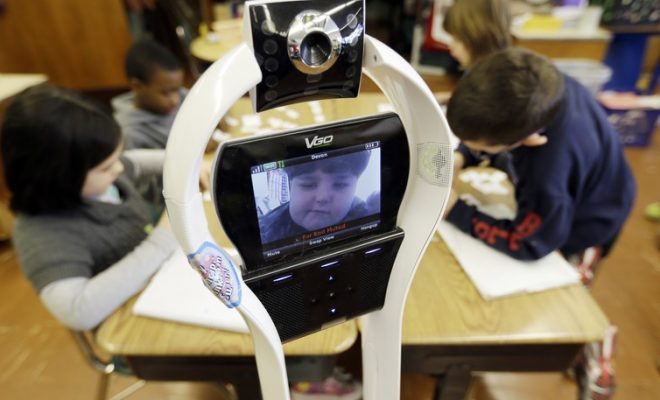
The advances in technology could mean more for society than just new educational technology and virtual reality video games. People with disabilities are finding innovative ways to put artificial intelligence to work with their current conditions. As the science improves, assistive technology will continue producing new and improved platforms to help create a better standard of living for those individuals.

Are you interested in the myriad of ways that assistive technology is changing with the improved status of artificial intelligence? These four examples should give you a great idea of what’s possible when you integrate these two fields.

Robots are better caregivers than humans.

A human caregiver grows tired after a ten-hour shift. Their fallible minds are liable to forget an appointment, a medication, or even a meal if they aren’t paying close enough attention. By nature, humans are bound to get things wrong on occasion. Robots are far less likely to have the same general mishaps that humans have on a daily basis. With artificial intelligence, people with disabilities could have around-the-clock care from a robot that never grows tired or makes mistakes. Better yet, you wouldn’t have to pay your robot a dime after the initial investment.

Paralyzed people might be able to walk.

Only a few years ago, individuals who were paralyzed expected to live out the rest of their days in a wheelchair. Artificial intelligence is coming far enough that it might even enable these people to walk. Scientists are working on a robotic exoskeleton that can help paralytics to walk on their own, relieving the constant pressure from the wheelchair. Right now, this technology is in the early stages and can’t accurately assist anyone. If we wait a few years, we might just get to see the lame walk once more.

Blind people no longer need to see.

Reading and writing have always been difficult for individuals with significant visual impairment, including blindness. Artificial intelligence makes it more likely that they can still function normally with the invention of speech-to-text technology. People with a visual impairment can now dictate their own words in order to have them show up on the screen. Similarly, they can request information from their phones and devices without ever having to read a thing.

Assistive technology can help clean the house.

One of the major things that fall by the wayside when you have a disability is the state of your home. Not everyone can afford a housekeeper in addition to their daily caretaker, doctors, and medications. Now, you can take advantage of a free and built-in housekeeper with developing assistive technology that helps you to better clean your living spaces. The most popular example in this category is the robotic vacuum cleaner that traces its own pattern over your floor to suck up dust, pet hair, and dirt. This is one daily chore you can cross off your to-do list.

Assistive technology is growing each and every day, opening new doors for those with disabilities. Artificial intelligence is the driving force that created these bursts of innovation that are improving the daily standard of care for people with disabilities. They present a real solution to current problems with a reasonable budget that could be more cost-effective than the traditional alternative over time. Consider what this field might have to offer as researchers continue to refine the capabilities of artificial intelligence.




Previous Article

Is Google Classroom Too Good to Be ...

Next Article

Does Artificial Intelligence Improve Student Outcomes?

Matthew Lynch

Related articles More from author

  • Assistive Technology

    How to Use Environment Variables in Windows 10

    June 22, 2023
    By Matthew Lynch
  • Assistive Technology

    Xbox Game Bar Not Working? Try These Troubleshooting Tips for Windows 10

    June 23, 2023
    By Matthew Lynch
  • Assistive Technology

    How to Customize the Normal Template in Microsoft Office/Microsoft 365

    June 10, 2023
    By Matthew Lynch
  • Assistive Technology

    Here Are Some Verizon Fios Internet Deals, Discounts, and Promotions to Look For

    August 8, 2023
    By Matthew Lynch
  • Assistive Technology

    How to Make a Spotify Widget

    June 6, 2023
    By Matthew Lynch
  • Assistive Technology

    Ways to Clean the Windows Registry Safely

    June 5, 2023
    By Matthew Lynch

Search

Login & Registration

  • Log in
  • Entries feed
  • Comments feed
  • WordPress.org

Newsletter

Signup for The Tech Edvocate Newsletter and have the latest in EdTech news and opinion delivered to your email address!

About Us

Since technology is not going anywhere and does more good than harm, adapting is the best course of action. That is where The Tech Edvocate comes in. We plan to cover the PreK-12 and Higher Education EdTech sectors and provide our readers with the latest news and opinion on the subject. From time to time, I will invite other voices to weigh in on important issues in EdTech. We hope to provide a well-rounded, multi-faceted look at the past, present, the future of EdTech in the US and internationally.

We started this journey back in June 2016, and we plan to continue it for many more years to come. I hope that you will join us in this discussion of the past, present and future of EdTech and lend your own insight to the issues that are discussed.

Newsletter

Signup for The Tech Edvocate Newsletter and have the latest in EdTech news and opinion delivered to your email address!

Contact Us

The Tech Edvocate
910 Goddin Street
Richmond, VA 23231
(601) 630-5238
[email protected]

Copyright © 2026 Matthew Lynch. All rights reserved.