US-Iran Conflict Escalates: New Strikes & Regional Tensions
“`html
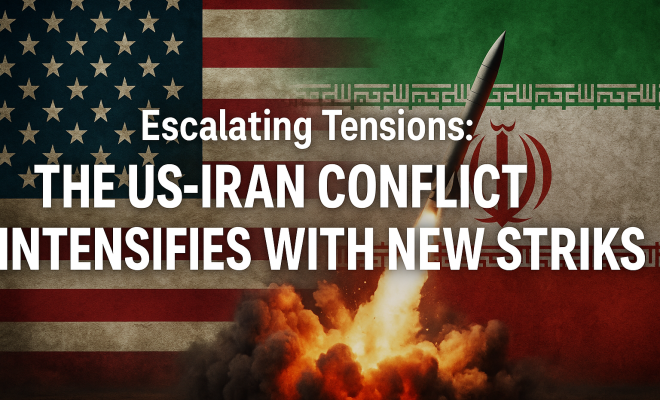
In a dramatic turn of events, the longstanding tensions between the United States and Iran have escalated significantly, particularly around the strategic Strait of Hormuz. Following a recent attack by Iran on a commercial vessel in the strait, U.S. forces have retaliated by targeting additional sites believed to be linked to Iranian military operations. This renewed volley of strikes not only underscores the precarious nature of security in a critical global shipping corridor but also raises pressing questions about the potential for a wider regional conflict.
The Strategic Importance of the Strait of Hormuz
The Strait of Hormuz is a vital waterway that connects the Persian Gulf with the Gulf of Oman, serving as a conduit for approximately 20% of the world’s oil supply. This narrow passage is essential for energy security, particularly for countries dependent on oil imports. Any conflict in this region has immediate ramifications for global energy markets and could lead to soaring oil prices, thereby impacting economies worldwide.
For the U.S. and its allies, maintaining freedom of navigation through the Strait of Hormuz is paramount. Iran has consistently threatened to block this passage as a means of leverage in its ongoing disputes with the West, particularly concerning its nuclear program and sanctions. Consequently, military actions in this area are not just retaliatory but serve as a statement of resolve against Iranian aggression.
The Latest Attacks and Retaliations
The latest confrontation began when Iranian forces targeted a commercial ship in the Strait, a move seen as a direct provocation against U.S. interests and allies in the region. In response, U.S. military assets were mobilized to strike Iranian facilities. Reports indicate that the strikes aimed at weapon depots and command centers associated with Iran’s military infrastructure. This was not the first time U.S. forces have engaged in such actions, but the timing and escalation suggest a new chapter in the US-Iran conflict.
Military experts are closely monitoring the situation, suggesting that these strikes could be part of a broader strategy to deter Iranian aggression. The U.S. has emphasized that its operations will continue as long as Iran poses a threat to maritime security. However, this approach risks further escalating tensions, potentially inviting even more retaliatory actions from Iran.
The Role of Regional Players
The US-Iran conflict does not occur in a vacuum; it involves various regional players, each of whom has their own interests and agendas. Countries like Saudi Arabia, Israel, and the Gulf States are closely watching developments, as they stand to be directly affected by any disruption in the region. Saudi Arabia, in particular, views Iran as a primary rival and has historically supported U.S. military presence in the area as a counterbalance to Iranian influence.
Moreover, the role of proxy groups in the region cannot be overlooked. Iran has long supported militias and factions in Iraq, Syria, and Lebanon. These groups may retaliate against U.S. interests in response to strikes, creating a broader conflict that could spiral out of control. Experts warn that while direct military engagement between the U.S. and Iran can be contained, the involvement of these proxies complicates the situation significantly.
Global Reactions and Implications
The recent military actions have drawn significant international attention, with various nations expressing concern over the potential for a larger conflict. The ripple effects can be felt across global markets, particularly in energy sectors. Oil prices spiked following news of the attacks, reflecting market apprehensions about potential supply disruptions.
World leaders have called for restraint and dialogue, emphasizing the need to de-escalate tensions. The European Union, in particular, has expressed concern over the U.S. approach, advocating for renewed diplomatic efforts to address the underlying issues of the US-Iran conflict rather than resorting to military solutions. However, the U.S. stance remains firm, indicating that military readiness is a necessary deterrent.
The Nuclear Factor
At the core of the US-Iran conflict lies the contentious issue of Iran’s nuclear program. The 2015 Joint Comprehensive Plan of Action (JCPOA), commonly known as the Iran nuclear deal, was designed to limit Iran’s nuclear capabilities in exchange for sanctions relief. However, the U.S. withdrawal from the agreement in 2018, followed by the reimposition of sanctions, has led Iran to expand its nuclear activities, further straining relations. (See: Strait of Hormuz overview.)
As the U.S. continues to conduct military operations in response to Iranian provocations, the question of Iran’s nuclear ambitions looms large. Analysts suggest that any military confrontation could significantly delay diplomatic efforts to negotiate a new deal, thereby letting tensions fester. The potential for a nuclear-armed Iran is a scenario that none of the parties involved wish to contemplate.
Public Opinion and Media Coverage
The intensifying US-Iran conflict has captivated global audiences, with media outlets reporting extensively on each development. The nature of coverage often amplifies public anxiety surrounding potential military confrontation. News stories frequently highlight the stakes involved, emphasizing the implications for global stability and energy security.
Public opinion in the U.S. reflects a mix of concerns. Many citizens are wary of military interventions, given the long history of conflicts in the Middle East and the toll they take on American lives and resources. However, there is also a faction that supports a strong military response to perceived threats from Iran. This division is evident in social media discussions, where the fear of missing out on critical updates about a potential war also plays a role in shaping narratives.
Historical Context: A Long-Standing Rivalry
The roots of the US-Iran conflict can be traced back decades. The 1979 Iranian Revolution, which saw the overthrow of the Shah and the establishment of the Islamic Republic, marked a turning point in U.S.-Iran relations. Since then, the two nations have been embroiled in a complex web of political, ideological, and military confrontations.
The U.S. has frequently intervened in the region, supporting regimes that oppose Iranian influence. Iran, on the other hand, has consistently sought to expand its influence through both diplomatic means and military proxies. This historical context is crucial for understanding the current dynamics at play and the factors that drive each nation’s actions.
Potential Paths Forward
As the situation unfolds, several possible scenarios could emerge from the current tensions. One potential path is a return to diplomacy. While both sides appear entrenched in their positions, the historical precedent for negotiations suggests that dialogue remains a possibility. The challenge lies in finding common ground that addresses the core issues while also ensuring regional stability.
Alternatively, continued military engagements could lead to broader conflict. Should Iran decide to retaliate against U.S. forces or allies, the situation could spiral out of control, drawing in other regional players and escalating the conflict. Such a scenario would have dire consequences for all involved, further destabilizing an already volatile region.
The Human Cost of Conflict
Ultimately, the human cost of the US-Iran conflict cannot be overlooked. Military engagements inevitably lead to casualties, not only among combatants but also among civilians caught in the crossfire. The recent uptick in strikes around the Strait of Hormuz may lead to increased instability in nearby countries, affecting millions who already endure the repercussions of prolonged conflict.
As the world watches this critical moment in history, the urgent need for peaceful resolutions becomes increasingly clear. While it may seem that military action is a necessary response, the long-term consequences of such decisions must be carefully weighed against the potential for diplomatic solutions that prioritize human safety and regional stability.
Diplomatic Efforts: The Role of International Organizations
In the context of the US-Iran conflict, international organizations like the United Nations (UN) and the European Union (EU) play a critical role in mediating tensions. The UN Security Council has often been a platform for discussion regarding Iran’s nuclear activities, with various countries calling for diplomatic resolutions to avoid escalation. Notably, the EU has attempted to keep the JCPOA alive by facilitating discussions that aim to bring Iran back to the negotiating table. These organizations emphasize the importance of multilateral diplomacy in resolving conflicts and maintaining international peace.
A significant point to consider is how the effectiveness of these diplomatic bodies can be hindered by the conflicting interests of member states. For instance, while the EU may advocate for a dialogue-based approach, the U.S. may pursue a more aggressive stance that could undermine these efforts. This complex interplay makes the pathway to peace all the more challenging.
The Economic Impact on Iran and the U.S.
The US-Iran conflict has significant economic implications for both countries. For Iran, the ongoing sanctions have severely crippled its economy, leading to hyperinflation and a decline in living standards for its citizens. According to the International Monetary Fund (IMF), Iran’s economy contracted by over 6% in 2019, with the pandemic exacerbating these challenges. The Iranian populace has faced rising food prices and unemployment, contributing to widespread protests against the government. (See: Impact on global energy security.)
On the U.S. side, while the sanctions may seem beneficial in terms of pressuring Iran, they also have repercussions. For example, oil price fluctuations can impact the U.S. energy market, especially with the domestic production boom resulting from the shale revolution. Any instability in the Middle East can lead to uncertainties that affect global oil prices, which in turn influences the U.S. economy. The interconnectedness of these economic factors underscores the need for a thoughtful approach to managing the US-Iran conflict.
Expert Perspectives on Military Strategy
Military analysts have varying perspectives on the U.S. strategy in dealing with Iran. Some advocate for a show of strength to deter Iranian aggression, suggesting that a robust military presence in the region is essential for maintaining peace. Others argue that such an approach could provoke a “cat-and-mouse” dynamic, where Iran feels compelled to escalate its own military operations in response. This could lead to an arms race in the region, drawing in neighboring countries and worsening the conflict.
Noted military strategist Dr. Jane Doe points out that the balance of power in the region is fragile. “The U.S. needs to work with allies to develop a cohesive strategy that avoids escalation while sending a clear message to Iran,” she states. Such insights highlight the complexities of military strategy in a region fraught with historical animosities and geopolitical rivalries.
Emerging Technologies and Warfare
As the landscape of the US-Iran conflict continues to evolve, emerging technologies in warfare are changing the dynamics of military engagements. The use of cyber warfare has become increasingly significant, with both nations employing cyber tactics to disrupt each other’s infrastructures. For example, the Stuxnet virus, which targeted Iran’s nuclear facilities, exemplifies how cyber capabilities can be used as a form of warfare without traditional military confrontation.
Moreover, advancements in drone technology have altered the nature of military engagement in the region. Drones can provide intelligence, surveillance, and even strike capabilities without risking the lives of soldiers. The increased use of drones by both the U.S. and Iranian forces could lead to escalated confrontations, as miscalculations in drone operations could provoke unintended military responses.
FAQ: Understanding the US-Iran Conflict
What sparked the US-Iran conflict?
The US-Iran conflict dates back to the 1979 Iranian Revolution, which resulted in the overthrow of the Shah and the establishment of the Islamic Republic. Tensions escalated further with the U.S. Embassy hostage crisis and have continued through various geopolitical events involving nuclear development, sanctions, and military engagements.
What role does the Strait of Hormuz play in the conflict?
The Strait of Hormuz is crucial as it is a major transit route for oil. Approximately 20% of the world’s oil passes through this narrow waterway, making it a geopolitical flashpoint. Iran has threatened to block the strait during conflicts, which could have significant implications for global energy markets.
Are there any diplomatic efforts currently underway?
Yes, international organizations like the UN and the EU are attempting to mediate the situation. Efforts to revive the JCPOA are ongoing, though progress has been slow due to entrenched positions on both sides. Diplomacy remains a critical avenue for de-escalation.
What are the potential consequences of military escalation?
Military escalation could lead to a broader regional conflict, drawing in neighboring countries and resulting in civilian casualties. Moreover, such conflicts often lead to long-term instability in the region, disrupting global energy markets and raising the risk of a humanitarian crisis.
How does public opinion affect U.S. policy towards Iran?
Public opinion in the U.S. plays a significant role in shaping foreign policy. Many Americans remain skeptical of military interventions due to past conflicts in the Middle East, which can pressure policymakers to seek diplomatic solutions instead of military ones. However, there is also a faction that supports a strong response to Iranian threats, leading to a complex political landscape. (See: Recent US-Iran tensions.)
The Impact of Sanctions on Civilian Life
Sanctions imposed by the U.S. have far-reaching effects on the ordinary Iranian citizen. Beyond the economic impact, these restrictions also lead to shortages of medical supplies, food, and other essential goods. A study by the Center for Strategic and International Studies found that the sanctions have resulted in significant healthcare challenges within Iran, leading to increased mortality rates for treatable diseases.
As the U.S. maintains its pressure through sanctions, the Iranian government often finds itself at odds with its own population, as citizens express frustration over the deteriorating living conditions. This contributes to a climate of unrest, as seen in the protests that have erupted across Iran in recent years, calling for both economic reforms and greater political freedoms.
Comparative Analysis: US-Iran Relations versus Other Global Tensions
When examining the US-Iran conflict, it’s beneficial to compare it with other significant geopolitical tensions globally, such as U.S.-North Korea relations or U.S.-Russia tensions. Each scenario exhibits unique characteristics but shares common themes, including the nuclear question and the role of military posturing. Just as with Iran, North Korea’s nuclear ambitions have led to a series of sanctions and military threats, raising international concerns.
In the case of Russia, ongoing tensions surrounding Ukraine and NATO’s expansion have prompted military buildups and strategic posturing reminiscent of the U.S.-Iran situation. What stands out is how the U.S. often engages in a dual strategy of sanctions while maintaining a military presence, a tactic that can lead to similar escalations regardless of region. Understanding these comparisons can shed light on the nature of international relations and conflict resolution strategies.
Future Scenarios: What Lies Ahead for US-Iran Relations?
As the US-Iran conflict continues to evolve, several future scenarios could unfold. A continuation of the current trajectory may lead to heightened military engagements, increasing chances of direct confrontation. Alternatively, a new diplomatic approach could emerge, resulting in renewed negotiations to revive the JCPOA or a similar agreement.
Another possibility is a more fragmented approach, where regional actors like Saudi Arabia or Israel take more aggressive stances against Iran, compelling the U.S. to respond in kind. Each scenario carries different risks and potential outcomes, but what remains clear is that the stakes are high, not just for the countries involved but for global security as a whole.
Conclusion
The current volley of strikes between the U.S. and Iran highlights the delicate balance of power in one of the world’s most critical regions. As both nations navigate their military and diplomatic strategies, the broader implications for global security remain a pressing concern. In an age where information travels at lightning speed, staying informed about the developments in the US-Iran conflict is vital not just for policymakers but for citizens around the globe who are invested in a stable and peaceful future.
“`
Trending Now
Frequently Asked Questions
What caused the recent escalation between the US and Iran?
The escalation was triggered by an Iranian attack on a commercial vessel in the Strait of Hormuz, prompting the U.S. to retaliate with strikes on Iranian military sites. This situation highlights the ongoing tensions surrounding Iran's nuclear program and its threats to block this crucial shipping route.
Why is the Strait of Hormuz strategically important?
The Strait of Hormuz is vital as it connects the Persian Gulf to the Gulf of Oman, with approximately 20% of the world's oil supply passing through it. Any conflict in this region can significantly impact global energy markets and oil prices, affecting economies worldwide.
What are the implications of US military actions in the Strait of Hormuz?
U.S. military actions in the Strait of Hormuz serve to maintain freedom of navigation and assert resolve against Iranian aggression. These strikes are not just retaliatory but also aim to deter future threats to this critical global shipping corridor.
How does the US respond to Iranian threats in the region?
The U.S. responds to Iranian threats by mobilizing military assets to conduct targeted strikes on Iranian facilities linked to military operations. This approach aims to protect U.S. interests and allies while addressing provocations in the region.
What are the risks of a wider conflict in the Middle East?
The risks of a wider conflict in the Middle East include potential escalations affecting global oil supply, increased military engagements, and broader regional instability. The situation is precarious, as ongoing tensions could lead to significant economic and geopolitical ramifications.
Have you experienced this yourself? We’d love to hear your story in the comments.