China’s Stunning Rise: Is It the New Leader in Global Scientific Research?
“`html
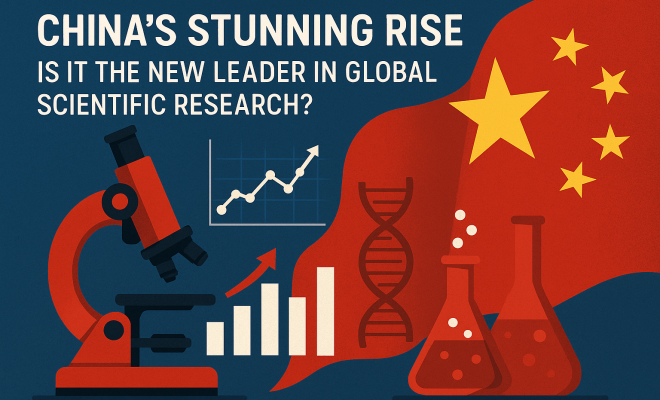
In recent years, China has made headlines for its rapid advancements in various fields, and the latest reports underscore its remarkable growth in scientific research. According to data, China’s scientific output surged by 22.4% from 2024 to 2025, making it the only nation among the global top ten to achieve double-digit growth. This significant leap doesn’t just highlight China’s progress; it poses a compelling question: Is China becoming the new hub of global scientific innovation? In this article, we will explore the factors contributing to this growth, its implications for the global scientific community, and what it means for future technological advancements.
1. Understanding China’s Scientific Boom
The sheer scale of China’s scientific output is staggering. From groundbreaking research in artificial intelligence and biotechnology to advancements in renewable energy, the nation’s investment in scientific research has placed it at the forefront of innovation. But what drives this rapid growth? A combination of substantial government funding, a focus on higher education, and collaborations with international institutions are key contributors to this phenomenon.
The Chinese government has made significant investments in research and development, establishing ambitious plans to enhance its global influence in science and technology. In 2025, China aims to spend around 2.5% of its GDP on research, which is a considerable increase compared to previous years. This funding supports both basic and applied research, allowing scientists to explore new frontiers in their respective fields.
2. Key Areas of Research Growth
China’s remarkable growth isn’t uniform across all scientific disciplines; it tends to excel in specific areas. Some of the notable fields where China is leading include artificial intelligence (AI), biotechnology, and renewable energy technologies. In AI alone, China is increasingly recognized as a global leader, publishing more research papers in this domain than any other country.
Moreover, the COVID-19 pandemic further accelerated research in biotechnology and pharmaceuticals. China’s rapid vaccine development and distribution showcased its capabilities on the world stage, proving that it could respond swiftly to global health challenges. This ability not only bolstered China’s reputation but also increased its influence within international scientific collaborations.
3. Global Collaborations and Partnerships
The surge in China’s scientific research output is closely linked to its willingness to engage with the global scientific community. By fostering international collaborations and partnerships, Chinese researchers have gained access to a wealth of knowledge, resources, and expertise. This cross-border exchange has enriched the scientific landscape, pushing the boundaries of innovation.
Many Chinese universities and research institutions have established partnerships with foreign entities, resulting in joint research projects and knowledge sharing. Such collaborations are essential in addressing complex global challenges, from climate change to public health crises. They demonstrate China’s commitment to being an integral part of the global scientific dialogue rather than isolating itself.
4. The Role of Higher Education
Higher education is a pivotal factor in China’s scientific advancement. Over the past few decades, China has transformed its higher education system, producing a vast pool of skilled scientists and researchers. The number of graduates in STEM (Science, Technology, Engineering, and Mathematics) fields has surged, creating a robust workforce capable of driving innovation.
Additionally, Chinese universities have made significant strides in global rankings, attracting international students and faculty. This influx of talent and diversity enhances the quality of research conducted within the country. Institutions like Tsinghua University and Peking University have emerged as global players, contributing to China’s status as a leader in scientific research.
5. Economic Implications of Scientific Leadership
The implications of China’s rise in scientific research extend beyond academic circles; they have profound economic consequences. A nation that leads in innovation is better positioned to dominate future markets, creating jobs and fostering economic growth. As China’s investment in research continues to yield results, other countries may feel the pressure to step up their own efforts in order to remain competitive.
Moreover, technological advancements driven by research can lead to the development of new industries. For instance, China’s focus on renewable energy technologies aligns with global sustainability efforts, potentially positioning the country as a leader in the burgeoning green economy. This shift could redefine global supply chains and economic alliances, making scientific research a central pillar of international trade. (See: China's rise in scientific research.)
6. The Geopolitical Landscape
China’s ascent in scientific research is not without geopolitical implications. As the nation continues to assert itself as a leader in innovation, it also raises questions about the balance of power in global affairs. The scientific race is closely intertwined with national security, economic competitiveness, and diplomatic relations.
Countries such as the United States and members of the European Union are closely monitoring China’s advancements, prompting discussions about the need for increased investment in domestic research programs. The geopolitical landscape is shifting, and nations are recognizing that scientific prowess may dictate future alliances and conflicts.
7. Challenges Ahead
Despite its impressive gains, China faces several challenges that could impact its scientific trajectory. Issues such as intellectual property theft, scientific integrity, and international collaboration barriers are increasingly under scrutiny. As China’s research output grows, so too does the scrutiny it faces from the global community.
Furthermore, there’s a need for transparency in scientific processes. Addressing concerns over research misconduct and ensuring that scientific findings can be replicated will be critical for maintaining credibility. As China positions itself as a leader in scientific research, these challenges must be navigated carefully to foster trust both domestically and internationally.
8. Looking to the Future
What does the future hold for China in terms of scientific research? Given its current trajectory, it’s reasonable to expect continued growth and innovation. The nation’s commitment to funding research, fostering international collaborations, and investing in education suggests that it will maintain its position as a global leader.
However, the global scientific landscape is dynamic, and challenges will undoubtedly arise. Countries like India, Germany, and the United States are also ramping up their research efforts. The evolution of global science will depend on how well nations can adapt to changing circumstances and collaborate in addressing complex challenges.
9. The Impact of Government Policies on Scientific Research
Government policies play an essential role in shaping the landscape of scientific research in China. The Chinese government has implemented several initiatives to boost scientific output, including the “Medium- and Long-Term Plan for the Development of Science and Technology” initiated in 2006. This plan set ambitious targets for increasing R&D investment and fostering innovation across various sectors.
In recent years, the Chinese leadership has also emphasized the importance of “self-reliance” in technological advancement, particularly in response to international pressures and trade tensions. This focus has led to increased funding for critical sectors like semiconductors, artificial intelligence, and quantum computing. The goal is to reduce reliance on foreign technologies and foster homegrown innovation, ensuring that China remains competitive in the global technological landscape.
10. Comparison with Other Leading Countries
When looking at China’s scientific research capabilities, it’s essential to compare them with other leading nations. The United States has traditionally been at the forefront of scientific research, thanks to its robust funding mechanisms, world-class universities, and a culture that encourages innovation. However, recent statistics indicate that China is narrowing this gap significantly.
For instance, a report from the National Science Foundation indicates that China produced over 30% of the world’s research papers in 2023. In comparison, the US accounted for about 25%. This shift highlights a growing trend where China is not merely following but is now setting the pace in various scientific fields, especially in AI and biotechnology.
Additionally, in fields such as nanotechnology and renewable energy, China has surpassed the U.S. in both patent applications and publications. The competition between these two nations is intensifying, with both countries vying for supremacy in critical technologies that will shape the future.
11. Investment in Emerging Technologies
China’s commitment to emerging technologies is a key component of its scientific research strategy. The nation has made significant strides in areas like artificial intelligence, quantum computing, and biotechnology. For instance, the Chinese government has earmarked billions in funding to bolster its AI industry, aiming to become the global leader in this transformative field by 2030.
In quantum computing, institutions like the University of Science and Technology of China have achieved remarkable milestones, including the development of the world’s first quantum satellite. This research not only enhances China’s technological capabilities but also strengthens its position in international collaborations and competitions. (See: China's investment in R&D.)
Furthermore, biotechnology is a focal point for China, especially in light of the COVID-19 pandemic. The rapid development of vaccines showcased China’s capacity for innovation, and companies like Sinovac and Sinopharm have become household names in global vaccine distribution. The investments in biopharmaceuticals and genetic research are likely to yield notable advancements in healthcare and agriculture in the coming years.
12. FAQs about China and Scientific Research
What are the key factors driving China’s scientific research growth?
China’s scientific research growth is driven by substantial government investments, a focus on STEM education, international collaborations, and a strategic emphasis on emerging technologies.
How does China’s scientific output compare to other countries?
As of 2023, China produces over 30% of the world’s research papers, while the United States accounts for about 25%. This positions China as a leading nation in scientific research output.
What challenges does China face in its scientific endeavors?
China faces challenges related to intellectual property theft, scientific integrity, international collaboration barriers, and the need for greater transparency in research processes.
How does government policy influence scientific research in China?
Government policies shape the scientific landscape by setting funding priorities, establishing research goals, and promoting self-reliance in critical technological sectors to foster homegrown innovation.
What is the future outlook for China’s scientific research?
The future outlook for China’s scientific research is promising, with continued growth expected due to strong government support, increasing international collaborations, and investment in emerging technologies.
How important is international collaboration for China’s scientific research?
International collaboration is crucial for China’s scientific research, allowing for knowledge sharing, access to resources, and engagement in addressing global challenges like climate change and public health crises.
13. The Role of Private Sector in China’s Scientific Research
While government funding is a significant driver of research in China, the private sector is increasingly playing a pivotal role. Companies like Alibaba, Tencent, and Huawei are not just tech giants; they have become key players in scientific research and development. For example, Alibaba has invested heavily in AI research, focusing on practical applications in sectors like e-commerce, healthcare, and transportation.
These companies are forming partnerships with universities and research institutions, providing funding and resources to spur innovation. In many cases, private firms are pushing the envelope in technological advancements, leading to breakthroughs that may not have been possible without their involvement.
This collaboration between the public and private sectors is crucial for fostering an innovative ecosystem. It encourages a more agile approach to research, where the agility of private companies can complement the stability of government-sponsored initiatives.
14. China’s Environmental Research Initiatives
As climate change continues to pose significant challenges, China is increasingly focusing on environmental research. The nation has committed to achieving carbon neutrality by 2060, which necessitates extensive research and development in renewable energy and sustainable practices. This ambition is reflected in the growing number of research papers produced in environmental science fields. (See: China's advancements in technology.)
Chinese researchers are exploring innovative solutions for clean energy, waste management, and pollution reduction. For instance, the development of solar energy technologies has received an enormous boost from both government and private sector investments. China is now the world leader in solar panel manufacturing, contributing significantly to the global transition to renewable energy sources.
Moreover, initiatives like the “Green Belt and Road” project aim to ensure that infrastructure development in participating countries adheres to environmental sustainability principles. This shows how China is not only addressing its domestic challenges but is also positioning itself as a leader in global environmental research and initiatives.
15. China’s Influence on Global Scientific Norms
China’s rapid rise in scientific research output is beginning to influence global scientific norms and practices. With its growing prominence, the country is actively shaping research agendas and methodologies, particularly in fields where it excels, such as AI and biotechnology. Chinese researchers are increasingly participating in international conferences and publishing in leading journals, thereby contributing to shaping the discourse in these areas.
This influence raises important questions about the standardization of scientific practices. For instance, the emphasis on collaboration in China has led to new models of co-authorship that differ from traditional Western practices. Understanding these differences is crucial for international researchers who wish to collaborate effectively with their Chinese counterparts.
There is also a growing interest in how China’s approach to research ethics—especially concerning data privacy and intellectual property—might influence global standards. As Chinese researchers gain prominence, their practices and perspectives could reshape discussions on ethical considerations in scientific research.
16. The Global Scientific Community’s Response
As China continues to assert itself as a leader in scientific research, the global scientific community has begun to respond in various ways. Some countries are ramping up their research funding, while others are focusing on fostering partnerships with Chinese institutions to leverage their advancements. This can be seen in various collaborative projects and joint research initiatives aimed at addressing common challenges like climate change and healthcare.
However, there are also concerns about the implications of China’s ascendance. Some researchers worry about potential biases in collaborative efforts, given China’s unique political and social landscape. This tension highlights the need for clear communication and mutual understanding between countries to ensure that collaborative research remains productive and equitable.
In summary, China’s rise as a dominant force in scientific research is not just an academic trend—it’s a powerful narrative that intertwines national pride, economic stakes, and global influence. As the center of scientific innovation potentially shifts, understanding China’s role in this transformation is crucial for anyone interested in the future of technology and global collaboration.
“`
Trending Now
Frequently Asked Questions
Is China the leader in scientific research?
China has shown remarkable growth in scientific research, with a 22.4% increase in scientific output from 2024 to 2025. This surge positions China as a significant player in global scientific innovation, particularly in fields like artificial intelligence, biotechnology, and renewable energy.
What factors contribute to China's scientific advancements?
Key factors driving China's scientific advancements include substantial government funding, a focus on higher education, and international collaborations. The Chinese government aims to spend about 2.5% of its GDP on research by 2025, which supports both basic and applied research.
Which fields is China excelling in for scientific research?
China excels in several key areas of scientific research, particularly in artificial intelligence, biotechnology, and renewable energy technologies. These fields have seen significant growth, contributing to China's overall rise in global scientific output.
How does China's scientific output compare to other countries?
China's scientific output growth is notable, as it is the only country among the global top ten to achieve double-digit growth rates. This places China in a strong position relative to other nations in terms of research and innovation.
What are the implications of China's rise in scientific research?
China's rise in scientific research has significant implications for the global scientific community, potentially shifting the balance of innovation and technological advancements. It raises questions about international collaboration, competition, and the future landscape of global science.
Have you experienced this yourself? We’d love to hear your story in the comments.