China & India Lead Global Car Production Shift in 2025
“`html
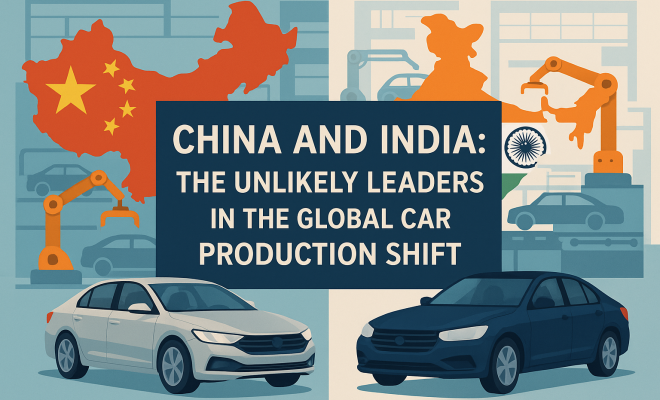
The automotive industry is undergoing a seismic transformation as the global car production shift points towards an unexpected hierarchy. For years, countries like the United States and Germany dominated the landscape, but recent statistics reveal a striking shift. China has emerged as the titan of car production, churning out a staggering 30.3 million passenger vehicles in 2025, while India is rapidly climbing the ranks, securing third place with 5.4 million units. This shift not only redefines where cars are being manufactured but also reshapes our understanding of the future market dynamics. So, what does this mean for automotive enthusiasts, manufacturers, and consumers alike?
The Rise of China in Global Car Production
Let’s start with the undisputed champion: China. The nation’s remarkable car production figures are jaw-dropping, making it clear that it’s not just a temporary trend. A combination of government support, extensive investment in local manufacturers, and a rapidly growing domestic market has propelled China to the forefront of the automotive world.
In recent years, the Chinese government has implemented policies encouraging the production and adoption of electric vehicles (EVs). This focus on sustainability aligns with global trends that favor eco-friendly transportation. With over 30.3 million cars produced in 2025, China outpaces traditional automotive giants by a significant margin, leading to questions about the future of the global automotive landscape.
India’s Ascent: A Surprising Contender
While China’s rise may seem predictable, India’s climb to third place in car production is nothing short of astonishing. The nation produced 5.4 million passenger vehicles in 2025, positioning itself as a formidable competitor in the automotive arena. Factors driving this growth include a burgeoning middle class, technological advancements, and a focus on expanding local manufacturing capabilities.
One critical aspect of India’s success is its manufacturing ecosystem, which has been bolstered by foreign investments from established automakers. Companies like Honda, Toyota, and Hyundai have established production facilities in India, creating jobs and stimulating local economies. As a result, India is not only increasing its output but also emerging as a key player in EV production, which is essential for its ongoing growth trajectory.
Global Trade Dynamics and Supply Chain Implications
The global car production shift carries significant implications for international trade and supply chains. With China and India at the forefront, traditional automotive powerhouses like the U.S., Japan, and Germany may find themselves reassessing their strategies to maintain competitiveness. The shift indicates that the production of vehicles is no longer confined to established markets; rather, it’s evolving in real-time based on various economic factors.
Furthermore, this change raises questions about supply chain sustainability. China, for instance, has positioned itself as a leader in the production of essential components for EVs, including batteries. As the global demand for electric vehicles surges, countries lagging in battery production may face hurdles in their automotive industries. Companies that once solely depended on traditional supply chains must now consider alternative sources and partnerships, especially with emerging markets like India.
The Competitive Landscape: Challenges Ahead
However, the rise of China and India isn’t without challenges. While they dominate production numbers, issues such as quality control, technological innovation, and global perceptions of brand value remain concerns. For instance, despite producing millions of cars, Chinese manufacturers often face skepticism regarding the quality and reliability of their vehicles in Western markets.
Moreover, as more countries adopt stringent environmental regulations, manufacturers will need to invest in technology that meets these standards. The automotive industry is evolving rapidly, and companies that fail to innovate may find themselves unable to compete. Therefore, it’s crucial for Chinese and Indian manufacturers to focus on quality and reputation as they expand their global footprints.
The Role of Electric Vehicles in the Shift
Electric vehicles are undeniably at the heart of this global car production shift. With increasing consumer demand for greener options, both China and India are prioritizing EV development in their automotive sectors. China has established itself as the largest market for electric vehicles, with companies like BYD and NIO leading the charge. (See: China's automotive industry growth.)
In India, the government has set ambitious targets for electric vehicle adoption, with plans to have a significant percentage of vehicles on the road be electric by 2030. Both nations are investing heavily in battery technology and charging infrastructure, critical elements in making EVs a viable option for consumers. As these two countries lead the charge towards electrification, traditional markets will need to adapt or risk falling behind.
Consumer Behavior and Market Preferences
As the global car production shift unfolds, consumer behavior across different regions plays a pivotal role in shaping the future of the industry. In China, the preference for electric vehicles is rapidly growing, driven by government incentives and increased awareness of environmental issues. Consumers are becoming more discerning, seeking modern tech features, connectivity, and sustainability in their purchases.
In India, while traditional vehicles still hold significant market share, there’s a growing interest in two-wheelers and compact cars due to urban congestion and cost considerations. As more consumers in India prioritize value, affordability, and efficiency, automakers must adapt their strategies accordingly. Understanding these preferences will be crucial for manufacturers aiming to capture market share in these rapidly evolving landscapes.
Investment Trends: Where the Money is Flowing
Investment trends in the automotive sector are also reflecting the global car production shift. Major automotive companies are pouring resources into research and development in China and India, recognizing the potential for growth and innovation. Tesla, for instance, has announced plans to expand its footprint in China, tapping into the vast market of EV consumers.
In India, initiatives like the Production-Linked Incentive (PLI) scheme are designed to attract foreign investment and boost local manufacturing. This influx of capital enables Indian companies to scale operations and improve production efficiency. As investments continue to flow into these regions, it will drive competition and innovation, setting the stage for a new era in the automotive industry.
The Future: Predictions and Possibilities
Looking ahead, the future of the automotive industry will likely be dominated by the trends we’re witnessing today. The global car production shift is not a mere blip on the radar; it represents a fundamental change in how cars are made and who makes them. As China and India solidify their positions, the ripple effects will be felt across supply chains, consumer preferences, and global trade.
Experts predict that as these nations continue to innovate and scale production capabilities, we may see a more balanced automotive landscape. Traditional powerhouses will need to evolve to maintain relevance, potentially leading to collaborations or partnerships that fuse old-world experience with new-world agility. The competition will undoubtedly foster innovation, which can only benefit consumers.
Challenges of Transitioning to EVs
Transitioning to electric vehicles is a daunting task for many automotive manufacturers, especially as they navigate technological, logistical, and market-related hurdles. The shift requires significant investment in research and development to create competitive EV models. Additionally, manufacturers must consider the infrastructure challenges associated with electric vehicles, including the expansion of charging networks. In countries where such infrastructure is lacking, consumer adoption may lag, stalling potential growth.
Statistical projections suggest that while EV sales are on the rise, they still accounted for only about 10% of total vehicle sales in the United States as of 2025. This figure underscores the need for greater investment in charging infrastructure and battery technology to encourage wider adoption. For manufacturers, it means not only producing electric vehicles but also ensuring that consumers have the means to charge and maintain them.
International Collaborations and Market Entry Strategies
As emerging markets like China and India continue to expand their automotive capabilities, international collaborations are becoming increasingly important. Auto manufacturers from Europe and the U.S. are not only looking to sell their products in these markets but also to establish manufacturing bases to remain competitive.
For example, Ford and Mahindra have entered into a partnership aimed at developing new products and technologies while sharing resources and knowledge. Such collaborations enable companies to leverage local expertise, reduce costs, and respond more swiftly to market demands. The success of these partnerships often hinges on understanding local consumer behavior and preferences, which can vary significantly from Western markets.
Environmental Impact of the Global Car Production Shift
The environmental ramifications of the global car production shift cannot be underestimated. As China leads in EV production, the country is also facing challenges related to pollution and resource depletion. The heavy mining of rare earth elements, crucial for EV batteries, raises concerns about environmental degradation and sustainability. (See: China's rise in car production.)
India, on the other hand, is grappling with a different set of environmental issues as it ramps up production. The automotive industry in India is urged to prioritize sustainable practices in manufacturing to minimize ecological footprints. The focus on developing clean energy sources and recycling initiatives is essential to balance the benefits of increased car production against potential environmental costs.
Technological Innovations Driving the Shift
Technological advancements are playing a crucial role in shaping this global car production shift. Innovations in automation, artificial intelligence, and connectivity are not only streamlining manufacturing processes but also enhancing the vehicles themselves. For example, manufacturers are increasingly integrating AI in production lines to improve efficiency, reduce waste, and enhance quality control.
Moreover, the rise of connected vehicles is shifting consumer expectations. Features such as automated driving capabilities and advanced infotainment systems are becoming standard, compelling manufacturers to innovate continuously. As vehicles become smarter, the boundaries of traditional automotive design are being pushed, leading to new opportunities and challenges in the marketplace.
Impact on Employment in the Automotive Sector
The global car production shift is also influencing employment dynamics within the automotive sector. As production moves to emerging markets, there are significant implications for job creation. Countries like China and India are seeing employment opportunities expand within their local automotive industries, but this shift can create job displacement in regions that have historically been automotive hubs, such as Detroit or Stuttgart.
Upskilling and reskilling will be critical as the industry evolves. Workers in traditional manufacturing roles may require training in new technologies or processes related to electric vehicles and automation. Furthermore, as demand for EVs increases, job roles focused on battery recycling, software development, and green technology will likely see growth, indicating a shift in the type of skills needed in the industry.
Frequently Asked Questions (FAQ)
What is the significance of the global car production shift?
The global car production shift signifies a change in the dominant players in automotive manufacturing. With China and India rising in prominence, it affects everything from supply chains to market dynamics, consumer preferences, and environmental policies.
How are electric vehicles influencing the automotive industry?
Electric vehicles are reshaping the automotive industry by driving innovation and investment towards sustainable practices. As demand for EVs grows, manufacturers are focusing on developing new technologies and infrastructures, like charging stations, to support this shift.
What challenges do manufacturers face in emerging markets?
Manufacturers in emerging markets may face challenges such as quality control, infrastructure development, and adapting to local consumer preferences. They must also compete with established automotive companies that have a longer history in the industry.
How does this shift impact global trade?
The shift impacts global trade by altering supply chains and market access. As China and India gain dominance in car production, traditional markets may reassess their strategies, leading to new trade agreements and partnerships to maintain competitiveness.
What future trends should we expect in the automotive industry?
Future trends may include increased collaboration between international automakers, a greater focus on sustainability and electric vehicles, advancements in connected car technology, and a continual evolution of consumer preferences toward more environmentally friendly and technologically advanced vehicles. (See: Electric vehicle production trends.)
Emerging Markets and their Potential
As the automotive industry evolves, various emerging markets are demonstrating incredible potential. Countries like Vietnam, Brazil, and Mexico are seeing increases in domestic production capacities and are becoming attractive destinations for foreign investment. Vietnam, for instance, has started its own automotive brand, VinFast, which aims to make a mark not only locally but also in international markets.
These emerging players are not just relevant for their production capabilities but also for their strategic locations, which can function as gateways for companies looking to penetrate other regional markets. As the global car production shift continues, keeping an eye on these emerging markets will be key for manufacturers seeking new opportunities.
Consumer Education and Awareness
Consumer education plays a vital role in the acceptance and growth of new automotive technologies. With the rapid rise in electric vehicle production, it’s essential for manufacturers to inform consumers about the benefits, uses, and maintenance of EVs. Awareness campaigns can help dispel myths and misconceptions surrounding electric vehicles, making consumers more comfortable with the transition.
Statistics show that consumer knowledge about EV technology is still lacking. A survey indicated that nearly 50% of consumers are unsure about how to charge an EV or what range to expect on a single charge. Manufacturers that take the lead in educating consumers are likely to benefit from increased trust and sales as more people opt for electric vehicles in the coming years.
Government Policies and Their Influence
The role of government policies in the global automotive landscape cannot be overstated. Policy frameworks and incentives can significantly influence the pace of the global car production shift. Subsidies for EV purchases, tax breaks for manufacturers, and stringent emission standards are all tools that governments can use to shape the industry.
In China, the government has played a crucial role in supporting the burgeoning EV market by providing substantial subsidies and investments in infrastructure. In contrast, countries with less aggressive policies may struggle to keep up with the rapid changes in consumer preferences and technology. Thus, manufacturers must navigate not only market conditions but also a complex web of regulations and incentives that can vary widely from one country to another.
Conclusion: Embracing the Shift
As the global car production shift unfolds, it’s essential for stakeholders across the spectrum to embrace change. Whether you’re a manufacturer, investor, or enthusiast, understanding the dynamics at play will be crucial in navigating this new landscape. The rise of China and India in the automotive sector is not just a story of numbers; it’s about a seismic shift in power dynamics, consumer behavior, and technological innovation. The future of transportation is being shaped, and it’s in regions you might not have expected. Keeping an eye on these developments will prepare you for the next chapter in the automotive saga.
“`
Trending Now
Frequently Asked Questions
What is the current state of car production in China?
As of 2025, China leads global car production with an astonishing 30.3 million passenger vehicles manufactured. This surge is driven by government support, investment in local manufacturers, and a growing domestic market, particularly in electric vehicles.
How is India performing in car production?
India has made significant strides in car production, ranking third globally with 5.4 million passenger vehicles produced in 2025. This growth is fueled by a rising middle class, technological advancements, and enhanced local manufacturing capabilities.
What factors contributed to the rise of China in the automotive industry?
China's rise in the automotive industry can be attributed to extensive government support, significant investments in local manufacturers, and a strong focus on electric vehicles. These factors have positioned China as a dominant player in car production.
What implications does the shift in car production have for the global market?
The shift in car production towards China and India redefines the global automotive landscape, impacting manufacturers, consumers, and market dynamics. It highlights changing trends towards sustainability and the increasing importance of emerging markets.
Why is the global car production shift significant?
The global car production shift is significant as it challenges the long-standing dominance of traditional automotive giants like the U.S. and Germany. With China and India leading the charge, it signals a transformation in manufacturing practices and market priorities toward sustainability and innovation.
Agree or disagree? Drop a comment and tell us what you think.