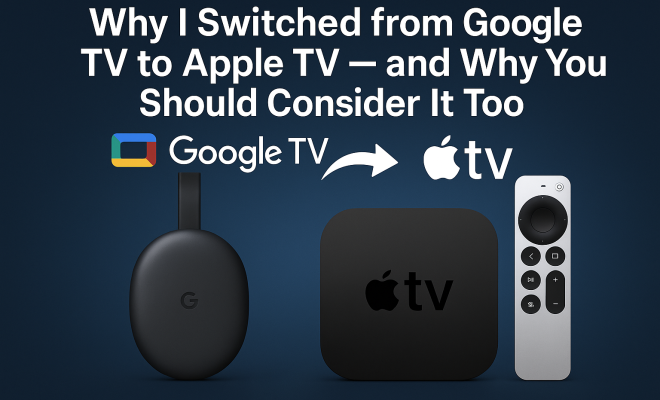
Google TV vs. Apple TV: Why I Switched & You Should Too
“`html
In the competitive arena of streaming devices, the contest between Apple TV vs Google TV has grown increasingly relevant. Every consumer has their go-to device, but what happens when that choice turns frustrating? In my journey from Google TV to Apple TV, I encountered a range of issues that have become all too familiar among users: intrusive ads, frustrating lag, and the insidious nature of tracking. If you’re like me, and you find yourself increasingly exasperated with your smart TV experience, this article might just resonate with you.
The Allure of Google TV
When I first purchased my Google TV, it felt like a step into the future. The promise of a comprehensive platform that integrated all my streaming services was undeniably appealing. With a clean interface, voice search features, and seamless connectivity with Google services, it seemed to tick all the boxes. The idea of uniting all my entertainment needs in one place was captivating. But soon, excitement turned to disappointment.
Ads: The Unwelcome Guests
One of the most aggravating aspects of using Google TV has been the incessant barrage of ads. Initially, I noticed them subtly integrated into my viewing experience, almost blending in. However, it didn’t take long for them to become glaringly intrusive. As I settled down to enjoy a quiet evening with a movie, I found myself bombarded with promotional content that interrupted my immersion. What was once a seamless interface became saturated with advertisements.
This focus on monetization over user experience felt like a betrayal. Streaming services have gradually increased their ad content, but it seemed that Google TV was taking it to another level. I wondered: were users really the priority here, or were advertisers calling the shots? The ads detracted from the very essence of what I wanted from a smart TV experience — simplicity and ease.
The Frustration of Lag
In addition to the ads, I also faced significant issues with lag. Whether it was navigating through menus or loading apps, the delays were maddening. I often found myself waiting for what felt like an eternity as the device struggled to keep up with my commands. For someone who simply wants to sit back and enjoy their favorite show, the experience became a test of patience.
This lag wasn’t just a minor annoyance; it transformed each viewing into a frustrating game of guesswork. Was my remote broken? Was my internet connection slow? The uncertainty was exhausting. I began to dread the moments when I had to interact with the device, which is the opposite of what a smart TV should provide. After all, shouldn’t technology make our lives easier? Instead, I felt as though I was fighting against it.
The Tracking Dilemma
Then there was the issue of tracking. It’s no secret that companies leverage our data to enhance user experience, but Google TV seemed to take it to an uncomfortable level. Every recommendation felt curated not for my personal taste but to serve advertising needs. I started to question how much my viewing habits were being monitored and whether my data was being sold to the highest bidder. This realization was unsettling. Consumers deserve transparency, especially when it comes to their personal information.
When you’re getting ads tailored to your every move, it can be hard to enjoy the content you genuinely love. Instead of feeling like a valued viewer, I felt like a product being sold. As my frustrations grew, I started to explore alternatives, hoping to find a solution that respected my privacy and enhanced my viewing experience.
Discovering Apple TV 4K
After a fair amount of research and numerous reviews, I stumbled upon the Apple TV 4K. What caught my attention was the focus on quality and user privacy. Unlike Google, Apple has positioned itself as a guardian of user data, promising not to track or sell personal information. This claim alone sparked my curiosity. Was it possible that this device could finally deliver a clean, ad-free experience?
Transitioning to Apple TV 4K was surprisingly easy. The setup was intuitive, taking only a few minutes before I could explore its features. This seamless integration felt like a breath of fresh air. Right from the onset, I was struck by the clarity and responsiveness of the interface. No lag, no delays—just pure enjoyment.
The Joy of a Clean Interface
One of the standout features of Apple TV is its user interface. Gone are the days of overwhelming ads and cluttered menus. Instead, Apple focuses on a streamlined design that allows for quick access to your favorite content. The layout feels intuitive, guiding you effortlessly through your viewing options. I found myself spending less time navigating and more time enjoying the shows and movies I love. (See: the impact of ads on streaming.)
This experience reminded me of the early days of streaming, where the content was the focus rather than the platform. Apple TV manages to recapture that sense of joy and excitement. The simplicity of finding and watching content without distractions reignited my passion for viewing. I could finally sit back and enjoy without the constant interruptions I had grown accustomed to with Google TV.
Ad-Free Experience
Perhaps one of the most liberating aspects of switching to Apple TV has been the significantly reduced presence of ads. While some streaming services still rely on advertising, Apple has made it a priority to create an experience that feels premium and ad-free. This commitment transforms the viewing experience, allowing me to immerse myself fully in the narrative without distractions.
With Apple’s focus on quality content, I found that I was no longer bombarded with irrelevant promotions. Instead, the platform curates recommendations based on my interests without compromising my viewing experience. I was finally able to enjoy the content without being interrupted by ads demanding my attention. It felt revolutionary.
Privacy Matters
Switching to Apple TV was not just about an improved viewing experience; it was also about regaining control over my personal data. Apple’s reputation for prioritizing privacy is a huge selling point. Unlike Google, which often feels like it’s watching your every move, Apple gives users a sense of trust. I don’t have to worry about my data being shared or sold—this peace of mind is invaluable.
As consumers, we should demand transparency and control over our information. With Apple TV, I felt reassured that my preferences wouldn’t be used against me. Instead of being a product, I became a valued user, free to explore content without the looming worry of surveillance. This shift in mindset made all the difference.
Comparing the Ecosystems
When it comes to the Apple TV vs Google TV debate, it’s essential to consider the overall ecosystems. Google’s offerings are vast but often feel fragmented and driven by ad revenue. Apple, on the other hand, has crafted an ecosystem that emphasizes user experience and integration across devices. If you own other Apple products, the seamless interaction between devices becomes a significant advantage.
With features like AirPlay, you can effortlessly stream content from your iPhone or iPad directly to your Apple TV. This connectivity enhances the overall experience, making it easier to share and enjoy content with family and friends. The continuity across devices is a testament to Apple’s commitment to creating an interconnected digital lifestyle.
Pricing and Value
While pricing can be a determining factor for many consumers, it’s worth looking closely at what you’re getting for your money. The Apple TV 4K does come with a higher upfront cost compared to many Google TV devices. However, the investment can be justified when considering the long-term benefits. With the Apple ecosystem, you’re not just buying a streaming device; you’re gaining access to a suite of services and features that enhance your overall digital experience.
For instance, Apple Arcade offers a library of premium games, while Apple Fitness+ provides subscribers with a range of exercise experiences. These additional services can make the Apple TV a more compelling choice for families or individuals looking to get the most out of their devices. In contrast, Google’s offering often feels like a basic streaming device with additional costs for the services you may want to use.
Consider how often you use these additional services. If you’re a casual viewer who primarily needs a device for streaming shows, Google TV may suffice. But for those who want a multifunctional device that genuinely adds value to their entertainment experience, Apple TV is a worthwhile investment.
Content Availability
Content offerings can significantly influence your decision between Apple TV and Google TV. While both platforms boast a wide range of apps and services, there are notable differences. Google TV excels with its integration of various streaming services, presenting a broader selection of third-party apps. However, Apple TV has made strides in recent years by adding popular services and exclusive content to its library.
The introduction of Apple TV+ has changed the landscape considerably. With original programming that includes award-winning series and films, Apple is positioning itself as a serious contender in the content creation game. If you’re a fan of original content, this might sway your decision towards Apple. The content recommendations are curated based on your viewing habits, which tends to foster a more personalized experience. (See: review of Google TV features.)
It’s essential to assess what’s more important to you: a vast selection of available apps or exclusive content. If you value original programming and quality over quantity, Apple TV might have the edge. However, if you’re looking for variety, Google TV offers a more extensive range of applications.
User Experience and Customer Support
User experience plays a vital role in determining the best streaming device for your needs. Apple has always been known for its focus on user experience, and the Apple TV is no exception. The interface is designed to be user-friendly, making it easy for anyone to navigate. In contrast, Google TV has faced criticism for its sometimes confusing interface, which can overwhelm new users.
Customer support is another critical factor. Apple is known for its robust customer support services, including online resources, live chat, and in-store assistance. Google, while also offering support, doesn’t have the same reputation for customer service. If you anticipate needing help, Apple’s support network might provide you with greater peace of mind.
People’s Preferences: What Users Are Saying
User reviews can provide valuable insights into the strengths and weaknesses of both devices. Many users praise Apple TV for its quality and reliability, often highlighting the seamless integration with other Apple products. The praise often extends to the quality of the content available on Apple TV+, which users have described as top-notch.
On the flip side, Google TV users frequently commend the vast selection of apps and services available, alongside its affordability. However, many of them also echo frustrations similar to mine regarding ads and lag. This divergence in user experience speaks volumes about how personal preferences can drive the choice between these two platforms.
FAQ: Apple TV vs Google TV
1. Which device is better for gaming?
If you’re interested in gaming, Apple TV has a slight edge due to its integration with Apple Arcade. However, Google TV offers a range of gaming apps and can be compatible with various game controllers, making it a solid option as well.
2. Can I access all streaming services on both devices?
Both devices support a wide range of streaming services, including popular ones like Netflix, Hulu, and Disney+. However, Google TV may have a broader selection of third-party apps.
3. How do the voice control features compare?
Google TV leverages Google Assistant for voice controls, which many users find to be very effective. Apple TV, on the other hand, uses Siri, which has its strengths but may not be as robust as Google Assistant in some situations. It often comes down to personal preference.
4. Is there a significant difference in picture quality?
Both Apple TV 4K and Google TV provide excellent picture quality, with support for 4K HDR content. The difference is often negligible unless you have very specific viewing needs.
5. What about privacy? Which is more secure?
Apple is known for its commitment to user privacy, often providing assurances that your data won’t be sold or used for ads. Google, while making strides in privacy, still collects data for advertising purposes, which may concern some users. (See: user experience with streaming devices.)
6. Which service is better for a family?
If you have a family, Apple TV may be more beneficial due to its range of family-friendly content and the ability to restrict certain viewing options. Google TV also has parental controls, but Apple TV’s ecosystem can offer a more comprehensive experience for families.
7. Are there any significant updates expected for both platforms?
Consumers are always curious about future updates that might enhance their devices. Apple regularly updates its software to improve functionality, add new features, and enhance security. On the other hand, Google has also been releasing updates to Google TV to improve user experience and enhance the integration of its various services. Staying updated on these changes can help users maximize their devices’ potential.
8. How does the remote control experience compare?
Apple TV’s remote is sleek and offers a touchpad for easy navigation, which some users enjoy. However, it may take a bit of getting used to. Google TV’s remote includes dedicated buttons for popular services, which many find more straightforward and quicker to use. Ultimately, the choice comes down to personal preference and what feels comfortable in your hands.
9. Can I use Apple TV with non-Apple devices?
Yes, Apple TV can work with non-Apple devices, but the experience is best when you’re in the Apple ecosystem. If you have devices like an iPhone or iPad, the integration is seamless. For users primarily on Android, Google TV may provide a more compatible experience.
The Future of Streaming Devices
As technology continues to evolve, the competition between streaming devices is only going to get fiercer. Both Apple and Google are committed to refining their respective platforms to meet user expectations. Innovations in artificial intelligence, such as personalized content recommendations, and advancements in streaming quality will continue to shape the landscape.
The growing push for 8K content and immersive experiences, such as virtual and augmented reality, may also play a critical role in future updates. Consumers will likely expect their devices to support these advancements seamlessly, and both companies will likely strive to lead in these areas.
Final Thoughts
My experience with Google TV was initially filled with promise but quickly devolved into frustration. The ads, lag, and tracking practices left a sour taste in my mouth, prompting me to search for a better solution. Upon switching to Apple TV 4K, I found not just a replacement but a complete transformation of my viewing habits.
It’s a choice that prioritizes user experience, privacy, and content quality over ad revenue. If you’re grappling with similar frustrations, consider making the switch. The peace of mind and enjoyment I’ve gained from my Apple TV is truly worth it. In the end, it’s about enjoying your entertainment without the distractions that have become all too common in today’s streaming services. So, if you’re tired of fighting against your device, maybe it’s time to rethink your choice in the Apple TV vs Google TV debate.
“`
Trending Now
Frequently Asked Questions
What are the main differences between Apple TV and Google TV?
The main differences include user experience, ad presence, and performance. Apple TV is known for its streamlined interface and minimal ads, while Google TV has been criticized for intrusive advertisements and lag issues. Additionally, Apple TV offers a robust ecosystem that integrates well with other Apple devices.
Is Apple TV worth the money compared to Google TV?
Many users find Apple TV worth the investment due to its superior user experience, fewer ads, and better performance. Users often appreciate the seamless integration with Apple services and devices, which enhances the overall streaming experience.
Why do people switch from Google TV to Apple TV?
People often switch from Google TV to Apple TV due to frustrations with intrusive ads, lag, and a less user-friendly interface. Apple TV offers a more polished experience with fewer interruptions, making it a preferred choice for those seeking simplicity and ease in streaming.
What issues do users commonly face with Google TV?
Users commonly face issues such as excessive ads, frustrating lag, and concerns over tracking. These problems can detract from the overall viewing experience, leading some to seek alternatives like Apple TV for a more enjoyable streaming environment.
How does Apple TV handle advertisements compared to Google TV?
Apple TV typically features fewer advertisements than Google TV, which has been criticized for its intrusive ad placements. This difference allows Apple TV users to enjoy a more immersive viewing experience without frequent interruptions from promotional content.
Agree or disagree? Drop a comment and tell us what you think.