Educational Leadership: 4 Dimensions for Higher Ed Transformation
“`html
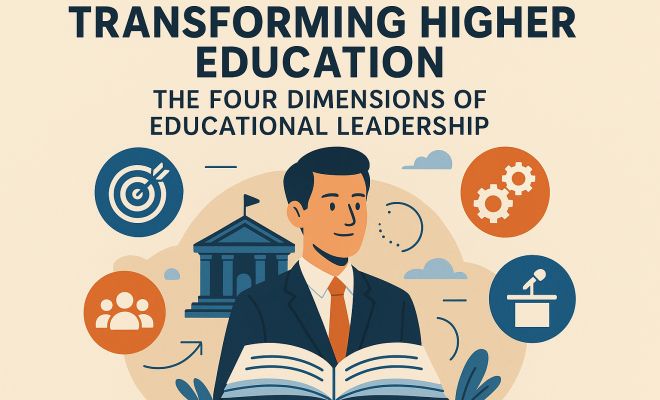
In the evolving landscape of higher education, educational leadership stands at the forefront of change. As institutions adapt to new challenges and demands, a recent academic article explores the intricate relationships between educational leadership and academic development. This piece examines leadership through four distinct yet overlapping lenses: leadership of, for, with, and through academic development. Each perspective offers valuable insights into how colleges and universities can enhance teaching quality, drive institutional reform, and foster a culture of continuous improvement.
Understanding Educational Leadership
Educational leadership is more than just a position; it’s a multifaceted approach that encompasses influence, vision, and collaborative effort. In higher education, effective leadership plays a crucial role in shaping the academic environment, steering institutions toward innovation and excellence. As the educational landscape grows increasingly complex, leaders must navigate challenges ranging from technological advancements to evolving student needs.
At the heart of educational leadership lies the commitment to fostering an inclusive and effective learning atmosphere. This commitment is particularly important in an age where scrutiny on institutional effectiveness is high and accountability measures are becoming the norm.
Leadership ‘Of’ Academic Development
The first dimension, leadership ‘of’ academic development, emphasizes the structural and procedural aspects of fostering educational growth. This approach necessitates that leaders establish clear visions and frameworks for academic initiatives. By aligning institutional goals with academic objectives, leaders can effectively implement strategies that enhance teaching and learning.
For instance, leaders who prioritize curriculum reform can significantly impact course offerings and pedagogical practices. They ensure that academic programs not only meet accreditation standards but also reflect contemporary trends and student interests. Such efforts are particularly important as institutions face the challenge of preparing graduates for a rapidly changing job market.
Leadership ‘For’ Academic Development
Next, we explore leadership ‘for’ academic development, which focuses on supporting and empowering faculty and staff in their professional growth. In this model, leaders act as advocates for their team, providing resources, training, and opportunities for professional development. This support is vital for fostering a culture of continuous improvement within institutions.
For example, academic leaders who invest in faculty development programs can directly enhance teaching effectiveness and student engagement. By offering workshops, mentorship programs, and funding for research, these leaders not only boost faculty morale but also improve overall educational outcomes. The commitment to faculty success reflects a broader understanding that effective teaching is a collaborative effort, requiring support and investment at all levels.
Leadership ‘With’ Academic Development
The third dimension, leadership ‘with’ academic development, highlights the importance of collaboration and partnership in advancing educational initiatives. This approach requires leaders to engage faculty, staff, and students in meaningful dialogues about institutional goals and academic programs. By fostering an environment of shared decision-making, leaders can cultivate a sense of ownership and accountability among all stakeholders.
Collaborative leadership models can manifest in various ways, from inclusive curriculum committees to focus groups that solicit student feedback. For instance, when developing new programs, academic leaders might facilitate workshops that bring together faculty and students to discuss their needs and aspirations. Such collaborative efforts can result in more relevant and impactful educational experiences, as they reflect the voices of those who are directly affected by institutional policies.
Leadership ‘Through’ Academic Development
The final perspective, leadership ‘through’ academic development, emphasizes the transformative power of educational leadership on institutional culture and practices. This approach views leadership as an ongoing process of change, where leaders actively shape and redefine educational norms and values.
In practical terms, this means that leaders must not only advocate for change but also model the behaviors and practices they wish to see within their institutions. For example, a leader who prioritizes innovative teaching methods should also encourage faculty to experiment with those methods in their classrooms. By doing so, they create a ripple effect that reinforces a culture of innovation and adaptability. (See: U.S. Department of Education.)
Challenges to Educational Leadership
While the four dimensions of educational leadership offer a robust framework for understanding and implementing change, numerous challenges accompany this endeavor. Chief among these challenges is the resistance to change that can arise within academic institutions. Faculty and staff may be hesitant to adopt new practices, fearing the loss of established traditions or questioning the efficacy of new methods.
Moreover, the pressure of institutional accountability can create an environment where leaders feel compelled to prioritize compliance over innovation. This tension can stifle creativity and hinder the development of truly transformative educational practices. It is essential for leaders to navigate these challenges thoughtfully, ensuring that their initiatives foster genuine academic growth rather than merely fulfilling external requirements.
The Role of Technology in Educational Leadership
In today’s digital age, technology plays a pivotal role in shaping educational practices and institutional leadership. Leaders must embrace technological advancements as tools for enhancing academic development. From online learning platforms to data analytics, technology offers numerous opportunities to improve teaching and learning.
For instance, educational technology can facilitate personalized learning experiences, allowing students to engage with content at their own pace. This flexibility can enhance student engagement and retention, particularly in diverse learning environments. Leaders who support the integration of technology into the curriculum position their institutions to thrive in an increasingly competitive educational landscape.
Case Studies in Effective Educational Leadership
Examining real-world examples of successful educational leadership can provide valuable insights into best practices and innovative strategies. Several institutions have implemented leadership models that align with the four dimensions of academic development, yielding impressive results.
One such example is the University of Michigan, which has embraced a collaborative leadership model that encourages faculty and staff to engage in shared decision-making. By creating committees that include diverse stakeholders, the university has successfully implemented curriculum changes that reflect the needs of both students and faculty. This participatory approach has not only enhanced teaching quality but has also fostered a sense of community and ownership among faculty members.
Another notable example is the University of California, Berkeley, which has prioritized faculty development through comprehensive training programs. By investing in the professional growth of its faculty, the university has seen increased student satisfaction and improved academic outcomes. This commitment to faculty support exemplifies the leadership ‘for’ academic development, demonstrating the positive impact of investing in its educators.
Future Directions for Educational Leadership
As higher education continues to evolve, so too must the approaches to educational leadership. Institutions are at a pivotal moment, needing leaders who can adapt to the changing landscape while remaining committed to the core values of education. Future leaders will need to embrace inclusivity, collaboration, and a focus on continuous improvement.
Moreover, as societal and technological changes continue to shape educational needs, leaders must remain agile and responsive. This adaptability will require ongoing professional development for leaders themselves, ensuring they are equipped with the skills and knowledge necessary to guide their institutions effectively.
The Importance of Community Engagement
Finally, educational leadership must extend beyond the walls of academia. Engaging with the broader community is essential for institutions seeking to create meaningful impact. By forging partnerships with local organizations, businesses, and other stakeholders, educational leaders can enhance academic programs and provide students with valuable real-world experiences.
Community engagement not only enriches the educational experience but also reinforces the value of higher education within society. Institutions that prioritize community partnership can cultivate a positive public perception and demonstrate their commitment to addressing societal challenges through education.
Educational Leadership and Diversity, Equity, and Inclusion (DEI)
As the global landscape becomes increasingly diverse, educational leadership must prioritize diversity, equity, and inclusion (DEI) within its frameworks. Leaders are responsible for promoting an inclusive academic environment that values different backgrounds and perspectives. By integrating DEI initiatives into their strategic plans, educational leaders not only enhance institutional culture but also improve student outcomes. (See: New York Times on college leadership.)
Statistics indicate that diverse teams lead to better decision-making and problem-solving. According to a study by McKinsey, companies with more ethnically and culturally diverse executive teams are 33% more likely to outperform their peers. Educational institutions can draw parallels from these findings, recognizing that diverse leadership teams can positively influence teaching and learning experiences.
Furthermore, educational leaders must ensure that policies are in place that actively dismantle barriers to access and success. This may involve implementing targeted recruitment strategies aimed at underrepresented groups, providing scholarships, or creating support services tailored to diverse student populations. By focusing on DEI, institutions can prepare students to thrive in an interconnected world.
Metrics for Evaluating Educational Leadership
Effective educational leadership can be challenging to measure, but establishing clear metrics is essential for assessing success. Institutions can utilize both qualitative and quantitative measures to evaluate the impact of leadership on academic development. Key performance indicators (KPIs) might include faculty and student satisfaction surveys, graduation rates, and employment outcomes post-graduation.
Additionally, qualitative measures, such as focus groups and interviews, can provide deeper insights into the perceptions of faculty and students regarding the effectiveness of leadership initiatives. Institutions might also consider benchmarking against peer institutions to gauge their performance in educational leadership.
Another valuable metric is the rate of faculty and staff retention. High retention rates are often indicative of a supportive and effective leadership environment. Conversely, high turnover can signal underlying issues within the academic institution’s leadership approach. Using a combination of these methods allows educational leaders to assess their impact and make informed decisions to enhance their strategies.
Expert Perspectives on Educational Leadership
To gain a deeper understanding of educational leadership, it’s useful to consider insights from experts in the field. Dr. Linda Darling-Hammond, a prominent educator and policy expert, emphasizes the need for leaders to develop strong relationships within their institutions. She argues that trust and collaboration among faculty, staff, and administration are vital for fostering an environment conducive to innovation and growth.
According to Dr. Darling-Hammond, “Effective educational leadership is not about authority; it’s about cultivating a community of learners.” This perspective highlights the shift towards a more inclusive and supportive model of leadership where each member of the academic community is valued and engaged.
Dr. Michael Fullan, a leader in educational reform, adds that leadership must be focused on systemic change rather than isolated initiatives. He stresses the importance of coherence in educational strategies and warns against the pitfalls of fragmented approaches. “Leading from the middle,” as he puts it, involves engaging stakeholders at various levels and ensuring they are aligned toward common goals.
FAQs about Educational Leadership
What is educational leadership?
Educational leadership involves the processes and practices that guide and support educational institutions. It encompasses decision-making, strategy development, and the promotion of a positive academic environment that fosters teaching and learning.
Why is educational leadership important in higher education?
Educational leadership is critical in higher education as it shapes institutional policies, fosters academic development, and enhances the overall student experience. Strong leadership can drive innovation, improve outcomes, and ensure that institutions remain relevant in a rapidly changing educational landscape.
What are the key characteristics of effective educational leaders?
Effective educational leaders typically exhibit strong communication skills, a collaborative mindset, adaptability, and a commitment to inclusivity. They should also demonstrate vision and the ability to inspire and motivate others.
How can institutions support their educational leaders?
Institutions can support their educational leaders by providing professional development opportunities, fostering a culture of trust and collaboration, and ensuring access to resources that empower leaders to implement effective strategies.
What role does technology play in educational leadership?
Technology plays a crucial role in educational leadership by offering tools that enhance teaching and learning. Leaders can leverage technology to facilitate communication, data analysis, and personalized learning experiences, ultimately improving institutional effectiveness.
How can educational leadership promote innovation?
Educational leadership can promote innovation by encouraging experimentation and risk-taking among faculty and staff. By creating a safe space for new ideas and fostering a mindset of continuous improvement, leaders can inspire their teams to explore innovative teaching methods and curricular changes.
How can educational leaders ensure accountability?
Leaders can ensure accountability by establishing clear goals and performance metrics, conducting regular evaluations of initiatives, and involving stakeholders in the assessment process. Transparency in decision-making and sharing progress with the academic community can also enhance accountability.
What impact does leadership have on student outcomes?
Research shows that effective educational leadership is linked to improved student outcomes, including higher graduation rates and enhanced student engagement. Leaders who prioritize a supportive learning environment and empower faculty tend to create conditions conducive to student success.
Conclusion
In summary, the landscape of educational leadership is multifaceted and constantly evolving. By examining leadership through the lenses of ‘of,’ ‘for,’ ‘with,’ and ‘through’ academic development, institutions can better navigate the complexities of higher education. As leaders embrace innovative strategies and foster collaboration, they can drive meaningful change that enhances teaching quality and promotes institutional reform. Educational leadership is not just about authority; it’s about inspiring growth, fostering a culture of learning, and ultimately transforming the student experience.
“`
Trending Now
Frequently Asked Questions
What are the four dimensions of educational leadership?
The four dimensions of educational leadership are leadership of, for, with, and through academic development. Each dimension offers unique insights into enhancing teaching quality, driving institutional reform, and fostering a culture of continuous improvement within higher education.
How does educational leadership impact academic development?
Educational leadership significantly impacts academic development by shaping the academic environment and aligning institutional goals with educational initiatives. Effective leaders implement strategies that enhance teaching and learning, ensuring that programs meet both accreditation standards and the evolving needs of students.
Why is effective leadership important in higher education?
Effective leadership in higher education is crucial for steering institutions towards innovation and excellence. Leaders navigate challenges like technological advancements and changing student needs, fostering an inclusive and effective learning atmosphere that promotes academic growth.
What role does accountability play in educational leadership?
Accountability in educational leadership is vital as it drives institutions to focus on effectiveness and improvement. Leaders are increasingly scrutinized to ensure they meet institutional goals, maintain quality academic programs, and foster a culture of continuous improvement.
How can leaders enhance teaching quality in colleges?
Leaders can enhance teaching quality by prioritizing curriculum reform and establishing clear frameworks for academic initiatives. By aligning academic objectives with institutional goals, they create strategies that improve pedagogical practices and course offerings.
What did we miss? Let us know in the comments and join the conversation.