Astronomers Discover 33,000 Giant Hydrogen Halos from Early Universe
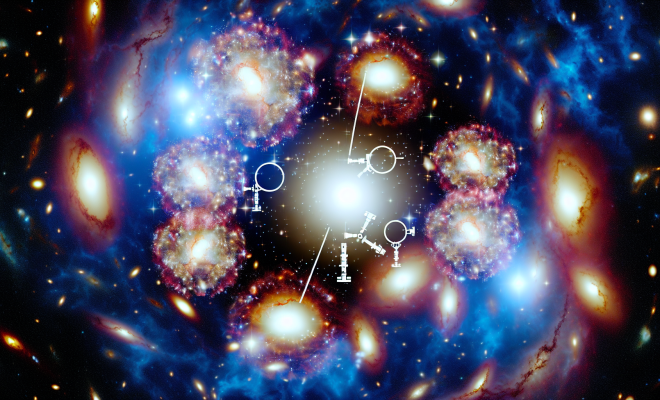
A groundbreaking discovery by astronomers using the Hobby–Eberly Telescope Dark Energy Experiment (HETDEX) has revealed an astonishing number of giant hydrogen gas halos, known as Lyman-alpha nebulae, which are believed to surround galaxies that existed during a pivotal period in the universe’s history. This moment, often referred to as Cosmic Noon, occurred between 10 to 12 billion years ago when star formation was at its peak.
A New Perspective on Cosmic Structure
The recent findings have significantly increased the known number of Lyman-alpha nebulae from approximately 3,000 to over 33,000. This remarkable tenfold increase not only highlights the abundance of these structures but also challenges previous assumptions about their rarity. The discovery allows astronomers to examine a more comprehensive sample, enabling deeper insights into the origins and evolution of the earliest galaxies.
Understanding Lyman-alpha Nebulae
Lyman-alpha nebulae are vast, glowing clouds of hydrogen gas that emit light at a specific wavelength known as Lyman-alpha, which corresponds to the transition of electrons in hydrogen atoms. These nebulae are crucial for understanding the intergalactic medium and the processes that led to the formation of galaxies. The presence of such large halos indicates that the early universe was a much more dynamic environment than previously believed.
The Significance of the Discovery
This discovery has profound implications for our understanding of cosmic evolution. By identifying a larger population of Lyman-alpha nebulae, astronomers can:
- Investigate Star Formation Rates: The abundance of these gas halos provides a clearer picture of how rapidly stars were forming during Cosmic Noon.
- Study Galaxy Formation: Understanding how these nebulae interact with their host galaxies can shed light on the mechanisms of galaxy formation and evolution.
- Explore Cosmic Chemistry: The study of Lyman-alpha nebulae helps astronomers learn about the chemical composition of the early universe and the processes that contributed to the formation of elements.
The Methodology Behind the Discovery
The HETDEX team utilized a cutting-edge spectrograph that enabled them to survey an extensive volume of the universe. By focusing on a specific region of the sky, they were able to capture the light emitted from the Lyman-alpha nebulae. The telescope’s unique capabilities allowed for the collection of data that was previously unattainable, leading to the identification of a substantial number of these structures.
The success of this survey not only highlights the advancements in astronomical technology but also sets a precedent for future studies aimed at mapping the cosmos. As telescopes continue to evolve, the potential for discovering even more about the universe’s formative years becomes increasingly promising.
The Future of Cosmic Research
This discovery opens up numerous avenues for further research. Astronomers are now poised to:
- Conduct Follow-up Observations: With additional data, researchers can refine their understanding of the physical properties of Lyman-alpha nebulae.
- Investigate the Role of Dark Energy: As part of the HETDEX’s broader mission, understanding how these structures relate to dark energy could provide critical insights into the universe’s expansion.
- Collaborate Across Disciplines: The findings could inspire collaborations between astronomers, physicists, and chemists to explore the implications of these nebulae on our understanding of fundamental forces in the universe.
Conclusion
The discovery of over 33,000 Lyman-alpha nebulae surrounding early galaxies marks a significant milestone in the field of astronomy. By confirming that these hydrogen gas halos are not rare occurrences, researchers have enhanced our understanding of the early universe and the processes that shaped it. As further studies unfold, the implications of these findings will undoubtedly contribute to our ever-evolving comprehension of cosmic history.
With each new discovery, astronomers continue to piece together the intricate puzzle of the universe’s origins, reminding us of the vastness and complexity that lies beyond our planet.