The Tech Edvocate

Top Menu

  • Advertisement
  • Apps
  • Home Page
  • Home Page Five (No Sidebar)
  • Home Page Four
  • Home Page Three
  • Home Page Two
  • Home Tech2
  • Icons [No Sidebar]
  • Left Sidbear Page
  • Lynch Educational Consulting
  • My Account
  • My Speaking Page
  • Newsletter Sign Up Confirmation
  • Newsletter Unsubscription
  • Our Brands
  • Page Example
  • Privacy Policy
  • Protected Content
  • Register
  • Request a Product Review
  • Shop
  • Shortcodes Examples
  • Signup
  • Start Here
    • Governance
    • Careers
    • Contact Us
  • Terms and Conditions
  • The Edvocate
  • The Tech Edvocate Product Guide
  • Topics
  • Write For Us
  • Advertise

Main Menu

  • Start Here
    • Our Brands
    • Governance
      • Lynch Educational Consulting, LLC.
      • Dr. Lynch’s Personal Website
      • Careers
    • Write For Us
    • The Tech Edvocate Product Guide
    • Contact Us
    • Books
    • Edupedia
    • Post a Job
    • The Edvocate Podcast
    • Terms and Conditions
    • Privacy Policy
  • Topics
    • Assistive Technology
    • Child Development Tech
    • Early Childhood & K-12 EdTech
    • EdTech Futures
    • EdTech News
    • EdTech Policy & Reform
    • EdTech Startups & Businesses
    • Higher Education EdTech
    • Online Learning & eLearning
    • Parent & Family Tech
    • Personalized Learning
    • Product Reviews
  • Advertise
  • Tech Edvocate Awards
  • The Edvocate
  • Pedagogue
  • School Ratings

logo

The Tech Edvocate

  • Start Here
    • Our Brands
    • Governance
      • Lynch Educational Consulting, LLC.
      • Dr. Lynch’s Personal Website
        • My Speaking Page
      • Careers
    • Write For Us
    • The Tech Edvocate Product Guide
    • Contact Us
    • Books
    • Edupedia
    • Post a Job
    • The Edvocate Podcast
    • Terms and Conditions
    • Privacy Policy
  • Topics
    • Assistive Technology
    • Child Development Tech
    • Early Childhood & K-12 EdTech
    • EdTech Futures
    • EdTech News
    • EdTech Policy & Reform
    • EdTech Startups & Businesses
    • Higher Education EdTech
    • Online Learning & eLearning
    • Parent & Family Tech
    • Personalized Learning
    • Product Reviews
  • Advertise
  • Tech Edvocate Awards
  • The Edvocate
  • Pedagogue
  • School Ratings
  • US Battery as a Service Market Shifts Toward Fleet-Based Energy

  • The Startling Truth: Why Americans Distrust AI with Their Health

  • This Crucial Deadline for Banks Is Closer Than You Think

  • Baffling: CrowdStrike’s $500 Million AI Bet Reshapes Cybersecurity

  • This Crucial Autonomous Driving Rule Could Cost You Everything

  • Baffling: Microsoft AI CEO Demands Halt to Conscious AI Development

  • O seară în ritmul tău: atmosfera divertismentului de cazinou pe internet

  • Outrageous: AppLovin Hit With Lawsuit Over AI Claims — What Investors Need to Know

  • 9 Critical Ways AI Investment Fraud Is Quietly Draining Your Bank Account

  • Is the AI Bubble Bursting? OpenAI’s Funding Woes Revealed

Tech News
Home›Tech News›Artemis II: Astronauts to Endure Planned Lunar Communication Blackout in 2026

Artemis II: Astronauts to Endure Planned Lunar Communication Blackout in 2026
By Matthew Lynch
April 6, 2026
0
Spread the love

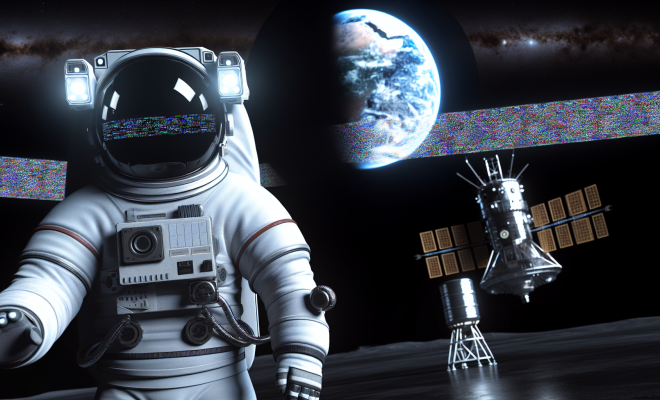
The Artemis II mission, a significant milestone in NASA’s goal to return humans to the Moon, is set to experience a brief but critical communication blackout as the spacecraft navigates the lunar environment. Scheduled for April 6, 2026, at approximately 4:17 AM IST, the crew aboard Artemis II will find themselves out of contact with mission control for a planned 40 minutes.

The Nature of the Blackout

This communication blackout is not an unexpected incident but rather a standard procedure during the mission’s flyby of the Moon. As the spacecraft travels behind the far side of the lunar surface, the Moon will obstruct all radio and laser signals that facilitate communication between the crew and mission control in Houston. During this period, the astronauts will be unable to receive instructions or updates from the ground, a situation that is crucial for understanding the challenges of deep space exploration.

Why Communication Blackouts Occur

Communication blackouts can occur for several reasons, particularly during space missions involving celestial bodies such as the Moon. The primary reason for this 40-minute blackout during Artemis II is the Moon’s physical obstruction. The following points highlight the significance and implications of such blackouts:

  • Geometric Limitations: The Moon’s position creates a natural barrier for radio waves and other forms of communication, making it impossible for signals to reach Earth.
  • Safety Protocols: The mission profile anticipates and prepares for these gaps in communication, allowing the crew to function autonomously during this time.
  • Historical Precedent: Similar blackouts have been experienced during past lunar missions, making them a well-understood aspect of space travel.

Preparedness of the Artemis II Crew

During the blackout period, the Artemis II astronauts will rely on their extensive training and preparation. The crew, consisting of four astronauts, has been trained to handle various scenarios, including communication failures. They will be equipped with the necessary protocols to ensure their safety and mission success while out of contact with Earth.

Mission Objectives and Responsibilities

The Artemis II mission aims to demonstrate NASA’s capabilities for crewed deep space exploration. The astronauts’ responsibilities during the blackout will include:

  • Monitoring Systems: Astronauts will continuously check spacecraft systems, ensuring all operations are running smoothly.
  • Conducting Experiments: The crew may engage in scientific experiments or observations that do not require direct communication with mission control.
  • Autonomous Decision-Making: In the absence of real-time instructions, astronauts will need to rely on their training to make decisions regarding the spacecraft’s operations.

The Importance of Artemis II

The Artemis II mission is more than just a lunar flyby; it is an essential step towards returning humans to the Moon and eventually exploring Mars. This mission will pave the way for Artemis III, which aims to land astronauts on the lunar surface by 2025. The Artemis program is designed to establish a sustainable human presence on the Moon by the end of the decade, allowing for ongoing scientific research and technology development.

The Broader Context of Space Exploration

As humanity pushes the boundaries of space exploration, missions like Artemis II become increasingly crucial. They provide insights into the challenges of long-duration spaceflight and the complexities of operating beyond Earth’s immediate environment. The planned blackout during this mission underscores the need for astronauts to be self-sufficient and capable of handling unexpected situations.

Future Implications

Looking ahead, the experiences gained from Artemis II and the handling of communication blackouts will inform future missions to Mars and beyond. Understanding how to operate independently during periods of communication loss will be vital as humankind sets its sights on the Red Planet.

In conclusion, while the 40-minute communication blackout during the Artemis II mission may seem daunting, it is a calculated aspect of the mission that allows astronauts to conduct their work autonomously. As NASA continues its preparations for this landmark journey, it is essential to appreciate the complexities involved in lunar exploration and the critical role that communication plays in the safety and success of space missions.


Previous Article

Artemis II Crew Shares Breathtaking Earth Views ...

Next Article

Astronomers Discover 33,000 Giant Hydrogen Halos from ...

Matthew Lynch

Related articles More from author

  • Tech News

    How to fix trackpad gestures not working

    June 24, 2026
    By Matthew Lynch
  • Tech News

    Zenefits vs Paycor features

    August 26, 2026
    By Matthew Lynch
  • Tech News

    Google Calendar desktop app download

    August 7, 2026
    By Matthew Lynch
  • Tech News

    Master Your Marathon: 7 Essential Training Tips

    July 1, 2026
    By Matthew Lynch
  • Tech News

    Snag a Windows 11 Pro License for Just $25 at StackSocial

    January 31, 2024
    By Matthew Lynch
  • Tech News

    Rogue Stradale: A High-Speed Adventure in Comic Book Realms

    April 4, 2026
    By Matthew Lynch

Search

Login & Registration

  • Log in
  • Entries feed
  • Comments feed
  • WordPress.org

Newsletter

Signup for The Tech Edvocate Newsletter and have the latest in EdTech news and opinion delivered to your email address!

About Us

Since technology is not going anywhere and does more good than harm, adapting is the best course of action. That is where The Tech Edvocate comes in. We plan to cover the PreK-12 and Higher Education EdTech sectors and provide our readers with the latest news and opinion on the subject. From time to time, I will invite other voices to weigh in on important issues in EdTech. We hope to provide a well-rounded, multi-faceted look at the past, present, the future of EdTech in the US and internationally.

We started this journey back in June 2016, and we plan to continue it for many more years to come. I hope that you will join us in this discussion of the past, present and future of EdTech and lend your own insight to the issues that are discussed.

Newsletter

Signup for The Tech Edvocate Newsletter and have the latest in EdTech news and opinion delivered to your email address!

Contact Us

The Tech Edvocate
910 Goddin Street
Richmond, VA 23231
(601) 630-5238
[email protected]

Copyright © 2026 Matthew Lynch. All rights reserved.