Third Galaxy Without Dark Matter Challenges Cosmic Theories
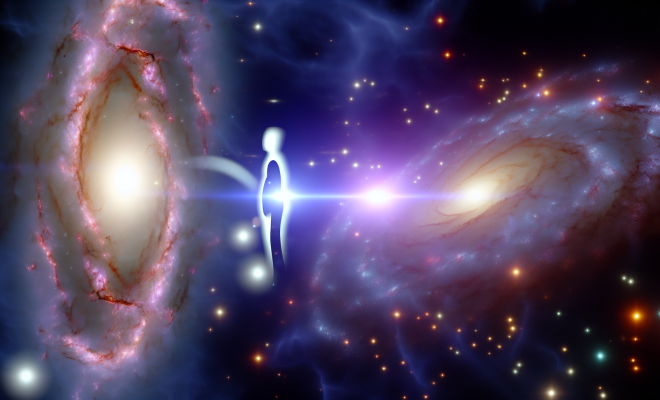
Astronomers have made a groundbreaking discovery, identifying a third galaxy that appears to be devoid of dark matter, a finding that lends significant credence to a theory suggesting that violent cosmic collisions can lead to the stripping away of this elusive substance. This revelation is not just an isolated incident; it supports a growing body of evidence that challenges conventional wisdom regarding galaxy formation and the role of dark matter in the fabric of our universe.
The Role of Dark Matter in the Universe
Dark matter is a theoretical form of matter that does not emit or interact with electromagnetic radiation, making it invisible and detectable only through its gravitational effects. It is estimated that dark matter constitutes about 27% of the universe’s total mass-energy content, playing a crucial role in the structure and behavior of galaxies. Typically, dark matter is thought to envelop galaxies, influencing their formation and evolution through gravitational attraction.
The Discovery of the Third Dark Matter-Less Galaxy
The latest galaxy to be identified without dark matter adds to the list of such galaxies, supporting a hypothesis that has been gaining traction in the astronomical community. Previously, two other galaxies—NGC 1052-DF2 and NGC 1052-DF4—were similarly found to lack dark matter, raising questions about the traditional models of galaxy formation. The identification of this third galaxy, reported in a recent study, reinforces the idea that under specific conditions, galaxies can lose their dark matter during interactions with other cosmic structures.
Insights from Cosmic Collisions
The theory positing that galactic interactions can strip dark matter from galaxies stems from the understanding that these cosmic collisions can be incredibly violent. When galaxies collide, their gravitational forces can disrupt the delicate balance of dark matter, leading to significant alterations in a galaxy’s structure. In particular, these violent encounters can result in the ejection of dark matter, leaving behind a galaxy that is primarily composed of visible matter.
Dr. Anna Franx, a prominent astrophysicist, stated, “The implications of this discovery are profound. It challenges our previous notions about the stability of dark matter within galaxies and opens up new avenues for research into how galaxies evolve over time. We are only beginning to understand the mechanisms that govern these cosmic interactions and their consequences for dark matter.”
Implications for Galaxy Formation Theories
This discovery carries significant implications for our understanding of galaxy formation. Traditional models suggest that dark matter is a fundamental building block for galaxies, providing the gravitational scaffolding necessary for visible matter to coalesce and form stars and planets. However, the existence of galaxies that are devoid of dark matter raises critical questions about how these structures can form and evolve without the presence of this crucial component.
As researchers delve deeper into the phenomenon, they are re-evaluating the processes that contribute to galaxy formation. The possibility that dark matter can be stripped away through galactic collisions suggests that the history of a galaxy may be more turbulent than previously thought. This has led to a shift in focus among astronomers, who are now considering the dynamics of galactic interactions as a key factor in shaping the characteristics of galaxies.
Future Research Directions
With three known galaxies lacking dark matter, the research community is poised to investigate further. Future studies will likely focus on:
- Identifying Additional Dark Matter-Less Galaxies: Astronomers will utilize advanced telescopes and observational techniques to search for more galaxies that fit this profile.
- Understanding the Mechanisms of Dark Matter Stripping: Researchers aim to model the conditions and interactions that lead to the loss of dark matter, adding to our understanding of galaxy dynamics.
- Revisiting Theoretical Frameworks: The findings may prompt a reevaluation of existing theories regarding dark matter and its role in the cosmos, potentially leading to new models of galaxy formation.
Conclusion
The discovery of a third galaxy missing its dark matter is a milestone in the field of astronomy, providing vital insights into the complex interplay between galaxies and the mysterious substance that is dark matter. As scientists continue to unravel the intricate tapestry of the universe, the implications of these findings could redefine our understanding of cosmic evolution. The journey to uncover the secrets of dark matter is just beginning, and with each new discovery, we move closer to understanding the true nature of our universe.