The Tech Edvocate

Top Menu

  • Advertisement
  • Apps
  • Home Page
  • Home Page Five (No Sidebar)
  • Home Page Four
  • Home Page Three
  • Home Page Two
  • Home Tech2
  • Icons [No Sidebar]
  • Left Sidbear Page
  • Lynch Educational Consulting
  • My Account
  • My Speaking Page
  • Newsletter Sign Up Confirmation
  • Newsletter Unsubscription
  • Our Brands
  • Page Example
  • Privacy Policy
  • Protected Content
  • Register
  • Request a Product Review
  • Shop
  • Shortcodes Examples
  • Signup
  • Start Here
    • Governance
    • Careers
    • Contact Us
  • Terms and Conditions
  • The Edvocate
  • The Tech Edvocate Product Guide
  • Topics
  • Write For Us
  • Advertise

Main Menu

  • Start Here
    • Our Brands
    • Governance
      • Lynch Educational Consulting, LLC.
      • Dr. Lynch’s Personal Website
      • Careers
    • Write For Us
    • The Tech Edvocate Product Guide
    • Contact Us
    • Books
    • Edupedia
    • Post a Job
    • The Edvocate Podcast
    • Terms and Conditions
    • Privacy Policy
  • Topics
    • Assistive Technology
    • Child Development Tech
    • Early Childhood & K-12 EdTech
    • EdTech Futures
    • EdTech News
    • EdTech Policy & Reform
    • EdTech Startups & Businesses
    • Higher Education EdTech
    • Online Learning & eLearning
    • Parent & Family Tech
    • Personalized Learning
    • Product Reviews
  • Advertise
  • Tech Edvocate Awards
  • The Edvocate
  • Pedagogue
  • School Ratings

logo

The Tech Edvocate

  • Start Here
    • Our Brands
    • Governance
      • Lynch Educational Consulting, LLC.
      • Dr. Lynch’s Personal Website
        • My Speaking Page
      • Careers
    • Write For Us
    • The Tech Edvocate Product Guide
    • Contact Us
    • Books
    • Edupedia
    • Post a Job
    • The Edvocate Podcast
    • Terms and Conditions
    • Privacy Policy
  • Topics
    • Assistive Technology
    • Child Development Tech
    • Early Childhood & K-12 EdTech
    • EdTech Futures
    • EdTech News
    • EdTech Policy & Reform
    • EdTech Startups & Businesses
    • Higher Education EdTech
    • Online Learning & eLearning
    • Parent & Family Tech
    • Personalized Learning
    • Product Reviews
  • Advertise
  • Tech Edvocate Awards
  • The Edvocate
  • Pedagogue
  • School Ratings
  • Cybersecurity vs. Green Energy: Which Path Will Make You Richer in 2026?

  • Why These 10 Renewable Energy Certifications Are Quietly Reshaping Careers by 2026

  • Why Millions Are Rushing to Online Renewable Energy Certifications Right Now

  • August AI vs. USMLE: The Unsettling Future of Medical Licensing

  • One AI’s Perfect USMLE Score Just Blew Up Medical Education As We Know It

  • This AI Just Aced the USMLE: Why Your Medical Career Might Never Be the Same

  • The Quiet Exodus: Why Senior FinTech Developers Are Abandoning Corporate Life

  • The Quiet Revolution: Where Elite FinTech Developers Are Fleeing in 2026

  • The Quiet Exodus: Why Senior FinTech Developers Are Ditching Corporate Life

  • AI Governance Software: Pricing and Features Comparison

Digital & Mobile Technology
Home›Digital & Mobile Technology›What is solid-state technology and how is it used?

What is solid-state technology and how is it used?
By Matthew Lynch
May 12, 2023
0
Spread the love

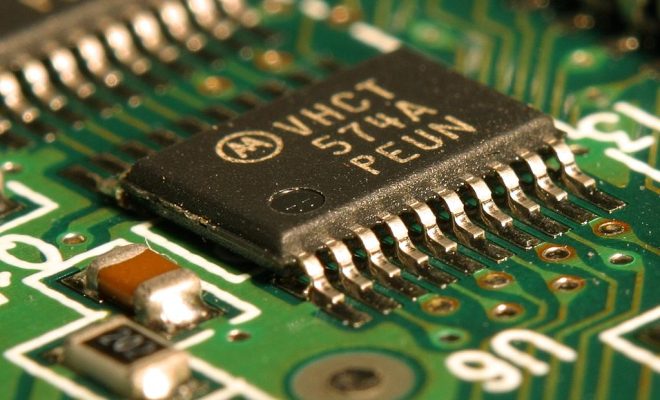
Solid-state technology has transformed the world of electronics over the past few decades. It has revolutionized the way we store information, communicate, and use energy. Solid-state technology involves the use of semiconductors, which are materials that exhibit electrical conductivity between that of conductors (such as copper and aluminum) and insulators (such as glass and rubber). Semiconductors are used to make devices such as transistors, diodes, and integrated circuits.

The main advantage of solid-state technology is its ability to perform various functions using a small amount of power. This is because many of the components used in solid-state devices do not have moving parts or rely on the flow of current to operate. Instead, they use the properties of the semiconductor material to perform various functions, such as storing data or amplifying a signal.

One example of solid-state technology is flash memory, which is commonly used in digital cameras, USB drives, and smartphones. Flash memory uses an electric field to trap and store electrons, which represent the data being saved. Unlike traditional hard disk drives, which use magnetism and spinning disks to store information, flash memory is faster, more reliable, and requires less power.

Another application of solid-state technology is in solar cells. Solar cells convert sunlight into electricity using semiconductors such as silicon. As the sunlight strikes the semiconductor material, it excites the electrons, which then flow through the material and generate a current. Unlike traditional solar panels, which are bulky and made of glass, solid-state solar cells can be much thinner and more flexible, allowing them to be used on portable devices and even clothing.

Solid-state technology is also used in the manufacture of microprocessors, which are the brains of computers and other electronic devices. Microprocessors are made up of millions of tiny transistors, each of which is only a few nanometers in size. These transistors are made of semiconductor material and can be turned on and off using a small amount of electricity. By arranging millions of these transistors in complex patterns, microprocessors can perform billions of calculations per second.


Previous Article

What is Software-Defined Infrastructure (SDI)?

Next Article

What is Solaris?

Matthew Lynch

Related articles More from author

  • Digital & Mobile Technology

    Fallout Shelter Tips for Vault Dwellers

    June 22, 2023
    By Matthew Lynch
  • Digital & Mobile Technology

    How to Update Meta (Oculus) Quest and Quest 2

    June 2, 2023
    By Matthew Lynch
  • Digital & Mobile Technology

    How to Animate in Blender

    September 8, 2023
    By Matthew Lynch
  • Digital & Mobile Technology

    How to Make Alexa Learn Your Voice

    April 29, 2023
    By Matthew Lynch
  • Digital & Mobile Technology

    Raspberry Pi Pico vs. ESP32: Which Microcontroller Is Right for You?

    June 26, 2023
    By Matthew Lynch
  • Digital & Mobile Technology

    How to Watch Hulu With Friends

    June 3, 2023
    By Matthew Lynch

Search

Login & Registration

  • Log in
  • Entries feed
  • Comments feed
  • WordPress.org

Newsletter

Signup for The Tech Edvocate Newsletter and have the latest in EdTech news and opinion delivered to your email address!

About Us

Since technology is not going anywhere and does more good than harm, adapting is the best course of action. That is where The Tech Edvocate comes in. We plan to cover the PreK-12 and Higher Education EdTech sectors and provide our readers with the latest news and opinion on the subject. From time to time, I will invite other voices to weigh in on important issues in EdTech. We hope to provide a well-rounded, multi-faceted look at the past, present, the future of EdTech in the US and internationally.

We started this journey back in June 2016, and we plan to continue it for many more years to come. I hope that you will join us in this discussion of the past, present and future of EdTech and lend your own insight to the issues that are discussed.

Newsletter

Signup for The Tech Edvocate Newsletter and have the latest in EdTech news and opinion delivered to your email address!

Contact Us

The Tech Edvocate
910 Goddin Street
Richmond, VA 23231
(601) 630-5238
[email protected]

Copyright © 2026 Matthew Lynch. All rights reserved.