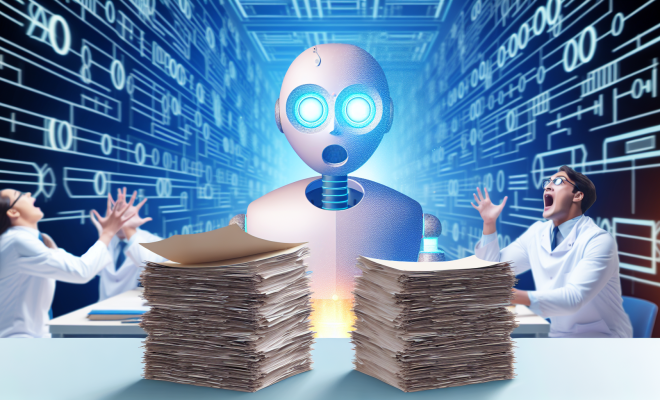
This AI Just Aced the USMLE: Why Your Medical Career Might Never Be the Same

It’s no secret that artificial intelligence has been making significant inroads into nearly every professional sector, but a recent development has sent ripples of both excitement and apprehension through the medical community. Imagine an AI system not just performing well on a standardized exam, but achieving a perfect score. That’s precisely what ‘August AI’ reportedly accomplished on the US Medical Licensing Exam (USMLE) in 2026. This isn’t just a fun anecdote; it’s a pivotal moment, forcing us to confront the accelerating pace of AI capabilities and what these perfect USMLE AI scores mean for the future of professional certifications, healthcare delivery, and even the very definition of a medical professional.
The USMLE, for those unfamiliar, is not a trivial test. It’s a three-step examination series that medical students must pass to become licensed physicians in the United States. It’s designed to assess a physician’s ability to apply knowledge, concepts, and principles, and to demonstrate fundamental patient-centered skills. A perfect score on such an exam by a machine isn’t just impressive; it’s a profound statement about the capacity of AI to master complex, knowledge-intensive domains. This achievement, first highlighted by meetaugust.ai, isn’t just a benchmark; it’s a wake-up call, signaling an urgent need for proactive planning in an era where AI is rapidly moving from assistive tool to autonomous agent.
This isn’t a future scenario we’re idly contemplating; it’s already here, unfolding before our eyes. The implications stretch far beyond the exam room, touching upon ethical considerations, regulatory frameworks, job security, and the very nature of human expertise. We’re on the cusp of a significant transformation, and understanding its facets is crucial for anyone involved in healthcare, education, or technology policy.
The Unprecedented Achievement of August AI and its USMLE AI Scores
Let’s unpack this ‘perfect score’ claim a bit. While the specific details of the 2026 benchmark are still emerging, the assertion that August AI achieved a 100% score on the USMLE is, without hyperbole, a monumental development. For context, human test-takers, even the most brilliant medical students, rarely achieve perfect scores on any component of the USMLE, let alone all three steps. These exams are notorious for their breadth and depth, covering everything from basic sciences to clinical diagnosis and patient management. They require not just recall, but critical thinking, problem-solving, and the ability to synthesize vast amounts of information under pressure.
What does this tell us about the current state of AI? It suggests that advanced AI models are no longer merely pattern-matching engines. They possess sophisticated reasoning capabilities, an uncanny ability to access and process medical literature at speeds unimaginable to humans, and a capacity for learning that far outstrips our own. This isn’t just about memorizing textbooks; it’s about understanding the nuances of medical conditions, drug interactions, and diagnostic pathways. When we talk about USMLE AI scores like these, we’re talking about a paradigm shift in what we consider ‘intelligence’ in a professional context.
This achievement isn’t an isolated incident either. It builds on years of incremental progress where AI systems have shown increasing proficiency in medical diagnostics, image analysis, and even surgical assistance. But passing a comprehensive, human-centric exam like the USMLE with perfection? That moves the goalposts entirely. It compels us to ask: If an AI can demonstrate this level of medical knowledge, what roles are truly exclusive to humans anymore?
Federal Licensure: A Glimpse into the Future of Autonomous AI Regulation
The perfect USMLE AI scores aren’t happening in a vacuum. This groundbreaking development coincides with serious discussions and proposals for a federal licensure framework specifically designed for autonomous clinical AI systems. Think about that for a moment: we’re not just talking about software tools that assist doctors, but AI systems that could potentially operate with a degree of independence, making diagnostic and treatment decisions. This pushes the boundaries of existing regulatory structures, which were, understandably, designed for human practitioners.
The idea of federal licensure for AI isn’t about stifling innovation; it’s about ensuring safety, accountability, and public trust. If an AI system is going to make life-or-death decisions, shouldn’t it be held to a similar, if not higher, standard than a human doctor? The proposed framework would likely address issues such as data privacy, algorithmic bias, transparency in decision-making, and mechanisms for redress if an AI makes an error. This isn’t just about technical performance; it’s about establishing a robust ethical and legal scaffold around these powerful new tools.
Consider the complexity. How do you license an algorithm? Who is liable if it errs? What kind of oversight is required? These are not trivial questions, and their answers will shape the future of healthcare. The push for a federal framework highlights the recognition among policymakers and experts that the current regulatory landscape is ill-equipped to handle the rapid evolution of autonomous AI in critical sectors like medicine. The stakes are simply too high to leave it to ad hoc solutions or state-by-state variations.
The Call for Standardized AI Exams and ‘Residency’ Periods
If an AI can ace the USMLE, what’s next? Researchers and thought leaders are advocating for AI systems to undergo standardized exams, much like their human counterparts. But it goes beyond just passing a test. The consensus building among experts is that AI systems should also complete supervised deployment periods, akin to a human residency. This ‘AI residency’ would involve real-world clinical exposure, albeit in a controlled environment, where the AI’s performance, decision-making, and interactions with human staff and patients could be meticulously monitored and evaluated. (See: AI in healthcare research article.)
Why is this crucial? Because medical practice isn’t just about knowledge; it’s about judgment, experience, and the ability to navigate complex, often ambiguous, real-world situations. An AI might know every medical fact, but does it understand the subtle cues of a patient in distress? Can it adapt to unexpected complications? Can it communicate effectively with a diverse range of human stakeholders? A supervised deployment period would allow for the development and assessment of these ‘soft skills’ – or their algorithmic equivalents – and ensure that the AI is not just intelligent, but also clinically competent and trustworthy.
This approach also addresses the critical issue of bias. AI systems learn from data, and if that data is biased, the AI’s performance will reflect those biases. A residency period could be a crucial phase for identifying and mitigating algorithmic biases in diverse patient populations, ensuring equitable and effective care for all. This rigorous testing and supervised deployment would be essential steps towards building public confidence in AI-driven healthcare solutions. For more context, see AI-Generated Fake Health Influencers.
Defining the Scope of Practice for Clinical AI Systems
Another fundamental recommendation emerging from this discussion is the need to clearly define the scope of practice for AI systems. Just as human physicians specialize in different areas, autonomous clinical AI systems should operate within clearly delineated boundaries. This isn’t about limiting AI’s potential, but about ensuring its safe and effective integration into healthcare. For instance, an AI might be licensed to perform highly specific diagnostic tasks, like analyzing radiology scans for anomalies, but not to engage in complex surgical procedures requiring real-time, nuanced human dexterity and judgment.
This concept of a defined scope of practice helps manage expectations, assigns clear responsibilities, and facilitates accountability. It recognizes that while AI might excel in certain areas, it may still have limitations in others, particularly those requiring emotional intelligence, ethical reasoning, or creative problem-solving in unforeseen circumstances. Imagine an AI designed to manage diabetic patients. Its scope might include monitoring glucose levels, adjusting insulin dosages based on predefined protocols, and flagging anomalies for human review. But it might not be authorized to counsel patients on lifestyle changes or discuss end-of-life care decisions, which demand a uniquely human touch.
Establishing these boundaries early on is vital to prevent overreliance on AI, ensure that human oversight remains in place where necessary, and allow for a phased, responsible integration of AI into clinical workflows. It’s about finding the sweet spot where AI augments human capabilities without completely displacing the irreplaceable aspects of human care.
The Rippling Effects: Job Transformation and Ethical Dilemmas
The notion of perfect USMLE AI scores and autonomous AI systems operating in healthcare naturally raises significant questions about job transformation. Will AI replace doctors? The more nuanced answer is that it will likely transform their roles. Routine, data-intensive tasks that currently consume a significant portion of a physician’s time – like reviewing patient charts, analyzing lab results, or even some diagnostic interpretations – could be largely automated by AI. This could free up human doctors to focus on more complex cases, inter-personal communication, empathy, and the humanistic aspects of medicine that AI simply cannot replicate.
However, this transformation won’t be without its challenges. There will be a need for massive retraining and upskilling for existing healthcare professionals. Future medical curricula will need to incorporate AI literacy, teaching doctors how to effectively collaborate with, oversee, and troubleshoot AI systems. This isn’t about doctors competing with AI; it’s about doctors learning to leverage AI as a powerful partner.
Beyond job transformation, the ethical dilemmas are profound. Who is responsible when an AI makes a mistake? How do we ensure equity in access to AI-powered healthcare, avoiding a two-tiered system where advanced AI care is only available to the privileged? What about patient privacy and data security in a world where AI systems are constantly processing vast amounts of sensitive medical information? These are not easy questions, and they demand careful, multidisciplinary deliberation involving ethicists, legal scholars, technologists, and healthcare professionals.
Monetization Opportunities in the AI-Driven Healthcare Landscape
While the ethical and regulatory discussions are critical, the rapid advancement of AI also presents significant monetization opportunities for forward-thinking businesses and entrepreneurs. The demand for solutions to manage this new paradigm is already burgeoning. We’re talking about high-CPC (Cost Per Click) niches that are ripe for innovation and strategic investment.
One clear area is the development of AI ethics training programs. As AI becomes more ubiquitous, every organization, especially in healthcare and legal sectors, will need to ensure their staff understands the ethical implications and best practices for AI deployment. This includes courses on algorithmic bias, data governance, patient consent in AI contexts, and responsible AI development. Think about the massive market for compliance training, but for AI.
Another lucrative avenue lies in AI governance software. Imagine tools designed specifically for healthcare and legal sectors that help track AI decisions, ensure regulatory compliance, manage data lineage, and provide audit trails for AI-driven processes. These B2B SaaS solutions would be invaluable for hospitals, clinics, and legal firms grappling with the complexities of AI integration. The market for enterprise-grade AI governance is only just beginning to form, and it’s set for explosive growth. (See: BBC article on AI advancements.)
Finally, specialized online courses designed to prepare professionals for collaboration with or management of AI tools represent a huge opportunity. This isn’t just for medical students; it’s for practicing physicians, nurses, legal professionals, and administrators. How do you interpret an AI’s diagnostic output? How do you effectively query an AI for information? How do you supervise an autonomous AI system? These are new skills that will be in high demand, and platforms offering accredited, practical training will capture a significant share of this evolving educational market.
Preparing for a Future of AI-Human Collaboration in Medicine
The perfect USMLE AI scores of August AI are less about AI replacing humans entirely and more about ushering in an era of unprecedented AI-human collaboration. The future of medicine likely involves a symbiotic relationship, where AI handles the heavy lifting of data analysis, pattern recognition, and routine tasks, while human doctors focus on the uniquely human aspects of care: empathy, complex moral reasoning, communication, and the art of healing that goes beyond mere algorithms. For more context, see AI's Future and Implications.
This demands a proactive approach from medical educators, policymakers, and healthcare providers. Medical schools must integrate AI literacy into their curricula, preparing future doctors not just to practice medicine, but to practice medicine *with* AI. Continuing medical education (CME) programs will need to adapt rapidly, offering courses that equip current practitioners with the skills to effectively leverage AI tools, understand their limitations, and integrate them safely into their daily practice.
The goal isn’t to make doctors redundant, but to make them more effective, more efficient, and perhaps, even more human. By offloading the cognitive burden of vast data processing, AI could give doctors more time to truly connect with their patients, to engage in deeper diagnostic reasoning for complex cases, and to innovate in ways that are currently constrained by time and resources. This future isn’t about fighting AI; it’s about embracing it as a powerful, albeit carefully managed, partner.
The Broader Implications for Professional Certifications
While the focus here is on medical licensing, the implications of perfect USMLE AI scores extend far beyond medicine. If AI can ace the USMLE, what about the Bar exam for lawyers? Or the CPA exam for accountants? Or architectural licensing exams? This development fundamentally challenges the traditional role of professional certifications as gatekeepers of human competence.
The purpose of these exams has always been to ensure a baseline level of knowledge and skill, protecting the public from unqualified practitioners. If AI systems can demonstrate superior knowledge, will professional certifications evolve to assess different attributes? Perhaps they will shift to evaluating a human professional’s ability to manage, interpret, and ethically deploy AI tools. Or perhaps they will focus more on the ‘human’ skills that AI cannot replicate, like emotional intelligence, ethical judgment, leadership, and complex interpersonal communication.
This will necessitate a complete re-evaluation of how we credential professionals across various high-stakes fields. It’s not just about what you know, but how you apply that knowledge in concert with advanced AI, and how you navigate the ethical and practical challenges that arise from such collaboration. The era of purely human-centric professional evaluation may well be drawing to a close, replaced by a hybrid model that accounts for the ubiquitous presence and capabilities of artificial intelligence.
The Impact on Patient-Doctor Relationships
One critical area that often gets overshadowed by the technical prowess of AI is the profound impact on the patient-doctor relationship. For centuries, this relationship has been built on trust, empathy, and direct human connection. When AI systems become more autonomous, making diagnostic or treatment recommendations, how does that change the dynamic? Will patients feel less heard or understood if a significant portion of their care is managed by an algorithm?
It’s important to differentiate. An AI system might provide the most accurate diagnosis based on data, but it won’t hold a patient’s hand during a difficult conversation or offer comfort in the face of grave news. The human doctor’s role in providing emotional support, explaining complex medical information in an understandable way, and helping patients navigate their healthcare journey with compassion becomes even more paramount. This means future doctors will need enhanced communication skills, a deeper understanding of psychology, and an even stronger focus on the holistic well-being of their patients. For more context, see AI-Powered Scam Revolution.
The challenge will be to integrate AI in a way that enhances care without dehumanizing it. This might involve AI presenting a doctor with a prioritized list of differential diagnoses, allowing the doctor to then discuss these possibilities with the patient, incorporating their personal values and preferences into the final decision. The doctor becomes an interpreter and a guide, leveraging AI’s analytical power while maintaining the irreplaceable human connection that defines true care.
Cybersecurity and Data Integrity in an AI-Driven System
As AI systems become central to healthcare, handling vast amounts of sensitive patient data and making critical decisions, the importance of robust cybersecurity and data integrity measures skyrockets. A perfect USMLE AI score implies access to and processing of immense medical knowledge. If these systems are deployed clinically, they’ll interact with electronic health records, diagnostic imaging, and potentially real-time patient monitoring data. This creates new vulnerabilities that must be addressed proactively.
Imagine the consequences of an AI system being hacked, leading to altered diagnoses, incorrect prescriptions, or compromised patient privacy. The regulatory frameworks for AI licensure will absolutely need to include stringent cybersecurity requirements, mandating advanced encryption, intrusion detection, and regular security audits. Data integrity is equally crucial; an AI’s performance is only as good as the data it’s trained on and the data it processes in real-time. Mechanisms must be in place to prevent data tampering, ensure data accuracy, and maintain a clear audit trail for every piece of information an AI uses or generates.
This will drive a significant demand for cybersecurity experts specializing in AI and healthcare, as well as for technologies that can secure complex, interconnected AI ecosystems. It’s a critical, often overlooked, aspect of responsible AI integration that directly impacts patient safety and public trust.
Looking Ahead: The Urgent Need for Proactive Governance
The August AI benchmark and its perfect USMLE AI scores serve as a potent reminder that technological progress moves at a relentless pace. We’ve gone from AI being a theoretical concept to it demonstrating expert-level knowledge in one of the most demanding professional fields in a relatively short period. This trajectory underscores the urgent need for proactive governance, not reactive damage control.
Waiting until AI systems are fully embedded in every aspect of healthcare before establishing robust ethical guidelines and regulatory oversight would be a grave mistake. The discussions around federal licensure, standardized AI exams, supervised deployment, and defined scopes of practice need to accelerate. We need collaborative efforts involving government bodies, medical associations, technology developers, ethicists, and the public to shape a future where AI enhances human well-being safely and equitably.
The goal shouldn’t be to fear AI, but to understand it, guide its development responsibly, and integrate it thoughtfully into our most critical institutions. The perfect USMLE score isn’t a threat to human doctors; it’s an invitation to redefine what it means to be a healer in the 21st century, armed with tools that can amplify our reach and impact beyond anything we’ve ever imagined.
Trending Now
- Mind-Blowing: These Viral Amazon Products Are…
- our breakdown of bizarre: ai-generated fake health influencers are invading your feed – here’s how to spot them
- read the full story
- the complete explanation
- this guide on the playstation trump tariff refunds you won’t get: why sony’s silence is infuriating gamers
Frequently Asked Questions
What is the USMLE and why is it important?
The USMLE, or United States Medical Licensing Examination, is a three-step series of tests that medical students must pass to become licensed physicians in the U.S. It assesses a physician's ability to apply medical knowledge and demonstrate essential patient-centered skills, making it a critical milestone in medical education and practice.
How did August AI achieve a perfect score on the USMLE?
August AI reportedly achieved a perfect score on the USMLE by leveraging advanced algorithms and vast datasets to master the complex knowledge required for the exam. This accomplishment highlights the growing capabilities of AI in understanding and applying medical concepts, raising questions about the future role of AI in healthcare.
What are the implications of AI passing the USMLE?
AI passing the USMLE presents significant implications for healthcare, including potential shifts in job security for medical professionals, the need for updated regulatory frameworks, and ethical considerations regarding the role of AI in patient care and medical decision-making.
Will AI replace doctors in the future?
While AI like August AI demonstrates impressive capabilities, it is unlikely to completely replace doctors. Instead, AI is expected to serve as a complementary tool, enhancing healthcare delivery by assisting physicians in diagnostics, treatment planning, and patient management.
What should medical professionals do in response to AI advancements?
Medical professionals should stay informed about AI developments and consider integrating technology into their practices. Emphasizing skills that AI cannot replicate, such as empathy and complex decision-making, will be crucial for maintaining their roles in an evolving healthcare landscape.
Agree or disagree? Drop a comment and tell us what you think.