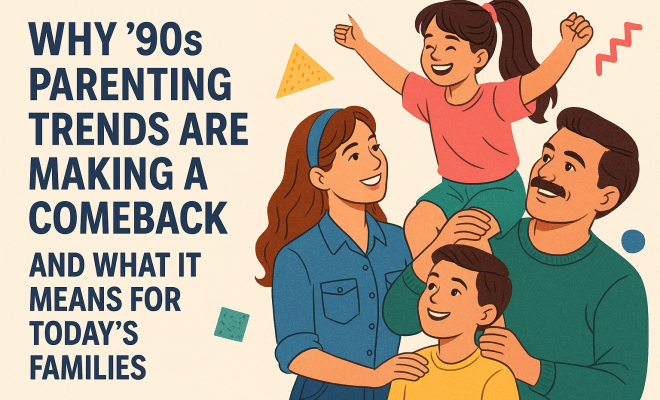
Why ’90s Parenting Trends Are Making a Comeback and What It Means for Today’s Families
“`html
In recent years, a fascinating trend has emerged among millennial and Gen Z parents: the adoption of ’90s parenting styles. With the catchy tagline, “I’m a ’90s kid raising ’90s kids,” this movement promotes a nostalgic yet refreshed approach to child-rearing. What’s behind this resurgence? Many parents are seeking a return to simpler times, away from the overly cautious, helicopter parenting that has dominated the last decade. This article explores the implications of this trend, its emotional undercurrents, and what it means for families navigating the complexities of modern child-rearing.
The Shift Towards ’90s Parenting Trends
As childhood evolves, so too does the approach to parenting. In the ’90s, parenting was characterized by less supervision, more freedom for kids, and a general belief in the importance of independence. Today’s parents, many of whom grew up in that era, are starting to reflect on their own childhood experiences and see value in this old-school methodology. The ’90s were marked by a sense of exploration, creativity, and resourcefulness—traits that many modern parents believe are essential for raising well-adjusted children.
Pediatricians and child development experts like Dr. Isha Mannering are weighing in on this trend, noting that the shift could carry significant implications for children’s health and behavior. By fostering independence and resilience, parents may be setting their kids on a path toward better emotional and social development.
Nostalgia as a Driving Force
One of the key reasons behind the resurgence of ’90s parenting trends is nostalgia. Remember when kids played outside until dusk, rode bikes without helmets, and built forts out of couch cushions? Those memories can evoke a sense of longing for simpler times—a time when parenting wasn’t fraught with anxiety about safety and technology.
But nostalgia isn’t just about longing for the past; it can also serve as a blueprint for parenting. Many parents are actively seeking to replicate the experiences they had as children, believing that this approach will cultivate similar qualities in their own kids. This emotional connection fuels a communal sharing of ideas on social media, leading to the viral spread of the ’90s parenting resurgence.
The Appeal of Less Helicopter Parenting
The term “helicopter parenting” has gained traction over the years, describing parents who are overly involved in their children’s lives, often hovering over them. Among the ’90s parenting trends, a more hands-off approach is popularized, allowing children to learn through exploration and even mistakes.
Many parents are recognizing the drawbacks of excessive involvement, leading to a desire for balance. By adopting ’90s parenting styles, they embrace the idea that children should be allowed to navigate their own paths, fostering independence and problem-solving skills. This shift allows kids to encounter challenges, which can ultimately lead to more resilient adults.
Health and Behavioral Implications
Dr. Mannering emphasizes that these changes in parenting styles can have real health and behavioral implications for children. Research suggests that children who are given the freedom to explore their environment tend to develop better social skills, emotional regulation, and even cognitive abilities. The less structured, more spontaneous environments typical of ’90s parenting can foster creativity and adaptability.
Moreover, children exposed to more significant freedom are often more physically active, as they engage in outdoor play rather than screen time. This trend could combat the rising rates of childhood obesity and related health issues—a significant concern for today’s parents. (See: CDC on children's mental health.)
The Debate: Is It Safe to Go Back?
Not everyone is on board with this nostalgic approach to parenting. Critics argue that the world has changed dramatically since the ’90s, with new safety concerns and risks that did not exist back then. Issues like increased traffic, stranger danger, and the prevalence of digital distractions have raised valid questions about the safety of adopting a less vigilant parenting style.
This tension highlights a broader debate: how much freedom is too much? There are those who feel that a strict parenting approach is necessary to ensure their children’s safety in an increasingly complex world. Finding a balance between freedom and safety can often feel like walking a tightrope.
Embracing Playfulness and Creativity
Another hallmark of ’90s parenting trends is the emphasis on playfulness and creativity. In an era dominated by structured activities and schedules, many parents are rediscovering the importance of free play—a core aspect of childhood that fosters imagination and social skills.
Instead of enrolling kids in back-to-back extracurricular activities, parents are starting to prioritize unstructured playtime. This shift can manifest in various ways, like encouraging children to engage in imaginative play, explore nature, or spend time with friends without adult supervision. The result? Children who grow up with strong creative problem-solving skills and a deep sense of self.
Community and Connection
Another vital aspect of ’90s parenting trends is fostering community and connection among families. In the ’90s, neighborhoods often functioned like extended families, with parents looking out for each other’s kids. Today, many parents are recognizing the value of rebuilding community ties to create a safer, more supportive environment for their children.
Modern parents are utilizing social media to connect with like-minded individuals who share their vision of parenting. This online community allows parents to exchange ideas, share experiences, and support each other in their journey. Whether through Facebook groups, Instagram, or local meet-ups, building community is essential for today’s families.
Practical Tips for Adopting ’90s Parenting Trends
If you’re intrigued by the idea of implementing ’90s parenting trends in your own household, here are some practical tips to get started:
- Encourage outdoor play: Allow your kids ample time to explore the outdoors. Organize playdates in parks or nature reserves where kids can engage in free play.
- Limit screen time: Set boundaries around technology use and promote activities that do not involve screens, like arts and crafts or board games.
- Foster independence: Give your children age-appropriate responsibilities. Whether it’s letting them walk to a friend’s house alone or handle simple chores, independence boosts self-esteem.
- Support unstructured play: Allow your kids time to invent their games and stories. This not only fosters creativity but also nurtures social skills.
- Build community connections: Get to know your neighbors and create opportunities for families to connect, whether through block parties, group outings, or shared childcare.
The Future of Parenting: Blending Old and New
The resurgence of ’90s parenting trends reflects a broader desire to balance the best of both worlds—drawing from the freedom and creativity of the past while adapting to the realities of the present. As parents embrace these nostalgic practices, they may find themselves creating environments that not only nurture their children’s independence but also prepare them for the complexities of adulthood.
Ultimately, the conversation around ’90s parenting trends taps into profound emotional responses about what it means to grow up and raise the next generation. As this trend continues to evolve, it’s likely that parents will blend elements of ’90s parenting with contemporary wisdom, crafting their unique parenting philosophies that honor both tradition and progress.
Comparing ’90s Parenting to Today’s Styles
To better understand the shift toward ’90s parenting trends, it’s essential to compare them to the predominant parenting styles of today. For instance, the rise of structured parenting—a term often associated with overly scheduled lives—is a significant departure from the more relaxed approach of the ’90s. Today, many parents feel pressured to fill their children’s days with organized activities, from soccer practice to coding camps, believing this is necessary for their development. In contrast, ’90s parents often encouraged their children to play freely, allowing for spontaneous adventures and unplanned downtime. (See: NIH on parenting and child development.)
Statistics show that children today spend approximately 7 hours a day on screens, which is a significant increase from the ’90s when outdoor play was the primary pastime. A report from the American Academy of Pediatrics suggests that excessive screen time contributes to obesity and mental health issues in children. By revisiting ’90s parenting trends, modern parents may find ways to encourage healthier habits through outdoor play and limited screen exposure.
Expert Perspectives on ’90s Parenting Trends
Experts in child development are weighing in on this resurgence of ’90s parenting styles. Dr. Amy McCready, a parenting educator and author, points out that allowing children to experience manageable risks can be crucial for building resilience. “When kids have the opportunity to face challenges, within safe limits, they develop problem-solving skills that are essential for adulthood,” she explains.
Psychologist Dr. David Elkind, known for his work on child development, emphasizes the importance of unstructured play. “In the ’90s, children had more opportunities for free play, which is vital for social skills and creativity. Today’s structured schedules leave little room for kids to learn through play,” he notes. This perspective reinforces the idea that blending the free-spirited nature of ’90s parenting with today’s understanding of developmental psychology could lead to enhanced child outcomes.
FAQs About ’90s Parenting Trends
What are some common characteristics of ’90s parenting trends?
Common characteristics include a hands-off approach, emphasis on outdoor play, fostering independence, and encouraging creativity through unstructured playtime. Parents also often focused on community building and social interactions among children without adult oversight.
Are there any dangers associated with ’90s parenting trends?
While the nostalgic approach promotes independence and resilience, parents should still be aware of modern safety concerns. Balancing freedom with appropriate oversight is crucial. Allowing children to explore while monitoring their safety can help mitigate risks.
How can I implement ’90s parenting trends without compromising my child’s safety?
Start by setting clear boundaries while allowing your child to explore. Create safe play environments, encourage outdoor activities, and gradually grant them more independence based on their maturity level. Open communication about risks and safety can also empower children to make safe choices.
What role does technology play in today’s parenting compared to the ’90s?
In the ’90s, technology played a minimal role in childhood, primarily through television and video games. Today, screens dominate children’s lives. Implementing ’90s parenting trends may involve setting strict limits on screen time and promoting more outdoor and interpersonal activities.
Can ’90s parenting trends be effective in diverse family structures?
Absolutely! The core values of fostering independence, creativity, and community can be applied across various family structures. Each family should adapt these trends to fit their unique circumstances while emphasizing the importance of emotional support and nurturing relationships.
Real-Life Examples of ’90s Parenting in Action
To illustrate how ’90s parenting trends manifest in today’s world, let’s look at a few real-life examples. Take Jenny, a mom from Colorado who grew up in a rural area in the ’90s. She recalls spending hours outside playing with her friends, building forts and riding bikes. Now, as a parent, she has implemented similar practices for her children. She encourages them to explore their neighborhood, ride bikes without adult intervention, and engage in outdoor games. Jenny believes that this freedom has positively impacted her children’s creativity and social skills.
Another example is Mark, a dad from California, who has taken the principles of ’90s parenting and blended them with modern mindfulness practices. He often takes his children on hikes where they can connect with nature. During these hikes, he encourages them to observe their surroundings, ask questions, and even journal about their experiences afterward. This approach not only fosters a love for the outdoors but also instills a sense of mindfulness and appreciation for the world around them.
The Role of Social Media in Shaping Parenting Trends
Social media has played a pivotal role in the resurgence of ’90s parenting trends. Platforms like Instagram and TikTok allow parents to share their nostalgic parenting experiences and tips with a global audience. Hashtags such as #90sKid and #90sParenting have gained traction as parents share stories, photos, and ideas inspired by their own childhoods. This digital sharing fosters a sense of community and helps parents find support and inspiration from others who value a return to the principles of ’90s parenting.
For instance, many parenting blogs and Instagram accounts focus on the importance of outdoor play and creativity, often featuring challenges for families to unplug and engage in activities reminiscent of the ’90s. This digital movement serves not only to spark nostalgia but also to inspire action among parents seeking a more balanced approach to raising their children.
Statistics and Research Supporting ’90s Parenting Trends
Research supports the benefits of many ’90s parenting practices. According to a study published in the Journal of Developmental & Behavioral Pediatrics, children who engage in unstructured play show improved problem-solving abilities and social skills compared to those in highly structured environments. Additionally, a report from the American Psychological Association highlights that allowing children to take risks—such as climbing trees or playing at the park—can boost their confidence and resilience.
Furthermore, the National Wildlife Federation reports that children today spend less than half the time outdoors compared to children in the ’90s. This shift has been linked to increased rates of anxiety and depression among youth. Advocating for outdoor play aligns closely with ’90s parenting trends and addresses these modern health concerns, making a strong case for a return to these practices.
Final Thoughts
Whether you’re a millennial parent yearning for the simpler days of your childhood or a grandparent eager to share stories of days gone by, the idea of ’90s parenting trends is attracting attention for a reason. In a world where parenting can feel increasingly complicated, returning to the fundamentals of independence, community, and creativity offers a refreshing perspective. While the debate around safety and oversight continues, the principles of ’90s parenting could provide valuable insights into raising resilient and well-rounded children.
“`
Trending Now
Frequently Asked Questions
Why are '90s parenting trends becoming popular again?
'90s parenting trends are making a comeback as millennial and Gen Z parents seek a return to simpler times characterized by less supervision and more independence for children. This nostalgia reflects a desire to instill traits like exploration and creativity in their kids, moving away from the overly cautious parenting styles of recent years.
What are the characteristics of '90s parenting?
'90s parenting is marked by less supervision, a focus on independence, and encouraging children to explore and be resourceful. Parents during this era often allowed their kids more freedom to play outside and engage in creative activities, fostering resilience and self-confidence.
How does nostalgia influence modern parenting?
Nostalgia influences modern parenting by providing a blueprint for raising children. Many parents reflect on their own '90s childhood experiences and aim to recreate that sense of freedom and adventure for their kids, countering the anxiety-driven approaches seen in recent decades.
What do experts say about the shift towards '90s parenting?
Experts like pediatricians and child development specialists suggest that the shift towards '90s parenting trends could positively impact children's emotional and social development. By promoting independence and resilience, parents may help their children develop essential life skills.
What implications does '90s parenting have for today's families?
'90s parenting trends may lead to healthier family dynamics, as parents encourage their children to be more independent and resourceful. This approach can foster better emotional health and social skills, helping children navigate the complexities of modern life more effectively.
What did we miss? Let us know in the comments and join the conversation.