Why Millions Are Ditching Human Advisors for WealthAI Right Now
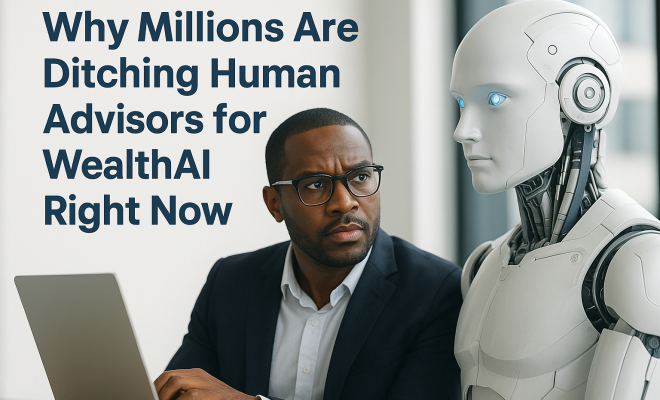
You’ve probably noticed the buzz, right? AI isn’t just writing poetry or cracking jokes anymore; it’s stepping into some serious territory, particularly when it comes to your money. We’re talking about a dramatic shift in how people manage their wealth, moving from the familiar, often slow, human-centric approach to something far more automated and, dare I say, efficient. The arrival of platforms like WealthAi, with its new suite of AI agents designed to fully automate client onboarding and Know Your Customer (KYC) processes, isn’t just an incremental improvement; it’s a seismic event in the financial world. This isn’t just about making things a little faster; it’s about fundamentally reshaping the relationship between you, your money, and the experts (or algorithms) guiding it.
It’s a fascinating time, isn’t it? For decades, wealth management has been synonymous with personal relationships, lengthy meetings, and a handshake. Now, the very fabric of that tradition is being challenged by artificial intelligence. We’re seeing tools like OpenAI’s ChatGPT expanding its personal finance features, offering everything from budgeting help to investment insights and even credit monitoring. This isn’t just theoretical; it’s already impacting real people’s finances. Data suggests that AI robo-advisors are statistically outperforming human-managed funds, with an average edge of 2.1% by 2026. And get this: a staggering 58% of Americans are already leaning on AI for financial advice. That’s a massive endorsement, and it really makes you wonder about the future of WealthAi vs traditional wealth management. Let’s dive deep into what this all means for you and your money.
1. The Speed of Onboarding: From Weeks to Minutes
Think back to the last time you opened a new financial account. Remember the stacks of forms, the endless questions, the identity verification documents you had to gather? It could take days, sometimes even weeks, to get fully set up with a traditional wealth manager. Each step—from initial contact to risk assessment, suitability checks, and the all-important Know Your Customer (KYC) process—was often a manual, sequential affair. Documents would be mailed, signatures would be required in person or via snail mail, and any discrepancies meant delays. It was a process designed for a different era, one where digital efficiency wasn’t even a glimmer in anyone’s eye.
Now, imagine that entire convoluted process being condensed into a matter of minutes. That’s the promise of WealthAi. Their AI agents are built to handle the entire client onboarding and KYC process end-to-end, automatically. This isn’t just about digitizing existing forms; it’s about intelligent automation that can verify identities, assess risk profiles, and complete regulatory checks almost instantaneously. For clients, this means less waiting, less paperwork, and a far smoother entry into managing their wealth. For wealth managers, it translates into significant operational cost savings and the ability to scale their client base without proportionally increasing their administrative burden. It’s a win-win, really, and a stark contrast when you compare WealthAi vs traditional wealth management.
2. Accuracy and Compliance: A New Standard
In traditional wealth management, the accuracy of client data and compliance with regulatory requirements largely depend on human diligence. While advisors and their support staff are trained professionals, human error is an unavoidable reality. A missed detail, a misfiled document, or an oversight in a complex regulatory framework can lead to significant issues, from fines and reputational damage for the firm to financial detriment for the client. The KYC process, in particular, is a minefield of potential compliance breaches if not handled meticulously. Anti-money laundering (AML) and counter-terrorist financing (CTF) regulations are constantly evolving, making it a perpetual challenge for human-led teams to stay perfectly compliant.
WealthAi’s AI agents, however, introduce a new standard for accuracy and compliance. These systems are programmed to follow regulatory guidelines precisely, without fatigue or oversight. They can cross-reference data points from multiple sources, flag inconsistencies, and ensure that every required piece of information is collected and verified according to the latest legal mandates. This significantly reduces the risk of human error and enhances the overall integrity of the onboarding process. For clients, this means greater peace of mind, knowing their financial profiles are accurately recorded and their accounts are compliant with all necessary regulations. This level of automated, unwavering precision is a key differentiator in the WealthAi vs traditional wealth management debate.
3. Personalization at Scale: Beyond Human Limits
One of the long-standing arguments for traditional wealth management has been the deeply personal relationship forged between an advisor and their client. A human advisor can understand nuances, empathize with life changes, and tailor advice based on a holistic view of the client’s aspirations, fears, and unique circumstances. This level of bespoke service is often touted as something AI simply can’t replicate. And to a degree, that’s true in the realm of emotional connection. However, when it comes to data-driven personalization, AI offers something entirely different: personalization at a scale and depth that no human advisor could ever achieve. (See: AI financial advisors gaining popularity.)
WealthAi’s agents, while not offering emotional support, can analyze vast amounts of data about a client – their financial history, risk tolerance, investment goals, spending habits, even their projected life events (based on demographic data) – to construct incredibly precise financial profiles. This allows for the immediate recommendation of investment strategies, products, and services that are highly individualized, far beyond what a human advisor could synthesize in a short meeting. This isn’t about replacing the human touch entirely, but rather augmenting it with unparalleled data analysis. Imagine an AI identifying a specific niche investment opportunity perfectly aligned with your obscure long-term goal, something a human might overlook or take weeks to research. That’s the power of AI-driven personalization, and it fundamentally changes the WealthAi vs traditional wealth management conversation. For more context, see AI's impact on financial management.
4. Cost Efficiency: Making Wealth Management Accessible
Let’s be frank: traditional wealth management services have historically been an expensive affair. The fees associated with human advisors, which often include management fees, transaction costs, and various administrative charges, can significantly eat into investment returns. These costs are a direct reflection of the personalized, labor-intensive nature of the service, from one-on-one meetings to extensive research and ongoing portfolio adjustments. Consequently, high-net-worth individuals have predominantly been the beneficiaries of such services, leaving a large segment of the population underserved or relying on less comprehensive, off-the-shelf financial products.
The beauty of AI-driven platforms like WealthAi is their ability to drastically reduce operational costs. By automating tasks that were once performed by multiple human staff members – onboarding, KYC, data analysis, and even routine communication – these platforms can offer sophisticated wealth management services at a fraction of the traditional cost. This democratization of wealth management is perhaps one of the most significant impacts of AI. It means that individuals with smaller portfolios, who might have been priced out of professional financial advice before, can now access high-quality, personalized investment strategies. This shift towards lower fees and broader accessibility is a major factor driving the discussion around WealthAi vs traditional wealth management, potentially opening up wealth creation opportunities for millions more people.
5. Accessibility and Convenience: 24/7 Financial Support
Traditional wealth management often operates within typical business hours, requiring scheduled appointments and sometimes travel to an advisor’s office. While many firms have adapted to remote consultations, the core model still relies on human availability. If you have a pressing question about your portfolio at 9 PM on a Sunday, chances are you’ll have to wait until Monday morning to get an answer. This can be inconvenient, especially for individuals with busy schedules or those in different time zones.
WealthAi, by leveraging AI agents, offers unparalleled accessibility and convenience. These digital advisors are available 24/7, ready to assist with onboarding, answer queries, or provide real-time updates on your investments. Imagine getting instant clarification on a market movement or adjusting your risk profile with a few clicks, anytime, anywhere. This always-on availability is a game-changer for many, fitting seamlessly into modern, demanding lifestyles. It removes geographical barriers and time constraints, making financial advice and account management truly on-demand. When we compare WealthAi vs traditional wealth management on the grounds of sheer convenience, the AI-driven approach often comes out on top for the digitally native client.
6. Data-Driven Performance: Outperforming Human Funds
This is where the rubber really meets the road, isn’t it? For all the talk of personal touch and nuanced advice, ultimately, people want their investments to perform well. The financial industry has long held that experienced human advisors, with their market intuition and ability to react to unforeseen events, would always have an edge. However, recent data is starting to paint a different picture, and it’s a compelling one for anyone weighing WealthAi vs traditional wealth management.
As mentioned earlier, AI robo-advisors are now statistically outperforming human-managed funds, with an average advantage of 2.1% projected by 2026. Why is this happening? AI doesn’t suffer from emotional biases like fear or greed, which can lead human investors to make suboptimal decisions during market volatility. AI algorithms can process and analyze vast quantities of market data – far more than any human could – identifying patterns and executing trades at optimal times. They can rebalance portfolios dynamically based on real-time market shifts and adhere strictly to predefined investment strategies without deviation. This objective, data-driven approach often leads to more consistent and, increasingly, superior returns. While human advisors bring wisdom and experience, AI brings unparalleled processing power and freedom from emotional interference, which, in the cold hard numbers of investment returns, appears to be a significant advantage. (See: CDC data on financial literacy.)
7. The Human Element: Where Traditional Management Still Shines
Despite the myriad advantages of AI, it’s crucial to acknowledge where traditional wealth management continues to excel. Financial planning isn’t just about numbers; it’s deeply intertwined with life events, emotions, and complex family dynamics. A human advisor can offer empathy during a financial crisis, guide a family through estate planning discussions that involve sensitive personal relationships, or provide comfort and reassurance when market volatility causes anxiety. These are areas where AI, for all its sophistication, currently falls short. AI can process data, but it cannot truly understand human grief, ambition, or the subtle nuances of interpersonal trust.
Moreover, highly complex or bespoke financial situations, such as managing a multi-generational family office, navigating intricate international tax laws, or structuring unique philanthropic endeavors, often require the strategic thinking, creativity, and negotiation skills that are inherently human. A seasoned advisor can act as a sounding board, a confidant, and a strategic partner in ways an algorithm simply cannot. So, while the debate of WealthAi vs traditional wealth management often highlights AI’s efficiency, the irreplaceable value of human connection and judgment in certain contexts remains a powerful argument for the traditional model. For many, wealth management is as much about peace of mind and trusted counsel as it is about financial returns. For more context, see data breaches and your money.
The Rise of Hybrid Models: The Best of Both Worlds?
Given the compelling arguments for both WealthAi’s capabilities and traditional human advisors, it’s no surprise that a hybrid model is emerging as a popular solution. This approach seeks to leverage the strengths of both worlds: using AI for efficiency, data analysis, and automated tasks, while reserving human expertise for complex problem-solving, emotional support, and high-level strategic guidance. Imagine an AI handling all the tedious onboarding and KYC, monitoring your portfolio for rebalancing opportunities, and providing instant data insights, while a human advisor steps in for your annual review, discussing your long-term legacy planning, or helping you navigate a sudden financial challenge like a job loss or a major inheritance.
This blended approach could offer the optimal balance for many investors. It allows wealth managers to scale their operations and reduce costs through automation, while still providing that crucial human touch for the aspects of financial life that truly demand it. For clients, it means enjoying the benefits of cutting-edge technology – faster service, lower fees, and data-driven performance – without sacrificing the comfort and confidence that comes from knowing a human expert is available when needed. It effectively bridges the gap in the WealthAi vs traditional wealth management discussion, creating a more holistic and robust offering.
Industry Trends: Why Automation is Inevitable
The financial industry is not just dabbling in AI; it’s embracing it with both hands. The trend towards automation, particularly in areas like KYC and client onboarding, is less about a passing fad and more about an inevitable evolution. The pressures are multi-faceted: increasing regulatory scrutiny demands ever more rigorous compliance, the global nature of finance requires faster and more seamless cross-border operations, and client expectations for instant, digital services are at an all-time high. Manual processes simply can’t keep up with these demands efficiently or cost-effectively.
Beyond WealthAi, we see companies investing heavily in robotic process automation (RPA), machine learning, and natural language processing (NLP) to streamline everything from back-office operations to customer service. The goal isn’t just to cut costs, but to enhance security, improve data accuracy, and free up human staff to focus on higher-value, more complex tasks. This shift is irreversible, and any financial institution that fails to adapt risks falling behind. The writing is on the wall: intelligent automation is becoming the standard, not the exception, in modern finance, making the WealthAi vs traditional wealth management comparison a critical one for all industry players.
The Impact on Financial Advisors: Evolve or Be Left Behind
So, what does all this mean for the traditional human financial advisor? Are they facing obsolescence? Not necessarily, but their roles are undeniably evolving. The days of advisors spending a significant portion of their time on administrative tasks, data entry, or routine portfolio rebalancing are numbered. AI will increasingly take over these functions, freeing up advisors to focus on what humans do best: building relationships, providing complex strategic advice, and offering emotional intelligence and empathy. (See: Impact of AI on financial markets.)
Advisors who embrace technology and learn to leverage AI tools will be the ones who thrive. They’ll become more like financial coaches and strategists, using AI as a powerful assistant to enhance their capabilities rather than a replacement. This shift demands new skills: understanding how AI works, interpreting its outputs, and knowing when to intervene with human judgment. The advisors who resist this change, clinging to outdated models, will find it increasingly difficult to compete with the efficiency, cost-effectiveness, and data-driven performance offered by platforms like WealthAi. It’s a call to evolve, to adapt, and to redefine what it means to be a financial professional in the age of AI.
Making Your Informed Choice: WealthAi vs Traditional Wealth Management
Ultimately, the decision of whether to opt for an AI-driven platform like WealthAi, a traditional human advisor, or a hybrid model comes down to your individual needs, preferences, and financial situation. If you prioritize speed, cost-efficiency, data-driven performance, and 24/7 accessibility, and you’re comfortable with a less personal touch, then AI platforms present a highly compelling option. They’re particularly attractive for younger investors, tech-savvy individuals, and those with simpler financial needs or smaller portfolios who want professional guidance without the premium price tag.
On the other hand, if you value deep personal relationships, require complex strategic advice that goes beyond algorithms, need emotional support during financial decision-making, or have a highly intricate financial life that demands bespoke solutions, a traditional human advisor or a hybrid model might be a better fit. It’s about weighing the benefits of cutting-edge technology against the irreplaceable qualities of human judgment and empathy. As the financial landscape continues its rapid transformation, understanding these distinctions will be key to making the best choices for your wealth and your future.
The Future is Now: A New Era of Financial Empowerment
What we’re witnessing with the advent of platforms like WealthAi isn’t just another technological advancement; it’s the dawn of a new era in personal finance. The ability to automate complex processes like onboarding and KYC, coupled with AI’s proven track record in investment performance, is fundamentally democratizing wealth management. It’s making sophisticated financial tools and advice accessible to a much broader audience, potentially empowering millions more people to achieve their financial goals. This isn’t just about efficiency; it’s about empowerment. It’s about giving individuals unprecedented control and insight into their financial lives, often at a lower cost than ever before. The conversation around WealthAi vs traditional wealth management isn’t just an academic one; it’s a practical guide to the future of how we all interact with our money. The landscape is shifting, and those who understand and adapt to these changes will be best positioned to thrive in this exciting new financial world.
Trending Now
Frequently Asked Questions
Why are people choosing AI over human financial advisors?
Many individuals are opting for AI-driven platforms like WealthAI due to their efficiency and speed. AI can automate processes such as client onboarding and KYC, significantly reducing the time required to set up financial accounts compared to traditional human advisors.
What advantages do AI robo-advisors have over human advisors?
AI robo-advisors have been shown to statistically outperform human-managed funds, with an estimated average edge of 2.1% by 2026. They also provide quicker and more streamlined services, making financial management more accessible and efficient.
How is AI changing wealth management?
AI is fundamentally reshaping wealth management by automating processes, enhancing personal finance features, and offering data-driven insights. This shift is challenging traditional practices centered around personal relationships and lengthy meetings.
What is WealthAI and how does it work?
WealthAI is a platform that utilizes artificial intelligence to automate wealth management processes, including client onboarding and KYC. It leverages advanced algorithms to provide personalized financial advice and insights, making wealth management more efficient.
Is AI financial advice reliable?
Yes, data indicates that a significant percentage of Americans, approximately 58%, are already relying on AI for financial advice. With its ability to analyze vast amounts of data quickly, AI offers reliable insights that can enhance investment strategies and financial planning.
Agree or disagree? Drop a comment and tell us what you think.