The Astonishing Reason Why China’s AI Education Will Leave the West Behind
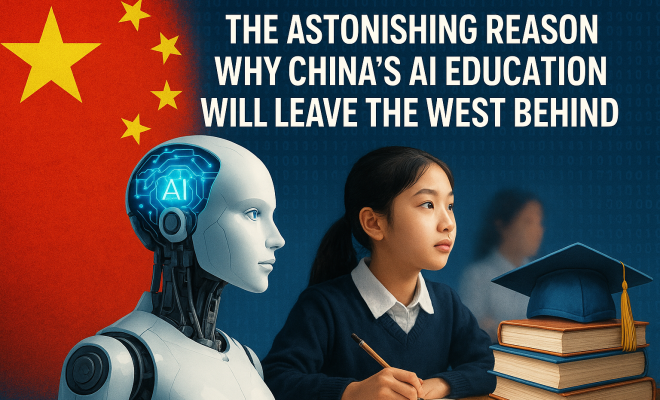
Imagine a world where every single student, from elementary school right through university, is not just aware of artificial intelligence but actively engaged in learning its principles, coding its logic, and even building their own AI applications. Now, picture this happening not in some distant sci-fi future, but right now, across an entire nation. That’s precisely the vision and the reality rapidly unfolding in China, where a truly ambitious plan is underway to mandate universal AI education in China across all its schools by 2030. It’s a national endeavor so sweeping that its AI education market is projected to hit a staggering $22 billion by next year alone.
This isn’t just about teaching kids to use a new app; it’s about fundamentally reshaping an entire generation’s relationship with technology. We’re talking about a country where a 370% surge in AI-themed study tours was observed just this past summer. Think about that for a second: hundreds of thousands, if not millions, of students spending their holidays diving deep into AI concepts. And it’s not just theoretical; we’re seeing concrete examples of children as young as 10 years old not just playing with AI, but actually leveraging it for legitimate business tasks. This aggressive, proactive embrace of AI in education stands in stark contrast to the often-hesitant, risk-averse discussions we typically hear in Western nations, particularly the United States. While China is full steam ahead, the U.S. remains largely mired in debates over the potential catastrophic or existential risks of AI, with some prominent tech leaders sounding the alarm bells.
This stark divergence in national strategies — one pushing for universal integration, the other grappling with ethical quandaries — creates a fascinating, and let’s be honest, controversial narrative. It has massive implications for future workforce competitiveness, technological dominance, and even global power dynamics. It’s a topic that’s already driving significant social media engagement and search interest because people instinctively understand its profound impact. For anyone watching the global tech race, understanding the mechanics and motivations behind AI education in China isn’t just interesting; it’s essential. See also US AI curriculum trends.
The Mandate: A National Blueprint for AI Literacy
China’s approach to AI education isn’t piecemeal; it’s a top-down, national strategy. The directive to integrate AI into the curriculum of every school by 2030 isn’t merely a suggestion; it’s a governmental mandate. This commitment signals a profound belief that AI literacy isn’t a niche skill for tech enthusiasts, but a foundational competency for every citizen in the 21st century. It’s akin to the push for universal literacy or numeracy in previous generations – deemed absolutely vital for national progress and individual opportunity.
This isn’t just about coding lessons in high school, either. The vision extends from introducing basic AI concepts in primary schools to specialized tracks in vocational colleges and advanced research in universities. The idea is to create a seamless pipeline of AI talent, ensuring that every student has at least a baseline understanding of how AI works, its applications, and its societal implications. Such an ambitious goal requires massive investment in teacher training, curriculum development, and technological infrastructure, all of which the Chinese government appears determined to provide. This integrated, multi-tiered strategy is designed to cultivate a workforce that is not only ready to adapt to an AI-driven economy but also capable of innovating within it.
A Market Explosion: $22 Billion and Counting
The sheer scale of China’s commitment is perhaps best illustrated by the economic projections. The country’s AI education market is forecast to reach an astonishing $22 billion by next year. Think about that: an entire industry blossoming around teaching AI, from educational software and hardware to specialized training programs and tutoring services. This isn’t just a government initiative; it’s a massive economic engine, attracting private investment and fostering innovation within the education technology (ed-tech) sector.
This market growth isn’t accidental. It’s a direct consequence of the national mandate, creating an enormous demand for AI-related educational products and services. Companies are scrambling to develop AI-powered learning platforms, interactive AI kits for younger students, and advanced simulation tools for future engineers. This competitive landscape drives quality and accessibility, making AI education increasingly sophisticated and widely available. It also creates a self-reinforcing cycle: government policy drives market growth, which in turn provides better resources for students, further strengthening the national AI talent pool.
Summer of AI: The Surge in Study Tours
If you wanted a tangible example of this enthusiasm, look no further than the summer of AI study tours. There was a remarkable 370% surge in AI-themed study tours this past summer alone. This isn’t just a handful of curious kids; this represents hundreds of thousands, if not millions, of students choosing to spend their break immersed in AI. These tours often involve visits to tech companies, AI research labs, and hands-on workshops where students can experiment with robotics, machine learning algorithms, and data science.
What does this tell us? It suggests a deep-seated interest and parental enthusiasm for AI literacy. Parents in China clearly see AI skills as critical for their children’s future success, and they’re willing to invest time and money to give them an edge. This grassroots demand, combined with the top-down governmental push, creates a powerful momentum. These tours aren’t just about learning; they’re about inspiration, about showing young people the exciting possibilities that AI offers, and about connecting theoretical knowledge with real-world applications. It’s a powerful way to demystify complex technology and make it accessible to a broader audience. (See: China's AI education initiatives.)
Child Prodigies or Pushed to Excel? Young Entrepreneurs and AI
The anecdotal evidence emerging from China is truly eye-opening. We’re hearing stories of children as young as 10 years old not just understanding AI, but actively utilizing it for business tasks. Imagine a fifth-grader developing a simple AI chatbot for a local shop, or using machine learning to analyze market trends for a small family business. These aren’t isolated incidents but rather illustrations of a burgeoning trend where young individuals are empowered to apply AI in practical, often entrepreneurial, ways. For more context, see AI upskilling courses.
This raises fascinating questions. Are these children simply natural prodigies, or is the educational environment in China creating an ecosystem where such early application of advanced technology becomes more common? It’s likely a combination of both. The widespread availability of AI tools, coupled with a curriculum that encourages hands-on experimentation and problem-solving, creates fertile ground for this kind of early innovation. While some might worry about the pressure on young children, the ability to engage with complex tools at such an early age could foster a generation of highly capable and technologically fluent individuals, ready to tackle the challenges of a rapidly changing world. (impact of AI education software)
The American Debate: Caution vs. Acceleration
Now, let’s pivot to the United States, and you’ll find a dramatically different conversation. While China is busy mandating universal AI education, the U.S. remains largely locked in fervent debates over the potential risks of AI. We’re hearing prominent tech leaders, academics, and policymakers warning of ‘catastrophic or existential risks to humanity’ from advanced AI. These aren’t fringe voices; they are respected figures like Elon Musk, who has consistently called for caution and regulatory oversight, or open letters signed by hundreds of AI experts expressing deep concern.
The conversation often centers on ethical dilemmas, job displacement, autonomous weapons, and the potential for AI to spiral out of human control. While these are undeniably critical concerns that warrant serious consideration, the focus on risk sometimes overshadows the urgency of preparing the next generation to engage with this technology. It creates a narrative of fear and apprehension, which, while understandable, can slow down progress in integrating AI into the educational system. This cautious approach, in contrast to China’s aggressive push, might leave American students and the future workforce at a significant disadvantage in a world increasingly shaped by AI.
A Tale of Two Futures: Implications for Global Competitiveness
This stark divergence in national strategies isn’t just an interesting academic point; it has profound implications for global competitiveness and technological leadership. If one nation systematically educates its entire population in AI from a young age, while another struggles to even define its stance, the gap in capabilities will inevitably widen. China is betting that pervasive AI literacy will fuel economic growth, drive innovation, and cement its position as a global technological powerhouse. They see AI not just as a tool, but as a fundamental pillar of future national strength.
The long-term consequences are significant. A workforce deeply familiar with AI will be better equipped to develop new technologies, optimize existing industries, and solve complex societal problems. It could mean faster economic growth, more robust innovation ecosystems, and a greater capacity for scientific breakthroughs. Conversely, a nation that lags in AI education might find itself increasingly reliant on other countries for advanced technological solutions, struggling to compete in key industries, and facing a growing skills gap within its own workforce. This isn’t just about who builds the next great AI; it’s about who understands it, who can wield it, and ultimately, who controls its future direction.
Ed-Tech Boom: Monetization Potential and Investment Opportunities
Beyond the geopolitical implications, this global shift has created a massive opportunity within the online education, software, and ed-tech sectors. The demand for AI learning platforms, AI courses for students, and innovative educational technology is skyrocketing, particularly in markets like China, but also globally as other nations inevitably realize the importance of AI literacy. This makes the topic ripe for monetization through various avenues.
For businesses, there’s enormous potential in catering to commercial searches for ‘AI learning platforms,’ ‘AI courses for students,’ and ‘edtech investment opportunities.’ This is a golden age for affiliate marketing, recommending best-in-class AI learning tools, coding bootcamps, or educational software. Furthermore, B2B SaaS product recommendations are highly relevant. Companies offering AI-powered teaching assistants, personalized learning algorithms, or curriculum development tools for schools and universities are poised for significant growth. The sheer scale of the investment and the number of students involved mean that even a small slice of this market can be incredibly lucrative, making AI education a hotbed for both innovation and entrepreneurial success.
Addressing the Ethical Quandaries: A Balanced Approach?
Of course, it’s easy to look at China’s aggressive push and the U.S.’s cautious stance as a simple dichotomy. But the reality is more nuanced. While China is accelerating AI education, it’s also grappling with the ethical implications, albeit perhaps with a different regulatory framework and societal philosophy. And while the U.S. is debating risks, there are also significant efforts underway to integrate AI into education, albeit less uniformly and without a national mandate.
The critical question for all nations is how to strike a balance between harnessing the immense potential of AI and mitigating its risks. Can we educate a generation to be AI-literate and innovative, while simultaneously instilling a strong ethical compass and critical thinking skills about the technology’s societal impact? The ideal scenario probably involves a proactive approach to education, similar to China’s, coupled with robust ethical frameworks, regulatory foresight, and a commitment to democratic values, which are often at the forefront of Western discussions. The challenge lies in translating these discussions into actionable educational strategies that can keep pace with the rapid advancements of AI. (See: AI education in China.)
The Road Ahead: What Does Universal AI Education Truly Mean?
So, what does it really mean when a nation commits to universal AI education by 2030? It means a fundamental transformation of what it means to be educated. It implies that understanding algorithms, data, and machine learning will become as essential as reading, writing, and arithmetic. It means equipping every citizen with the tools to navigate, understand, and even shape a world where AI is not just a tool, but a pervasive force in daily life, work, and governance. For more context, see AI competency gap.
This isn’t just about creating more AI engineers, although that will certainly happen. It’s about fostering a society that can engage intelligently with AI, critically assess its outputs, and participate in informed discussions about its future direction. It’s about empowering individuals to leverage AI for personal growth, economic opportunity, and societal benefit. The long-term impact of AI education in China will ripple across the globe, influencing everything from economic competition to the very nature of human-technology interaction. As we watch this unfold, it’s clear that the choices nations make today about educating their populace in AI will define their prosperity and influence for decades to come.
Global Comparisons: How China Stacks Up Against Other Leaders
It’s helpful to put China’s ambitious AI education plan into a global context. While many countries recognize the importance of AI, few have adopted such a comprehensive, top-down national strategy. For instance, the European Union, while investing heavily in AI research and development, emphasizes a human-centric approach to AI, with a strong focus on ethical guidelines and regulatory frameworks. Their educational initiatives are often more decentralized, driven by individual member states or specific universities, rather than a single, overarching mandate for universal integration into K-12 schooling. For more on this, see AI specialist vs traditional role.
Similarly, countries like South Korea and Singapore are known for their tech-forward education systems. They’ve made significant strides in coding and digital literacy, and AI is certainly on their radar. However, their efforts, while impressive, don’t quite match the sheer scale and explicit timeline of China’s 2030 goal for universal AI education across all levels. These nations often focus on cultivating specialized AI talent at higher education levels and in vocational training, rather than embedding foundational AI concepts into the primary school curriculum for every single student. This difference in scale and scope highlights China’s unique position as a global leader in this particular facet of AI development.
The Role of Teacher Training: A Critical Bottleneck and Investment
A national mandate for universal AI education sounds fantastic on paper, but the practicalities of implementation are immense. One of the biggest challenges, and therefore a major area of investment, is teacher training. You can’t just hand teachers an AI curriculum and expect them to be experts overnight. Many educators, especially those in primary and secondary schools, may have limited or no prior experience with AI concepts, programming, or machine learning. This isn’t a criticism; it’s simply a reality of rapidly evolving technology.
China is addressing this head-on, pouring resources into training programs for current educators. This includes workshops, online courses, and even partnerships with tech companies to provide practical experience. The goal is to not only equip teachers with the technical knowledge but also to help them develop pedagogical approaches that make complex AI concepts accessible and engaging for students of all ages. Without a well-trained and confident teaching force, even the most brilliantly designed curriculum would fall flat. This focus on empowering educators is a silent but incredibly vital component of China’s overall AI education strategy.
Beyond Coding: Cultivating AI Ethics and Critical Thinking
While much of the discussion around AI education naturally gravitates towards coding and technical skills, China’s mandate also implicitly includes the cultivation of critical thinking and ethical considerations. It’s not enough for students to simply learn how to build an AI; they must also understand its societal implications. How does AI impact privacy? What are the biases inherent in certain datasets? How do autonomous systems make decisions, and who is accountable?
Integrating these questions into the curriculum, even at an early age, is crucial. For younger students, this might involve discussions around how AI-powered toys collect data, or the ethics of AI in simple games. For older students, it could involve more complex case studies on facial recognition, algorithmic fairness, or the future of work. The aim isn’t just to produce skilled technicians, but thoughtful citizens who can navigate an AI-driven world responsibly. This balanced approach, while challenging to implement, is essential for a truly “universal” AI literacy that goes beyond mere technical proficiency. For more context, see AI revolution and software development. (See: impact of AI on education.)
FAQ: Understanding AI Education in China
What is the core goal of AI education in China?
The primary goal is to achieve universal AI literacy across all educational levels by 2030. This means ensuring every student, from elementary school through university, has a foundational understanding of AI principles, applications, and societal implications, preparing them for an AI-driven economy and future.
How does China plan to implement this universal AI education?
It’s a multi-tiered national strategy. This includes integrating basic AI concepts into primary school curricula, offering specialized AI tracks in vocational colleges, and conducting advanced AI research at universities. It also involves significant investment in teacher training, curriculum development, and technological infrastructure.
What makes China’s approach different from Western nations like the US?
China’s approach is characterized by a top-down, national mandate with a clear timeline and extensive government funding. In contrast, the US and many Western nations have a more decentralized approach, often focusing on ethical debates and risks, with less uniform integration of AI into K-12 education and without a singular national directive.
What is the projected market value of AI education in China?
The AI education market in China is projected to reach an astonishing $22 billion by next year. This growth is fueled by the national mandate, creating massive demand for educational software, hardware, training programs, and tutoring services related to AI. K-12 AI literacy funding news offers useful background here.
Are there concerns about children being “pushed” too hard in AI education?
While some external observers might raise concerns about pressure on young children, the anecdotal evidence suggests an environment where young individuals are empowered to apply AI practically and entrepreneurially. The widespread availability of AI tools and a hands-on curriculum seem to foster early innovation, rather than solely relying on innate prodigy.
How is China addressing the ethical implications of AI within its education system?
While the focus is on acceleration, the curriculum also includes aspects of critical thinking and ethical considerations. This means teaching students not just how to build AI, but also to understand its impact on privacy, potential biases, and accountability, preparing them to engage with AI responsibly.
Trending Now
Frequently Asked Questions
Why is AI education important in China?
AI education in China is crucial because it aims to equip an entire generation with essential skills in artificial intelligence, fostering innovation and technological understanding. By mandating universal AI education by 2030, China seeks to reshape its workforce and enhance its competitive edge globally.
How is China's approach to AI education different from the West?
China's approach to AI education is characterized by aggressive integration into the national curriculum, encouraging hands-on learning and practical application. In contrast, Western nations, particularly the U.S., often focus on ethical debates and potential risks, leading to a more cautious stance on AI adoption in education.
What are the projected financial implications of AI education in China?
The AI education market in China is projected to reach an astonishing $22 billion by next year. This growth reflects the country's commitment to advancing AI literacy and technology among students, which is expected to have significant economic and technological benefits.
What age are Chinese students starting to learn about AI?
In China, students as young as 10 years old are engaging with artificial intelligence concepts. They are not only learning about AI but also applying it in practical scenarios, such as business tasks, showcasing an early and active engagement with technology.
What impact does China's AI education initiative have on global competitiveness?
China's AI education initiative is poised to significantly enhance its global competitiveness by creating a tech-savvy workforce. This proactive approach contrasts sharply with the more hesitant strategies of Western nations, potentially leading to a shift in technological dominance and global power dynamics.
Agree or disagree? Drop a comment and tell us what you think.