The Tech Edvocate

Top Menu

  • Advertisement
  • Apps
  • Home Page
  • Home Page Five (No Sidebar)
  • Home Page Four
  • Home Page Three
  • Home Page Two
  • Home Tech2
  • Icons [No Sidebar]
  • Left Sidbear Page
  • Lynch Educational Consulting
  • My Account
  • My Speaking Page
  • Newsletter Sign Up Confirmation
  • Newsletter Unsubscription
  • Our Brands
  • Page Example
  • Privacy Policy
  • Protected Content
  • Register
  • Request a Product Review
  • Shop
  • Shortcodes Examples
  • Signup
  • Start Here
    • Governance
    • Careers
    • Contact Us
  • Terms and Conditions
  • The Edvocate
  • The Tech Edvocate Product Guide
  • Topics
  • Write For Us
  • Advertise

Main Menu

  • Start Here
    • Our Brands
    • Governance
      • Lynch Educational Consulting, LLC.
      • Dr. Lynch’s Personal Website
      • Careers
    • Write For Us
    • The Tech Edvocate Product Guide
    • Contact Us
    • Books
    • Edupedia
    • Post a Job
    • The Edvocate Podcast
    • Terms and Conditions
    • Privacy Policy
  • Topics
    • Assistive Technology
    • Child Development Tech
    • Early Childhood & K-12 EdTech
    • EdTech Futures
    • EdTech News
    • EdTech Policy & Reform
    • EdTech Startups & Businesses
    • Higher Education EdTech
    • Online Learning & eLearning
    • Parent & Family Tech
    • Personalized Learning
    • Product Reviews
  • Advertise
  • Tech Edvocate Awards
  • The Edvocate
  • Pedagogue
  • School Ratings

logo

The Tech Edvocate

  • Start Here
    • Our Brands
    • Governance
      • Lynch Educational Consulting, LLC.
      • Dr. Lynch’s Personal Website
        • My Speaking Page
      • Careers
    • Write For Us
    • The Tech Edvocate Product Guide
    • Contact Us
    • Books
    • Edupedia
    • Post a Job
    • The Edvocate Podcast
    • Terms and Conditions
    • Privacy Policy
  • Topics
    • Assistive Technology
    • Child Development Tech
    • Early Childhood & K-12 EdTech
    • EdTech Futures
    • EdTech News
    • EdTech Policy & Reform
    • EdTech Startups & Businesses
    • Higher Education EdTech
    • Online Learning & eLearning
    • Parent & Family Tech
    • Personalized Learning
    • Product Reviews
  • Advertise
  • Tech Edvocate Awards
  • The Edvocate
  • Pedagogue
  • School Ratings
  • Toxic Pills: This Supplement Scandal Puts Millions at Risk

  • Urgent Dog Supplement Recall: This Stealthy Threat Could Be Hiding in Your Pantry!

  • Staggering: Climate Tech Fundraising Collapses — Is AI to Blame?

  • Global AI stocks tumble as industry’s biggest names sound alarm – The Straits Times

  • Sony’s Controversial Move: Why the Last of Us Part II Multiplayer Mod Got Axed

  • Trump’s Wild AI Claims: Is There a ‘Sick Conspiracy’ Against Tech?

  • This One Thing Is Turning Classrooms Into Culture War Battlegrounds

  • Your AI Detector Is Useless: Why Universities Are Scrapping ‘Catch & Ban’ for This

  • Terrifying: AI Is About to Break Cybersecurity – And No One Is Ready

  • Volkswagen’s Staggering Miscalculation: 50,000 Jobs Vanish as EV Dream Sours

Digital & Mobile Technology
Home›Digital & Mobile Technology›What Is the “Hi Mom!” Scam? How to Avoid and Handle It

What Is the “Hi Mom!” Scam? How to Avoid and Handle It
By Matthew Lynch
June 23, 2023
0
Spread the love

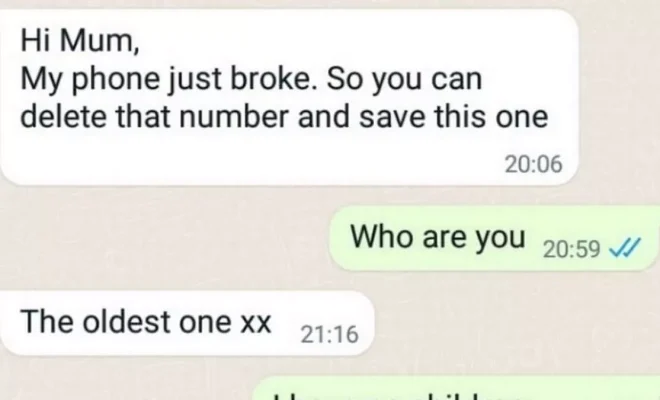
The “Hi Mom!” scam has been around for quite some time, but it’s still causing trouble for many unsuspecting victims. It’s a scam that tricks people into believing their loved one is in trouble, often aiming at grandparents, parents, or any other close family members. In this article, we’ll talk about what the “Hi Mom!” scam is and how to avoid and handle it.

What is the “Hi Mom!” scam?

The “Hi Mom!” scam is a type of scheme that involves a scammer calling someone pretending to be their child or grandchild. The scammer will claim that they’re in a difficult situation and urgently need money.

The scammer’s tactic is to begin the call with the phrase “Hi mom!” to establish a sense of trust and affection. They then proceed to explain that they’re in jail or a hospital in a foreign country and require immediate financial assistance.

The scammer would provide specific instructions about how the victim should go about sending the money. They often emphasize that the situation is time-sensitive and doesn’t allow the victim to contact the affected family member’s spouse or other relatives.

How to avoid the “Hi Mom!” scam?

The “Hi Mom!” scam can be devastating, and it’s important to protect yourself from becoming a victim. Here are some tips on how to avoid the scam:

1. Check your source: if you receive an unusual call from someone who identified themselves as a close relative, ask personal questions to confirm their identity before discussing anything else.

2. Don’t panic: scammers work on a sense of urgency, so they can pressure you to take immediate action. If you notice any pushiness or rush, take your time to think and investigate the situation.

3. Verify the information: conduct research and try to verify the details transmitted during the call. Check for the validity of the situation presented and try to reach other family members for additional information.

4. Don’t share financial information over the phone: Never give out sensitive information or send money over the phone, especially if the request is urgent. Ask for alternative ways to transfer money, such as PayPal, Venmo or other secure payment methods.

What to do if you fall victim to the “Hi Mom!” scam?

If you fall prey to the “Hi Mom!” scam, it’s critical to act quickly. Here are a few practical steps to take:

1. Notify your bank: If you’ve transferred money, contact your bank as soon as possible. Explain the situation to them and request that they put a freeze on your account or reverse the transfer.

2. File a police report: Report the matter to your local police department. Provide as much information as possible, including details about the phone number used to call you, the location, and the transfer methods used.

3. Contact your close relatives: Alert your relatives about the incident and inform them that a scammer could be targeting them.

In conclusion, being vigilant and wary of suspicious calls can help prevent the “Hi Mom!” scam from affecting you or your loved ones. When in doubt, verify the information, take your time in processing the situation, and do not invest in financial transactions under pressure. Remember, scammers target people’s emotions to swindle money, so being cautious and vigilant is the best defense against these types of scams.


Previous Article

How to Fix the “D3DX9_39.dll Missing” Error ...

Next Article

Ways to Charge Your EV for Free

Matthew Lynch

Related articles More from author

  • Digital & Mobile Technology

    What is a Deployment in Computing?

    April 17, 2023
    By Matthew Lynch
  • Digital & Mobile Technology

    How to Find and Share Your Wi-Fi Password Easily on Any Device

    May 28, 2023
    By Matthew Lynch
  • Digital & Mobile Technology

    Best Calendar Apps for iPhone

    June 21, 2023
    By Matthew Lynch
  • Digital & Mobile Technology

    What to Do When a Discord Update Fails on Windows

    August 5, 2023
    By Matthew Lynch
  • Digital & Mobile Technology

    Getting the 0x0 0x0 Error Code in Windows 11? Here’s How to Fix It

    August 5, 2023
    By Matthew Lynch
  • Digital & Mobile Technology

    Ultimate Guide to Sega Genesis Emulation on Retroarch

    April 25, 2023
    By Matthew Lynch

Search

Login & Registration

  • Log in
  • Entries feed
  • Comments feed
  • WordPress.org

Newsletter

Signup for The Tech Edvocate Newsletter and have the latest in EdTech news and opinion delivered to your email address!

About Us

Since technology is not going anywhere and does more good than harm, adapting is the best course of action. That is where The Tech Edvocate comes in. We plan to cover the PreK-12 and Higher Education EdTech sectors and provide our readers with the latest news and opinion on the subject. From time to time, I will invite other voices to weigh in on important issues in EdTech. We hope to provide a well-rounded, multi-faceted look at the past, present, the future of EdTech in the US and internationally.

We started this journey back in June 2016, and we plan to continue it for many more years to come. I hope that you will join us in this discussion of the past, present and future of EdTech and lend your own insight to the issues that are discussed.

Newsletter

Signup for The Tech Edvocate Newsletter and have the latest in EdTech news and opinion delivered to your email address!

Contact Us

The Tech Edvocate
910 Goddin Street
Richmond, VA 23231
(601) 630-5238
[email protected]

Copyright © 2026 Matthew Lynch. All rights reserved.