The Tech Edvocate

Top Menu

  • Advertisement
  • Apps
  • Home Page
  • Home Page Five (No Sidebar)
  • Home Page Four
  • Home Page Three
  • Home Page Two
  • Home Tech2
  • Icons [No Sidebar]
  • Left Sidbear Page
  • Lynch Educational Consulting
  • My Account
  • My Speaking Page
  • Newsletter Sign Up Confirmation
  • Newsletter Unsubscription
  • Our Brands
  • Page Example
  • Privacy Policy
  • Protected Content
  • Register
  • Request a Product Review
  • Shop
  • Shortcodes Examples
  • Signup
  • Start Here
    • Governance
    • Careers
    • Contact Us
  • Terms and Conditions
  • The Edvocate
  • The Tech Edvocate Product Guide
  • Topics
  • Write For Us
  • Advertise

Main Menu

  • Start Here
    • Our Brands
    • Governance
      • Lynch Educational Consulting, LLC.
      • Dr. Lynch’s Personal Website
      • Careers
    • Write For Us
    • The Tech Edvocate Product Guide
    • Contact Us
    • Books
    • Edupedia
    • Post a Job
    • The Edvocate Podcast
    • Terms and Conditions
    • Privacy Policy
  • Topics
    • Assistive Technology
    • Child Development Tech
    • Early Childhood & K-12 EdTech
    • EdTech Futures
    • EdTech News
    • EdTech Policy & Reform
    • EdTech Startups & Businesses
    • Higher Education EdTech
    • Online Learning & eLearning
    • Parent & Family Tech
    • Personalized Learning
    • Product Reviews
  • Advertise
  • Tech Edvocate Awards
  • The Edvocate
  • Pedagogue
  • School Ratings

logo

The Tech Edvocate

  • Start Here
    • Our Brands
    • Governance
      • Lynch Educational Consulting, LLC.
      • Dr. Lynch’s Personal Website
        • My Speaking Page
      • Careers
    • Write For Us
    • The Tech Edvocate Product Guide
    • Contact Us
    • Books
    • Edupedia
    • Post a Job
    • The Edvocate Podcast
    • Terms and Conditions
    • Privacy Policy
  • Topics
    • Assistive Technology
    • Child Development Tech
    • Early Childhood & K-12 EdTech
    • EdTech Futures
    • EdTech News
    • EdTech Policy & Reform
    • EdTech Startups & Businesses
    • Higher Education EdTech
    • Online Learning & eLearning
    • Parent & Family Tech
    • Personalized Learning
    • Product Reviews
  • Advertise
  • Tech Edvocate Awards
  • The Edvocate
  • Pedagogue
  • School Ratings
  • This One Flaw Just Blew Up the Guardian Smart Baby Monitor

  • The AI Race: Why Doomsday Warnings Can’t Stop the Train

  • XBOX: Activision takes over Halo, Obsidian joins Bethesda, and Ninja Theory is going

  • White House Arcade: 2nd Japan Protest, Nintendo Feud [2026]

  • One-Fifth of White-Collar Jobs Could Vanish by 2030, New Report Claims

  • Is a ‘Pacing’ AI Slowdown Really Possible? This Week’s AI News Roundup Reveals the Truth

  • California’s Bold Move: AB 1709 Social Media Restrictions Could Banish Teen Addiction

  • This One AI in Education Concern Is Completely Missing the Point

  • ShinyHunters Claims FBI Data Breach: Hacker Group Says It Stole Records of All Employees and Applicants

  • One Hacker, 100 Companies: The AI Cybersecurity Attack That Changed Everything

Digital & Mobile Technology
Home›Digital & Mobile Technology›What is Gigahertz (GHz)?

What is Gigahertz (GHz)?
By Matthew Lynch
May 21, 2023
0
Spread the love

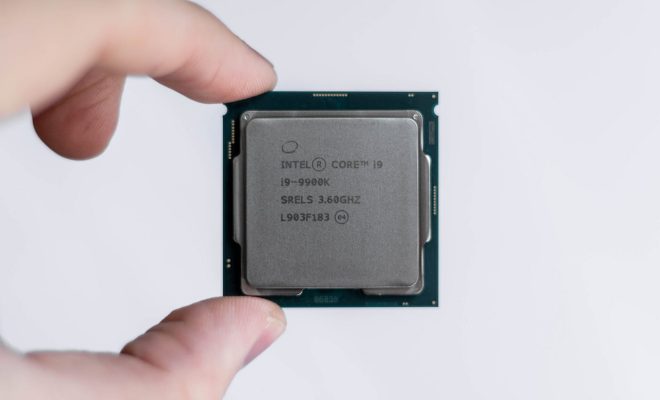
Gigahertz (GHz) is a unit of measurement for frequency, specifically for measuring the frequency of electromagnetic radiation in the radio wave spectrum. It is a measure of the number of cycles a wave completes in one second, and is used to describe the speed at which computer processors operate.

In practical terms, GHz is a measure of the clock speed of a computer’s central processing unit (CPU). Higher GHz means that the CPU can execute more instructions per second, which results in faster computations and overall system performance.

The name ‘gigahertz’ itself can be broken down into its components. ‘Giga’ is a prefix meaning one billion, and ‘hertz’ refers to the unit of frequency whereby a hertz (Hz) is equal to one cycle per second. Therefore, 1 GHz can be understood as one billion cycles per second.

The concept of GHz is not limited to just computer processors, but is used more broadly to describe the frequency of electromagnetic waves in a range of applications. For instance, GHz is also used in the study of radio astronomy to measure the frequency of radio waves emitted by celestial objects in the cosmos.

The development of technology has seen an increase in GHz values over time. In the early days of computing, processors typically operated at a few megahertz (MHz), whereas modern processors can operate at clock speeds upwards of 4 GHz. This increase in GHz values has been a crucial factor in enabling computers to handle more complex tasks with greater speed and efficiency.

It is important to note that GHz is only one factor in determining the overall performance of a computer or other electronic device. The architecture, number of cores, cache size, and other factors also play a critical role in determining the overall performance of a device.

In conclusion, Gigahertz (GHz) is a unit of measurement used to describe the frequency at which electromagnetic waves operate. It is commonly used as a measure of the clock speed of computer processors, but also has many other applications in various fields of study. As technology advances, it is likely that GHz values will continue to increase, allowing for faster, more efficient processing of information.

Previous Article

What is Garbage In, Garbage Out (GIGO)?

Next Article

What is Fused Deposition Modeling (FDM)?

Matthew Lynch

Related articles More from author

  • Digital & Mobile Technology

    How to Enable or Disable File History in Windows

    July 31, 2023
    By Matthew Lynch
  • Digital & Mobile Technology

    The Best iPhone 12 Pro Max Cases

    July 31, 2023
    By Matthew Lynch
  • Digital & Mobile Technology

    What is Enterprise Data?

    May 7, 2023
    By Matthew Lynch
  • Digital & Mobile Technology

    Why You Should Use Apple MFI Certified Lightning Cables

    July 4, 2023
    By Matthew Lynch
  • Digital & Mobile Technology

    What is Software-Defined Anything (SDx)?

    May 12, 2023
    By Matthew Lynch
  • Digital & Mobile Technology

    How to Screenshot on HP Envy

    June 6, 2023
    By Matthew Lynch

Search

Login & Registration

  • Log in
  • Entries feed
  • Comments feed
  • WordPress.org

Newsletter

Signup for The Tech Edvocate Newsletter and have the latest in EdTech news and opinion delivered to your email address!

About Us

Since technology is not going anywhere and does more good than harm, adapting is the best course of action. That is where The Tech Edvocate comes in. We plan to cover the PreK-12 and Higher Education EdTech sectors and provide our readers with the latest news and opinion on the subject. From time to time, I will invite other voices to weigh in on important issues in EdTech. We hope to provide a well-rounded, multi-faceted look at the past, present, the future of EdTech in the US and internationally.

We started this journey back in June 2016, and we plan to continue it for many more years to come. I hope that you will join us in this discussion of the past, present and future of EdTech and lend your own insight to the issues that are discussed.

Newsletter

Signup for The Tech Edvocate Newsletter and have the latest in EdTech news and opinion delivered to your email address!

Contact Us

The Tech Edvocate
910 Goddin Street
Richmond, VA 23231
(601) 630-5238
[email protected]

Copyright © 2026 Matthew Lynch. All rights reserved.