The Tech Edvocate

Top Menu

  • Advertisement
  • Apps
  • Home Page
  • Home Page Five (No Sidebar)
  • Home Page Four
  • Home Page Three
  • Home Page Two
  • Home Tech2
  • Icons [No Sidebar]
  • Left Sidbear Page
  • Lynch Educational Consulting
  • My Account
  • My Speaking Page
  • Newsletter Sign Up Confirmation
  • Newsletter Unsubscription
  • Our Brands
  • Page Example
  • Privacy Policy
  • Protected Content
  • Register
  • Request a Product Review
  • Shop
  • Shortcodes Examples
  • Signup
  • Start Here
    • Governance
    • Careers
    • Contact Us
  • Terms and Conditions
  • The Edvocate
  • The Tech Edvocate Product Guide
  • Topics
  • Write For Us
  • Advertise

Main Menu

  • Start Here
    • Our Brands
    • Governance
      • Lynch Educational Consulting, LLC.
      • Dr. Lynch’s Personal Website
      • Careers
    • Write For Us
    • The Tech Edvocate Product Guide
    • Contact Us
    • Books
    • Edupedia
    • Post a Job
    • The Edvocate Podcast
    • Terms and Conditions
    • Privacy Policy
  • Topics
    • Assistive Technology
    • Child Development Tech
    • Early Childhood & K-12 EdTech
    • EdTech Futures
    • EdTech News
    • EdTech Policy & Reform
    • EdTech Startups & Businesses
    • Higher Education EdTech
    • Online Learning & eLearning
    • Parent & Family Tech
    • Personalized Learning
    • Product Reviews
  • Advertise
  • Tech Edvocate Awards
  • The Edvocate
  • Pedagogue
  • School Ratings

logo

The Tech Edvocate

  • Start Here
    • Our Brands
    • Governance
      • Lynch Educational Consulting, LLC.
      • Dr. Lynch’s Personal Website
        • My Speaking Page
      • Careers
    • Write For Us
    • The Tech Edvocate Product Guide
    • Contact Us
    • Books
    • Edupedia
    • Post a Job
    • The Edvocate Podcast
    • Terms and Conditions
    • Privacy Policy
  • Topics
    • Assistive Technology
    • Child Development Tech
    • Early Childhood & K-12 EdTech
    • EdTech Futures
    • EdTech News
    • EdTech Policy & Reform
    • EdTech Startups & Businesses
    • Higher Education EdTech
    • Online Learning & eLearning
    • Parent & Family Tech
    • Personalized Learning
    • Product Reviews
  • Advertise
  • Tech Edvocate Awards
  • The Edvocate
  • Pedagogue
  • School Ratings
  • This Nordstrom Fall Beauty Product Delivers a ‘Filter Effect’ — Without the Filter

  • Your Smart Devices ARE Listening: The Multi-Million Dollar Deception Revealed

  • The Shocking Truth About AquaHarvest’s Water Footprint in Our Deserts

  • MindLink’s BCI Scandal: 10 Urgent Questions About Your Brain Data

  • Level-5’s AI Apology: Why Fans Are Furious Over One Small Detail

  • This Crucial New Law Just Changed Everything for Kids Online

  • Humanity’s Reckoning? This Viral AI Extinction Warning Ignited a Firestorm

  • Unveiling the Battle: Why Teachers Unions in New York Are Fighting This Federal Program

  • Unbelievable: This Private School Twitter Challenge Is Sparking Outrage

  • Two Tankers Hacked: The Disturbing Truth About Cyberattacks on Oil Tankers

Digital & Mobile Technology
Home›Digital & Mobile Technology›What Are Packet Sniffers and How Do They Work?

What Are Packet Sniffers and How Do They Work?
By Matthew Lynch
June 10, 2023
0
Spread the love

Packet sniffers refer to a type of software or tool that allows people to monitor and analyze network traffic passing through a specific device or network. They work by intercepting and logging network packets without being detected by the sender or the receiver. Consequently, packet sniffers can be helpful to network administrators, computer network engineers, and security professionals, who use them to diagnose network infrastructure problems, optimize network performance, detect anomalies, and identify and mitigate network security threats. However, they can also be used maliciously by hackers, cybercriminals, and eavesdroppers to steal sensitive information, such as passwords, credit card numbers, and personal identifiable information (PII).

How Do Packet Sniffers Work?

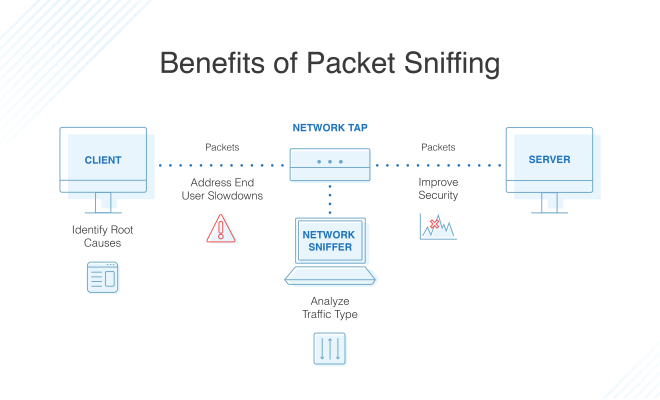
Packet sniffers function by utilizing a network interface card (NIC) to capture and analyze packets transmitted over a network. The NIC is configured in either promiscuous or monitor mode, which enables it to capture all network traffic, including packets not intended for the device.

Once activated, packet sniffers capture data packets and record their source and destination IP addresses, the type of protocol used, and other relevant information. They then analyze the contents of the packets and can extract different attributes, such as the URL requested, the user-agent, credentials, and other sensitive data. Advanced packet sniffers can reconstruct entire conversations between network devices, including email messages, voice over IP calls, and chat sessions.

Some of the most common uses of packet sniffers include network troubleshooting, traffic analysis, performance optimization, and security forensics. Network administrators and engineers can use sniffers to monitor network traffic in real-time and detect any potential network bottlenecks, misconfiguration, or connectivity issues. By analyzing inbound and outbound traffic, they can optimize network performance, reduce latency, and improve network availability.

In addition, packet sniffers are useful in identifying and mitigating network security threats. By analyzing network traffic patterns, they can detect various types of attacks, including network scanning, DDoS attacks, and malware infections. They can also identify unauthorized access attempts, such as attempts to exploit vulnerabilities, brute-force attacks, and SQL injections.

However, packet sniffers can also be used maliciously. Hackers and eavesdroppers can use them to intercept and steal sensitive information transmitted over a network. This information can then be used for identity theft, financial fraud, and other types of cybercrime. Therefore, it is crucial to ensure that your network is secure by using encryption, firewalls, and other security measures to prevent unauthorized access.

Conclusion

Packet sniffers are powerful tools used to monitor and analyze network traffic. They can be used for network troubleshooting, performance optimization, and security forensics. However, they can also be misused to steal sensitive information, underscoring the importance of securing your network. By using encryption, firewalls, and other security measures, you can prevent unauthorized access and ensure that your data is kept safe from cybercriminals and hackers.


Previous Article

How to Fix a Dell Laptop With ...

Next Article

What Does Cache Mean?

Matthew Lynch

Related articles More from author

  • Digital & Mobile Technology

    iPhone Camera Won’t Focus? Try These Fixes

    June 12, 2023
    By Matthew Lynch
  • Digital & Mobile Technology

    Everything You Need to Know About SMS & MMS on the iPhone

    June 6, 2023
    By Matthew Lynch
  • Digital & Mobile Technology

    Easy Video Editing Ideas for Beginners to Try

    June 5, 2023
    By Matthew Lynch
  • Digital & Mobile Technology

    What is Web Scraping?

    May 15, 2023
    By Matthew Lynch
  • Digital & Mobile Technology

    How to Change Your iPad Name

    June 4, 2023
    By Matthew Lynch
  • Digital & Mobile Technology

    Everything You Need to Know About iOS 8

    June 3, 2023
    By Matthew Lynch

Search

Login & Registration

  • Log in
  • Entries feed
  • Comments feed
  • WordPress.org

Newsletter

Signup for The Tech Edvocate Newsletter and have the latest in EdTech news and opinion delivered to your email address!

About Us

Since technology is not going anywhere and does more good than harm, adapting is the best course of action. That is where The Tech Edvocate comes in. We plan to cover the PreK-12 and Higher Education EdTech sectors and provide our readers with the latest news and opinion on the subject. From time to time, I will invite other voices to weigh in on important issues in EdTech. We hope to provide a well-rounded, multi-faceted look at the past, present, the future of EdTech in the US and internationally.

We started this journey back in June 2016, and we plan to continue it for many more years to come. I hope that you will join us in this discussion of the past, present and future of EdTech and lend your own insight to the issues that are discussed.

Newsletter

Signup for The Tech Edvocate Newsletter and have the latest in EdTech news and opinion delivered to your email address!

Contact Us

The Tech Edvocate
910 Goddin Street
Richmond, VA 23231
(601) 630-5238
[email protected]

Copyright © 2026 Matthew Lynch. All rights reserved.